
The Dawn of a Republic: Economic Prosperity and the Birth of a New Aesthetic
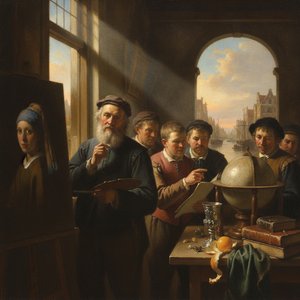 Mastering Light & Shadow: A Journey Through the Dutch Golden Age's Luminous Legacy
The Dawn of a Republic: Historical Context and the Birth of a New Aesthetic Golden Age Reflections: Dutch Baroque Painting & Cultural Innovation The Rise of a Republic: Historical Context & Artistic Flourishing Wikipedia: Dutch Golden Age The Dutch G...
To step into the seventeenth-century Netherlands is to enter a realm where the very air seems heavy with the scent of salt spray, damp earth, and the quiet hum of a nation finding its soul. This was the era of the Dutch Golden Age, a period of unprecedented artistic flourishing born from the crucible of independence and the burgeoning prosperity of the Dutch Republic. Following decades of struggle for liberation from Spanish rule, the Netherlands emerged not merely as a sovereign state, but as the most prosperous nation in Europe, leading the world in trade, science, and, most vibrantly, art. This newfound wealth was not channeled into the grandiose, intimidating displays of power found in the royal palaces of France or the religious monuments of Italy; instead, it fueled a revolution of the everyday.
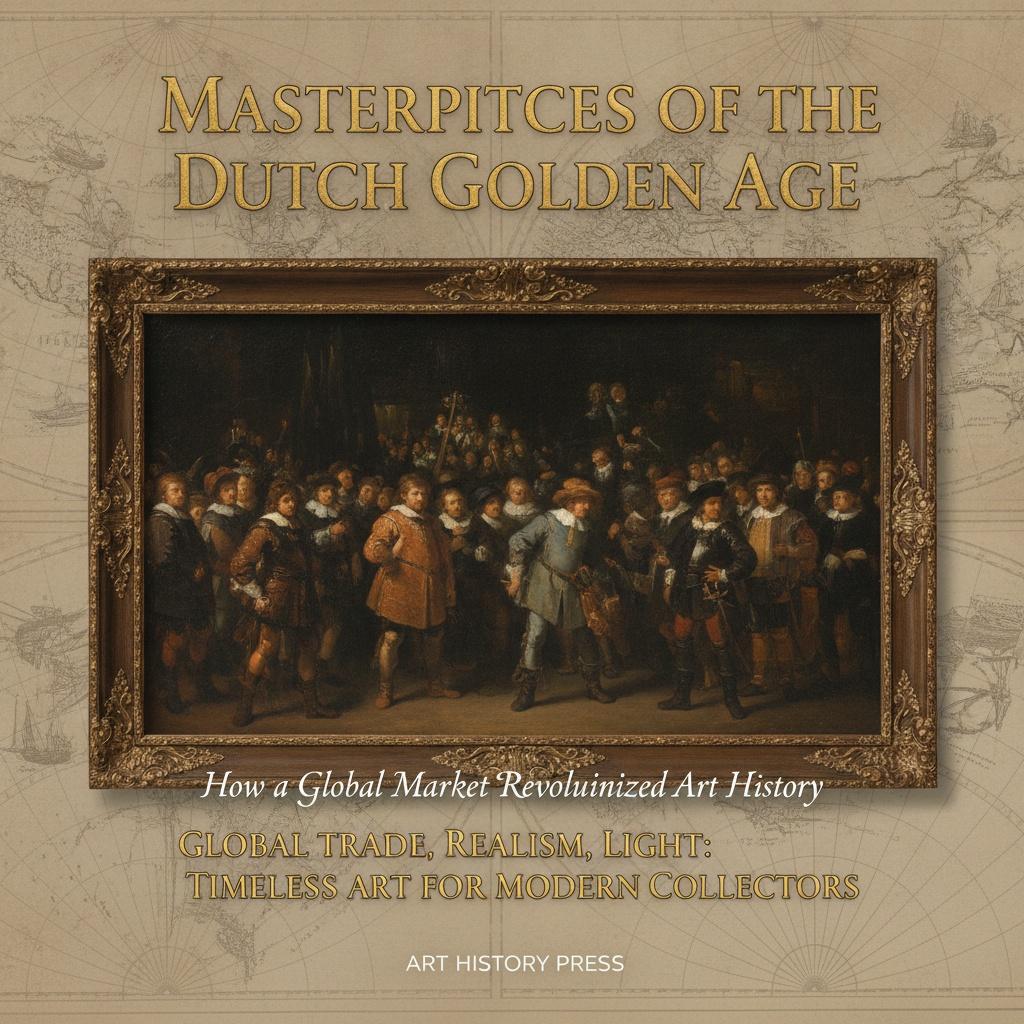
As the new Republic moved away from monarchist and Catholic traditions, the demand for traditional religious iconography waned. The sharp break with old traditions meant that Dutch art had to reinvent itself almost entirely, a task in which it was remarkably successful. In place of saints and monarchs, a large new market for secular subjects grew up, driven by a merchant class that sought to see its own values reflected on canvas. This economic boom, fueled by global trade and the development of modern financial practices, created a landscape where art became an accessible commodity, a mirror held up to the lives of the people themselves.
The Revolution of the Everyday: From Religious Iconography to Genre Painting
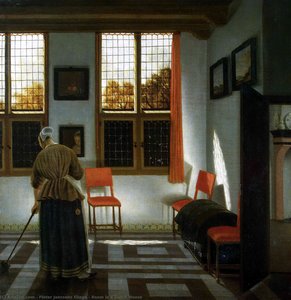 Room in a Dutch House
A Window into 17th-Century Domesticity Pieter Janssens Elinga’s “Room in a Dutch House” (1668) offers an intimate glimpse into the heart of everyday life during the Dutch Golden Age. This captivating oil on canvas, now residing at The Hermitage in St...
This shift birtched a unique aesthetic where the mundane was elevated to the extraordinary. In this era, the quiet beauty of a domestic interior or a sweeping horizon could command as much reverence as any cathedral altar. This movement, known as genre painting, sought to depict everyday life with remarkable realism and psychological depth. We see this beautifully captured in works like Gerard ter Borch’s Le Duo: chanteuna et joueur de luth théorbé. In this serene domestic tableau, a man diligently plays the lute while a woman sings, their intimacy framed by a modestly furnished interior that speaks volumes about the era's focus on quiet contemplation and familial harmony.
The beauty of this period lies in its ability to find magic in the ordinary. Whether it is the meticulous arrangement of a room in Pieter Janssens Elinga’s Room in a Dutch House—where sunlight streams through windows to illuminate dust motes dancing in the air—or the sweeping, ambitious vistas of maritime life, the subject matter was profoundly personal. Even the most humble tasks, such as a woman sweeping a floor, were transformed into studies of order, cleanliness, and dignity. This was an art of intimacy, designed not for distant worship, but for the walls of homes inhabited by those who lived through this transformative age.
Mastering Light and Texture: The Technical Brilliance of the Dutch Masters
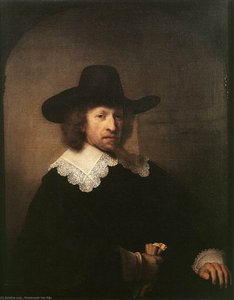
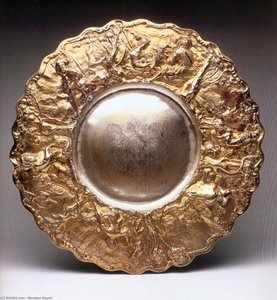 nicolaes keyser
Nicolaes Keyser: The Golden Weaver of Delft Nicolaes Keyser, a name often whispered in the halls of Dutch art history, remains an enigmatic figure despite his undeniable brilliance. Active primarily during the mid-17th century, he stands as one of De...
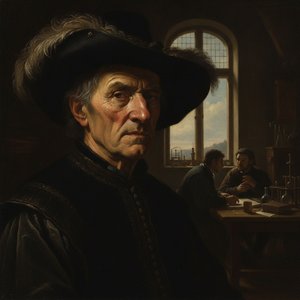
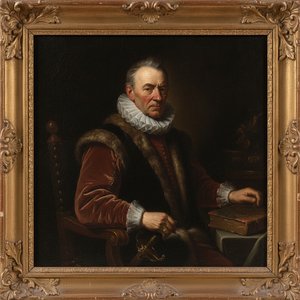
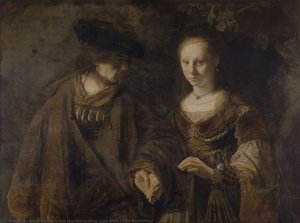
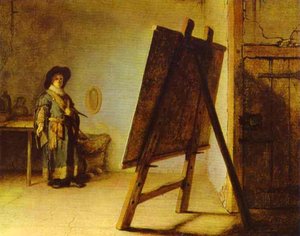
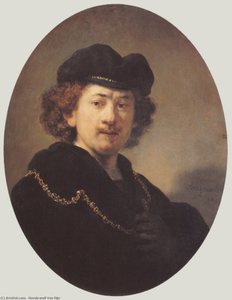
The true soul of the Golden Age resides in its luminous legacy. To understand this period, one must witness the masterful interplay of light and shadow, a technique known as chiaroscuro, which provided a dramatic tension to even the most quiet scenes. Artists like Rembrandt van Rijn mastered the ability to capture not just a likeness, but an inner life, using light to pull characters from the darkness of the canvas. This brilliance extended to the textures of the world: the shimmer of silk, the cold glint of pewter, and the heavy weight of velvet. Nicolaes Keyser, a master of Delft, was particularly renowned for his ability to weave light into his portraits, creating canvases that seemed to possess a distinctive golden hue.
This technical prowess was often rooted in a deep appreciation for craftsmanship. Many artists were themselves skilled in related trades; for instance, Keyser’s background as a goldsmith informed the rich materiality and intricate detail of his work. This dedication to precision allowed for a level of realism that remains breathtaking centuries later. From the sweeping, atmospheric skies of landscape painters like François van Knibbergen to the rugged, salt-sprung seascapes of Abraham Storck, the Dutch Masters used light as a tool to define space, emotion, and time, creating a visual language that is both technically profound and emotionally resonant.
A Global Marketplace: How Maritime Trade Fueled Artistic Innovation
 Dutch Whalers near Spitsbergen
Dutch Whalers Near Spitsbergen Abraham Storck’s “Un Prt de Mer,” depicting Dutch whalers navigating the icy waters off Spitsbergen—a breathtaking vista of Arctic exploration and maritime ambition—stands as a testament to the grandeur of the Dutch Gol...
The expansion of the Dutch Republic as a leading maritime power was the engine behind its artistic explosion. The Dutch merchant fleet, navigating far-reaching routes to Spitsbergen and beyond, brought more than just spices and silk; it brought new perspectives and exotic inspirations. This global reach is vividly depicted in works such as Abraham Storck’s Dutch Whalers near Spitsbergen, which captures the grandeur of Arctic exploration and the daring enterprise of a nation at the height of its maritime ambition. The very subjects being painted were often direct results of the trade routes established by the Dutch.
This era saw the birth of a truly modern art market. Unlike the patronage-heavy systems of the rest of Europe, the Dutch market was driven by a diverse group of collectors, from wealthy merchants to middle-class citizens. This led to an incredible specialization among artists; many spent their entire careers perfecting a single niche, whether it be seascapates, still lifes, or portraits. This fragmentation and specialization allowed for a level of refinement and innovation that pushed the boundaries of what art could achieve, turning the Netherlands into a vibrant hub of cultural and commercial exchange.
The Legacy of the Golden Age: Timeless Influence on Modern Interior Design
 Dutch Masters: 10 Golden Age Paintings That Still Inspire |
Introduction Imagine stepping into a world bathed in soft northern light, where everyday life is elevated to extraordinary beauty and quiet contemplation reigns supreme. This is the realm of the Dutch Golden Age – a period of unprecedented artistic f...
Today, the spirit of the Dutch Golden Age continues to breathe life into modern spaces. The era's emphasis on light, texture, and the beauty of the domestic sphere resonates deeply with contemporary design sensibilities. We see its influence in the way we use soft, natural lighting to create atmosphere, and in our enduring fascination with pieces that tell a story of quiet, meaningful living. The Dutch Masters taught us that an interior is not merely a collection of furniture, but a carefully constructed tableau of one's values and history.
For the modern enthusiast, bringing these masterpieces into a home—whether through a meticulously hand-painted oil reproduction or a high-quality museum print—is an act of connecting with a profound human legacy. At ArtsDot.com, we celebrate this connection by offering ways to "remix" history, allowing you to bring the light-drenched style of the Old Masters into your modern sanctuary. Whether it is a large-scale landscape that evokes the vastness of the Dutch seas or an intimate portrait that adds psychological depth to a study, the Golden Age remains a timeless source of inspiration for anyone looking to decorate with meaning and soul.