The Dawn of Neo-Impressionism: Moving Beyond the Spontaneity of Monet
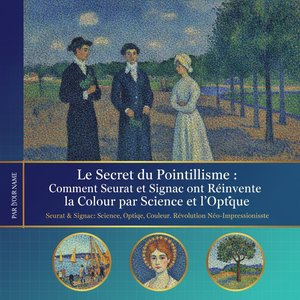 The Science of Light: How Seurat and Signac Invented Optical Mixing
The Dissatisfaction with Spontaneity: Moving Beyond Impressionism Chromatic Islands: Exploring the Theory & Legacy of Pointillism in 19th-Century Art The Dawn of Division: Impressionism’s Dissatisfaction & Seurat’s Vision The late 19th century Parisi...
To understand the seismic shift that occurred in the late 19th-century Parisian art world, one must first look back at the shimmering, ephemeral world of its predecessor. The Impressionists, led by luminaries like Claude Monet and Pierre-Auguste Renoir, had already begun to dismantle the rigid hierarchies of academic painting. They replaced somber studio tones with a vibrant, subjective celebration of light and movement, seeking to capture the fleeting moment—the way a sunbeam dances upon water or how a passing cloud alters the hue of a cathedral. Yet, beneath these beautiful, flickering surfaces, a growing discontent began to stir among a new generation of thinkers.
For the emerging avant-garde, the wonderful spontaneity of Impressionism felt dangerously close to chaos. There was a perceived lack of underlying structure, an almost arbitrary application of pigment that lacked a cohesive, intellectual foundation. While the Impressionists captured the impression of a moment, a new movement sought something more permanent and profound. This transition from the subjective to the objective marked the birth of Neo-进步Impressionism, a movement that would not merely witness the transient effects of nature but would attempt to decode them through a lens of rigorous, calculated precision.
The Science of Sight: Decoding Optical Mixing and Chromoluminarism
 Divisionism
Divisionism, also called chromoluminarism, is the characteristic style in Neo-Impressionist painting defined by the separation of colors into individual dots or patches that interact optically. By requiring the viewer to combine the colors optically ...
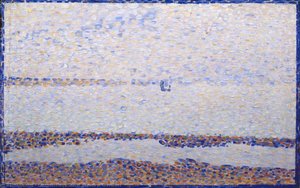
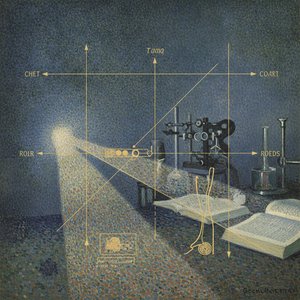
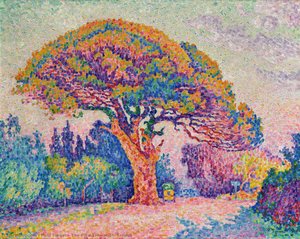
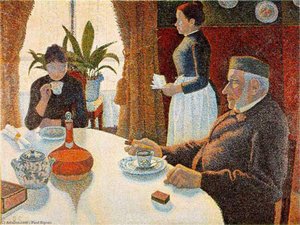
The true revolution of this era lay in the marriage of art and science. The Neo-Impressionists were not merely painters; they were explorers of the very physics of vision. Drawing inspiration from contemporary scientific treatises—including the works of Michel Eugène Chevreul, Ogden Rood, and Charles Blanc—they sought to ground their aesthetic choices in the study of optics. This led to the development of Divisionism, also known as chromoluminarism, a technique defined by the separation of colors into individual dots or patches that interact within the viewer's eye.
The brilliance of this method lies in the concept of mélange optique, or optical mixing. Rather than physically blending pigments on a palette—a process that can often dull the vibrancy of the paint—the artist applies tiny, distinct dots of pure color side by side. When viewed from a distance, these separate elements are reconstituted by the human eye into brilliantly colored lights. This method achieves a level of luminosity and a pulsating shimmer that traditional blending simply cannot replicate. It was an attempt to achieve the maximum brightness scientifically possible, turning the canvas into a living, breathing medium of light.
Georges Seurat: The Architect of the Dot
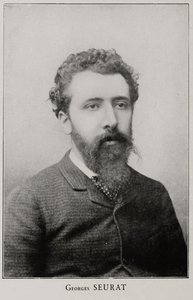 Georges Seurat
A Pioneer of Luminous Precision: The Life and Art of Georges Seurat Georges Pierre Seurat, born in Paris on December 2, 1859, emerged as a pivotal figure in the transition from Impressionism to modern art. His brief but intensely focused career revol...
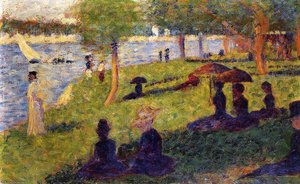
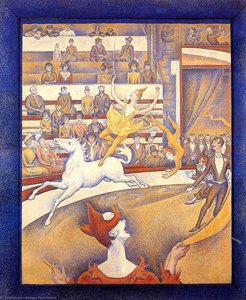
At the heart of this intellectual revolution stood Georges Pierre Seurat, a visionary whose brief but intensely focused career changed the trajectory of modern art forever. Seurat was much more than an artist; he was an architect of light. His approach was characterized by an unwavering pursuit of optical truth and a meticulous, almost mathematical, rigor. His most renowned masterpiece, A Sunday Afternoon on the Island of La Grande Jatte, serves as the definitive manifesto of this new era, introducing a measured technique that replaced the loose brushstrokes of his predecessors with a structured, monumental stillness.
Seurat’s work, such as the evocative Artist at Work or the serene The Poppy Field, reveals a profound meditation on the act of creation. In these works, we see a departure from traditional portraiture toward something far more conceptual. He used Pointillism to explore gesture, intention, and the internal world of the artist. Through his disciplined application of color, Seurat managed to capture the essence of modern urban life and landscapes with a precision that felt both timeless and revolutionary, proving that art could be as much a product of the mind as it is of the hand.
Paul Signac: Expanding the Vision of Light and Color
 Paul Signac
The Harmonious Vision of Paul Signac Paul Victor Jules Signac, born in Paris in 1863, emerged as a pivotal figure in the evolution of modern art, inextricably linked to the birth and development of Neo-Impressionism. Initially drawn to architecture, ...
While Seurat provided the foundational blueprint, Paul Signac emerged as the movement's great expander and its most dedicated communicator. Initially drawn to the structured world of architecture, Signac’s encounter with Monet’s work ignited a passion that would eventually lead him into a transformative partnership with Seurat in 1884. If Seurat was the architect, Signac was the explorer who took these scientific principles and applied them to a broader, more harmonious vision of existence.
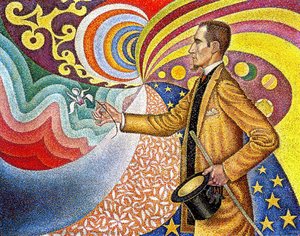
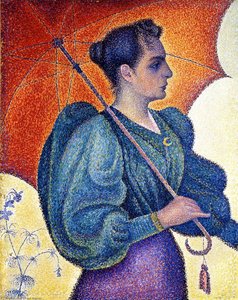
Signac’s brushwork often leaned toward larger, more mosaic-like patches of color, yet he remained steadfast in his commitment to the principles of color theory. He shared Seurat's fascination with Eugène Delacroix’s writings on complementary contrasts and the emotional impact of hue. Through works like Boulevard de Clichy, Signac demonstrated how the calculated application of points could capture the vibrant, rhythmic energy of urban life. His dedication to the science of perception helped ensure that Neo-Impressionism was not just a fleeting style, but a robust, enduring method of artistic expression.
The Lasting Legacy: How Pointillism Redefined Modern Visual Perception
--- title: Neo-Impressionist Color Theory (article) | Khan Academy url: https://www.khanacademy.org/humanities/becoming-modern/avant-garde-france/post-impressionism/a/neo-impressionist-color-theory hostname: khanacademy.org sitename: Khan Academy dat...
The legacy of Seurat and Signac extends far beyond the late 19th century. By introducing a systematic approach to painting, they paved the way for the many avant-garde movements that followed. Their ability to synthesize the ideal with the real, and science with temperament, provided a new vocabulary for artists seeking to explore the complexities of the modern world. They taught us that seeing is not a passive act, but an active, constructive process performed by the eye itself.
Today, we see the echoes of Pointillism in everything from digital imaging to modern graphic design. The way our screens use pixels to create seamless images is, in many ways, the technological descendant of Seurat’s tiny dots of pure color. For the art enthusiast, the magic of Pointillism remains a profound reminder of the beauty found in precision and the incredible power of light. It invites us to pause, to step back from the canvas, and to rediscover the vibrant, shimmering world that exists when we learn to truly see the colors around us.
For those looking to bring this luminous history into their own homes, ArtsDot.com offers exquisite, hand-painted reproductions of these masterpieces. Our artists meticulously recreate the texture and depth of Seurat and Signac's work on 100% cotton canvas, ensuring that the scientific magic of optical mixing is preserved in every brushstroke.