Defining Academic Realism: Establishing Authority and Prestige in Hospitality Design
 Mastering Perfection: A Definitive Guide to the Elegance and Precision of Academic Classicism
The Foundations of Order: Defining the Principles of Academic Classicism Mastering Perfection: A Definitive Guide to the Elegance and Precision of Academic Classicism The Foundations of Order: Defining the Principles of Academic Classicism To underst...
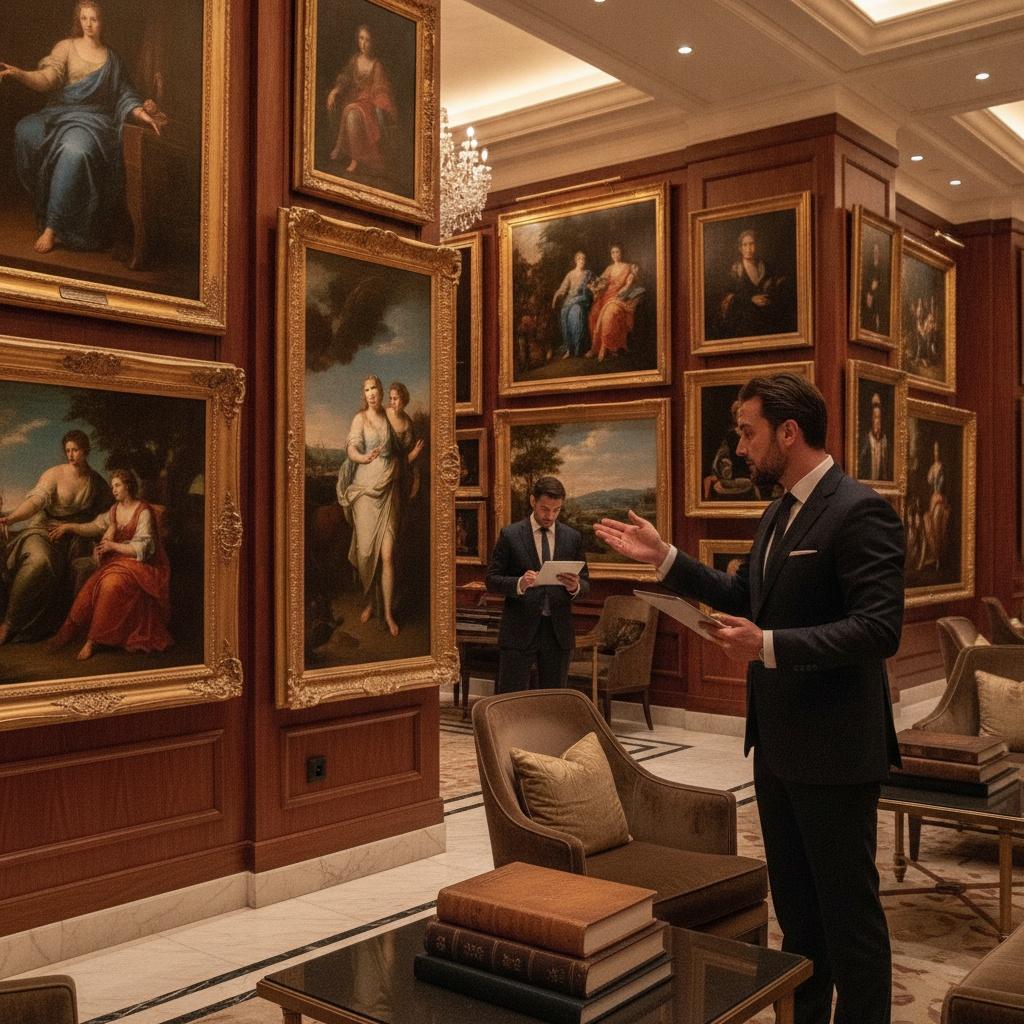
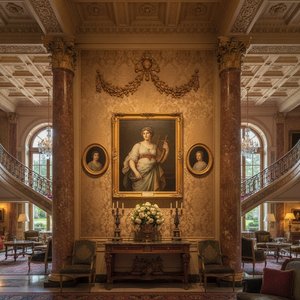
In the competitive landscape of luxury hospitality, the visual narrative of a lobby or executive suite serves as the silent ambassador of a brand’s heritage. To design for prestige is to understand the profound psychological impact of Academic Realism, an art movement born from the rigorous European academies of the nineteenth century. Unlike the fleeting energy of modern abstraction, Academic painting offers a sanctuary of profound logic and historical reverence. It is an intentional pursuit of ideal beauty through meticulous observation, where every brushstroke is a testament to technical mastery. When a designer selects works rooted in this tradition, they are not merely decorating a wall; they and their clients are anchoring the space in a sense of permanence and intellectual depth.
The allure of this style lies in its ability to transcend the ephemeral nature of daily life by focusing on the eternal principles of proportion, anatomy, and light. To gaze upon an academic portrait or a classical landscape is to enter a world where skill reigns supreme, reflecting not just appearances but the very soul of human experience. For the hotel designer, integrating these works provides an immediate sense of established authority. Whether it is the sculptural precision found in the neo-classical studies of Jean-Auguste-Dominique Ingres or the dignified, meticulously rendered portraits reminiscent of George Reid’s academic realism, these pieces communicate a commitment to excellence and a respect for the cultural pillars that define civilization.
The Procurement Advantage: Scalable Solutions for Large-Scale Hotel Installations
For the procurement professional, the challenge of art selection is often a tension between aesthetic ambition and operational reality. Managing large-scale installations across multiple properties requires more than just an eye for beauty; it demands a reliable supply chain capable of delivering consistent quality at volume. This is where the strategic sourcing of hand-painted reproductions becomes an indispensable tool in the designer's repertoire. The ability to access a vast library of classical masterpieces—ranging from maritime scenes to grand historical narratives—allows for a cohesive visual identity across entire hotel chains without the prohibitive costs and logistical nightmares associated with acquiring original museum-grade canvases.
Efficiency is the cornerstone of successful hospitality procurement. A professional approach focuses on repeatable, standard sizes that integrate seamlessly into architectural plans, alongside the ability to execute large-scale commissions that command attention in grand atriums. The modern procurement manager requires a partner who understands the necessity of bulk-order flows and the importance of clear, tax-compliant documentation for corporate accounting. By leveraging specialized catalogs that offer deep variety in subject matter—from the serene landscapes of the Old Masters to the structured elegance of academic portraiture—designers can achieve a high-end, curated look that remains scalable and budget-conscious, ensuring that every room in a multi-unit development meets the same rigorous standard of luxury.
Technical Specifications: Evaluating Hand-Painted Reproductions vs. Digital Prints
 Dongyang Co., Ltd.
The Enduring Legacy of Dongyang Co., Ltd.: Masters of Reproduction and Tradition Dongyang Co., Ltd. represents a fascinating, yet often overlooked, cornerstone in the world of art appreciation and accessibility. While not a single artist in the tradi...
A critical distinction for any designer must be made between the tactile depth of a handmade oil reproduction and the flat surface of a digital print. In high-end hospitality, where the sensory experience is paramount, the choice of medium can define the perceived value of the entire interior. A true handmade oil reproduction is an artisanal endeavor; it is 100% hand-painted on cotton canvas, characterized by visible brushstrokes and a rich, multi-layered impasto that captures light in ways a print never could. These works possess a deeper tonal range and a physical texture that invites close observation, offering the "soul" of the original masterpiece through the skilled hands of artists trained in the finest academic traditions.
Conversely, while high-quality Giclée prints offer an excellent, cost-effective solution for secondary spaces or transient corridors, they lack the sculptural dimension of oil. A print is a digital reproduction—an accurate but flat representation of color and form. For designers seeking to create focal points in primary suites or grand lobbies, the investment in hand-painted oils provides a level of prestige that distinguishes a luxury property from a standard commercial space. Furthermore, the longevity of these mediums differs significantly; while archival inks provide durability, the use of specific oils and damar varnishes in hand-painted works protects the surface against dust, moisture, and atmospheric pollutants, ensuring the artwork remains vibrant for generations of guests.
Customization and Logistics: Managing Volume Orders, Custom Sizing, and Global Delivery
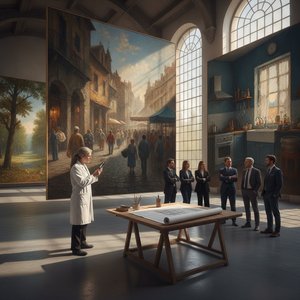
The complexity of international hotel design necessitates a logistics partner that functions with the precision of an industrial operation. Large-scale projects often involve bespoke requirements, such as "remixing" art history to match a specific brand palette or requesting "Period Shifts"—transforming contemporary imagery into the style of a seventeenth-century master. The ability to customize sizing is equally vital; whether a designer requires a standard medium canvas for a guest room or an oversized centerpiece for a ballroom, the workflow must remain seamless. This process begins with professional digital mockups, allowing designers to visualize the composition and color accuracy within their specific architectural context before the first drop of paint touches the canvas.
Reliability in global logistics is the true measure of a trade supplier. For the procurement manager, the certainty of tracking via DHL or FedEx, the provision of VAT-compliant invoices, and the assurance of reinforced, damage-proof packaging are non-negotiable. Managing a project across different time zones and borders requires an organized system where status updates are transparent and much like a project management tool. From the initial confirmation email to the final pre-shipment photo approval, every step must be documented and verifiable. This level of operational excellence ensures that even when ordering by the dozen for a global rollout, the designer can maintain strict control over the timeline, budget, and aesthetic integrity of the installation.
Strategic Integration: Using Multi-Panel Layouts and Murals for Architectural Impact
 kunstanstalt august gerber
The Enduring Echoes of Classical Forms: The Legacy of August Gerber and Kunstanstalt August Gerber’s name, though perhaps less familiar to the general public than those of Michelangelo or Canova, represents a crucial bridge between antiquity and mode...
To truly master the use of classical art in professional spaces, one must look beyond the single frame and consider the architectural canvas itself. The modern trend of multi-panel or "split" paintings offers a sophisticated way to cover expansive walls or grand staircases, breaking a singular historical image across three, four, or even five panels. This technique creates a contemporary, rhythmic flow that complements modern architectural lines while retaining the classical subject matter. It allows for a massive visual impact without the overwhelming weight of a single, monolithic frame, providing a cohesive and integrated look that feels custom-built for the space.
For the most ambitious projects, the integration of large-format murals and ceiling frescoes can transform a standard room into a historical landmark. These works, painted on massive canvas rolls, allow designers to recreate the grandeur of Renaissance ceilings or classical halls in any modern structure. Much like high-end wallpaper, these installations provide a way to wrap a space in history, creating an immersive environment that captivates guests from the moment they enter. By strategically utilizing multi-panel layouts, custom wraps, and large-scale frescoes, the designer moves beyond mere decoration, instead using art as a fundamental architectural element that defines the very essence of the hospitality experience.