The Genesis of Chaos: From SAMO© Graffiti to Global Iconography
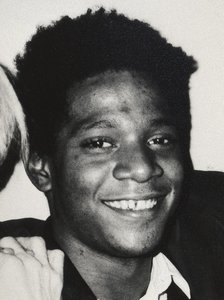 jean michel basquiat
A Brooklyn Beginning and the Rise of SAMO Jean-Michel Basquiat erupted onto the 1980s art scene as a force of raw energy and intellectual depth, an impact that continues to resonate profoundly today. Born on December 22, 1960, in Brooklyn, New York, ...
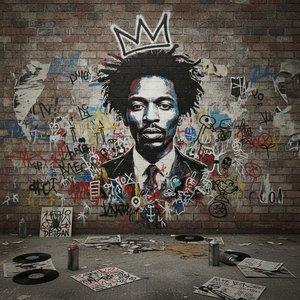
Emerging from the gritty, electric pulse of 1970s New York, Jean-Michel Basquiat did not seek permission from the hallowed halls of academia; instead, he found his medium in the urban sprawl. Before he became a titan of the international art market, his voice was etched into the very skin of Manhattan. Alongside Al Diaz, he operated under the enigmatic pseudonym SAMO©, a collaborative project that functioned less as traditional graffiti and as a poetic intervention. These were not mere tags, but cryptic, thought-provoking epigrams scrawled across the Lower East Side, designed to challenge societal norms and question established power structures.
This early period was a crucible of creativity, where the energies of disco, punk, and the nascent hip-hop culture converged into a single, rhythmic heartbeat. The streets provided a raw, unfiltered classroom where language, symbol, and social commentary could be tested in real-time. As the boundaries between high culture and street rebellion began to dissolve, Basquiat transitioned from the ephemeral nature of the wall to the permanence of the canvas, carrying with him the grit, the noise, and the unvarnished truth of a city in transition.
Visual Vocabulary: Decoding the Crowns, Text, and Anatomical Rawness
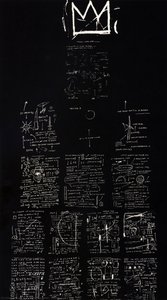
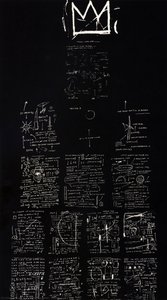 Tuxedo
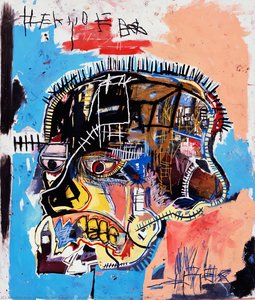
Jean-Michel Basquiat’s “Tuxedo”: A Chronicle of Urban Noise “Tuxedo,” painted in 1982, is more than just an image; it's a visceral eruption of raw energy and fragmented thought – a quintessential work by the tragically short-lived genius that was Jea...
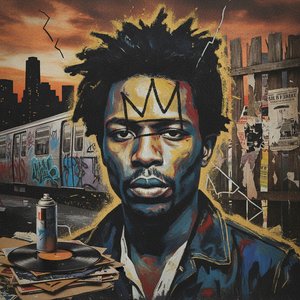
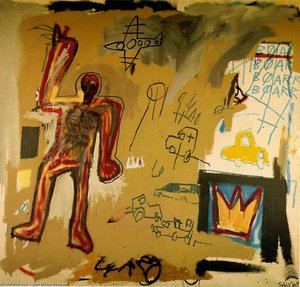
To look at a Basquiat is to enter a world of vibrant chaos. His visual language is a dense, layered symphony of symbols that demand attention. The recurring motif of the crown dominates his oeuvre, instantly evoking notions of royalty, power, and the reclamation of dignity within the Black experience. Yet, beneath this regal imagery lies a much more visceral layer: the anatomical. Influenced by a childhood fascination with Gray’s Anatomy, Basquiat integrated skeletal structures and fragmented human forms into his work, creating a haunting dialogue between life and mortality.
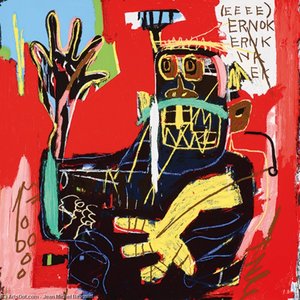
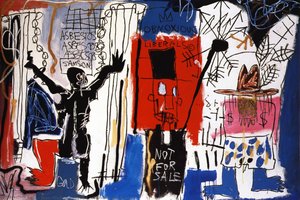
In masterpieces like Untitled (ernok), we see a captivating exploration of urban energy through bold primary colors—red, blue, yellow, and black—used in high contrast to create an arresting effect. His work often feels like a chronicle of urban noise; take, for instance, the screenprint Tuxedo, which confronts the viewer with a chaotic symphony of text fragments and iconic symbols. This isn't just visual noise; it is a deliberate attempt to capture the overwhelming influx of information that characterizes modern existence. Every line, every scratch, and every cryptic word serves as a piece of a larger, fragmented puzzle of identity.
The Neo-Expressionist Riot: Breaking the Rules of Minimalism
Neo-expressionism is a style of late modernist or early-postmodern painting and sculpture that emerged in the late 1970s. Neo-expressionists were sometimes called Transavantgarde, Junge Wilde or Neue Wilden ('The new wild ones'; 'New Fauves' would be...
By the late 1970s and early 1980s, the art world was gripped by the cool, detached restraint of Minimalism and Conceptual art. Basquiat arrived like a lightning strike, spearheading the Neo-Expressionism movement as a direct rebellion against this formal coldness. This style embraced intense subjectivity and the rough handling of materials, returning to the power of recognizable—albeit distorted—objects and the human body.
Basquiat’s approach was characterized by an aggressive application of energy that rejected formal restraint. He utilized a technique that felt immediate and unsettling, much like the frenetic pulse of 1980s New York City itself. His paintings were not mere depictions; they were visceral eruptions of thought. By marrying text and image, abstraction and figuration, he created a new way to process the dichotomies of wealth versus poverty and integration versus segregation. This was art that refused to be quiet, refusing to be polished, and refusing to be ignored.
Urban Pulse & Pop Legacy: The Enduring Impact of Street Rebellion
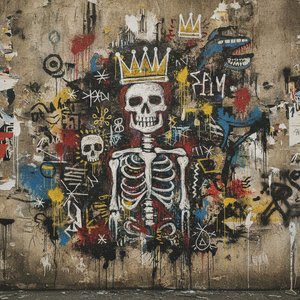 Basquiat and Raw Pop: The High-Energy Rebellion of Neo-Expressionism and the Legacy of Urban Street Art
The Genesis of Chaos: From SAMO© to the Streets of New York Basquiat & Raw Pop: The Unfiltered Energy of Neo-Expressionism and the Legacy of Urban Rebellion The Genesis of Chaos: From SAMO© to the Streets of New York Jean-Michel Basquiat: Deconstruct...
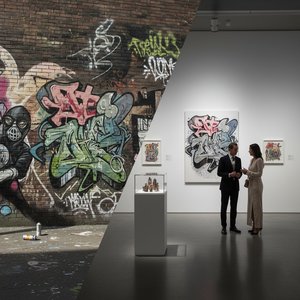
The legacy of Basquiat’s rebellion extends far beyond the 1980s, fueling a global phenomenon that has transformed the very definition of "fine art." Today, we see his DNA in everything from the monumental murals of São Paulo to the dynamic street art foundations in London. The distinction between the "street" and the "gallery" has been permanently blurred. Street art has evolved from defiant graffiti into a potent, significant artistic force that engages directly with the communities it serves. <::br> This movement represents a profound shift in the urban narrative, where once-stigmatized marks are now celebrated as a heritage of creativity and social commentary. The energy of Basquiat—the raw, high-impact, and unapologetic nature of his work—continues to resonate with a generation that values authenticity over academic tradition. It is an art form that lives and breathes within the fabric of the city, much like the rhythmic, chaotic heartbeat of the streets that first gave it life.
Remixing the Legend: Bringing High-Impact Urban Energy into Your Modern Space
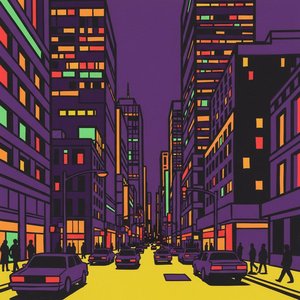 Nocturnal Geometry: A Monumental Vision of Midnight Urban Symmetry and Light
Experience the aggressive energy of Caroline Pelletier’s Nocturnal Geometry, a one-of-one masterwork of urban symmetry and vibrant neon light that offers a rare opportunity to own a unique ArtsDot Studio creation.
At ArtsDot.com, we believe that art shouldn't be confined to museum archives; it belongs on your walls, driving the energy of your contemporary space. We specialize in the bold, the graphic, and the high-impact. Our collection is hard-filtered to exclude the academic and the classical, focusing exclusively on the vivid, the abstract, and the street-inspired works that define modern culture.
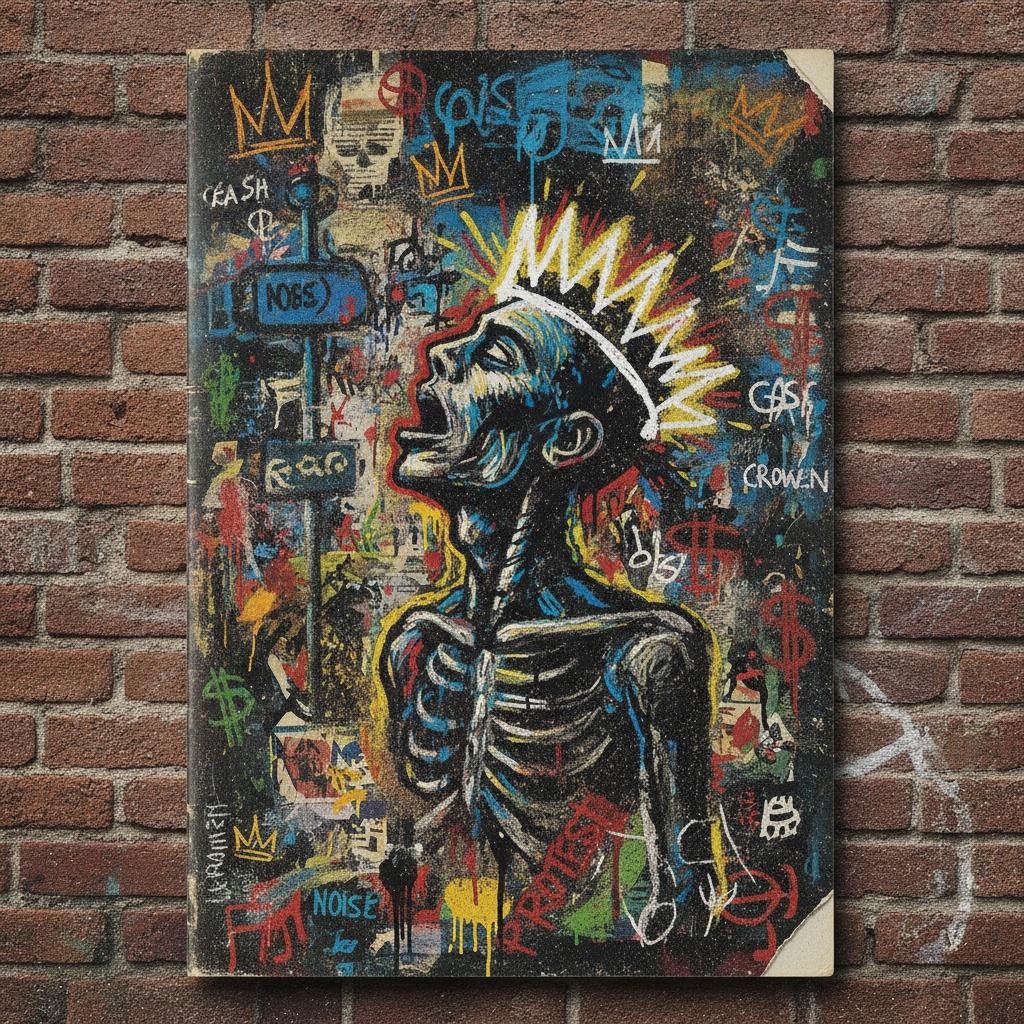
We don't just sell prints; we offer the ability to remix art history. Our artists create 100% hand-painted oil reproductions on premium cotton canvas—no computer printing here. You can experience the true depth of the Neo-Expressionist movement through visible brushstrokes and a rich, tactile tonal range that a mere poster could never replicate. Whether you want to transform a personal photo into a Basquiat-style masterpiece using our AI Masterpiece tool or commission a custom portrait in an impasto style, we bring the rebellion to life.
Elevate your interior with pieces that command attention. From multi-panel group sets for wide architectural walls to bespoke custom commissions, ArtsDot.com is your destination for art that hits as hard as the streets of New York. Explore our collection and find the pulse of the city for your home today.