



Early Influences & European Foundations: Stella's Artistic Genesis
American modernism, much like the modernism movement in general, is a trend of philosophical thought arising from the widespread changes in culture and society in the age of modernity. American modernism is an artistic and cultural movement in the Un...
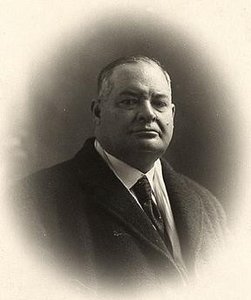
Joseph Stella, a name synonymous with the burgeoning energy of American Modernism, didn’t emerge from a vacuum. His artistic trajectory was forged through a complex interplay of familial expectation, rigorous academic training, and an insatiable thirst for innovation nurtured by his experiences both in America and abroad. Born Giuseppe Michele Stella in 1877 in Muro Lucano, Italy, the young artist initially followed a path dictated by family tradition – medicine. However, New York City, to which he immigrated in 1896, proved to be a crucible for artistic awakening. Abandoning his medical studies, Stella enrolled at the Art Students League and later studied under William Merritt Chase, absorbing the fundamentals of draftsmanship and realism. Yet, these early works, depicting gritty urban scenes, hinted at a restless spirit yearning for something beyond mere representation.
The pivotal moment arrived with Stella’s return to Europe in 1909. Italy, while deeply resonant with his heritage, felt constrained by the weight of its artistic past. It was Paris that truly ignited his modernist sensibilities. Immersing himself in the avant-garde movements – Fauvism, Cubism, and most significantly, Futurism – Stella began to dismantle traditional forms and embrace a new visual language predicated on dynamism, speed, and technology. This exposure wasn’t simply about adopting stylistic tropes; it was a fundamental shift in his perception of reality, a recognition that the world was accelerating at an unprecedented pace and art needed to reflect this transformation. His early European works demonstrate a growing fascination with fragmented forms and bold color palettes, foreshadowing the iconic style he would soon develop.
The Brooklyn Bridge Series: An Icon of American Modernism
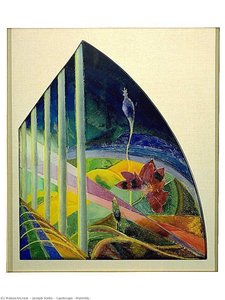
 Untitled (436)
Experience Joseph Stella’s Untitled (436). A striking black & white composition featuring reaching poles against a vast blue sky. Capture the dynamism of early modernism – order and chaos in a timeless image.
Upon his return to New York in 1913, Stella embarked on what would become arguably his most celebrated undertaking: a series of paintings dedicated to the Brooklyn Bridge. More than just architectural studies, these works are powerful allegories for the promise and potential of modern America. The bridge itself, a marvel of engineering and symbol of progress, became a conduit for expressing the nation’s burgeoning industrial power and its relentless forward momentum. Stella didn't merely *depict* the bridge; he sought to capture its very essence – the interplay of light and shadow on steel cables, the rhythmic pulse of traffic, the sheer scale of human ambition.
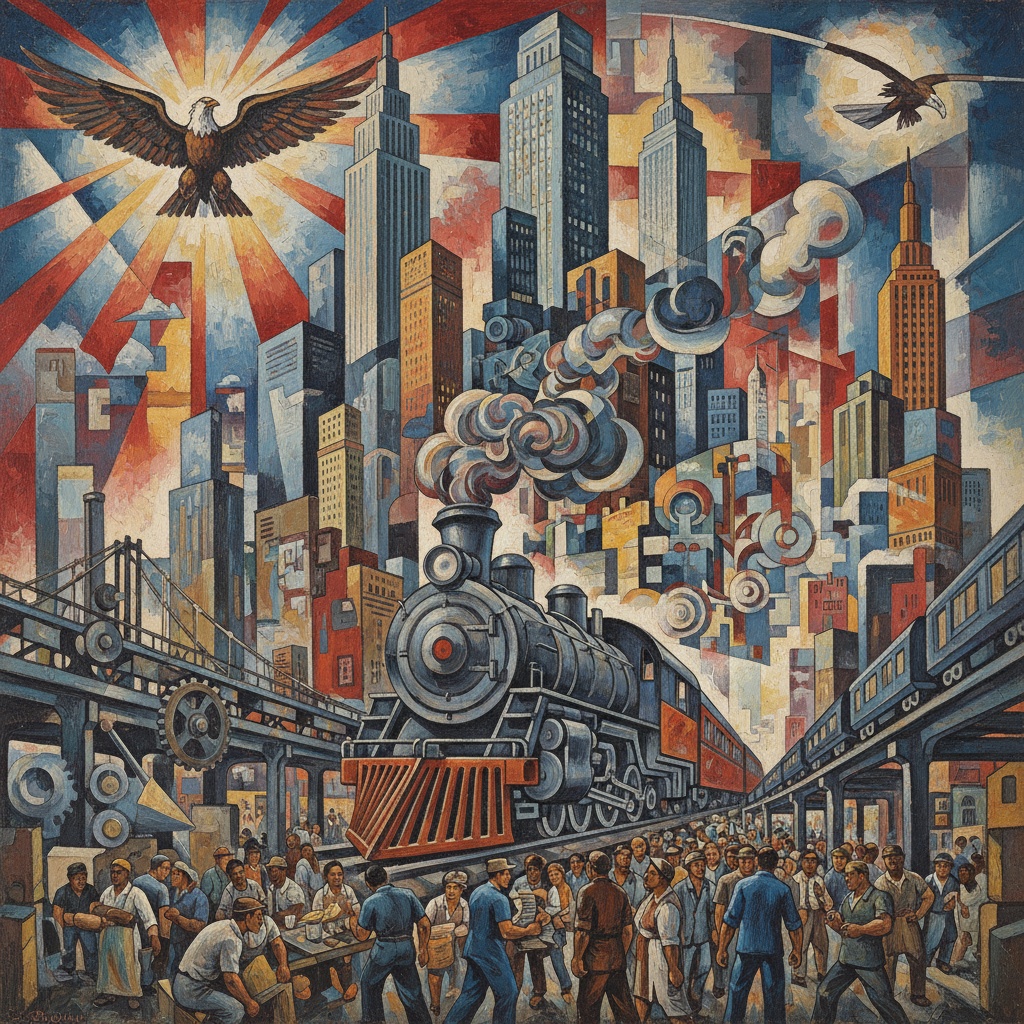
The series is characterized by a unique blend of Futurist energy and Precisionist clarity. While influenced by the Italian movement’s celebration of speed and technology, Stella infused his work with a distinctly American sensibility – a focus on geometric form, meticulous detail, and a sense of awe at the grandeur of industrial structures. Paintings like “Brooklyn Bridge” (1918) showcase this perfectly: fractured planes of light create a dazzling effect, conveying both the solidity of the bridge’s construction and the dynamism of its environment. The use of color is equally striking, with vibrant hues emphasizing the interplay between man-made structure and natural elements.
Coney Island & the Machine Age: Capturing Urban Dynamism
If the Brooklyn Bridge represented the aspirational heights of American progress, Coney Island embodied its exuberant, often chaotic energy. Stella’s fascination with this iconic amusement park stemmed from a desire to capture the raw vitality of modern urban life – the surging crowds, the dazzling lights, and the relentless pursuit of pleasure. His “Battle of Lights, Coney Island, Mardi Gras” (1913-14) is a masterpiece of fragmented form and vibrant color, attempting to convey the overwhelming sensory experience of this bustling entertainment hub.
The painting isn’t a literal depiction of Coney Island; rather, it's an attempt to translate its *feeling* onto canvas. Fractured planes of light represent the flashing signs and whirling rides, while bold colors evoke the excitement and energy of the crowds. Stella employed techniques borrowed from Futurism – dynamic lines, overlapping forms, and a sense of constant motion – but he also infused his work with a distinctly American sensibility. He wasn’t simply interested in depicting speed; he was interested in capturing the *experience* of modernity, the thrill and chaos of urban life.
Futurism, Precisionism, and Stella’s Unique Synthesis
Positioning Joseph Stella within the broader context of early 20th-century art movements is a nuanced undertaking. While deeply influenced by Futurism, particularly its emphasis on dynamism and technology, he never fully embraced the Italian movement's more radical political ideologies. Similarly, his work shares affinities with Precisionism – a distinctly American style characterized by geometric form, meticulous detail, and a focus on industrial subjects – but Stella’s paintings possess a greater sense of emotional intensity and expressive freedom.
Stella’s unique contribution lies in his ability to synthesize these disparate influences into a cohesive artistic vision. He wasn't simply copying Futurist or Precisionist techniques; he was adapting them to express his own distinct perspective on the American experience. His paintings are characterized by a dynamic interplay between abstraction and representation, order and chaos, precision and emotion. This synthesis is evident in works like “Voice of the City” (1922), which combines geometric forms with vibrant colors and a sense of overwhelming energy.
Beyond Industry: Exploring Stella’s Diverse Subject Matter & Later Works
While often remembered for his depictions of industry and urban life, Joseph Stella's artistic interests extended far beyond these themes. Throughout his career, he consistently returned to the natural world, producing a remarkable body of work dedicated to flowers, plants, and birds. These paintings, often overlooked in favor of his more iconic industrial scenes, reveal a surprising depth of sensitivity and spiritual connection.
Stella saw nature as a source of renewal and inspiration, a refuge from the chaos and intensity of modern city life. His floral studies are characterized by lush colors, delicate brushwork, and a sense of ethereal beauty. These works demonstrate his ability to adapt his modernist techniques to different subject matter, infusing even seemingly traditional subjects with a unique sense of dynamism and expressive freedom. Later in his career, Stella also explored religious themes, creating altarpiece-like compositions that reflect his deep spiritual beliefs.
Joseph Stella's Legacy: Impact and Enduring Relevance
Joseph Stella’s impact on American art is undeniable. He played a pivotal role in introducing European Modernism to the United States and helped establish a distinctly American artistic voice. His paintings, characterized by their dynamic energy, vibrant colors, and unique synthesis of Futurist and Precisionist techniques, continue to captivate audiences today.
His work remains relevant not only for its aesthetic qualities but also for its insightful commentary on the complexities of modern life. Stella’s depictions of industry and urban dynamism offer a powerful glimpse into the transformative period of American history, capturing both the promise and the anxieties of a nation undergoing rapid change. For art collectors seeking works that embody innovation, energy, and a uniquely American sensibility, Joseph Stella represents an exceptional investment – a testament to the enduring power of artistic vision.