The Alchemy of Layers: Understanding the Composition of Old Masterworks
 Mastering the Brush: The Timeless Secrets of Old Master Oil Painting Techniques
The Alchemy of Pigment: Understanding the Chemistry and Longevity of Oil Media To understand the enduring brilliance of a classical masterpiece, one must first look beneath the surface at the very soul of the medium: the chemistry of pigment and oil....
To gaze upon a classical masterpiece is to witness more than mere pigment on canvas; it is to observe a profound chemical marriage, an ancient alchemy that has defied the centuries. The enduring brilliance of an
Old Master—those pre-eminent painters of Europe working before the dawn of the nineteenth century—relies heavily on the meticulous selection of stable minerals and drying oils. For centuries, the history of art has been inextricably linked to the laboratory, as artists sought the perfect balance between earthy ochres, deep ultramarines derived from precious lapis lazuli, and rich cadmiums. This delicate equilibrium was essential not only for achieving a specific hue but for ensuring
lightfastness and chemical stability against the ravages of time.
The soul of this medium lies in its molecular transformation. Unlike water-based media that dry through simple evaporation, oil paintings undergo a slow, complex process of oxidation. As the artist applies layers of linseed or poppy oil, they initiate a biological and chemical metamorphosis where the medium absorbs oxygen to form a durable, flexible film. This structural integrity is further bolstered by the application of flexible gesso to prevent cracking and a final protective coat of
Damar varnish, which shields the surface from the invisible threats of dust, moisture, and atmospheric pollutants. When we admire the luminous depth of a Renaissance portrait, we are admiring a carefully engineered architecture of light and chemistry.
Pentimento: The Ghostly Traces of Artistic Regret and Revision
 Old Master
In art history, "Old Master" (or "old master") refers to any painter of skill who worked in Europe before about 1800, or a painting by such an artist. An "old master print" is an original print (for example an engraving, woodcut, or etching) made by ...
There exists a term in the lexicon of art history that carries the weight of a tragic Italian romance:
pentimento. Derived from the Italian word
pentirsi, meaning "to repent" or "to regret," a pentimento is far more than a mere technical error; it is a window into the artist's psyche. It occurs when a painter, perhaps dissatisfied with the placement of a hand or the tilt of a head, decides to obscure an earlier idea beneath a new layer of paint. Over centuries, as these upper layers thin or become slightly translucent due to chemical shifts, the "ghost" of that original thought begins to peek through the surface, offering us a rare glimpse into the artist's moment of doubt and subsequent resolution.
These hidden revisions transform a static image into a living narrative of creative struggle. We see it in the works of giants like
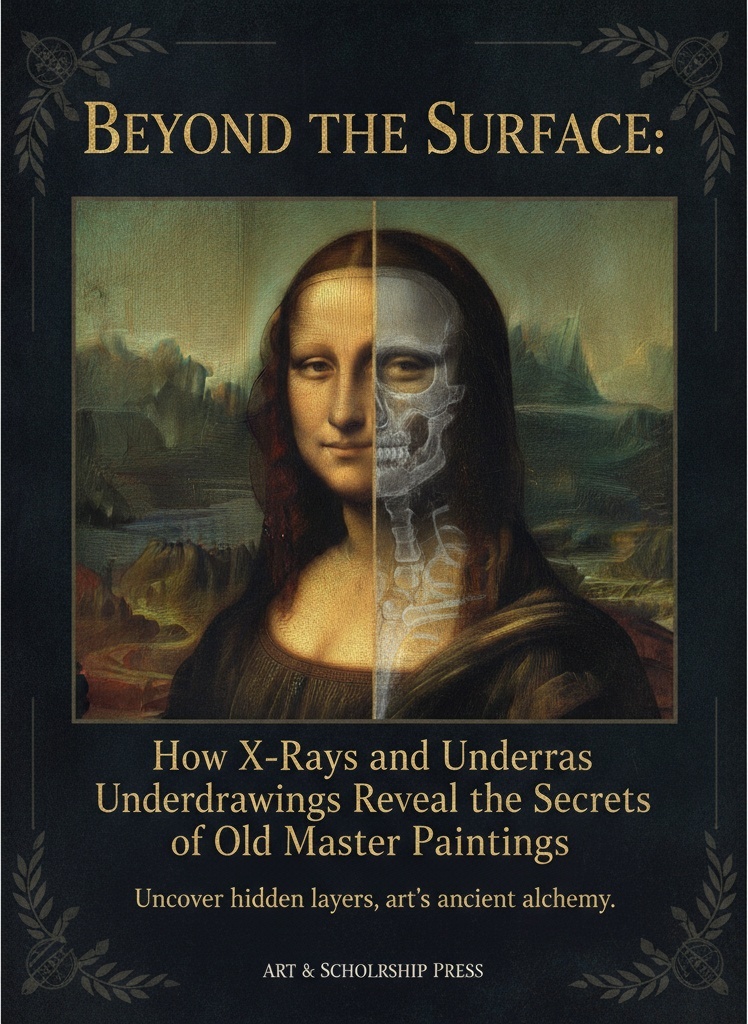
Leonardo da Vinci, where infrared scans of the
Mona Lisa have revealed that her enigmatic smile and the positioning of her hands were subject to multiple adjustments. To encounter a pentimento is to experience a form of temporal travel, where the artist's initial hesitation becomes visible to the modern eye. These traces remind us that even the most celebrated masters were not infallible; they were thinkers caught in the act of materializing dreams, constantly refining their vision through layers of beautiful, intentional revision.
Beyond Visible Light: How X-Ray Radiography Unmasks Hidden Landscapes
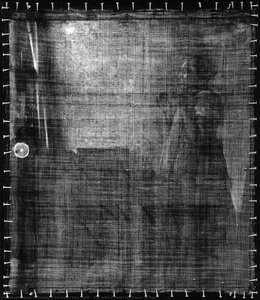 Girl with a Pearl Necklace (X-Ray)
Discover the hidden layers of Vermeer's 'Girl with a Pearl Necklace' through an X-ray! This unique image reveals brushstrokes and canvas structure, offering a scientific glimpse into a masterpiece.
While our eyes are bound by the visible spectrum, modern science has granted us a new way to peer into the shadows of history.
X-ray radiography acts as a profound diagnostic tool, allowing conservators to penetrate the opaque layers of oil paint to reveal what lies beneath. This technology does not merely show us what is hidden; it reveals the structural skeleton of the artwork itself. Through X-ray imaging, we can detect the presence of heavy metal pigments, such as lead white, which often form the foundation of a composition.
The revelations provided by X-rays are often startling. In some instances, an entire forgotten world emerges from the darkness. For example, X-ray analysis of certain works by
Pablo Picasso has revealed hidden landscapes buried beneath his more famous Blue Period compositions. Similarly, recent discoveries have shown that many artists frequently reused supports, painting new subjects over older, abandoned works. These scans can reveal a landscape painting hidden under a portrait when the image is rotated, or even an upside-down figure of a mustachioed man lurking beneath a Titian masterpiece. Such discoveries challenge our understanding of the artist's process, proving that every canvas holds secrets far deeper than the surface suggests.
Infrared Reflectography: Peering Through the Glaze to the Artist's Initial Sketch
 Infrared
Infrared (IR; sometimes called infrared light) is electromagnetic radiation (EMR) with wavelengths longer than that of visible light but shorter than microwaves. The infrared spectral band begins with the waves that are just longer than those of red ...
If X-rays reveal the heavy, metallic foundations of a painting,
Infrared (IR) reflectography offers a more delicate, intimate view. Infrared radiation, with wavelengths longer than visible red light, possesses the unique ability to pass through many of the translucent glazes used by Old Masters. This technique allows researchers to see through the "breath" of the painting—the thin, transparent layers of oil that provide depth and luminosity—to reach the
underdrawing.
This is where we find the artist's true first intentions: the charcoal or graphite sketches that laid the groundwork for the final masterpiece. Through infrared imaging, we can trace the fluid movement of a brush before it ever touched the pigment, observing how an artist mapped out proportions and light. This method is particularly effective in studying the technique of
glazing, where multiple translucent layers are applied over a dried underpainting to allow light to strike the opaque base and reflect back to the viewer. By peering through these glazes, we witness the transition from a simple line on a canvas to the complex, multi-dimensional reality of a finished work of art.
The Modern Eye: Advanced Spectroscopic Imaging and the Future of Art Conservation
The frontier of art history is no longer found solely in dusty archives, but in the high-tech laboratories of
spectroscopic imaging. Today, researchers utilize multi-modal scanners that combine various light frequencies to create a comprehensive map of an artwork's history. Technologies such as Macro X-ray Fluorescence (MA-XRF) and Hyperspectral Infrared Reflectography (HSIR) allow us to analyze the elemental composition of every millimeter of a painting. This level of detail enables us to distinguish between different types of pigments, identify where an artist might have used a more expensive material like lapis lazuli, and even detect the subtle traces of restoration work performed centuries ago.
This scientific evolution is vital for the continued preservation of our global heritage. As we develop more sophisticated ways to "see" the invisible, we are better equipped to protect these treasures from environmental decay. The ability to non-invasively examine a painting without ever touching its surface ensures that the physical integrity of the masterpiece remains uncompromised. We are entering an era where the intersection of technology and art history allows us to reconstruct not just the final image, but the entire evolutionary path of human creativity, ensuring that the brilliance of the past remains vibrant for generations to come.
Preserving the Vision: The Science of Pigment Stability and Long-term Preservation
The ultimate goal of both the artist and the conservator is the same: the preservation of a vision against the relentless march of time. As we have explored, the longevity of an oil painting is a matter of meticulous science. From the choice of
safflower oil for lighter tones to prevent the dreaded yellowing effect, to the use of archival-quality pigments, every decision made during the creation process impacts how a work will age. The stability of the molecular structure within the oil film determines whether a painting will remain a window into the past or become a clouded relic of faded colors.
For collectors and enthusiasts, understanding these principles is essential for the stewardship of fine art. Protecting an investment in a masterpiece requires knowledge of environmental controls—avoiding direct sunlight that can degrade pigments and maintaining stable humidity to prevent the expansion and contraction of the canvas. Whether one is admiring an original Old Master or a high-quality
hand-painted reproduction, the principles of preservation remain paramount. By respecting the chemistry of the medium and the artistry of the brushstroke, we ensure that the profound beauty discovered beneath the surface continues to inspire awe and wonder in the hearts of all who behold it.
***
At
ArtsDot.com, we share this passion for the enduring power of the masters. Our mission is to bring the majesty of history's most iconic works into your home through museum-quality, hand-painted reproductions. Every piece in our collection—from the enigmatic smile of the
Mona Lisa to the dramatic light of a Rembrandt—is meticulously recreated on 100% cotton canvas by artists trained in the finest academic traditions. We specialize in capturing the tactile depth of real oil paint, including visible brushstrokes and the option for an aged
craquelure finish, ensuring that your piece is not merely a print, but a soulful tribute to the masters. Explore our curated library of canonical masterpieces and bring the profound secrets of art history to your walls.