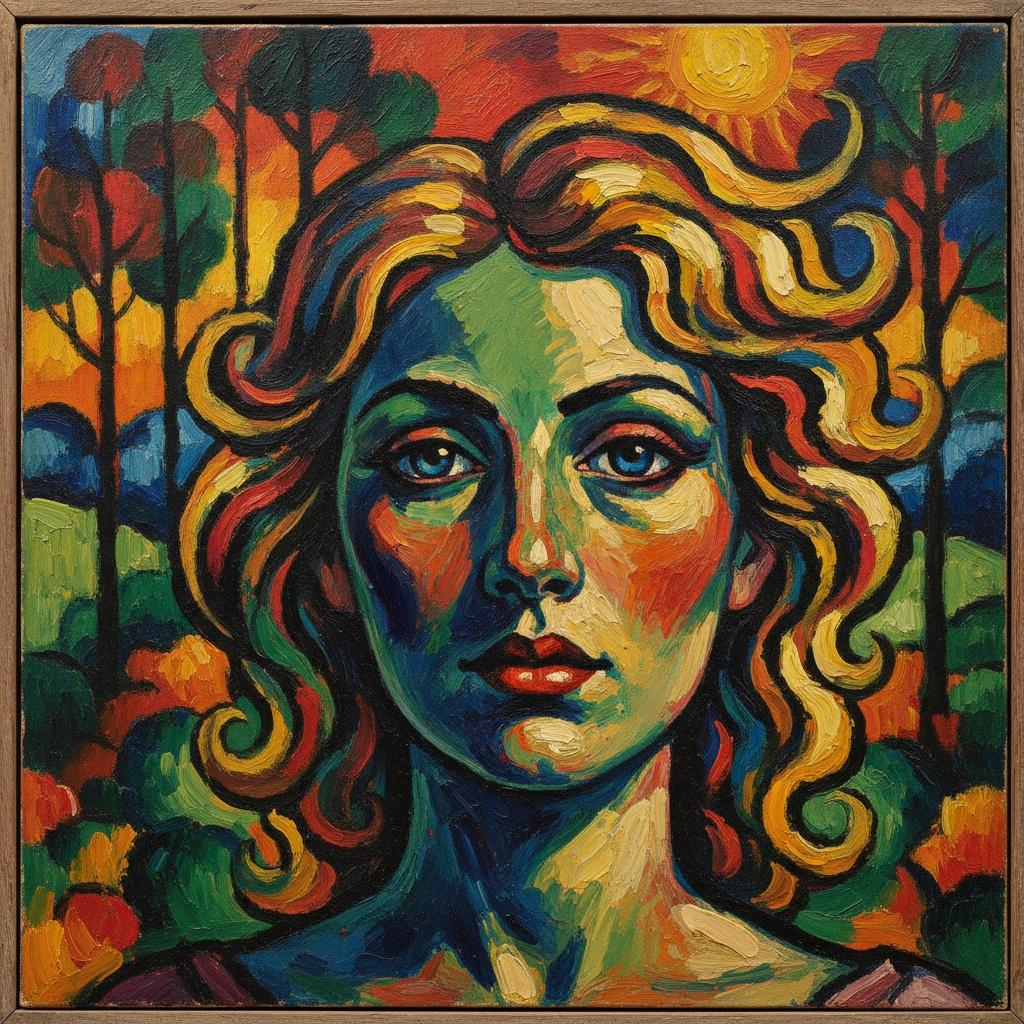
The Genesis of Rebellion: From Academic Tradition to the 'Wild Beasts'
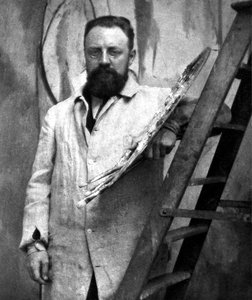 henri émile benoît matisse
Early Life and Artistic Beginnings Born: December 31, 1869, Le Cateau-Cambrésis, France Died: November 3, 1954, Nice, France Matisse's early life was marked by a period of illness in his youth which led him to pursue art as a hobby. He initially stud...
To understand the seismic shift that occurred at the dawn of the twentieth century, one must first envision the rigid, disciplined world of the late nineteenth-century French Academy. For decades, the pinnacle of artistic achievement was defined by mimesis—the faithful, almost scientific replication of reality through subtle gradations of light and shadow. Artists were expected to adhere to strict anatomical accuracy and a muted, naturalistic palette that respected the boundaries of the visible world. However, beneath this veneer of classical order, a restless energy was brewing. The arrival of modernism was not merely a change in style, but a fundamental rebellion against these very constraints.
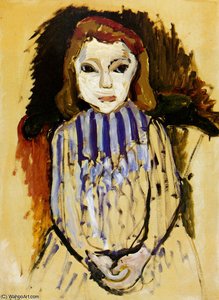
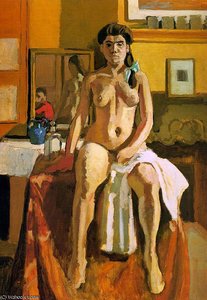
The story of this revolution is deeply personal, embodied in the life of Henri Matisse. Born in 1869, Matisse was not initially destined for the bohemian life of a painter; he was a student of law, a man of logic and legal briefs. It was only through a period of profound physical convalescence, following an attack of appendicitis in 1889, that the transformative power of art found him. Gifted a set of paints by his mother, Matisse discovered a "kind of paradise" within the pigment. As he moved away from the conservative realism of his early training, influenced by the expressive shadows of Gustave Moreau and the light-drenched canvases of Manet, he began to sense that color possessed a voice far more potent than mere description.
This burgeoning desire to move beyond the literal paved the way for a movement that would shock the Parisian establishment. The artists who emerged were not interested in capturing the fleeting moment as the Impressionists had; they sought something deeper, something more primal. They wanted to strip away the academic veneer to reveal the raw, pulsating energy of existence. This period of experimentation would soon earn them a derisive nickname that they would ultimately wear as a badge of honor: les Fauves, or "the wild beasts."
The Collioure Experiments: Matisse, Derain, and the Liberation of Color
--- title: Vertigo of Color: Matisse, Derain, and the Origins of Fauvism - The Metropolitan Museum of Art url: https://www.metmuseum.org/exhibitions/vertigo-of-color/visiting-guide hostname: metmuseum.org description: The Met presents over 5,000 year...
In the early summer of 1905, the small, sun-drenched fishing village of Collioure on the French Mediterranean became the crucible for a new era of painting. It was here that Henri Matisse invited his young friend, André Derain, to join him in a shared pursuit of light and color. The landscape of the Mediterranean, with its intense sunlight and vibrant flora, provided the perfect stage for their radical departure from convention. In these freewheeling weeks, the duo engaged in exercises that would forever alter the trajectory of Western art.
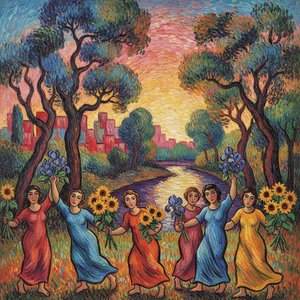
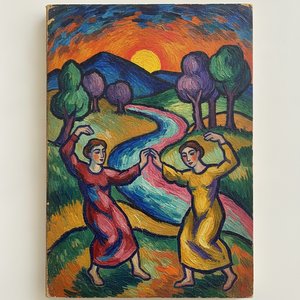
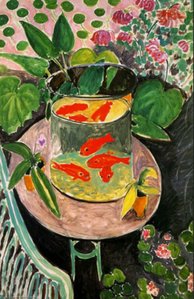
The experiments conducted in Collioure were characterized by a profound redefinition of the natural world. Rather than relying on the perceptual hues found in nature—the soft greens of leaves or the predictable blues of the sea—Matisse and Derain began to rely on their own internal sensations. They processed color through experience rather than observation. In their hands, a forest of cork oak trees could be rendered in startling pinks and lavende; the port of Collioure could be "heated" by primary colors applied directly from the tube. This was not an attempt to misrepresent reality, but to intensify it, using color as a tool for emotional resonance.
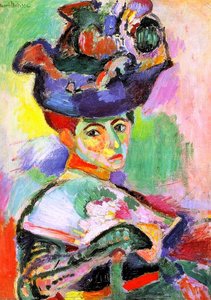
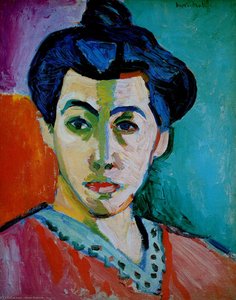
When these astonishing works were eventually unveiled at the Salon d’Automne in Paris, the reaction was one of near-scandalized disbelief. The critic Louis Vauxcelles, struck by the fierce brushwork and the jarring, unblended colors, famously likened the artists to wild beasts. Yet, what the critics perceived as a lack of control was actually a highly sophisticated liberation. By breaking the bond between color and its descriptive duty, Matisse and his contemporaries had unlocked a new dimension of artistic expression, allowing the canvas to become a space of pure, unadulterated sensation.
Beyond Representation: The Emotional Language of Non-Naturalistic Hues
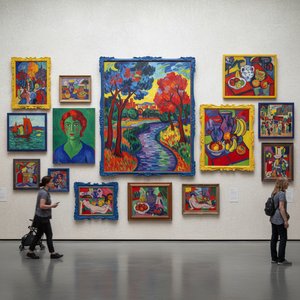 Fauvism's Bold Vision: 10 Masterpieces That Revolutionized Modern Art |
Introduction Imagine a world saturated with color—not the subtle hues of Impressionism, but bold, unrestrained shades applied with an almost primal energy. This is the realm of Fauvism, a short-lived yet profoundly influential art movement that explo...
The true essence of Fauvism lies in its rejection of the literal. For the Fauve painter, color was no longer a servant to form; it was an independent protagonist. This movement introduced a language where a vibrant red might signify passion or heat, and a deep ultramarine could evoke a sense of profound serenity or weight, regardless of whether such colors existed in the subject being painted. This non-naturalistic approach allowed for a level of subjectivity previously unseen in modern art.
This shift from perceptual painting to expressive painting meant that the artist's internal vision became the ultimate authority. The goal was to capture not just what was seen, but how it was felt. This approach resonated with the broader currents of the early twentieth century, reflecting a world undergoing rapid change through industrialization and urbanization. By simplifying forms and saturating them with intense hues, the Fauves offered a sanctuary for the eye—a way to experience the sheer pleasure of visual sensation in an increasingly complex age.
Mastering Form and Texture: The Evolution from Fauvism to Gouache Découpée
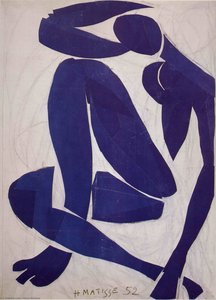 Nu bleu IV Gouache découpée Nice , musée Matisse
A Symphony of Blue: Unveiling Henri Matisse’s “Nu bleu IV” Henri Matisse's "Nu bleu IV Gouache découpée Nice, musée Matisse" isn’t merely a painting; it’s an immersion into the heart of Fauvism – a vibrant rebellion against academic tradition. Comple...
While many associate Fauvism with its initial burst of wild, uninhibited color, the movement’s legacy is also one of incredible technical evolution. As Matisse matured, his style moved away from the frantic brushwork of his youth toward a more rigorous and decorative harmony. He began to explore the power of flattened planes and intricate patterns, seeking a balance between the intensity of color and the stability of composition. This transition demonstrated that the "wild beast" was also a master of classical structure.
One of the most profound technical innovations to emerge from this evolution was the gouache découpée technique, or paper cut-outs. Developed by Matisse in his later years when ill health limited his ability to paint on large easels, this method involved painting directly onto paper and then meticulously cutting out shapes to be arranged into complex compositions. This process allowed him to manipulate both color and form with unprecedented precision. The resulting works possess a unique texture—a layered, almost sculptural effect where the edges of the cut shapes create a dynamic interplay between figure and space.
This technique represented the ultimate distillation of his Fauvist principles. In these cut-outs, the distinction between drawing and painting dissolves. The forms are simplified to their very essence, yet they retain an incredible vitality. Whether through the thick, impasto strokes of his early oils or the precise, rhythmic placement of paper shapes, Matisse’s career was a lifelong pursuit of artistic liberation—a journey from the constraints of reality toward a pure, distilled expression of life itself.
The Enduring Legacy: How Fauvism Redefined the Modern Visual Experience
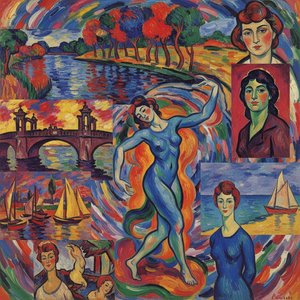 Fauvism's Boldest Visions: 10 Masterpieces That Revolutionized Modern Art | ArtsDot
Introduction Imagine a world ablaze with color—not the subtle hues of nature faithfully reproduced, but bold, unrestrained shades liberated from their descriptive duties. This is the essence of Fauvism, an early 20th-century art movement that shocked...
The impact of Fauvism extends far beyond the brief period of its peak intensity. Though the movement itself was short-lived, it acted as a vital catalyst for nearly every major development in twentieth-century art. By proving that color could exist independently of form, it paved the way for Expressionism, Cubism, and eventually, the total abstraction of the mid-century masters. The "wild beasts" had effectively broken the gates of tradition, allowing subsequent generations to explore the limitless possibilities of the medium.
Today, we see the echoes of Fauvism in every corner of modern visual culture. Its influence is felt in the bold palettes of contemporary graphic design, the emotive power of modern cinema, and the expressive freedom found in street art. The movement taught us that art does not need to mirror the world to be true; it only needs to be honest to the artist's experience. For the collector and the enthusiast, the works of this era remain a profound source of inspiration—a reminder of the joy, energy, and defiance inherent in the act of creation.
At ArtsDot.com, we celebrate this enduring legacy by bringing these historical masterpieces into the modern home. We specialize in creating museum-quality, hand-painted oil reproductions that capture the true soul of the Fauves—from the thick, visible brushstrokes of a Matisse landscape to the vibrant, textured depth of his later cut-outs. Whether you seek a faithful reproduction of an iconic work or wish to transform a personal memory through our custom "Period Shift" services, our master artists ensure that the revolutionary spirit of color and emotion is preserved on every canvas we create.