The Birth of the Wild Beasts: Origins and the 1905 Salon d'Automne
--- title: Fauvism | Tate url: https://www.tate.org.uk/art/art-terms/f/fauvism hostname: tate.org.uk description: Tate glossary definition for fauvism: Name given to the painting of Matisse, Derain and other artists from their circle from 1905 to abo...
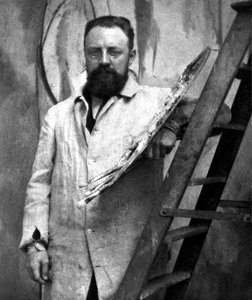
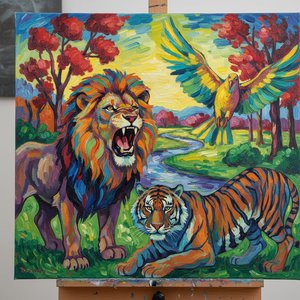
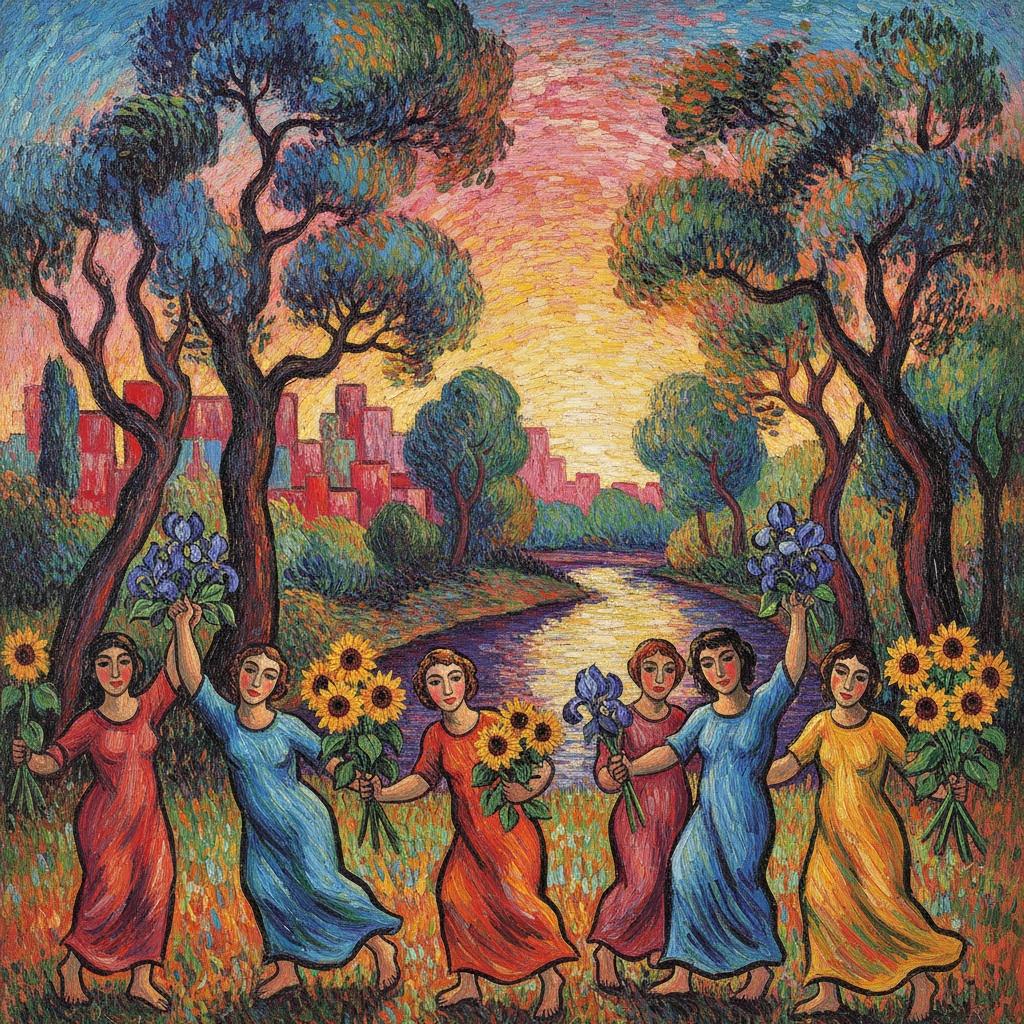
To understand the seismic shift that occurred in the Parisian art world at the dawn of the twentieth century, one must envision the atmosphere of the Salon d’Automne in 1905. It was here, amidst a sea of established academic norms and the fading echoes of Impressionism, that a group of young, audacious painters unleashed a visual storm that would forever alter the trajectory of modern art. The term les Fauves—the Wild Beasts—was not a self-appointed title but a derisive label coined by the critic Louis Vauxcelles. Upon witnessing the jarring, non-naturalistic colors and fierce, uninhibently loose brushwork of artists like Henri Matisse and André Derain, Vauxcelles famously remarked on the primitive intensity of the works, as if a wild beast had been released into a classical garden. This moment of critical shock was, in reality, the first breath of a revolution that sought to strip art of its descriptive duties and replace them with pure, unadulterated sensation.
The movement emerged not from a vacuum, but as a concentrated burst of energy from artists who had been absorbing the radical experiments of their predecessors. While the name suggested a lack of control, the Fauves were deeply engaged with the evolving language of modernism. They stood at a crossroads where the structured light of Impressionism met the emotional intensity of Post-Impressionism. For the art student or the dedicated collector, this period represents a pivotal moment of transition—a time when the canvas ceased to be a window into a recognizable world and began to function as a mirror for the artist's internal psyche.
Liberating the Palette: The Rejection of Impressionism and Academic Tradition
 Fauvism's Boldest Visions: 10 Masterpieces That Revolutionized Modern Art | ArtsDot
Introduction Imagine a world ablaze with color—not the subtle hues of nature faithfully reproduced, but bold, unrestrained shades liberated from their descriptive duties. This is the essence of Fauvism, an early 20th-century art movement that shocked...
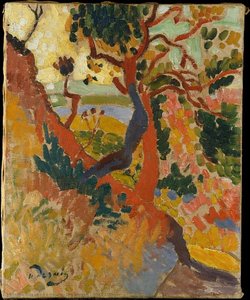
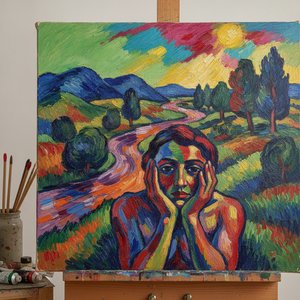
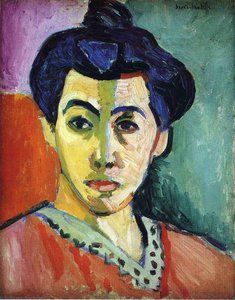
For centuries, the sanctity of art was maintained by the strictures of academic realism, which demanded that color serve the form and that light be captured with fidelity to nature. Even the Impressionists, though revolutionary in their pursuit of fleeting atmospheric effects, remained tetherable to the observable world. Fauvism, however, staged a definitive rebellion against these constraints. The movement’s core philosophy was built upon the liberation of color from its descriptive obligations. In a Fauvist masterpiece, a sky need not be blue, and a face need not be flesh-toned; instead, colors were chosen for their ability to vibrate against one another and to evoke specific emotional resonances.
This rejection of naturalism was achieved through the strategic use of complementary colors—pairs like orange and blue or red and green that, when placed side-by-side, intensify each even more. By abandoning the subtle gradations of shadow and the muted earth tones of the past, the Fauves created a sense of flattened space and heightened energy. This was not merely a stylistic choice but an ontological one; it was an assertion that the artist's subjective experience held more truth than the objective reality of the subject matter. As they moved away from the mimesis of the old masters, they paved the way for a new era where the medium itself—the pigment, the texture, and the stroke—became the primary subject of the work.
Masters of the Revolution: The Visionary Contributions of Matisse and Derain
Largely abandoning descriptive color, he found ways to translate his own sensations, experimenting daringly in paint, watercolor, and pen and ink. Matisse saw ...
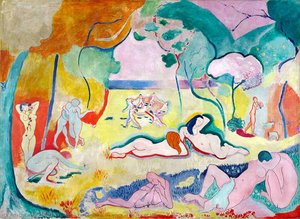
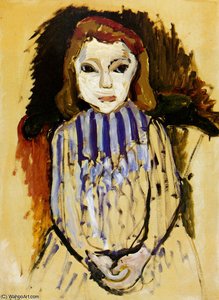
At the heart of this chromatic upheaval stood Henri Matisse, a figure whose career would span decades of profound innovation. Matisse’s journey was one of remarkable transformation; initially trained in the classical traditions of the Académie Julian, he found his true voice through an encounter with the expressive power of Vincent van Gogh. His work, such as the iconic Madame Matisse en Japonaise, demonstrates a masterful ability to balance structural harmony with wild color. Even in his later years, as seen in works like Nu bleu IV, Matisse continued to explore the interplay between figure and space, using gouache découpée (cut-out) techniques to distill form into its most essential, rhythmic elements.
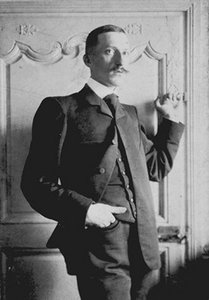
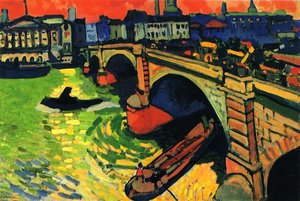
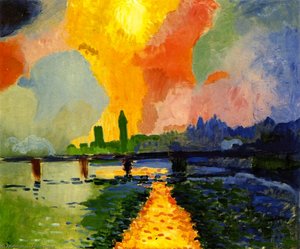
Alongside him, André Derain played an equally vital role in defining the movement's aesthetic. During a transformative summer spent working with Matisse in Collioure, Derain experimented with bold, unblended strokes of color applied directly from the tube. His landscapes and portraits possess a primal energy, characterized by simplified forms and a luminous, almost electric palette. Together, these artists—along with others like Maurice de Vlaminck and Georges Braque—created a cohesive yet diverse front that challenged the very definition of painting. Their collective vision was not about depicting a scene, but about constructing a new reality through the deliberate arrangement of light and hue.
Color as Emotion: Analyzing the Technical Innovations of Fauvist Brushwork
 Fauvism's Bold Vision: 10 Masterpieces That Revolutionized Modern Art |
Introduction Imagine a world saturated with color—not the subtle hues of Impressionism, but bold, unrestrained shades applied with an almost primal energy. This is the realm of Fauvism, a short-lived yet profoundly influential art movement that explo...
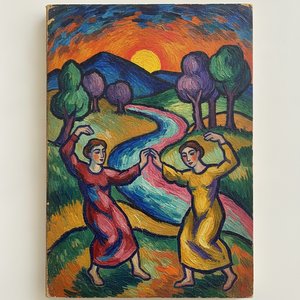
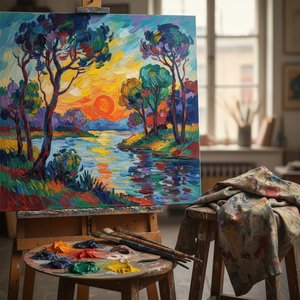
To study Fauvism is to study the physics of emotion. The technical hallmark of the movement lies in its painterly qualities—the visible, often aggressive, application of paint that emphasizes the physical presence of the medium. Unlike the smooth, invisible brushwork of the Academy, Fauvist canvases celebrate the "wild" nature of the stroke. These artists utilized thick impasto and loose dabs of pigment to create a sense of movement and vitality. The texture of the paint itself becomes a rhythmic element, guiding the viewer's eye across the surface in a dance of light and shadow.
The emotional impact of these works is deeply rooted in color theory. By utilizing high-contrast palettes and non-naturalistic shades, the Fauves could manipulate the viewer's psychological state. A sudden slash of vermilion against a deep ultramarine can evoke warmth, tension, or even a sense of profound joy. This approach turned the canvas into a sensory experience rather than a mere intellectual exercise. For those who appreciate the tactile depth of fine art, the Fauvist style offers a masterclass in how texture and color can be synthesized to create a work that feels as though it is breathing with its own internal life.
The Enduring Legacy: How Fauvism Paved the Way for Modern Abstraction
Fauvism ( FOH-viz-əm) is a style of painting and an art movement that emerged in France at the beginning of the 20th century. It was the style of les Fauves (French pronunciation: [le fov], the wild beasts), a group of modern artists whose works emph...
Though the height of the Fauvist movement was relatively brief, lasting roughly from 1905 to 1910, its impact on the trajectory of Western art is immeasurable. By breaking the bond between color and reality, the Fauves provided the essential foundation for nearly every major movement that followed, including Cubism, Expressionism, and eventually, pure Abstraction. They proved that art could exist as an autonomous language, independent of the physical world, a concept that would become the cornerstone of twentieth-century modernism.
Today, the legacy of the "Wild Beasts" lives on in our appreciation for bold design, expressive media, and the emotive power of color. Their courage to embrace the "primitive" and the "unrefined" continues to inspire artists and collectors alike. At ArtsDot.com, we celebrate this enduring spirit by offering museum-quality reproductions that allow you to bring this revolutionary energy into your own space. Whether it is a hand-painted oil on canvas that captures the thick, textured brushstrokes of Matisse or a high-fidelity Giclée print for a modern interior, our mission is to make these historical masterpieces accessible to all. We invite you to explore our collection and discover how the vibrant rebellion of Fauvism can transform your world.