The Intellectual Framework: Defining Academic Realism and its Pursuit of Order
 Mastering Perfection: A Definitive Guide to the Elegance and Precision of Academic Classicism
The Foundations of Order: Defining the Principles of Academic Classicism Mastering Perfection: A Definitive Guide to the Elegance and Precision of Academic Classicism The Foundations of Order: Defining the Principles of Academic Classicism To underst...
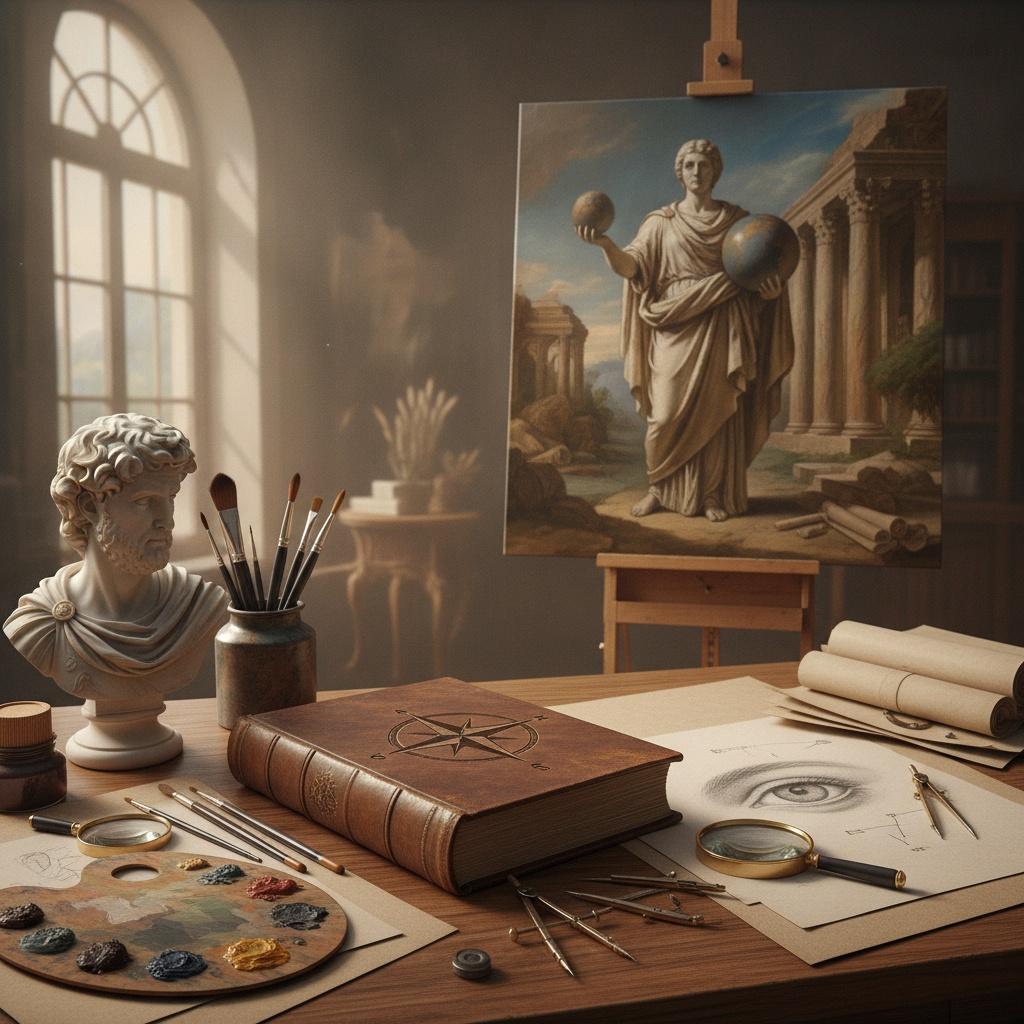
To step into the world of Academic Realism is to leave behind the frantic, unscripted energy of the modern age and enter a sanctuary of profound logic and historical reverence. This movement was never merely an aesthetic preference or a passing trend; it was a disciplined, intellectual pursuit of truth through the lens of order and clarity. At its very core, Academic Classicism emerged as a necessary reaction against the perceived chaos of more emotive, spontaneous styles, seeking instead to anchor the human spirit in the timeless principles of antiquity. It is an art form rooted in the conviction that true beauty is not found in the accidental or the raw, but in the carefully structured and the mathematically harmonious.
The profound allure of this style lies in its ability to look beyond the surface of the canvas and into a rigorous intellectual framework. By adhering to established canons of proportion, the Academic artist seeks to capture the eternal essence of human experience, using the structured language of line and form to communicate universal truths that resonate across centuries. There is a profound sense of stability in these works, providing a quiet power that transcends the ephemeral nature of daily life. This pursuit of perfection demands more than just raw talent; it requires a dedication to the belief that art should serve as a mirror to the idealized, permanent structures of the universe rather than the fleeting shadows of a single moment.
The Pillars of Technique: Anatomy, Proportion, and the Mastery of Form
 Académie d'homme
A Study in Form: Jean-François Millet’s *Académie d'homme* This captivating work by Jean-François Millet, titled *Académie d'homme*, offers a compelling glimpse into the artist’s mastery of anatomical study and his engagement with the academic tradit...
The foundation of this movement rests upon an uncompromising commitment to technical excellence, where the artist’s hand serves as a precise instrument of observation. Central to this training was the rigorous study of anatomy, a cornerstone of artistic education in the great academies. One need only look at Jean-François Millet’s
Académie d'homme to witness this mastery; while often celebrated for his rural subjects, Millet utilized the academic tradition to explore the dynamic interplay of muscle and bone. In such works, the subject is not merely posed but captured in a state of anatomical truth, where every twist of the torso and tension in the limb reveals the artist's deep engagement with the human form.
Beyond anatomy, the mastery of light and texture provides the essential dimension that breathes life into the academic canvas. The technique often involves a sophisticated use of
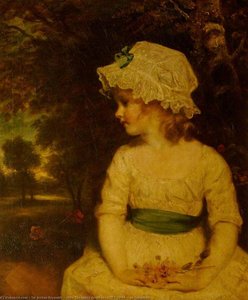
impasto—thick layers of paint applied with visible brushstrokes to create a rich, tactile quality—alongside the delicate rendering of fabric and skin. Artists like Guillaume Seignac achieved a poetic precision in capturing the interplay of light upon silk, demonstrating that technical skill could elevate a simple subject to a state of grace. This meticulous attention to detail ensures that every element, from the sheen of a cap to the subtle modeling of a face, contributes to a remarkably lifelike and authoritative portrayal.
From the Académie to the Salon: A Historical Journey through European Traditions
 Royal Academy of Fine Arts (Antwerp)
The Royal Academy of Fine Arts Antwerp (Dutch: Koninklijke Academie voor Schone Kunsten van Antwerpen) is an art academy located in Antwerp, Belgium. It is one of the oldest of its kind in Europe. It was founded in 1663 by David Teniers the Younger, ...
The lineage of Academic Realism is traced through the hallowed halls of Europe’s most prestigious institutions, each serving as a guardian of classical excellence. From the
Academy of Fine Arts Vienna, founded in 1688, to the
Royal Academy of Fine Arts Antwerp, established by David Teniers the Younger, these academies provided the structured environment necessary for such rigorous discipline. These institutions were modeled after the great traditions of Rome and Paris, creating a unified language of art that spanned continents. The prestige of these academies grew through centuries of reform, establishing a hierarchy of excellence that defined the very concept of "high art."
This tradition was not confined to Europe alone; it traveled across oceans, finding fertile ground in the Americas. The
Pennsylvania Academy of Fine Arts (PAFA), founded in 1805, stands as a living testament to this global evolution. As the oldest art museum and school in the United States, PAFA allowed for the infusion of European academic rigor into the American aesthetic, fostering masters like Thomas Eakins and influencing later figures such as George Reid. This historical continuity ensures that the principles of the Old Masters remain a vital part of our collective visual heritage, connecting the contemporary viewer to a lineage of profound institutional service and artistic authority.
The Aesthetic of Ideal Beauty: Balancing Meticulous Observation with Classical Grace
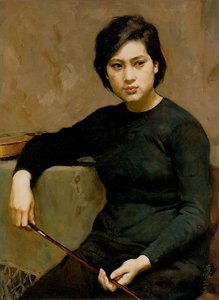 Jin Shangyi
Jin Shangyi: A Master of Neoclassical Realism Jin Shangyi (born December 1934 in Jiaozuo, Henan Province, China) stands as a towering figure within the landscape of contemporary Chinese oil painting, firmly rooted in the neoclassical realism movement...
Academic Realism seeks a delicate equilibrium between the faithful representation of reality and the pursuit of an idealized perfection. It is an ambitious endeavor that does not merely depict life as it is, but rather elevates the everyday through the lens of beauty. This movement emerged as a sophisticated counterpoint to both the emotional fervor of Romanticism and the rigid formality of Neoclassicism, striving instead for a harmonious middle ground. The goal was to capture the essence of human experience by filtering reality through a prism of grace and proportion.
This pursuit is best exemplified in the works of artists like Jin Shangyi, a master of Neoclassical Realism. His approach prioritizes meticulous observation and faithful representation, yet it is imbued with a sense of grandeur that transcends mere documentation. By utilizing harmonious color palettes and a profound understanding of composition, such artists can convey deep emotion through visual imagery that feels both grounded in the real world and elevated by classical ideals. It is within this balance—the tension between the tangible texture of the paint and the intangible beauty of the subject—that the true magic of Academic Realism resides.
Legacy in the Modern Era: The Enduring Influence of Academic Precision on Contemporary Art
 Academic Realism's Finest: 10 Masterpieces for Art Lovers & Home Decor
Introduction To gaze upon these ten masterpieces is to step back into a world where skill reigned supreme, and art served as a mirror reflecting not just appearances, but the very soul of human experience. The Academic Realism movement, born from the...
In our contemporary age, characterized by rapid technological shifts and a fragmented visual culture, the principles of Academic Realism offer a much-needed sense of permanence. While the avant-garde may push boundaries of abstraction, the dedication to technical mastery and anatomical truth continues to inspire those who seek depth and substance in art. The legacy of this movement lives on in the works of contemporary realists who continue to champion the importance of observation, skill, and the enduring power of the human figure.
For the modern collector and enthusiast, this tradition provides a way to reconnect with the foundational elements of human creativity. Whether through the study of historical masterpieces or the acquisition of high-quality reproductions that honor these classical techniques, the spirit of the Academy remains vibrant. The precision, elegance, and profound logic of Academic Realism continue to serve as a sanctuary for those who find beauty in order and truth in the meticulously rendered detail, ensuring that the flame of artistic excellence is never extinguished.
At Most-Famous-Painting.com, we are dedicated to preserving this magnificent legacy. We specialize in providing museum-quality, hand-painted oil reproductions of the world's most iconic masterpieces. Our artists, many of whom hold degrees from prestigious Fine Arts academies, use traditional techniques to ensure that every brushstroke captures the soul and texture of the original works. Whether you are looking to adorn your home with a classical portrait or seeking a custom commission that transforms a personal memory into a masterpiece, our commitment to academic excellence ensures a lasting investment in beauty.