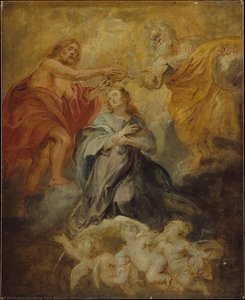
The Essence of Flemish Baroque: A Departure from Renaissance Serenity
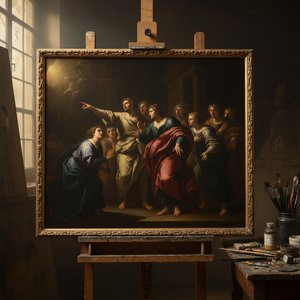 Mastering Drama and Light: A Definitive Guide to the Flemish Baroque Art Movement
The Essence of Flemish Baroque: A Symphony of Motion and Emotion To step into the world of the Flemish Baroque is to surrender oneself to a sensory deluge, where the stillness of canvas is replaced by an eternal, rhythmic pulse. Unlike the balanced, ...
To step into the world of the Flemish Baroque is to surrender oneself to a sensory deluge, where the stillness of the canvas is replaced by an eternal, rhythmic pulse. Unlike the balanced, often static serenity that defined the High Renaissance, the Flemish Baroque movement emerged as a profound celebration of vitality, capturing life in its most turbulent and magnificent states. It was an era defined by a deliberate departure from restraint, favoring instead a theatricality that sought to stir the very soul of the observer. This period was not merely about depicting scenes; it was about orchestrating experiences through a symphony of motion and emotion. Every brushstroke seemed imbued with a sense of urgency, as if the subjects were caught in a fleeting moment of transformation, creating a profound psychological connection with the viewer that invites them to participate in the drama rather than merely witness it from a distance.
The Historical Crucible: Counter-Reformation and the Spirit of Antwerp
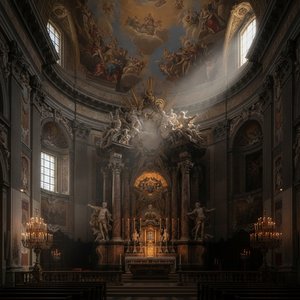 Drama and Light: Discover the Captivating Grandeur of Baroque Art
The Genesis of Grandeur: The Counter-Reformation and the Birth of Baroque The Dramatic Flourish: Exploring the Baroque Movement's Enduring Legacy in Art History The Genesis of Grandeur: Historical Context & The Counter-Reformation Wikipedia: Counter-...
To understand the breathtaking scale of this movement, one must understand a world in profound upheaval. The Flemish Baroque was an artistic earthquake born from spiritual and political tremors. During the 16th and 17th centuries, the Southern Netherlands found itself at the heart of the Counter-Reformation—the Catholic Church's powerful response to the Protestant Reformation. In cities like Antwerp, which served as the movement's artistic nexus, art became a vital instrument of faith. The Church sought to reaffirm the central tenets of Christian belief—sacrifice, redemption, and divine grace—through imagery that was visceral and emotionally arresting. This period of religious fervor demanded a style that could bridge the gap between the divine and the earthly, utilizing sweeping gestures and complex, swirling compositions to guide the eye through narratives of epic proportions, effectively using beauty as a tool for spiritual resurgence.
Sir Peter Paul Rubens: The Diplomat, Scholar, and Master Painter
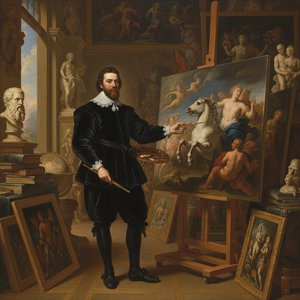 Peter Paul Rubens: A Baroque Master's Life, Legacy & Enduring Influence
Early Life & Apprenticeship: Forging a Flemish Master Peter Paul Rubens, born in Siegen, Westphalia in 1577, was not destined for the quiet life of a provincial artist. His early years were marked by displacement; his father, Jan Rubens, a lawyer and...
At the zenith of this era stood Sir Peter Paul Rubens, a name synonymous with the exuberant dynamism of the Flemish Baroque. Yet, Rubens was far more than a painter; he was a diplomat, a scholar, and a cultural architect who fundamentally reshaped the European artistic landscape. His life, marked by early displacement due to religious persecution, instilled in him a cosmopolitan resilience that would later define his work. Following a transformative journey through Italy, where he immersed himself in the masterpieces of Michelangelo, Raphael, and Titian, Rubens synthesized Italian Renaissance ideals with a distinctly Flemish sensibility. He established one of the most successful artistic enterprises in history, operating a prolific workshop that produced large-scale altarpieces, portraits, and mythological histories. His ability to blend classical erudition with a sensuous portrayal of the human form allowed him to command the attention of both the nobility and the devout alike.
Techniques of Grandeur: Chiaroscuro, Color, and the Anatomy of Emotion
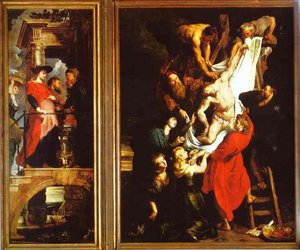 The Descent from the Cross (Left)
A Dramatic Echo of Faith: The Descent from the Cross (Left) Peter Paul Rubens’ “The Descent from the Cross (Left)” isn't merely a depiction of a biblical scene; it’s a visceral experience, a carefully orchestrated drama rendered in vibrant color and ...
The technical mastery of the Flemish masters is most evident in their use of light and color to create drama. Central to this was the sophisticated use of
chiaroscuro—the dramatic interplay of light and shadow—which lent a sculptural depth to their figures. In works such as Rubens’
“The Descent from the Cross (Left),” one sees a carefully orchestrated drama rendered in vibrant, saturated colors. He eschewed somber tones for a palette bursting with reds, blues, and golds, creating an intense visual impact. Furthermore, his commitment to anatomical accuracy, born from obsessive study, allowed him to render the musculature of Christ or the tension in a mythological figure with startling realism. This meticulous attention to detail, combined with dynamic diagonal compositions, generates a powerful sense of movement, conveying the heavy weight of grief and the soaring heights of divine grace through the very texture of the paint itself.
Bringing the Golden Age Home: Curating Baroque Splendor in Modern Spaces
For the modern connoisseur, the grandeur of the Flemish Baroque offers an unparalleled opportunity to infuse contemporary interiors with historical depth and theatrical elegance. While the original masterpieces reside in museums like the Rubens House in Antwerp, the spirit of this golden age can be brought into your own collection through the art of meticulous reproduction. At
ArtsDot.com, we specialize in transforming these canonical works into 100% hand-painted oil reproductions on premium cotton canvas. Our process is a tribute to the masters:
- Each piece is a bespoke creation, painted by hand over 2 to 4 weeks to ensure visible brushstrokes and a deep tonal range that no digital print can replicate.
- We offer a professional digital mockup service, allowing you to see the composition before the first stroke of paint touches the canvas.
- Our artists can even "remix" history, offering "Period Shifts" where we can transform a modern portrait into a 17th-century masterpiece in the style of Rubens.
- Every order includes a pre-shipment photo for your approval, ensuring the final work meets our museum-grade standards.
Whether you are seeking a large-scale multi-panel set to anchor a grand staircase or a custom commission that turns a personal milestone into an oil painting, we provide the bridge between history and your home. From the careful application of Damar varnish for longevity to our global, insured shipping via DHL and FedEx, we ensure that your piece of the Baroque remains a vibrant, enduring legacy for generations to come.