The Arcadian Ideal: Exploring the Philosophical Roots of Pastoral Art
 Idyllic Visions: Exploring the Pastoral Scene in Art History – From Arcadia to Modern Interpretations
The Classical Roots of Arcadia: Myth and Early Representations Wikipedia: Pastoral The pastoral genre of literature, art, or music depicts an idealised form of the shepherd's lifestyle – herding livestock around open areas of land according to the se...
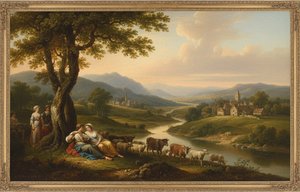
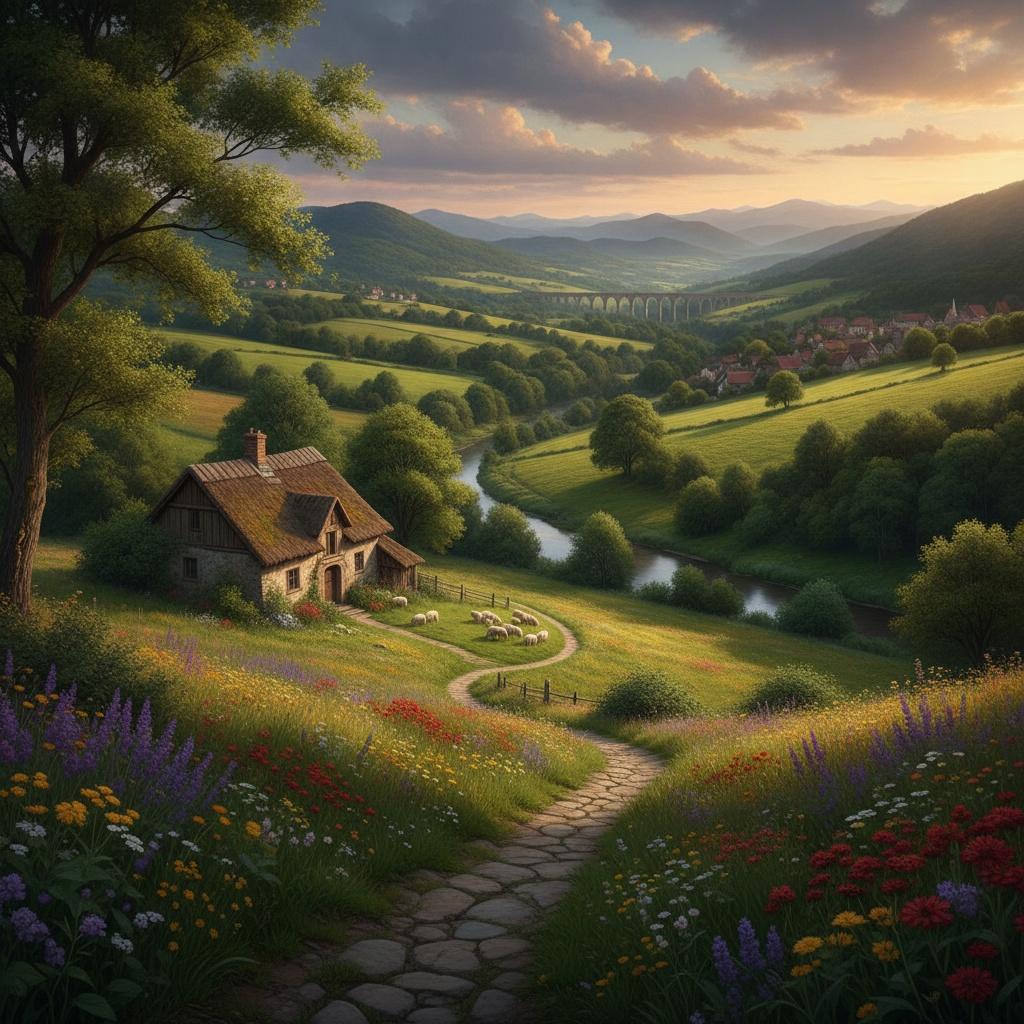
To understand the landscape is to understand a profound human longing. Long before the brush touched canvas, the concept of the pastoral existed as a spiritual sanctuary within the Western consciousness. This tradition finds its most ancient and evocative expression in the myth of Arcadia, a remote Greek region celebrated by poets such as Theocritus. In these early verses, Arcadia was far more than a geographical coordinate; it functioned as a locus amoenus—a beautiful, peaceful place where nymphs and shepherds lived in an eternal, harmonious dance with nature. This classical archetype established the foundational motifs of the genre: gentle landscapes, unrequited love, and a sense of melancholy beauty that offered an escape from the burgeoning complexities of urban existence.
As history progressed, this idealized vision evolved through the works of Virgil, whose Eclogues transformed the pastoral into a symbol of political and personal refuge. The landscape became a stage for the human soul, where the simplicity of the shepherd's life served as a critique of—and a remedy for—the chaos of civilization. This philosophical underpinning ensures that when we gaze upon a pastoral masterpiece, we are not merely observing trees or meadows; we are participating in an ancient ritual of seeking solace. The landscape, therefore, serves as a bridge between the tangible world and the intangible realm of human emotion, establishing a legacy of tranquility that continues to resonate in our increasingly digital age.
Light and Solitude: The Impressionistic Mastery of the English Countryside
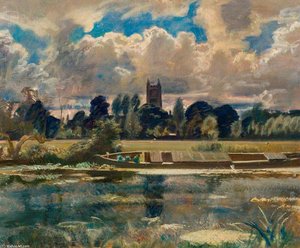 Dedham Painted From Lock Cottage
A Window into the Serenity of Dedham In the quietude of the English countryside, there exists a specific kind of magic found only in the soft interplay of light and water, a magic that Sir Alfred James Munnings captures with unparalleled grace in Ded...
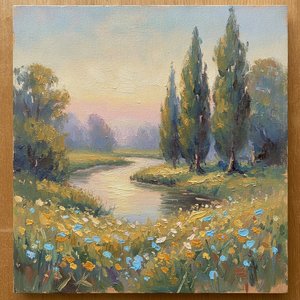
Moving from the mythological to the observational, the evolution of landscape art reached a breathtaking zenith through the mastery of light and atmosphere. In the English tradition, artists began to move away from rigid, historical narratives toward a more visceral engagement with the environment. Sir Alfred James Munnings, a master of Impressionistic sensibility, exemplifies this shift in works such as Dedham Painted From Lock Cottage. Here, the focus is not on a grand historical event, but on the delicate interplay of light and water within the quietude of the English countryside. The composition, anchored by a solitary boat upon a mirror-like canal, invites the viewer into a world where time itself seems to decelerate.
The technique employed in such works is a masterclass in capturing the ephemeral. Rather than relying on harsh, definitive outlines, the artist utilizes fluid brushstrokes to suggest the movement of clouds and the subtle ripples of a river's surface. The palette—a sophisticated arrangement of deep greens, soft earth tones, and luminous blues—recreates the very essence of the atmosphere. This approach allows the viewer to experience the warmth of a late afternoon sun or the cool mystery of a morning mist. It is this ability to capture the "breathing" quality of nature that elevates these paintings from mere depictions to immersive experiences, offering a window into a serene, vanishing world.
Quiet Meditations: The Enduring Spirit of German and Victorian Ruralism
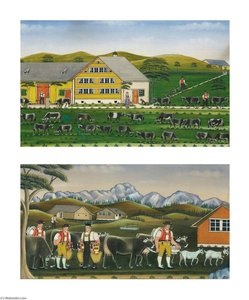 johannes zülle
The Quiet Resonance of Rural Life: Introducing Johannes Zülle Johannes Zülle, a name perhaps less celebrated than some of his contemporaries, nevertheless occupies a significant and deeply affecting space within the landscape tradition of early 20th-...
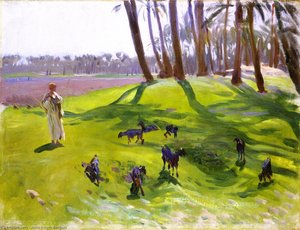
While some artists sought the dramatic interplay of light, others found profound beauty in the quiet resonance of daily rural life. This period of art history is characterized by a gentle lyricism and a deep respect for the enduring spirit of the countryside. In the early 20th-century German tradition, Johannes Zülle occupied a significant space within this movement. His works are not grand, revolutionary departures but rather quiet meditations on the beauty found in the mundane. Through a softer, more muted palette, Zülle captured the rhythms of village life—farmers tending fields and livestock grazing peacefully—imbued with a sensitivity to light that speaks directly to the heart.
Similarly, the Victorian era produced painters like James Thomas Linnell, who carved a distinctive niche through his evocative depictions of English rurality. Rooted in the legacy of his father, John Linnely, James Thomas brought a unique sensibility to the canvas, characterized by brighter palettes and an almost ethereal quality of light. His work, alongside that of contemporaries like José Weiss, transformed familiar scenes of the Sussex hills or the Surrey countryside into poetic visions. These artists did not merely paint landscapes; they documented a way of life, capturing a sense of nostalgic tranquility that remains deeply poignant to the modern observer.
From Myth to Realism: The Evolution of Landscape as a Primary Subject
--- title: Landscapes, Classical to Modern Curriculum (Education at the Getty) url: https://www.getty.edu/education/for_teachers/curricula/landscapes/background1.html hostname: getty.edu description: This curriculum from the Getty Museum for elementa...
The history of landscape painting is a narrative of increasing autonomy. In antiquity, landscapes often served as mere backdrops for religious or mythological scenes, acting as symbolic settings for the divine. It was not until the Renaissance and the subsequent rise of the Dutch landschap in the 16th century that the landscape began to be viewed as a subject in its its own right. The emergence of a prosperous middle class in the Netherlands created a demand for secular art that reflected their connection to the land, leading to a surge in technical innovation and topographical accuracy.
As we moved into the Romantic era, this evolution took a dramatic turn toward the sublime. Artists like Caspar David Friedrich began to use the landscape to explore intense personal emotion and the overwhelming power of nature. This trajectory eventually led to the radical shifts of the Impressionists and Post-Impressionists, who used the land as a vehicle for exploring color, form, and the fleeting nature of perception. From the foundational works of Joachim Patinir in the Northern Renaissance to the modern interpretations of the pastoral, the landscape has transitioned from a symbolic setting to a profound medium for human expression, reflecting our changing relationship with the world around us.
Bringing the Great Outdoors In: Curating Timeless Landscapes for Modern Interiors
 Beyond the Horizon: 10 Landscape Masterpieces for Your Home Decor
Introduction The landscape… a word that evokes not just a visual scene, but a feeling. A sense of belonging, perhaps, or the humbling vastness of nature. For millennia, artists have turned to the land – its mountains, forests, and seascapes – as a so...
In an era defined by rapid urbanization and digital saturation, the presence of landscape art in a home offers a vital connection to something ancient and enduring. Integrating these masterpieces into a modern interior is more than a decorative choice; it is an act of curation that brings a sense of belonging and peace to a living space. A well-placed landscape can serve as a focal point, providing a window into a world of serenity that contrasts beautifully with the complexities of contemporary life.
For the discerning collector, the choice between different mediums allows for a personalized approach to art appreciation. While high-quality Giclée prints offer an accessible way to enjoy historical imagery, a Handmade Oil Reproduction provides a tactile depth that no print can replicate. These bespoke works, painted by hand on 100% cotton canvas, feature visible brushstrokes and a rich tonal range that captures the true soul of the original masterpiece. Whether you are looking to recreate the soft light of an English meadow or the dramatic vistas of the Romantic era, these artworks serve as enduring legacies of human creativity.
At ArtsDot.com, we specialize in making these legendary moments accessible. Our master artists, holding degrees from prestigious Fine Arts academies, meticulously recreate the textures and emotions of the world's most iconic landscapes. From custom "period shifts" to large-scale multi-panel compositions for grand architectural spaces, our mission is to preserve the beauty of the Old Masters for your personal collection. We invite you to explore our library of masterpieces and discover how a single painting can transform a room into a sanctuary of timeless elegance.