
Introduction
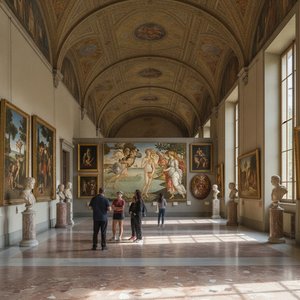
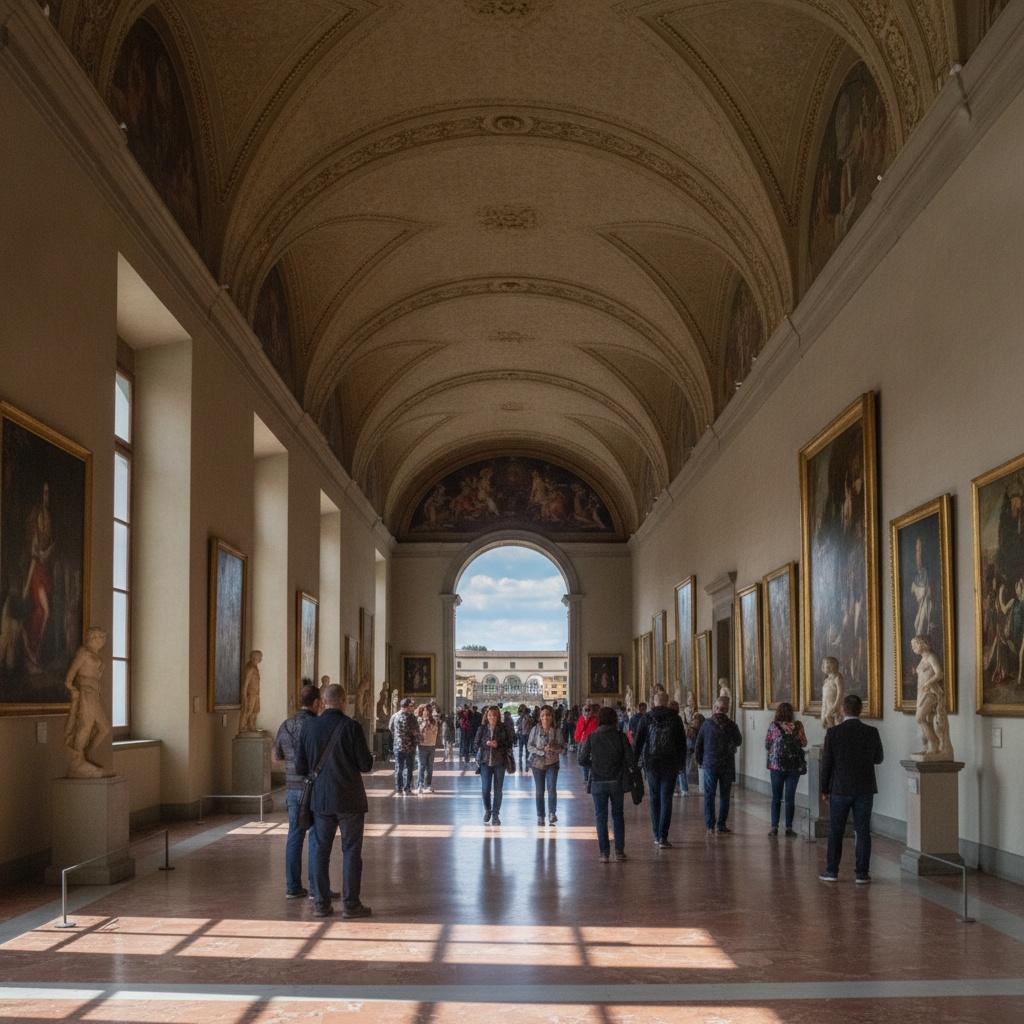
To step into the Galleria degli Uffizi is to cross a threshold between the modern world and the very heartbeat of the Renaissance. Nestled within the soul of Florence, this magnificent palace does not merely house art; it breathes it. As you wander through corridors designed by Giorgio Vasari, where light spills from grand windows onto centuries-old floors, you are walking through a meticulously crafted portal to an era of unparalleled human achievement.
Originally conceived as administrative offices for Florentine magistrates, these Uffizi were transformed by the visionary patronage of the powerful Medici family into one of the world's most revered sanctuaries of artistic legacy. The architecture itself—a rhythmic dance of Doric columns and sweeping arches opening toward the Arno River—was engineered to inspire awe, creating a harmonious stage where the brilliance of the Renaissance could be both celebrated and preserved. It is a space where the boundaries between the viewer and the masterpiece begin to dissolve.
These works remain profoundly meaningful today because they capture the precise moment when human perspective shifted, when light, shadow, and anatomy were mastered to tell stories of divinity and humanity alike. Each canvas and panel within these walls serves as a testament to the enduring allure of beauty and the potent sway of cultural ambition. In the following selection, we invite you to journey through twenty-five of the museum's most iconic masterpieces —works that continue to resonate with the same intensity and grace that first captivated the masters of Florence centuries ago.
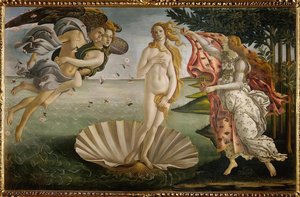
The Birth Of Venus - Sandro Botticelli
 The Birth Of Venus - Sandro Botticelli
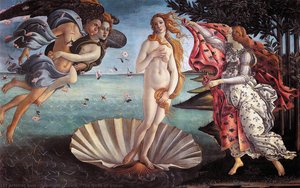
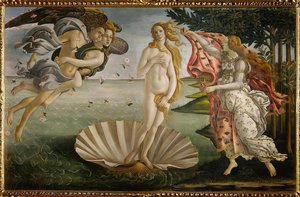
To contemplate The Birth of Venus by Sandro Botticelli is to engage with an unparalleled investment in artistic legacy and refined taste. As a definitive pillar among the top 25 artworks in the Galleria degli Uffizi, this 1485 masterpiece represents the zenith of Renaissance Neoplatonism. Its profound influence on Western aesthetics and its prestigious provenance—deeply rooted in the era of Medici patronage—confirm its status as an incomparable treasure of art history.
The painting captures the ethereal moment of Venus’s emergence from a colossal scallop shell, propelled by the gentle winds of Zephyrus and Chloris. Botticelli’s signature use of elegant linearity and a palette of soft, luminous pastels creates a sense of divine grace. The rhythmic movement of the sea and the arrival of the Horae to clothe the goddess offer a sensory experience of spiritual rebirth.
For the discerning collector, integrating a high-quality, hand-painted oil reproduction into a modern luxury interior provides more than mere decoration; it offers an unmistakable sense of aesthetic authority, allowing this timeless icon to anchor contemporary spaces with historical prestige and status.
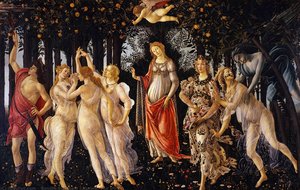
Primavera - Sandro Botticelli
 Primavera - Sandro Botticelli
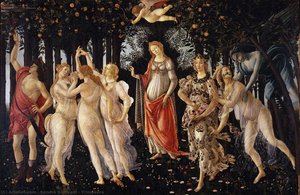
At ArtsDot.com, our philosophy is rooted in the belief that profound beauty should be accessible to all, not just those standing behind museum velvet ropes. Within the hallowed halls of the Uffizi, few works capture the ephemeral magic of life quite like Primavera by Sandro Botticelli . This masterpiece earns its place among the top 25 artworks in the Galleria degli Uffizi through its unparalleled ability to weave classical mythology with the vibrant, rhythmic pulse of nature.
The composition is an intricate dance of light and line, where the goddess Venus presides over a lush, verdant grove teeming with nymphs and the gentle, transformative breath of Zephyr. Its symbolic celebration of fertility and seasonal renewal offers a profound emotional resonance that has shaped visual culture for centuries. Just as this Renaissance treasure once graced the private villas of the Medici, you can bring its enchanting energy into your own home, office, or personal gallery. Through our high-fidelity, hand-painted oil reproductions, the luminous grace of Botticelli’s vision becomes a living, breathing part of your modern space.
Annunciation - Leonardo da Vinci
 Annunciation - Leonardo da Vinci
In Leonardo da Vinci's Annunciation , time seems to suspend itself in a single, breathless moment of divine grace. As you stand before this masterpiece in the Galleria degli Uffizi, Florence, you are witnessing more than just paint on wood; you are experiencing the dawn of High Renaissance brilliance. The way the angel Gabriel’s golden wings catch the light, and how the sfumato technique softens the edges of the distant landscape into a misty, ethereal dream, captures a profound sense of peace that has resonated for centuries.
This work is a cornerstone of the Uffizi's collection due to its unparalleled technical innovation. At ArtsDot.com, we believe such beauty should not be confined to museum walls. Our master artists hand-paint each reproduction on 100% cotton canvas, meticulously recreating Leonardo’s subtle tonal transitions and rich, tactile textures. By capturing the depth of the original's glazes and the delicate movement of light, we enable you to bring the sacred serenity of Florence into your own home, preserving the very soul of the Renaissance.
Left - Portrait of Battista Sforza, Duc - Piero della Francesca
 Left - Portrait of Battista Sforza, Duc - Piero della Francesca
In the hallowed halls of the Uffizi, Piero della Francesca’s 1465 portrait of Battista Sforza stands as a testament to Renaissance poise. Rendered in a profile view reminiscent of ancient Roman coinage, this work captures the Duchess with a serene, almost ethereal dignity. The meticulous use of tempera on panel allows for a luminous quality, where every strand of pearl and thread of gold embroidery on her velvet attire seems to catch a soft, eternal light. Beyond the surface, the painting embodies the humanist ideals of the era—strength, virtue, and political alliance.
Owning this portrait by Piero della Francesca isn’t merely a purchase; it is an inheritance . Its presence in the top 25 artworks of the Galleria degli Uffizi represents a handshake across centuries, a true lineage of taste . And now, with ArtsDot.com, that lineage isn’t just for museums. It is for your walls —where every glance is a nod to the masters.
The Virgin and Child with Four Angels and Six Saints (Pala di San Barnaba) - Sandro Botticelli
 The Virgin and Child with Four Angels and Six Saints (Pala di San Barnaba) - Sandro Botticelli
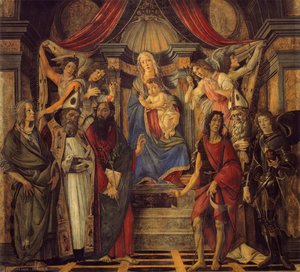
To stand before this panel is to enter a realm of celestial harmony, where the boundaries between the earthly and the divine dissolve. In The Virgin and Child with Four Angels and Six Saints (Pala di San Barnaba) by Sandro Botticelli , we witness the pinnacle of Florentine Renaissance devotion. Created in 1488, this masterpiece exemplifies Botticelli’s unparalleled ability to marry spiritual depth with rhythmic, linear elegance.
The composition is anchored by a sacred pyramidal structure, guiding the gaze through a sea of saints and angels toward the tender intimacy of the Madonna. Notice the luminous interplay of light across the delicate contours of the faces and the rich, warm earth tones punctuated by shimmering gold accents. Every meticulously rendered detail breathes with a sense of profound serenity. Such timeless beauty does more than decorate; it elevates. Bringing a hand-painted reproduction of this Uffizi treasure into your own home allows the quiet majesty of the Renaissance to transform a modern space into a sanctuary of contemplation.
Calumny of Apelles - Sandro Botticelli
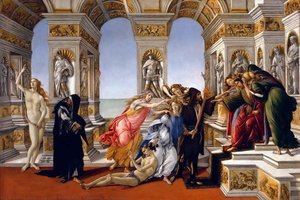 Calumny of Apelles - Sandro Botticelli
In the hallowed halls of the Uffizi, Sandro Botticelli’s Calumny of Apelles stands as a profound psychological drama. Painted around 1495, this tempera masterpiece transcends mere pigment on panel; it is a complex tapestry of human vice and virtue. As you navigate the composition, your gaze is led by the rhythmic lines of Renaissance mastery toward a central tragedy: Slander, brandishing a destructive torch, dragging an innocent soul through a classical architectural landscape. The vibrant reds and golds clash with the somber presence of Envy and Ignorance, creating a tension that feels strikingly modern. Every meticulous stroke captures the weight of moral judgment, from the foolishness symbolized by King Midas's donkey ears to the desperate search for Truth. To encounter this work is to witness the very heartbeat of Florentine intellect. While the original remains anchored in Florence, our hand-painted oil reproductions allow you to bring this transformative energy into your own space, turning a mere room into a gallery of the soul.
Madonna of the Rosengarden (also known as Madonna del Roseto) - Sandro Botticelli
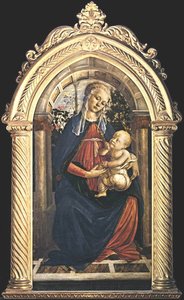 Madonna of the Rosengarden (also known as Madonna del Roseto) - Sandro Botticelli
Before one reaches the grander mythological scenes of the Florentine masters, a profound stillness awaits in the presence of the Madonna of the Rosengarden by Sandro Botticelli . Created in 1469, this work stands as a cornerstone among the top 25 artworks in 'Galleria degli Uffizi, Florence' , capturing the delicate transition from Gothic tradition to Renaissance humanism. The painting radiates a divine tenderness; the Virgin’s gaze is soft, meeting the Christ Child with an intimacy that feels both sacred and deeply human. Observe the masterful use of light—delicate glazes create luminous skin tones, while a palette of warm golds, soft pinks, and gentle purples breathes life into the composition. The subtle presence of roses serves as a silent hymn to purity and divine love. This masterpiece does more than document history; its serene energy possesses a timeless ability to transform any contemporary space, offering a window into a moment of eternal grace.
The Doni Tondo (framed) - Michelangelo Buonarroti
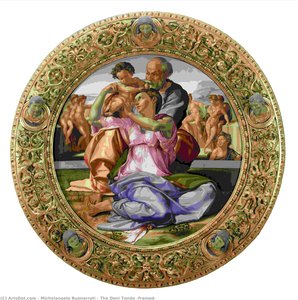 The Doni Tondo (framed) - Michelangelo Buonarroti
A celestial dance of color and form, The Doni Tondo by Michelangelo Buonarroti captures a moment where divinity meets the human pulse, frozen in a perfect, eternal circle. As a cornerstone among the top 25 artworks in Galleria degli Uffizi, Florence , this masterpiece holds a singular place in art history as the artist's only completed panel painting, marking the profound transition from High Renaissance harmony to the dramatic, muscular tension of Mannerism.
The painting breathes with a sculptural vitality; vibrant, jewel-toned drapery in brilliant blues and saturated reds wraps around figures that possess an almost tactile, marble-like weight. Michelangelo’s mastery of light sculpts every muscle, creating a sense of movement that feels both monumental and intimate. Bringing a reproduction of this tondo into a modern home offers more than mere decoration; it introduces a profound architectural rhythm and a sophisticated, classical energy that transforms any contemporary interior into a sanctuary of historical grace.
The Holy Family with the infant St. John the Baptist (the Doni tondo) - Michelangelo Buonarroti
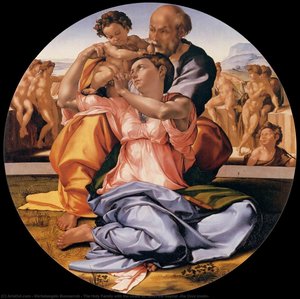 The Holy Family with the infant St. John the Baptist (the Doni tondo) - Michelangelo Buonarroti
What if I told you that The Holy Family with the infant St. John the Baptist (the Doni tondo) by Michelangelo Buonarroti was born from a moment of rebellion—a stroke of defiance against the ordinary? This is not merely a painting; it is a sculptural manifesto in color. Within the hallowed halls of the Uffizi, this work stands as a cornerstone of the Top 25, where Michelangelo’s unparalleled mastery of anatomy and vibrant, luminous hues—striking pinks and cerulean blues—redefined the very boundaries of Renaissance beauty.
The figures possess a muscular, rhythmic energy that seems to breathe within their circular frame, transcending the flat surface of the canvas. To bring a hand-painted reproduction of this masterpiece into your home is to invite that same divine energy into your personal sanctuary. Imagine this swirling vortex of grace and light hanging in your office or study, turning every glance into a powerful reminder: your space is not just a room; it is a profound statement of history, culture, and soul.
Baptism of Christ - Leonardo da Vinci
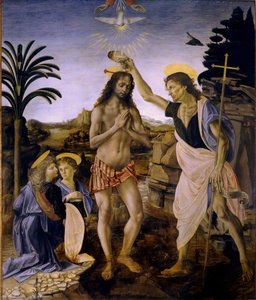 Baptism of Christ - Leonardo da Vinci
In the hallowed halls of the Uffizi, Leonardo da Vinci’s Baptism of Christ stands as a profound meditation on divinity and grace. Painted around 1475, this early masterpiece captures the pivotal moment in the Jordan River with an ethereal, atmospheric quality. Here, we witness the nascent genius of Da Vinci through his revolutionary use of sfumato , where edges dissolve into a dreamlike haze, and light dances across oil tempera to create translucent, lifelike textures. The landscape is not merely a backdrop but a living participant in this sacred event.
Owning Baptism of Christ by Leonardo da Vinci isn’t a purchase; it’s an inheritance . Its spot in the Top 25 is a legacy, a handshake across centuries. It’s not just art; it’s a lineage of taste . And now, with ArtsDot.com, that lineage isn’t just for museums. It’s for your walls —where every glance at a hand-painted oil reproduction is a nod to the masters.
Portrait of a Man with the Medal of Cosimo - Sandro Botticelli
 Portrait of a Man with the Medal of Cosimo - Sandro Botticelli
Imagine standing before a gaze that holds the secrets of a vanished dynasty. The air in the Uffizi seems to thicken with the weight of Florentine ambition as you encounter this intimate, piercing stare. In the Portrait of a Man with the Medal of Cosimo by Sandro Botticelli , we find a profound intersection of personal identity and political allegiance. Painted in 1474, this work captures the era when the Medici family's influence became the very heartbeat of Florence. The man’s grasp on the golden medal is not merely a gesture; it is a visual oath to Cosimo de' Medici. Botticelli utilizes the delicate, luminous precision of tempera to render the glint of gold and the rich texture of the subject's attire, while distant mountains provide an atmospheric depth. As one of the top 25 artworks in Galleria degli Uffizi, Florence , this portrait reminds us that true art does more than record history—it invites us to inhabit it, bringing a sense of timeless dignity and quiet power into our lives today.
The Adoration of the Magi (The draft) - Leonardo da Vinci
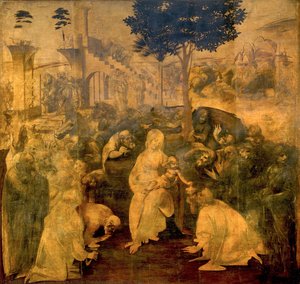 The Adoration of the Magi (The draft) - Leonardo da Vinci
In The Adoration of the Magi (The draft) , the lines are not merely drawn; they are choreographed . This is not a static composition, but a dance frozen in time, capturing Leonardo da Vinci’s genius mid-motion. Though left unfinished for the monks of San Donato, the work vibrates with an unparalleled creative energy. A swirling crowd of figures—attendants, onlookers, and perhaps even a glimpse of the artist himself—revolves around the luminous, triangular core of the Virgin and Christ.
Through the nascent use of sfumato , Leonardo begins to blur the boundaries between the physical and the divine, set against architectural ruins that symbolize the transition from the pagan era to the Christian age. The warm golds and deep ochres create a sense of sacred urgency. Just as this masterpiece finds harmony within its own chaotic process, one might wonder if their own walls could breathe such rhythm; bringing a piece of this Florentine legacy into your home allows you to capture that same profound balance between movement and stillness.
Rucellai Madonna - Duccio di Buoninsegna
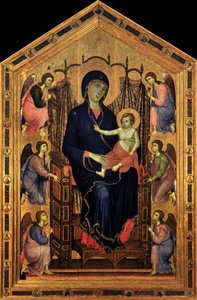 Rucellai Madonna - Duccio di Buoninsegna
The Rucellai Madonna by Duccio di Buoninsegna serves as a luminous threshold between the rigid Byzantine tradition and the burgeoning Italian Gothic. Created around 1285, this monumental altarpiece radiates with the spiritual fervor of the Sienese School, utilizing shimmering gold leaf and deep, celestial azure pigments to evoke a sense of divine presence. As you observe the Virgin Mary cradling the Christ Child amidst an assembly of saints, the painting’s scale and intricate glazing layers create an almost ethereal glow.
Owning a piece of this history is not merely a purchase; it is an inheritance —a handshake across centuries. To bring such a masterpiece into your home through our hand-painted oil reproductions is to claim a lineage of taste . This profound beauty, once reserved for the halls of the Uffizi, can now reside on your walls, where every glance serves as a nod to the masters.
Portraits of the Duke and Duchess of Urbino, Federico da Montefeltro and Battista Sforza - Piero della Francesca
 Portraits of the Duke and Duchess of Urbino, Federico da Montefeltro and Battista Sforza - Piero della Francesca
Imagine standing before a window into the 15th century, where time seems to hold its breath in silent, regal dignity. This profound stillness is captured perfectly in the Portraits of the Duke and Duchess of Urbino, Federico da Montefeltro and Battista Sforza by Piero della Francesca . As a cornerstone among the top 25 artworks in 'Galleria degli Uffizi, Florence', this diptych embodies the mathematical rigor and serene humanism of the Early Renaissance. Piero, a master of geometry, utilizes precise tempera layering to render the Duke’s commanding profile against an expansive, mountainous landscape. The vibrant reds of their attire contrast beautifully with the ethereal, sun-drenched vistas where distant boats drift upon the water. There is a monumental calm in their steady, profile gazes that transcends the centuries. To possess such a piece—whether through a meticulous hand-painted oil reproduction or a fine print—is to invite the enduring prestige and quiet strength of the Renaissance into your own personal sanctuary.
Bacchus (detail) - Caravaggio
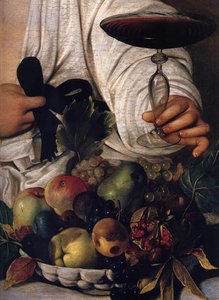 Bacchus (detail) - Caravaggio
In the hauntingly direct gaze of Caravaggio’s Bacchus , one encounters a profound connection to the human condition. As you stand before this detail, the youthful figure’s expression—a delicate tension between playful confidence and a languid, intoxicating vulnerability—captures the very essence of fleeting youth. This psychological depth is precisely why it remains a cornerstone among the top 25 artworks in the Galleria degli Uffizi, Florence .
Through his revolutionary use of chiaroscuro , Caravaggio sculpts light across dew-kissed fruit and overflowing wine, pulling the subject from the murky shadows into a visceral, tactile reality. To possess a reproduction of such dramatic intensity is to invite a sense of profound contemplation into your home; it allows a personal sanctuary to become a space for quiet reflection, anchored by the masterful interplay of light and shadow that defines the Baroque era.
St Catherine of Alexandria - Artemisia Gentileschi
 St Catherine of Alexandria - Artemisia Gentileschi
In St Catherine of Alexandria , a profound, velvety black dominates the composition, casting an atmosphere of intense, introspectively dramatic weight. This deep, tenebristic shadow sets a stage where light and darkness engage in a silent, psychological struggle, characteristic of the Baroque era. The masterful use of luminous gold—glinting from the regal crown—pierces through the surrounding gloom, a brilliant technical feat that secures its place among the top 25 artworks in 'Galleria degli Uffizi, Florence' . This striking interplay between shadow and brilliance captures the very essence of Artemisia Gentileschi’s resilience. For those looking to curate a modern living space, this dramatic color palette offers a blueprint for sophisticated elegance; integrating these rich, dark tones and metallic accents into a dining room or study can evoke a sense of historical grandeur and profound emotional depth, transforming a contemporary room into a sanctuary of classical strength.
Pallas and the Centaur - Sandro Botticelli
 Pallas and the Centaur - Sandro Botticelli
To stand before Pallas and the Centaur is to witness a celestial struggle frozen in time, where the ethereal grace of Athena meets the raw, muscular turbulence of the centaur. Botticelli captures that breathless second where wisdom prepares to subdue chaos, making this work an essential pillar among the top 25 artworks in the Galleria degli Uffizi, Florence. It embodies the Neoplatonic ideals of the Medici era, using rhythmic, flowing lines and a luminous tempera technique to represent the triumph of virtù over unbridled passion.
This masterpiece does not merely depict myth; it vibrates with an emotional resonance that has endured since 1482. At ArtsDot.com, we strive to preserve this very soul. Our master artists hand-paint meticulous oil reproductions on cotton canvas, ensuring the visible brushstrokes and deep tonal ranges of Botticelli’s original are captured, allowing you to bring this profound moment of Renaissance balance into your own collection with museum-grade authenticity.
Minerva - Artemisia Gentileschi
 Minerva - Artemisia Gentileschi
What story does the enveloping darkness surrounding Minerva by Artemisia Gentileschi tell? It is a narrative of emergence and intellectual sovereignty. Within the grand tapestry of the Baroque era, Gentileschi—a pioneering artist celebrated for her profound resilience—utilizes the dramatic technique of Tenebrism to sculpt the goddess of wisdom out of profound shadow. This work broke new ground in art history by replacing passive feminine archetypes with a subject of unmistakable authority and piercing clarity.
As one explores the top 25 artworks in 'Galleria degli Uffizi, Florence' , this masterpiece stands as a vital pillar of psychological depth. For the modern collector, such a painting offers more than mere decoration; it provides a curated escape into history. The dramatic interplay of light and the regal purple tones of Minerva’s gown allow a contemporary interior to evoke a sense of timelessness, anchoring a room with the same commanding presence and sophisticated atmosphere found within the halls of the Uffizi itself.
Self-Portrait - Jacques-Louis David
 Self-Portrait - Jacques-Louis David
What if I told you that "Self-Portrait" by Jacques-Louis David was born from a moment of rebellion—a stroke of defiance against the ordinary? In this 1791 masterpiece, we encounter more than a mere likeness; we witness the very soul of Neoclassicism. As one of the essential top 25 artworks in the Galleria degli Uffizi, Florence, David’s work captures the profound tension between classical restraint and the burgeoning emotional intensity of the Romantic era.
Through precise, sculpted lines and a muted palette of earthy browns, he presents himself as a figure of intellectual resilience, masking physical vulnerability with unwavering dignity. This is not art; it’s a manifesto . Its place in the Top 25 is not just earned; it’s demanded by history.
Now, imagine this rebellion hanging above your desk, turning every glance into a reminder: your space is not just a room. It’s a statement. At ArtsDot.com, we invite you to bring this historical gravity into your personal sanctuary through our exquisite, hand-painted oil reproductions.
St Augustine in His Cell - Sandro Botticelli
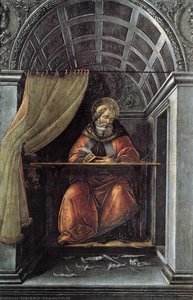 St Augustine in His Cell - Sandro Botticelli
In the quietest corridors of the Galleria degli Uffizi, Sandro Botticelli’s St. Augustine in His Cell offers a profound sanctuary of thought. Moving away from his more mythological epics, Botticelli captures a moment of intense spiritual and intellectual stillness. The painting presents the saint not as an imposing figure, but as a dedicated scholar immersed in study. Through the use of tempera on panel , the artist employs a luminous palette of rich reds and warm golds that bathe the monastic cell in a solemn, divine light. The composition is anchored by a subtle pyramidal structure, directing our gaze from the open book—representing the pursuit of truth—to the crucifix hanging above. To possess a high-quality reproduction of this work is to invite this very atmosphere of contemplation into your own space; it is an opportunity to transform a mere room into a gallery of the soul, surrounded by the enduring genius of the Renaissance.
Madonna and Child - Fra Angelico
 Madonna and Child - Fra Angelico
Fra Angelico’s Madonna and Child stands as a luminous bridge between medieval devotion and the burgeoning humanism of the Early Renaissance. This masterpiece captures a moment where the divine enters the earthly realm through pure, unadulterated tenderness, making it an essential pillar within the Galleria degli Uffizi's collection.
Its placement among the museum's greatest treasures is earned through Fra Angelico’s unparalleled mastery of tempera glazing . By applying thin, translucent layers, the artist achieved an ethereal radiance that seems to emanate from within the figures themselves, particularly in the soft, porcelain-like skin of the Christ child. The painting invites us to contemplate the profound beauty found in stillness and the eternal bond of maternal love, reminding us that even in the most sacred moments, humanity remains central.
For those curating a sophisticated home, a high-quality reproduction of this work offers more than mere decoration; it introduces a meditative light and a sense of historical gravity, allowing this Renaissance grace to anchor a contemporary space with quiet inspiration.
Judith Beheading Holofernes - Artemisia Gentileschi
 Judith Beheading Holofernes - Artemisia Gentileschi
In Judith Beheading Holofernes , the lines are not merely drawn; they are choreographed . This is not a static composition, but a dance of life and death frozen in time. Within the hallowed halls of the Galleria degli Uffizi, Artemisia Gentileschi’s masterpiece commands attention through its visceral use of tenebrism, where piercing light cuts through suffocating shadows to reveal Judith’s grim determination. We witness the heavy weight of the blade and the startling, rhythmic contrast of crimson blood against stark white linens—a sensory explosion of Baroque intensity.
This work stands as a profound testament to resilience, capturing a moment of fierce empowerment amidst historical darkness. As you contemplate this pinnacle of the Uffizi’s collection, consider the impact of such mastery on your own environment. What if your living room could hold that same dramatic balance? What if your walls could breathe rhythm , echoing the strength and soul of a true Renaissance spirit?
Theseus Finding His Father's Arms - Nicolas Poussin
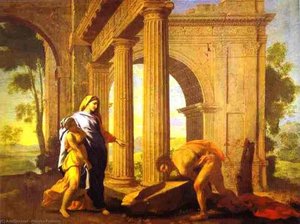 Theseus Finding His Father's Arms - Nicolas Poussin
In Theseus Finding His Father's Arms , Nicolas Poussin does not merely depict light; he composes it like a silent, profound sonata. Within the hallowed halls of the Galleria degli Uffizi , this 1633 masterpiece uses light as a language to narrate the weight of destiny. As Theseus kneels amidst classical columns, the subtle interplay of chiaroscuro illuminates the pivotal moment he discovers his father's discarded sword and sandals—the tangible proof of his royal lineage.
The palette is a masterclass in restraint, utilizing earthy ochres and deep, atmospheric shadows to create a sense of monumental stillness. This isn't just a mythological scene; it is an invention of light that breathes life into the stone-like figures surrounding the young hero. As one of the top 25 artworks in Florence , its power lies in this ability to transform space. When you bring a hand-painted oil reproduction of this Poussin into your home, that same transformative light spills across your walls, turning a simple room into a portal of classical inspiration and historical depth.
Ognissanti Madonna (Madonna in Maestà) - Giotto di Bondone
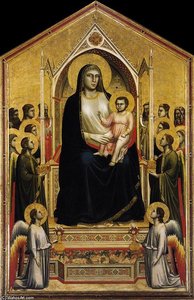 Ognissanti Madonna (Madonna in Maestà) - Giotto di Bondone
To encounter Giotto di Bondone’s Ognissanti Madonna is to witness the very moment Western painting found its breath. As one of the most profound entries in the list of top 25 artworks in Galleria degli Uffizi, Florence, this masterpiece serves as a seismic bridge between the rigid, stylized Byzantine tradition and the dawn of Renaissance naturalism.
Giotto moves beyond mere iconography, imbuing the Virgin Mary with a sculptural weight and an earthly presence that feels startlingly real. Through meticulous tempera application on wood, he uses subtle light and shadow to carve volume out of the panel, transforming flat, ethereal figures into monumental, three-dimensional presences. The composition—a hierarchical assembly of angels and prophets surrounding the enthroned Queen of Heaven—is anchored by rich, saturated pigments and a sense of divine, geometric order.
For the discerning eye, this work offers more than religious devotion; it represents an unparalleled legacy of innovation. Its structured grandeur and profound emotional intelligence make it a timeless reference for any refined collection seeking to embody the enduring spirit of the Florentine Golden Age.
St. Anthony Dispirited - Francisco de Zurbarán
 St. Anthony Dispirited - Francisco de Zurbarán
Close your eyes. Can you feel the weight of the shadows and the sudden, piercing grace in St. Anthony Dispirited by Francisco de Zurbarán? Within the hallowed corridors of the Galleria degli Uffizi, Florence , this work does not merely reflect light; it composes it. Like a master musician crafting a silent sonata, Zurbarán uses the dramatic language of tenebrism to sculpt the saint’s weathered face and the heavy, monastic folds of his robe out of an abyssal darkness.
The light here is an invention—a divine presence manifesting through extreme chiaroscuro. You can sense the tactile texture of the cold stone chapel and the ethereal presence of the flanking angels. This painting stands as a cornerstone of our top 25 artworks in the Uffizi because it captures a moment of profound spiritual intensity that transcends time. Now, open your eyes. That same transformative light is waiting to spill into your home, turning your walls into portals of historical inspiration and quiet, breathtaking beauty.
Conclusion
To wander through the halls of the Galleria degli Uffizi is to participate in a silent, centuries-old dialogue between the artist and the soul. As we conclude this journey through twenty-five of Florence’s most profound treasures, we find that these works do not truly belong to the past; they are living presences that continue to breathe within the modern world. They are more than mere historical artifacts; they are vessels of light, emotion, and human triumph that possess the power to transform any space they inhabit.
The true magic of a masterpiece lies not in its preservation behind museum glass, but in its ability to inspire the everyday. There is a profound, quiet strength found in surrounding oneself with the textures of the Renaissance—the deliberate weight of a brushstroke, the luminous glow of a Madonna’s veil, or the dramatic shadows of a Florentine landscape. To bring these works into your own home is to invite a daily encounter with greatness, turning a private sanctuary into a gallery of reflection and grace.
We invite you to continue this exploration and find the piece that speaks to your own story within our full collection . Whether through the tactile depth of a hand-painted oil reproduction or the enduring clarity of a fine print, let the legacy of the Uffizi become a permanent part of your world, serving as a timeless reminder of the boundless beauty of human creativity.