
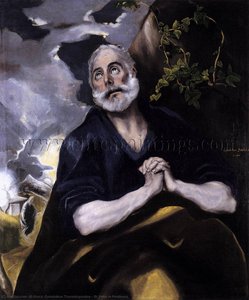
The Fracture of Harmony: Transitioning from High Renaissance Stability to Mannerist Tension
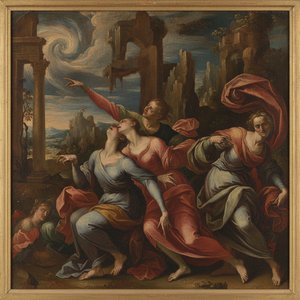 Drama & Distortion: A Journey Through the Captivating World of Baroque Mannerism
The Renaissance Departure: From Serene Harmony to Mannerist Tension Drama and Distortion: A Definitive Guide to the Mastery of Mannerism and Baroque Art The Renaissance Departure: Understanding the Rise of Mannerism Mannerism Mannerism is a style in ...
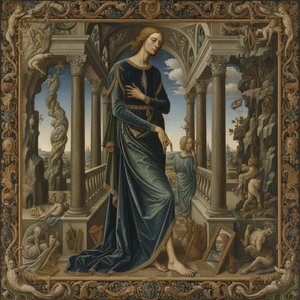
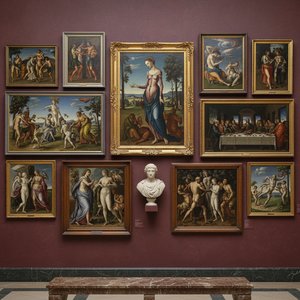
To truly appreciate the breathtaking tension of Mannerism, one must first sit quietly with the serene equilibrium of the High Renaissance. For decades, the European artistic landscape was anchored by a pursuit of mathematical perfection—a world where perspective, anatomical accuracy, and light converged to create a window into a divine, harmonious reality. The masters of this era, such as Leonardo da Vinci and Raphael, sought to mirror the order of the and the cosmos through stable pyramidal compositions and a sense of tranquil permanence. There was a predictable beauty in this classical stability, a belief that art could capture the very essence of a rational and balanced universe.
However, as the sixteenth century dawned, this classical stability began to fracture under the weight of profound social, religious, and political upheaval. The certainty of the Renaissance—rooted in faith, reason, and order—was shaken by seismic events such as the sack of Rome in 1527, which fostered a pervasive sense of instability and disillusionment across the continent. This was not a sudden rupture but a gradual, deliberate departure from the predictable. The clarity of the Renaissance gave way to an era of ambiguity and psychological complexity. Where once there was balance, there emerged tension; where once there was naturalism, there arose a fascination with the artificial and the elongated.
The Aesthetic of Distortion: Elegance, Artifice, and the Elongated Form
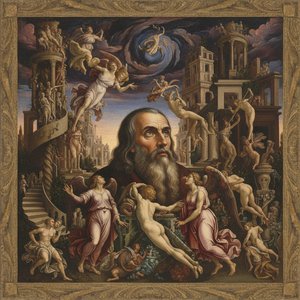
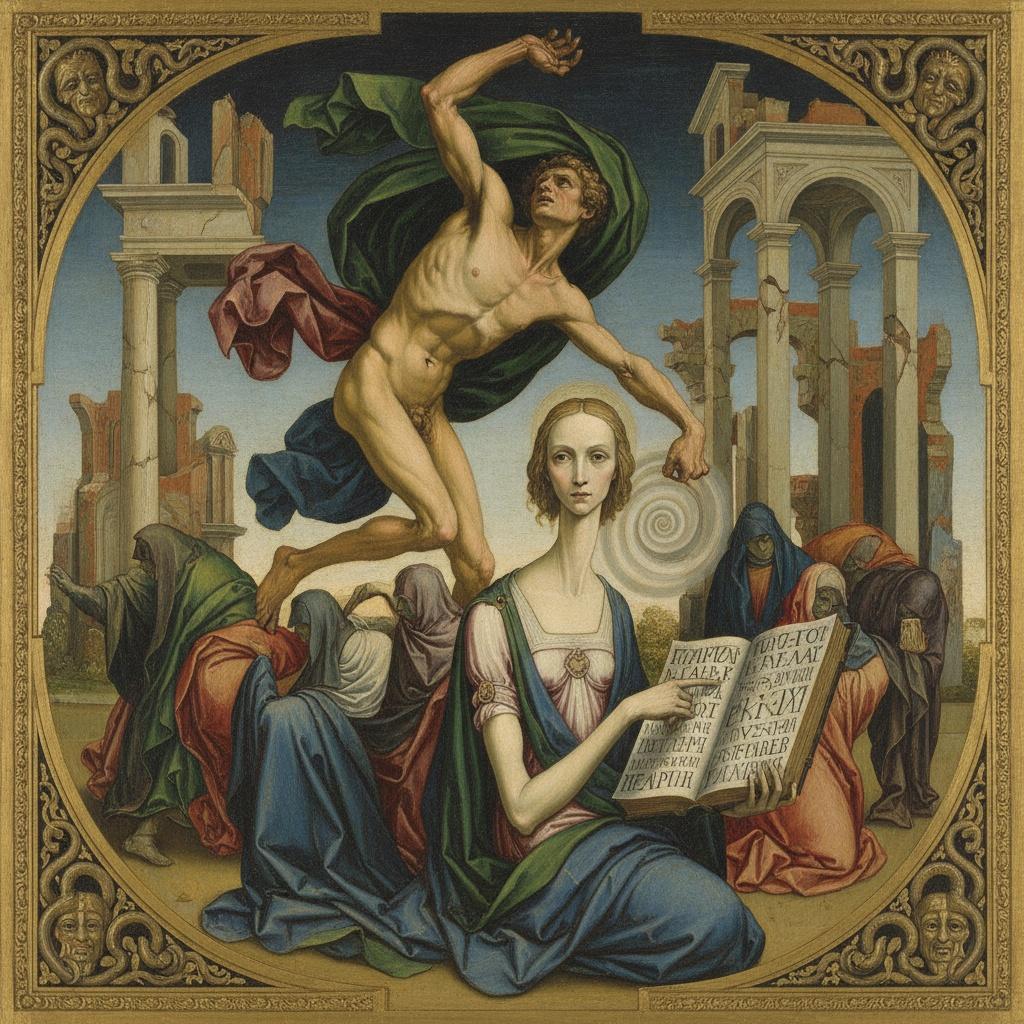
Mannerism, derived from the Italian word maniera meaning “style” or “manner,” was not an attempt to reject beauty altogether, but rather a profound endeavor to redefine it. It emerged as a reaction against the perceived perfection of its predecessors, seeking to excel through artifice rather than imitation. In this new realm, the pursuit of perfection was abandoned in favor of the pursuit of expression. The artists of this period began to manipulate the human form with a sophisticated, almost playful, disregard for strict anatomical accuracy.
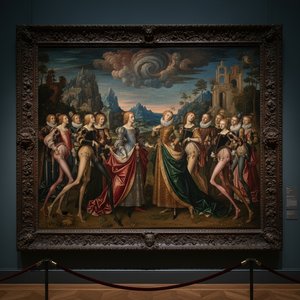
This aesthetic is characterized by what we might call elegant distortion. Figures became unnaturally elongated, limbs stretched into graceful yet impossible arcs, and compositions grew increasingly asymmetrical. This was not a failure of skill, but a mastery of it—a way to use the body as a vehicle for emotional and intellectual complexity. The grace found in Mannerist works is often highly stylized, prioritizing a sense of sprezzatura—that effortless elegance that masks the immense technical difficulty required to create such fluid, serpentine movements.
A World in Flux: Social Upheaval and the Psychological Depth of the 16th Century
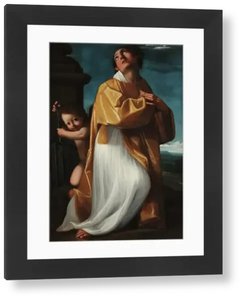 Giulio Cesare Amidano
Giulio Cesare Amidano: A Parma Painter Lost in the Shadows of Mannerism Giulio Cesare Amidano, a name largely absent from the grand narratives of 16th-century Italian art, was nonetheless a painter who quietly contributed to the evolving landscape of...
The shift from the High Renaissance to Mannerism was deeply intertwined with the anxieties of the age. The sixteenth century was a period of profound transition, where the established structures of the Church and the State were being interrogated by new religious movements and political shifts. This atmosphere of uncertainty found its way onto the canvas, manifesting as a palpable psychological depth. Unlike the tranquil faces of Raphael’s Madonnas, Mannerist figures often possess an underlying tension, reflecting the anxieties and uncertainties of their era.
In the works of artists like Giulio Cesare Amidano, one can observe how landscapes began to incorporate a certain melancholy. While his scenes might feature rolling hills and expansive skies reminiscent of the Flemish masters, there is often a diffused quality to the light that suggests a deeper, more introspective mood. This ability to infuse classical grace with a sense of psychological weight is what makes Mannerism so captivating; it captures the human condition in a moment of profound transition, caught between the fading light of Renaissance certainty and the approaching shadows of a more turbulent age.
Northern Mannerism: The Spread of Elegant Tension Across the Alps
 Northern Mannerism
Northern Mannerism is the form of Mannerism found in the visual arts north of the Alps in the 16th and early 17th centuries. Styles largely derived from Italian Mannerism were found in the Netherlands and elsewhere from around the mid-century, especi...
While the heart of this movement beat strongly in Italy, its influence traveled far beyond the Mediterranean. Northern Mannerism emerged as a fascinating synthesis of Italian sophistication and the unique traditions of the Netherlands, France, and Prague. In these regions, the style took on even more original and distinctive forms. Unlike the Italian masters who had a direct lineage to classical antiquity, Northern artists often blended these new, elongated aesthetics with existing Gothic influences and a burgeoning interest in intricate ornamentation.
In the Netherlands and beyond, Mannerism became particularly evident in architecture and the decorative arts, where complex, swirling patterns and highly detailed motifs flourished. This movement was spread largely through the medium of prints, allowing the "modern" style to reach an international audience of collectors and royals. It was a period of intense artistic exchange, where the dramatic evolution of European art was written in the language of elegant distortion and sophisticated, often intellectually demanding, compositions.
From Devotion to Drama: The Oratorio del Gonfalone and the Legacy of El Greco
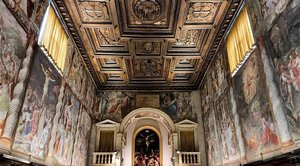 Oratorio del Gonfalone
A Glimpse into Renaissance Devotion – The Oratorio del Gonfalone Tucked away within the labyrinthine streets of Rome, the Oratorio del Gonfalone stands as a testament to the city’s layered history and artistic brilliance. Often referred to as the “Si...
Nowhere is the transition from religious devotion to dramatic expression more palpable than in the sacred spaces of Rome. The Oratorio del Gonfalone, often referred to as the “Sistine Chapel” of Mannerism, serves as a breathtaking testament to this era. Tucked away in the labyrinthine streets of Rome, this oratory reveals a treasure trove of frescoes that blend religious fervor with dynamic artistic expression. The cycle of paintings depicting the Passion of Christ, created by a collective of prominent Mannerist artists, moves away from static iconography toward a more kinetic and emotionally charged narrative.
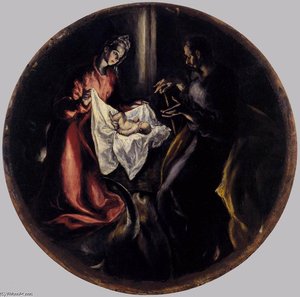
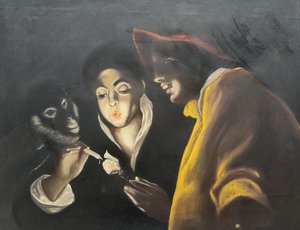
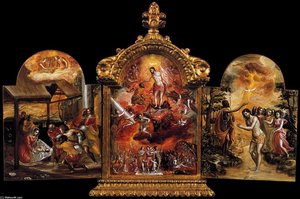
This trajectory of drama reaches its zenith in the works of El Greco. In the heart of Toledo, his legacy remains an immersive pilgrimage into the creative soul. El Greco redefined the limits of Mannerism, utilizing elongated figures and dramatic, flickering light to dissolve the boundaries between the earthly and the divine. His work captures a sense of religious ecstasy that is unparalleled, using expressive distortion not merely for aesthetic flair, but to convey the very essence of spiritual intensity. He stands as a monumental figure who took the seeds of Mannerist tension and bloomed them into a full-scale revolution of light and emotion.
The Bridge to Baroque: How Mannerist Complexity Paved the Way for Emotional Grandeur
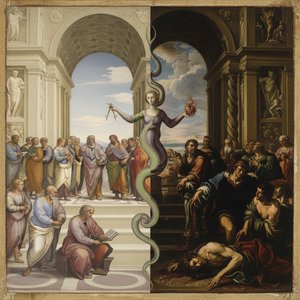 Mannerism: Bridging Renaissance Harmony & Baroque Drama – A Study of Style & Affectation
The Twilight of Renaissance Classicism: Setting the Stage for Mannerism Wikipedia: Renaissance art Renaissance art (1350 – 1620) is the painting, sculpture, and decorative arts of the period of European history known as the Renaissance, which emerged...
As we look back upon the twilight of the sixteenth century, we see that Mannerism was far more than a mere stylistic detour. It served as the essential bridge between the harmonious ideals of the High Renaissance and the theatrical, sweeping drama of the Baroque. By breaking the rules of proportion and embracing instability, Mannerist artists prepared the European consciousness for a new kind of engagement with art—one that prioritized movement, emotion, and the sublime.
The complexity and artifice of Mannerism eventually gave way to the more direct, visceral energy of Caravaggio and the early Baroque masters. Yet, the lessons of Mannerism—the power of light to create atmosphere, the use of distortion to evoke feeling, and the ability to find beauty in tension—remained foundational. To study Mannerism is to witness the moment when art stopped trying to perfectly mirror the world and began, instead, to interpret the profound complexities of the human soul.