
The Echo of Antiquity: Finding Roman Grandeur in the Impressionist Lens
 Roman Empire
The Roman Empire was a state that dominated the Mediterranean and much of Europe, Western Asia, and North Africa during the classical period. The Roman Republic had previously conquered most of these territories, which later came under permanent sing...
To step into a landscape painted with the light of Impressionism is to enter a world where time itself seems to soften, losing its rigid edges to the gentle caress of dappled sunlight. For those of us who have spent decades wandering through the hallowed halls of museums, there is a profound, quiet magic in witnessing the intersection of two seemingly disparate eras: the monumental, unyielding strength of the Roman Empire and the fleeting, ephemeral whispers of the Impressionist movement. While the Romans sought to etch their glory into eternal marble and stone, the Impressionists—those rebels of the nineteenth century—sought to capture the very breath of life as it danced across those ancient surfaces.
The Roman Empire, at its zenith, was a testament to permanence, a vast dominion that stretched from the Mediterranean to the heart of Europe, leaving behind a legacy of architectural precision and imperial might. Yet, when we view these echoes of antiquity through the lens of artists like Monet, Renoir, or Pissarro, we do not see the cold, hard facts of history. Instead, we encounter a romanticized dialogue between what was once invincible and what is perpetually changing. It is a beautiful tension; the heavy, storied weight of Roman ruins meeting the light, broken brushstrokes that celebrate the momentary flicker of a sunset or the shifting shadow of a cloud.
This connection invites us to reflect on our own relationship with history. Just as the Impressionists rejected the stiff, academic traditions of their time to find truth in the sensory experience, we too can find a deeper meaning in the ruins of the past when viewed through a lens of beauty and emotion. It is not merely about documenting a fallen empire, but about feeling the pulse of life that continues to beat amidst its remnants.
Sunlight on Stone: Capturing the Epermeral Beauty of Classical Ruins
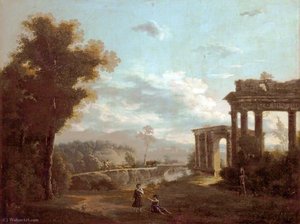 Classical Landscape with Ruins and Two Figures
Admire Andrea Locatelli’s ‘Classical Landscape.’ A serene 18th-century oil painting featuring Roman ruins & figures in a romantic landscape. Explore its beauty & historical context.
There is a specific, heart-stirring sensation that occurs when sunlight hits a weathered Roman column, turning cold limestone into something that glows with an inner, golden warmth. The Impressionist masters were nothing if not observers of this phenomenon. They moved en plein air, away from the controlled environments of the studio, to witness how light interacts with texture and age. In their hands, a ruin is never just a pile of debris; it is a canvas for the play of light and shadow, a stage where the sun performs its daily drama.
Consider the way an artist might approach a fragment of an ancient archway. Where a classical painter of the seventeenth century might have focused on the precise architectural geometry, an Impressionist focuses on the atmospheric perspective. They use layers of vibrant, unblended color to suggest the way dust motes dance in the heat or how moisture from a nearby river softens the silhouette of a crumbling temple. The stone becomes porous, almost liquid, absorbing the hues of the surrounding greenery and the azure sky.
<This technique creates a sense of profound intimacy. When we gaze upon these works, we are not looking at a distant historical monument; we are standing right there, feeling the warmth of the afternoon sun on our skin, hearing the rustle of leaves against ancient masonry. The heavy architecture of Rome is rendered weightless by the sheer brilliance of the palette, reminding us that even the most formidable structures are subject to the beautiful, transformative power of nature.
Beyond the Marble: The Emotional Resonance of Landscapes and Lost Empires
 Fall of the Western Roman Empire
The fall of the Western Roman Empire, also called the fall of the Roman Empire or the fall of Rome, was the loss of central political control in the Western Roman Empire, a process in which the Empire failed to enforce its rule, and its vast territor...
Beyond the mere visual spectacle lies a deeper, more melancholic beauty found in the concept of the lost empire. There is an inherent poetry in the decay of greatness. For the art lover, there is a shared sentiment between the fallen Roman provinces and the Impressionist fascination with the passing moment. Both remind us of the transient nature of all things—the rise and fall of civilizations, the blooming and fading of a summer flower.
The landscapes that feature these classical motifs often serve as meditations on memory. When we see figures wandering through a landscape dotted with Roman vestiges, as seen in the tradition of Italianate landscapes, we are prompted to contemplate our own place in the grand tapestry of time. The ruins act as anchors of memory, while the Impressionist style provides the emotional fluidity to process that history. It is a way of mourning what was lost while simultaneously celebrating the enduring beauty of the earth that remains.
This emotional resonance is what makes these paintings so much more than mere decor; they are vessels for reflection. They allow us to touch the hem of history without being burdened by its weight. In the soft, luminous textures of a well-executed oil painting, the tragedy of the fall of Rome is transformed into a serene, contemplative grace, inviting us to find peace in the inevitable cycles of change.
A Symphony of Light and History: How Impressionism Reimagined the Eternal City
 Impressionistic Landscapes: 10 Masterpieces That Changed Art & Decor
Introduction To gaze upon these ten canvases is to step directly into a world transformed by light, color, and an unprecedented embrace of the fleeting moment. The Impressionistic Landscape movement wasn’t merely a shift in painting technique; it was...
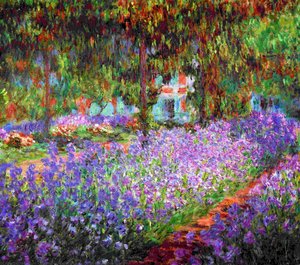
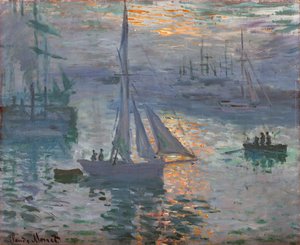
The reimagining of history through Impressionism was nothing short of a revolution in perception. By rejecting the meticulous detail and mythological grandiosity favored by the traditional Salon, artists like Monet and Degas offered a new way to "see" the past. They did not seek to reconstruct the Roman Empire with archaeological accuracy; rather, they sought to capture its impression—the feeling of its presence in the modern landscape.
This reimagining is achieved through a masterful use of color and movement. The "eternal" quality of Rome is stripped of its static, frozen nature and infused with vitality. A landscape might feature a broken aqueduct, but that aqueduct is alive with the movement of light, the shadows of passing birds, and the vibrant greens of encroaching vines. This creates a symphony where the low, steady notes of history provide the foundation for the high, bright melodies of color.
In this way, Impressionism breathes new life into antiquity. It prevents the past from becoming a dusty, irrelevant relic. Instead, it integrates the Roman legacy into the living, breathing present. The "Eternal City" is no longer just a subject of history books; it becomes a sensory experience, a shimmering, subjective reality that continues to capturize our imaginations centuries later.
Curating Timelessness: Bringing the Spirit of Roman Majesty into the Modern Home
 Impressionist Landscapes: 10 Masterpieces for Your Home | ArtsDot
Introduction Imagine stepping into a world bathed in dappled sunlight, where colors dance and shimmer with an ethereal quality. This is the realm of Impressionism – a revolutionary art movement that forever altered how we perceive light, color, and t...
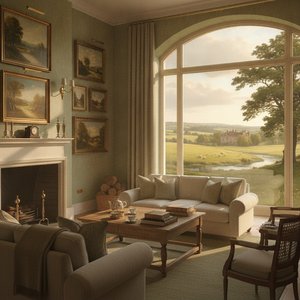
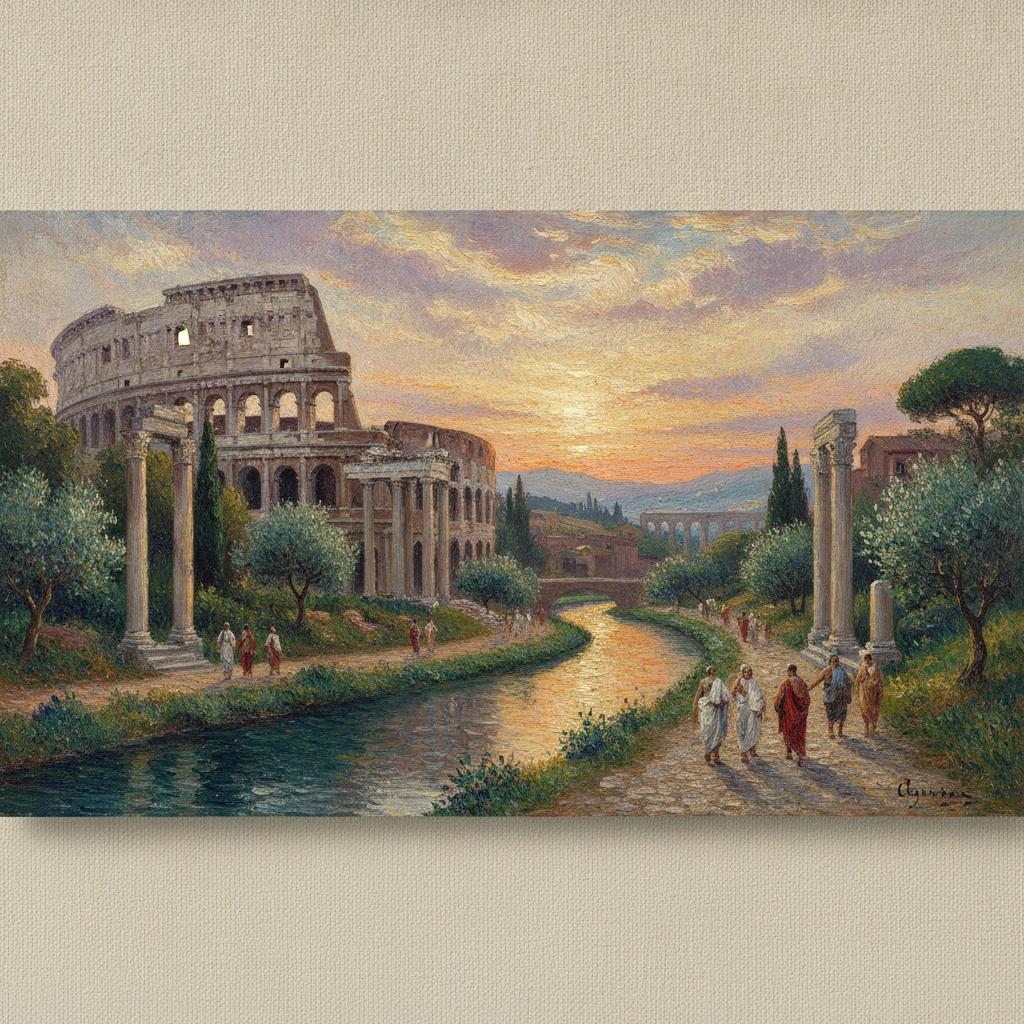
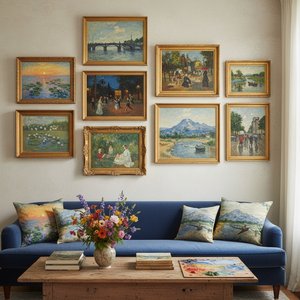
For the discerning collector, bringing these visions of eternal glory into one's personal sanctuary is an act of curation that transcends mere interior design. It is about creating an atmosphere of culture, reflection, and enduring beauty. A carefully chosen Impressionist-style landscape, with its nods to classical grandeur, can serve as a window to another era, providing a sense of depth and soul to any room.
When selecting pieces for your home, consider the emotional impact of the light and color. An expansive, multi-panel work featuring the sun-drenched ruins of an Italianate landscape can transform a wide wall or a grand staircase into a focal point of historical conversation. The visible brushstrokes and the rich, tactile nature of a hand-painted oil reproduction offer a depth that digital prints simply cannot replicate, allowing the light to catch the texture of the paint just as it would in a museum.
Ultimately, decorating with such profound subject matter is about surrounding ourselves with stories. Whether it is a soft, atmospheric depiction of a Roman twilight or a vibrant study of sunlight on ancient marble, these works remind us to slow down, to observe the fleeting moments, and to cherish the enduring majesty of the world around us. In doing so, we do not just decorate a house; we cultivate a home filled with the light of history.