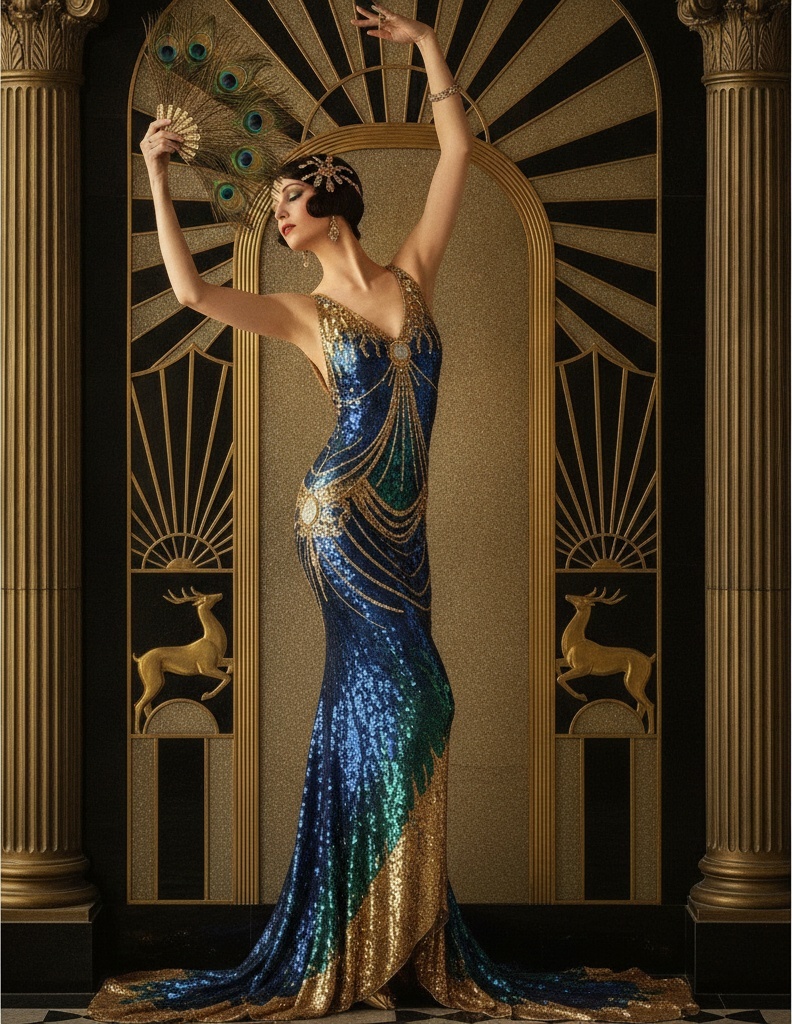
The Architect of Glamour: Introducing the Visionary World of Erté
To step into the world of Romain de Tirtoff, known universally as Erté, is to surrender oneself to a dream of perpetual elegance. He was not merely an illustrator; he was the high priest of the Art Deco movement, a visionary who breathed life into the rhythmic pulse of the 1920s and 30s. His work does not simply depict fashion; it orchestrates a symphony of movement, where every silken drape and feathered ornament tells a story of unparalleled sophistication. For those of us who find solace in the refined beauty of the past, Erté offers a sanctuary of grace, a place where the frantic pace of modernity is replaced by the deliberate, poised cadence of a bygone era of luxury.
His influence transcended the boundaries of paper and ink, spilling into the very fabric of culture. From the stage of the Folies Bergère to the most prestigious fashion houses of Paris, Erté’s hand guided the aesthetic evolution of an entire generation. He possessed a rare ability to capture the ephemeral essence of beauty—the way light dances upon a sequin or the fluid motion of a dancer mid-turn—and crystallize it into a permanent, iconic form. To study his oeuvre is to witness the birth of a modern myth, where the human figure becomes an exquisite vessel for geometric perfection and ornamental splendor.
Symmetry and Sophistication: The Defining Elements of Art Deco Design
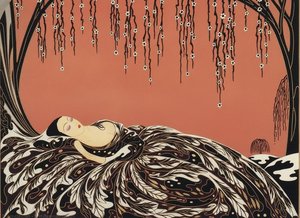
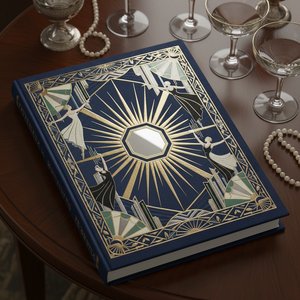
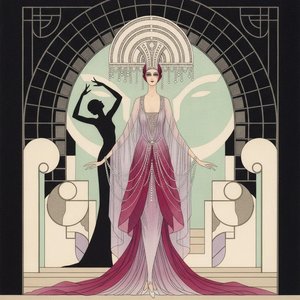
The magic of Erté’s compositions lies in their profound adherence to the principles of Art Deco: a marriage of organic fluidity and rigorous geometric structure. Unlike the swirling, unrestrained vines of the preceding Art Nouveau period, the Art Deco aesthetic embraced the clarity of the machine age, yet infused it with a decadent, human warmth. In Erté's hands, this manifested as a breathtaking use of symmetry. His figures are often framed by architectural motifs—sunbursts, stepped pyramids, and stylized floral patterns—that ground the ethereal subject matter in a sense of monumental stability.
This balance between the structured and the flowing creates a tension that is deeply captivating to the eye. One might observe how a sharp, angular silhouette is softened by the cascading curves of a feathered boa, or how a rigid, metallic backdrop provides the perfect stage for the soft, translucent layers of a chiffon gown. This interplay of opposites is what gives his work its rhythmic vitality. It is a design language that speaks of order and luxury, inviting the viewer to admire not just the subject, and the artistry, but the very mathematical harmony that underpins the entire visual experience.
The Poetry of Line: Exploring Erté’s Iconic Fashion Illustrations
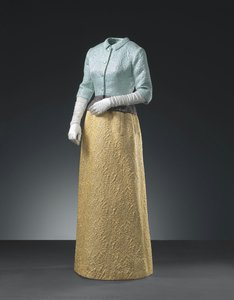
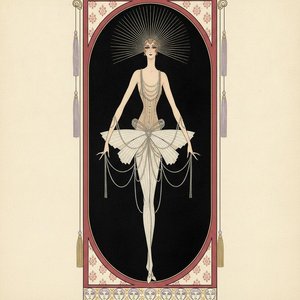
At the heart of Erté’s mastery is his incomparable command of line. His illustrations possess a lyrical quality, where a single, sweeping stroke can convey both the weight of heavy velvet and the weightlessness of a summer breeze. There is a profound poetry in his penmanship; he utilized line not merely as a boundary for color, but as an expressive tool capable of conveying emotion and movement. When we gaze upon his depictions of the era's most coveted gowns, we are witnessing a masterclass in rhythmic contouring.
His work often features a delicate interplay of textures that feels almost tactile to the viewer. Through meticulous detail, he suggests the shimmer of pearls, the luster of satin, and the intricate complexity of beadwork. This attention to detail does not overwhelm the composition; rather, it enhances the sense of opulence. Each figure seems to emerge from a mist of stylized ornamentation, draped in garments that are as much sculptures as they are clothing. It is this seamless integration of fashion and fine art that allows his illustrations to remain timeless, transcending the fleeting trends of any single decade to become eternal icons of style.
A Symphony of Luxury: How Art Deco Influenced 20th-Century Decorative Arts
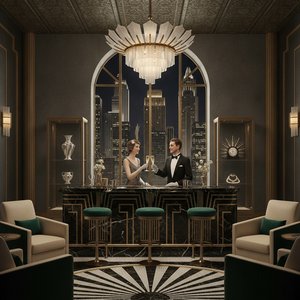
The aesthetic revolution led by Erté and his contemporaries did not remain confined to the pages of fashion magazines; it permeated every facet of the decorative arts. The spirit of Art Deco can be found in the sleek lines of streamlined locomotives, the geometric precision of skyscraper architecture, and the opulent textures of fine jewelry. This era sought to unify art with everyday life, turning functional objects into exquisite masterpieces of design. One can see the echoes of Erté’s rhythmic patterns in the lacquered surfaces of furniture, the intricate metalwork of lighting fixtures, and the bold, graphic motifs of ceramic ware.
This period was characterized by a profound sense of optimism and a celebration of new materials—chrome, glass, and exotic woods. The decorative arts of this era shared with Erté’s illustrations a common goal: to evoke a sense of wonder through controlled elegance. Whether it was a cocktail shaker crafted with streamlined precision or a grand ballroom adorned with stylized motifs, the objective was to create an environment of curated splendor. This holistic approach to design ensured that the glamour of the Art Deco movement was not just something to be viewed, but something to be lived within.
Timeless Allure: Bringing the Spirit of Art Deco into the Modern Home
In our contemporary world, there is a profound longing for the enduring quality and intentional beauty represented by the Art Deco era. Integrating elements of this style into a modern interior does not require a complete historical reconstruction; rather, it is about selecting pieces that evoke that same sense of curated luxury and rhythmic grace. A single, high-quality reproduction of an Erté illustration, framed in a classic gold leaf or deep espresso wood, can serve as a breathtaking focal point, anchoring a room with its sophisticated narrative.
The beauty of the Art Deco aesthetic lies in its versatility. It pairs exquisitely with the clean lines of modern minimalism, providing a necessary layer of warmth and historical depth. One might introduce metallic accents, geometric patterned textiles, or sculptural lighting to echo the era's love for structure and shine. By thoughtfully incorporating these elements, we do more than decorate a space; we curate an atmosphere of timelessness. We invite the elegance of the past to converse with the present, creating a home that feels both deeply personal and eternally refined.