The Primordial Dialogue: From Sacred Symbols to Scientific Observation
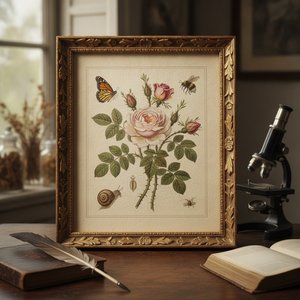 The Delicate Beauty of Botanical Realism: Capturing Nature's True Essence through the Lens of Art History
The Roots of Observation: From Ancient Herbals to Scientific Precision The Flourishing Canvas: A Historical Journey Through Botanical Illustration From Herbals to Healing: The Earliest Roots of Botanical Depiction Wikipedia: Botanical illustration Bo...
To wander through the annals of art history is to witness a profound, ancient dialogue between humanity and the verdant world. Long before the advent of the camera lens or the sophisticated microscope, our understanding of the plant kingdom was inextricably linked to the artist's steady hand and the symbolic language of the brush. In the earliest glimpses of this relationship, we find no sterile textbooks, but rather sacred depictions adorning the walls of ancient tombs and temples. In these primordial works, flora served as a cosmological language; a single leaf could represent the breath of life or the eternal cycle of rebirth. These early illustrations, dating back nearly four millennia, reveal a fundamental human impulse to categorize and interpret the natural world, even when strict anatomical accuracy was not yet the primary goal.
As centuries unfolded, this symbolic reverence transitioned into a more structured pursuit of knowledge. During the medieval period, monasteries became quiet sanctuaries of botanical preservation. Within these cloistered gardens, monks cultivated medicinal herbs not merely for sustenance but for healing, and their herbals—meticulously illustrated compendiums—became vital lifelines. While works like the
Pseudo-Apuleius Herbarius often prioritized spiritual meaning over strict realism, they laid the essential groundwork for a growing human desire to document nature with greater fidelity. This evolution reached a pivotal moment in the 6th century with manuscripts such as the
Vienna Dioscurides, marking a shift toward a more disciplined approach to botanical representation that would eventually bridge the gap between art and science.
The Master’s Eye: Precision and Passion in Botanical Realism
 johann simon von kerner
Johann Simon von Kerner: A Pioneer of Botanical Illustration Born in Kirchheim bei Teck, Germany, in 1755, Johann Simon von Kerner’s life was inextricably linked to the burgeoning world of botany and scientific illustration. His legacy rests primaril...
As the Renaissance and Enlightenment eras dawned, the artist’s role expanded from storyteller to scientist. The necessity of survival and the expansion of global exploration demanded a new level of precision. This era birthed masters who could render the delicate textures of a petal or the rugged bark of a stem with such clarity that the painting became a document of discovery. We see this in the works of figures like Johann Wilhelm Weinmann, whose
Phytanthoza iconographia redefined the genre through its ambitious and breathtakingly accurate depictions. The artist’s task was no longer just to evoke emotion, but to provide a visual truth that could be studied by scholars far from the specimen's original habitat.
This period of scientific advancement brought forth pioneers like Johann Simon von Kerner, whose twelve-volume
Hortus Sempervirens stands as a monumental testament to meticulous observation. His life was inextricably linked to the burgeoning world of botany, and his ability to capture the very essence of plant life through artistic skill allowed the beauty of the natural world to reach a wider audience. Similarly, the work of Jacopo Ligozzi, particularly his depictions of the
Agave americana, showcases how muted tones and meticulous detail can create a sense of scientific permanence. In these hands, the brush became an instrument of discovery, capturing the form, color, and intricate details of species with a reverence that honored both the subject and the observer.
A Living Chronicle: The Intersection of Artistry and Botanical Science
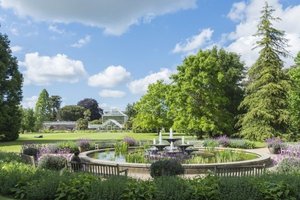 Cambridge University Botanic Garden
A Living Chronicle of Botanical Artistry Nestled within the historic heart of Cambridge, the Cambridge University Botanic Garden serves as much more than a mere horticultural display; it is a living, breathing masterpiece where scientific inquiry mee...
The true magic of naturalistic illustration lies in the seamless blending of scientific inquiry and profound aesthetic grace. This intersection is perhaps most beautifully realized in spaces like the Cambridge University Botanic Garden. Since its inception in 1762, this sanctuary has evolved into a sprawling canvas of natural history where the boundaries between the laboratory and the gallery dissolve. To wander through such paths is to trace the footsteps of intellectual giants like Charles Darwin, whose formative ideas were nurtured amidst these verdant expanses. Here, every leaf and bloom acts as a brushstroke in a centuries-old portrait of the natural world’s enduring majesty.
This harmony is not merely accidental but is often a result of intentional composition. Much like a masterfully planned landscape painting, botanical gardens often employ a systematic approach that allows visitors to witness the intricate interconnectedness of life. The arrangement of species by evolutionary relationships creates a rhythmic flow of texture and color that educates the mind while soothing the spirit. We see this same dedication to structured beauty in the
Museo Botanico of Florence, a testament to both scientific curiosity and the artistic patronage of the Medici family. These gardens are more than collections of plants; they are living chronicles where architectural elegance meets the untamed beauty of the natural world, reflecting a deep-seated human desire to find order within the wild.
Beyond the Lens: The Emotional Resonance of Naturalistic Detail
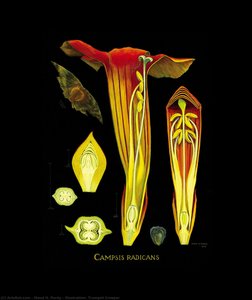 Illustration: Trumpet Creeper
Exquisite 1932 botanical illustration by Maud H. Purdy: 'Trumpet Creeper'. Detailed watercolor study of a *Campis radicans* plant, showcasing scientific precision & natural beauty.
While the scientific utility of botanical art is undeniable, its true enduring power resides in its ability to evoke emotion and capture the "soul" of the subject. There is a tactile intimacy in a watercolor study, such as Maud H. Purdy’s 1932 illustration of the
Trumpet Creeper, that a photograph can rarely replicate. The artist’s choice of medium—whether the delicate transparency of watercolor or the rich, layered depth of oils—allows for a sensory experience that transcends mere documentation. We are not just seeing a plant; we are feeling its vitality, its fragility, and its place within the larger tapestry of life.
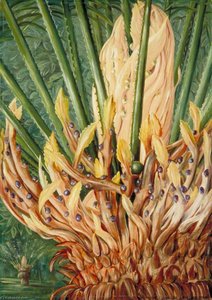
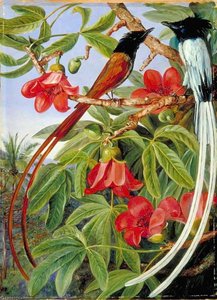
This emotional resonance is also found in the more expansive, habitat-focused works of artists like Marianne North. Unlike the formal botanical studies that often isolate specimens for scrutiny, North’s paintings explode with the energy of plants flourishing in their natural environments. Her work, particularly her depictions of palms in the Buitenzorg Botanic Garden, serves as a passionate testament to a life lived in pursuit of beauty. In her brushstrokes, we find the untamed spirit of exploration and a profound love for the vibrant, living world. It is this ability to capture the "life" within the illustration—the subtle movement of a vine or the way light filters through a leaf—that allows these works to move us long after the scientific era of their creation has passed.
The Enduring Legacy: Preserving Nature's Beauty Through the Brush
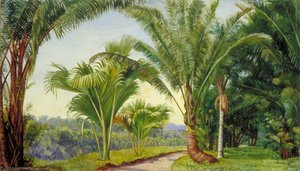 Palms in the Botanic Garden, Buitenzorg, Java
A Victorian Explorer's Ode to Tropical Beauty: Marianne North’s ‘Palms in the Botanic Garden’ Marianne North (1830–1890) wasn’t merely an artist; she was a pioneer, a woman who defied societal expectations and charted her own course toward scientific...
As we look back upon this rich history, we recognize that naturalistic illustration remains a vital bridge between our past and our future. In an age dominated by rapid technological advancement and digital imagery, the slow, deliberate process of hand-painted botanical art offers a much-needed moment of reflection. The legacy of the illustrators—from the monks of the medieval era to the Victorian explorers—remains etched in the very textures of the works they left behind. Their dedication to capturing the essence of nature ensures that even as species change and landscapes shift, the beauty of the natural world is preserved for generations to come.
For those of us who find solace in the intricate details of a petal or the sweeping grace of a fern, these artworks are more than mere decorations; they are windows into a deeper understanding of our planet. They remind us of our profound connection to the earth and the importance of observing it with both scientific rigor and artistic wonder. As we continue to cherish these masterpieces, we carry forward the tradition of seeing the world not just as a collection of objects, but as a living, breathing work of art that deserves our utmost respect and protection.
Discovering Artistry at ArtsDot.com
At
ArtsDot.com, we celebrate this enduring legacy of human creativity. Our mission is to make fine art accessible to everyone, offering exquisite hand-painted reproductions that honor the techniques of the masters. Whether you are drawn to the scientific precision of botanical realism or the light-drenched beauty of the Impressionists, our artists work with passion and academic excellence to bring these historical treasures into your home. We invite you to explore our vast library and find a piece that speaks to your soul.