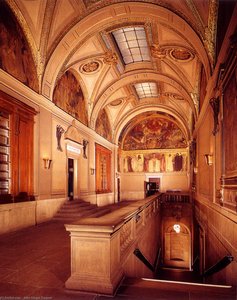
The Foundations of Excellence: Defining the Academic Tradition
 Academic art
Academic art, academicism, or academism, is a style of painting and sculpture produced under the influence of European academies of art. This method extended its influence throughout the Western world over several centuries, from its origins in Italy...
To step into the world of Academic art is to enter a sanctuary of order, where the chaotic impulses of human emotion are refined through the lens of disciplined excellence. Unlike movements that seek to capture the fleeting, transient light of a single moment, Academicism—or academicism—is a profound commitment to a standardized beauty rooted in the prestigious fine arts academies of Europe. This tradition, which flourished from the mid-1s6 century through the early 20th century, was never merely about a specific style; it was an unwavering devotion to established canons. It represents a cultural pursuit of stability and intellectual clarity, where the artist’s hand serves as a bridge between the mortal realm and the eternal ideals of perfection.
At its very heart, this movement celebrates the triumph of technique over spontaneous impulse. One does not simply paint in the Academic tradition; one masters it through years of rigorous study, learning to command the chemistry of pigments and the subtle interplay of light upon surface. It is a method that demands an invisible hand—a seamlessness where the viewer rarely perceives the frantic marks of the brush, but rather experiences a finished perfection. This pursuit of truth through idealized form allowed Academic art to reach its absolute apogee in the 19th century, particularly under the influential standards of the French Académie des Beaux-Arts, creating a visual language that spoke of permanence, authority, and a shared European heritage.
The Rigor of the Brush: Technical Mastery and Anatomical Precision
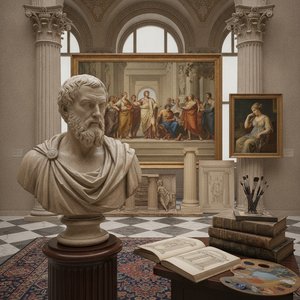 Mastering the Classics: An Expert Guide to Academicism and Neoclassical Excellence in Fine Art
Defining Academicism: The Principles of Precision and Technical Mastery To understand the profound impact of Academicism, one must first look beyond the surface of a canvas and into the rigorous discipline that governs its creation. Academicism is no...
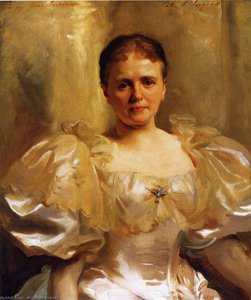
The true soul of an Academic masterpiece lies beneath its polished surface, within the meticulous discipline of its creation. To gaze upon a work from this era is to witness a masterclass in anatomical accuracy and the subtle gradation of light. There is no room for error when one is tasked with rendering the heavy drape of velvet or the delicate, translucent quality of human skin. This level of precision is achieved through an arduous process of studying the masters, understanding how light interacts with various textures to create a sense of profound depth and three-dimensionality.
This technical rigor extends far beyond simple representation; it is a pursuit of truth through the mastery of detail. When we observe the way light catches the edge of a marble sculpture or the soft glow on a subject's brow, we are seeing the result of an artist’s devotion to the science of painting. This precision allows these works to transcend their original era, offering a sense of stability that more transient styles often lack. It is this very dedication to the craft—the ability to render the world with such clarity and grace—that ensures these paintings remain as captivating today as they were when the paint first dried on the canvas centuries ago.
Echoes of Antiquity: The Neoclassical Soul and Idealized Beauty
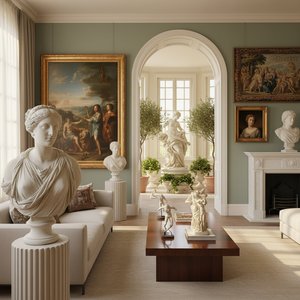 Neo-Classicism's Greatest Hits: 10 Masterpieces for Your Home |
Introduction Imagine stepping back into a world yearning for order, reason, and timeless beauty—a world recovering from excess and seeking inspiration in the grandeur of antiquity. This is the essence of Neo-Classicism, an art movement that swept acr...
Flowing naturally from the strictures of Academic training is the breathtaking movement of Neoclassicism, an era that sought to revive the dignity and clarity of ancient Greece and Rome. This was a profound cultural response to the ornate excesses of the Baroque and Rocanness, born from Enlightenment ideals and fueled by the awe-inspiring archaeological discoveries at Pompeii and Herculaneum. Artists looked back to antiquity not merely for aesthetic inspiration, but as a model for moral virtue, symmetry, and structural integrity. They sought to capture a world yearning for order and reason, finding inspiration in the grandeur of the past to reflect the stability they craved in the present.
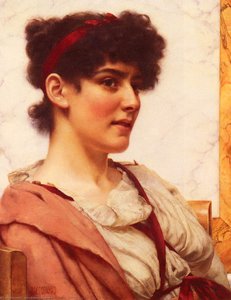
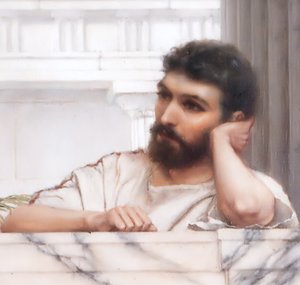
This Neoclassical influence provided the thematic soul for much of the Academic repertoire, manifesting in works that emphasize monumental calm and idealized human forms. We see this beautifully realized in the works of Victorian Neo-Classical masters like John William Godward. His paintings, such as
Dolce far Niente, transport us to a world of timeless elegance, where beautiful figures inhabit classical settings with a sense of serene, sun-drenched tranquility. Through the use of vibrant colors and meticulous attention to classical architecture, these artists reinterpreted the past, infusing ancient motifs with a contemporary sensibility that celebrates the enduring power of beauty and the pursuit of an idealized, harmonious existence.
The Academy's Legacy: From European Institutions to Global Influence
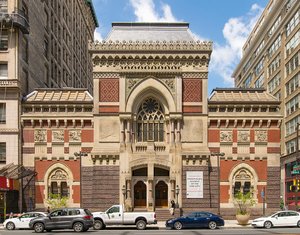 Pennsylvania Academy of Fine Arts
A Living Legacy of American Artistry In the heart of Philadelphia, where the echoes of history meet the vibrant pulse of modern creativity, stands the Pennsylvania Academy of Fine Arts (PAFA). More than a mere repository for canvas and stone, PAFA se...
The influence of the great European academies was not confined by borders; it extended throughout the Western world, shaping the very trajectory of art history. From the prestigious Royal Academy in England to the Accademia di Belle Arti di Brera in Milan, these institutions served as the heartbeat of artistic tradition. They were more than mere schools; they were curators of taste and architects of fame. In London, the Royal Academy’s exhibitions—meticulously organized as seen in the architectural drawings of Thomas Sandby—dictated the spatial politics of art, where the placement of a canvas could determine an artist's rising prominence.
This legacy of excellence traveled across oceans, finding new expressions in institutions like the Pennsylvania Academy of Fine Arts, the oldest art museum and school in the United States. This global dissemination ensured that the principles of Academicism—the reverence for proportion, the study of the antique, and the mastery of form—became a universal language of prestige. Even as the formal influence of these academies began to dissipate in the early 20th century, their impact remained embedded in the foundation of fine art, leaving behind a rich tapestry of works that continue to serve as benchmarks for technical achievement and aesthetic grace across the globe.
Timelessness in the Modern Home: Preserving the Grandeur of Academic Art
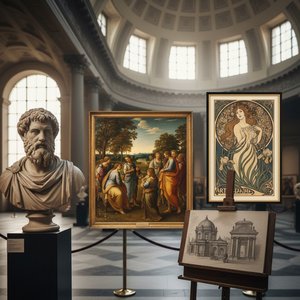 Timeless Resonance: Exploring Classic Vibe in Art – A Historical & Aesthetic Analysis
The Enduring Appeal of Classicism: Defining an Aesthetic Ideal Classicism, as a concept in art, isn’t merely a stylistic preference; it represents a profound reverence for the artistic achievements of ancient Greece and Rome. It's a yearning for orde...
In our contemporary world, often characterized by rapid change and fleeting trends, the enduring appeal of Academic and Neoclassical art offers a much-needed sense of permanence. To bring a piece of this tradition into one's home is to invite a dialogue with history, a way to surround oneself with themes of love, courage, and duty that transcend time. These works do not merely decorate a room; they provide an anchor of stability and a window into a world of profound beauty and intellectual clarity.
For the discerning collector, preserving this grandeur involves appreciating the tactile depth of the medium itself. While modern prints may offer convenience, it is the hand-painted oil reproduction—with its visible brushstrokes, rich tonal range, and the physical texture of paint on canvas—that truly captures the spirit of the masters. Whether through a large-scale mural that recreates the majesty of a historical ceiling or a carefully selected portrait that serves as a focal point in a study, the integration of Academic art into modern interiors allows us to maintain a living connection to the triumphs of human creativity, ensuring that the flame of classical excellence continues to burn brightly in the homes of today.
Discover the artistry of the masters at ArtsDot.com. From bespoke hand-painted oil reproductions to custom portraits that transform your personal memories into historical masterpieces, we bring the elegance of the academies to your doorstep.