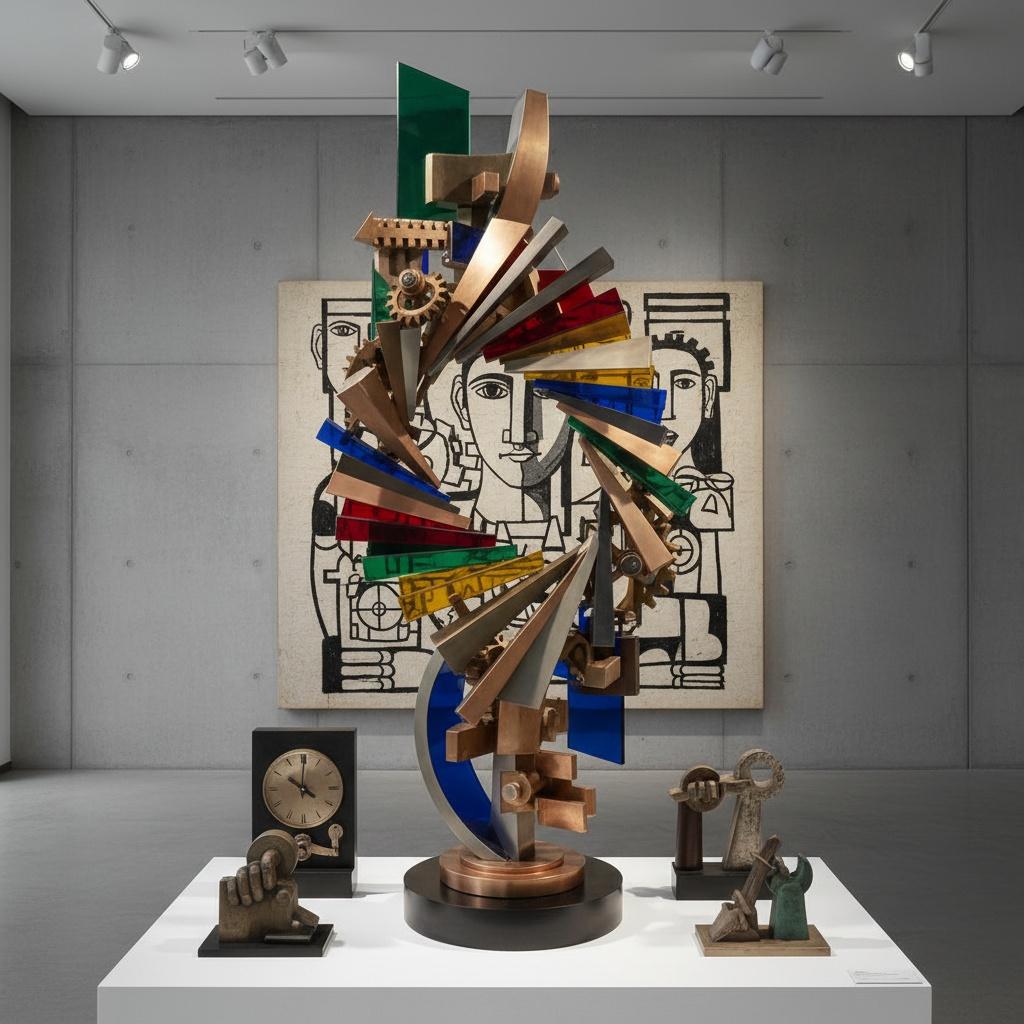
The Architect of Motion: Fernand Léger and the Birth of Tubism
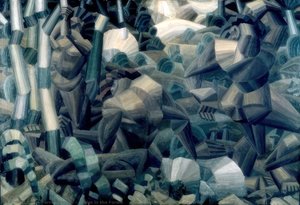
To understand the seismic shift in early twentieth-century aesthetics, one must look beyond the fractured planes of traditional Cubism and toward the rhythmic, volumetric revolution spearheaded by Fernand Léger. While his contemporaries were often preoccupied with the deconstruction of space, Léger sought to reconstruct it through a lens of unprecedented vitality. He did not merely observe the world; he reimagined it as a series of interconnected, dynamic forms that pulsed with the energy of a new era. This unique approach led to the emergence of what critics famously termed Tubism, a stylistic departure characterized by the use of cylindrical, tubular shapes that lent a sense of weight and three-dimensionality to his compositions.
This was not an art of stillness, but an art of momentum. By emphasizing the rounded, structural elements of his subjects, Léger captured the essence of a world in transition. His work bridged the gap between the static traditions of the past and the kinetic uncertainty of the future. For the discerning collector, Léger’s early period offers more than just visual interest; it provides a window into a moment when the very definition of form was being rewritten by the influence of industrial geometry and the relentless march of progress.
Mechanical Aesthetics: The Intersection of Human Form and Industrial Precision
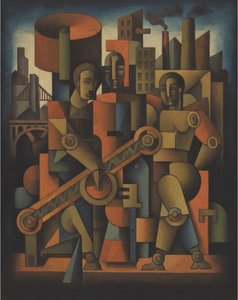
As the twentieth century progressed, the boundaries between the organic and the synthetic began to blur, a phenomenon Léger captured with unparalleled mastery. In seminal works such as The Mechanic, we witness a profound dialogue between the human figure and the machinery of the modern age. There is no conflict here, but rather a harmonious synthesis. The musculature of the worker is rendered with the same precision and structural integrity as the pistons and gears of a locomotive, suggesting that the human spirit had become inextricably linked to the technological advancements of the era.
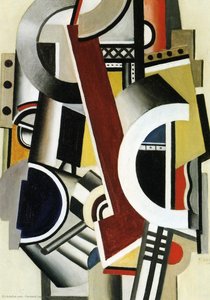
This aesthetic of precision celebrates the beauty found in the functional. In pieces like Mechanical Elements, the artist invites us to find poetry in the assembly line and grace in the urban landscape. The human form is not diminished by the machine; instead, it is elevated, imbued with a new, metallic strength. For those who curate spaces defined by modern sophistication, Léger’s ability to find elegance within industrial complexity offers a powerful narrative of resilience and adaptation, making his works timeless anchors for any serious collection.
Chromatic Dynamism: Exploring Color and Geometry in the Machine Age
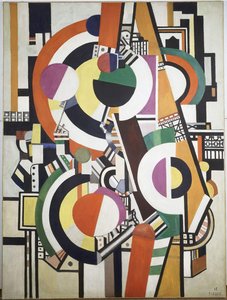
Beyond the structural rigor of his forms, Léger utilized color as a primary driver of movement. His palette was rarely subtle; instead, it was composed of bold, primary hues that acted as architectural components within his compositions. In works such as The Big Tug, we see how vibrant yellows, deep blues, and striking reds are used to define boundaries and create depth, much like the brightly painted surfaces of industrial equipment. These colors do not merely decorate the canvas; they command the eye, directing it through a labyrinth of geometric intersections.
The interplay between these saturated tones and sharp, clean lines creates a sense of rhythmic tension. This chromatic dynamism serves to mirror the pulse of the modern city—the flashing lights, the movement of traffic, and the constant flux of urban life. By stripping away the atmospheric haziness of Impressionism in favor of clear, delineated color fields, Léger achieved a clarity that felt both revolutionary and profoundly honest. It is this unapologetic use of light and pigment that allows his work to retain such immense visual impact even decades after its creation.
From Cubist Roots to Pop Art Progenitor: Léger’s Lasting Legacy
The lineage of modern art is deeply indebted to Léger’s radical experimentation. While his foundations were firmly planted in the Cubist movement, his fascination with mass culture, advertising, and the aesthetics of everyday objects laid the essential groundwork for what would later become Pop Art. He was one of the first to recognize that the "low" culture of posters, signs, and industrial design held as much artistic potential as the "high" traditions of classical painting. This democratization of subject matter paved the way for artists like Warhol and Lichtenstein to explore the beauty of the mundane.
His legacy is one of continuous evolution. Léger’s ability to synthesize the avant-garde with the accessible ensured that his influence would permeate not just the galleries, but the very fabric of visual culture. To collect Léger is to collect a pivotal chapter in the history of modernism—a chapter that celebrates the strength of the line, the power of color, and the enduring beauty of the machine.
Curating Modernity: Integrating Léger’s Geometric Vision into Contemporary Interiors
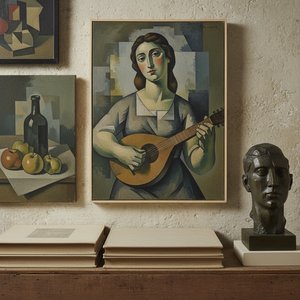
Integrating the works of Fernand Léger into a contemporary collection requires an eye for balance and architectural intent. His bold, geometric compositions serve as exceptional focal points in modern interiors, particularly in spaces characterized by clean lines and minimalist architecture. A large-scale reproduction of a Léger masterpiece can transform a neutral room into a dynamic environment, providing the necessary "visual weight" to anchor a large wall or a grand staircase.
For the sophisticated collector, the challenge lies in pairing his industrial energy with textures that complement rather than compete. Consider the juxtaposition of a vibrant, tubular composition against the organic warmth of natural wood or the sleekness of polished stone. Whether through multi-panel layouts that expand the artwork across a wide expanse or custom-sized commissions that fit a specific architectural niche, Léger’s vision offers endless possibilities for creating a space that feels both historically grounded and vibrantly modern.
At ArtsDot.com, we specialize in bringing these historical masterpieces to life through meticulous, hand-painted oil reproductions. Our master artists, trained in the finest academic traditions, capture the essential brushstrokes and tonal depth of Léger’s work, ensuring that every piece is a soulful tribute to his genius. From custom color matching to professional digital mockups, we provide an unparalleled service for collectors looking to infuse their homes with the enduring beauty of the Machine Age.