Introduction
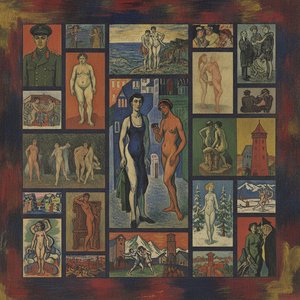
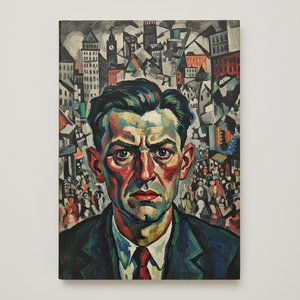
To step into the world of Ernst Ludwig Kirchner is to abandon the comfort of the familiar and embrace the electric, often jarring pulse of modern existence. His work does not merely sit upon a canvas; it vibrates with the restless energy of an era caught between tradition and the profound psychological shifts of the early 20th century. As we wander through this curated selection of his top twenty-five masterpieces, we are not just observing paint on canvas, but witnessing the very birth of German Expressionism —a movement that sought to strip away the polite veneer of academic realism to reveal the raw, unvarnished truth of the human soul.
Born in Aschaffenburg and shaped by the burgeoning anxieties of a modernizing Germany, Kirchner became a founding pillar of the Die Brücke (The Bridge) collective. This group of rebels sought to build a connection between the past and a future defined by emotional authenticity. Through his eyes, we see the frantic, neon-lit streets of Berlin, where elongated figures and acid-bright palettes capture the alienation and frenetic pace of urban life. We also encounter the profound intimacy of nature, rendered with a primitive, visceral strength that recalls the bold textures of Van Gogh and the haunting psychological depth of Munch.
These artworks remain profoundly meaningful today because they speak to a universal human condition: the struggle to find identity amidst chaos, the tension between solitude and society, and the courage to express discomfort through beauty. Kirchner’s jagged lines and emotive color harmonies resonate in our own age of rapid technological and social transformation, reminding us that art's highest calling is to mirror our internal landscapes.
In the following exploration, we shall guide you through twenty-five pivotal works that define his legacy. From his iconic street scenes to his deeply personal portraits, each piece serves as a window into a mind that dared to transform tension into timeless aesthetic power. Prepare to encounter the brilliance, the shadows, and the enduring spirit of a true master of expression.
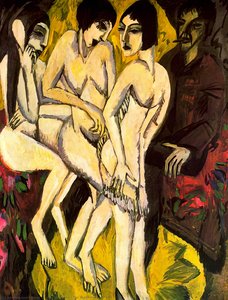
The Judgement of Paris - Ernst Ludwig Kirchner
To experience The Judgement of Paris by Ernst Ludwig Kirchner is to witness the raw, visceral energy of German Expressionism captured in thick, rhythmic impasto. One cannot look at this masterpiece without being drawn into its tactile landscape, where jagged, angular brushstrokes create a sense of profound tension and movement. The palette—a dramatic collision of intense ochres, fiery reds, and deep, shadowy blacks—does more than merely depict figures; it vibrates with the psychological weight of human desire and vulnerability.
As a cornerstone in our collection of the top 25 artworks of Ernst Ludwig Kirchner , this piece exemplifies the revolutionary spirit of the Die Brücke movement. At ArtsDot.com, our mission is to preserve this very materiality for the discerning collector. Our hand-painted oil reproductions are meticulously crafted on 100% cotton canvas, ensuring that the heavy texture, visible brushwork, and the three-dimensional soul of Kirchner’s original vision are brought into your space with uncompromising authenticity and prestige.
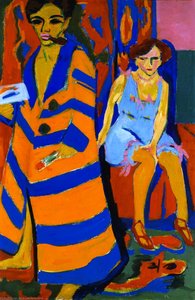
Self Portrait with Cat - Ernst Ludwig Kirchner
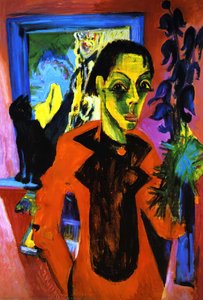 Self Portrait with Cat - Ernst Ludwig Kirchner
In the turbulent landscape of 1919, Self Portrait with Cat by Ernst Ludwig Kirchner emerges as a profound psychological window, capturing the delicate boundary between solitude and solace. As one of the most vital entries in our collection of the top 25 artworks of Ernst Ludwig Kirchner, this masterpiece distills the artist's journey through post-war anxiety toward a state of quiet healing. The canvas vibrates with a thick impasto technique , where energetic, rhythmic brushstrokes create a tactile urgency that is impossible to ignore.
The color palette is a masterclass in emotional resonance: the striking red of his jacket clashes with deep blues and sun-drenched yellow curtains, creating a chromatic tension that mirrors the complexities of the human spirit. The presence of the black cat on the windowsill offers a symbolic anchor of companionship amidst profound introspection. For the modern collector or interior designer, this work brings an unparalleled sense of drama and intellectual depth to a space, offering a bold, avant-garde focal point that pairs exquisitely with contemporary, high-end minimalist interiors seeking a touch of historical soul.
Portrat Gewecke - Ernst Ludwig Kirchner
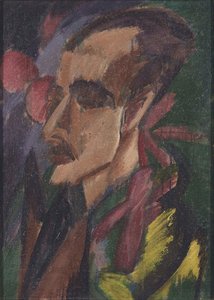 Portrat Gewecke - Ernst Ludwig Kirchner
In Portrat Gewecke , Ernst Ludwig Kirchner masterfully employs a striking verticality that anchors the viewer's gaze, creating a structural harmony that is both unsettling and profoundly captivating. The composition relies on simplified, almost geometric forms—the sharp contours of the subject’s shoulders and the heavy, gestural lines of the face—to establish a sense of monumental presence. This deliberate reduction of detail into essential shapes creates an internal balance that feels timeless, securing its rightful place among the top 25 artworks of Ernst Ludwig Kirchner .
The painting's architecture mirrors the principles of modern minimalist design; by stripping away the superfluous, Kirchner achieves a clean, potent aesthetic that grounds contemporary interiors with raw, emotional weight. As you observe the thick, impasto brushstrokes and the somber interplay of earthy browns against a dark, verdant background, you feel the palpable tension of 1914. The way the light catches the ridges of the paint adds a tactile dimension, transforming a mere portrait into a visceral window into Expressionist angst, where every jagged line serves to amplify the subject's psychological depth.
The Red Tower at Halle - Ernst Ludwig Kirchner
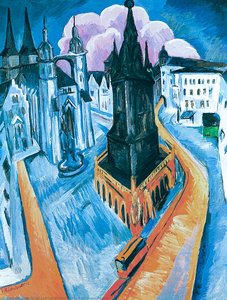 The Red Tower at Halle - Ernst Ludwig Kirchner
In the pulsing heart of a modernizing Germany, The Red Tower at Halle by Ernst Ludwig Kirchner emerges as a breathtaking symphony of color and urban tension. At ArtsDot.com, our mission has always been to democratize beauty, ensuring that the raw, emotive power of such historical milestones is accessible to every discerning collector. This masterpiece earns its place in our curated Top 25 through its masterful use of the Die Brücke spirit—utilizing a distorted, high-angle perspective and thick, impasto brushstrokes to capture the restless energy of the street.
The composition is a visceral experience; deep blues and purples collide with warm, glowing oranges, creating a visual rhythm that mirrors the heartbeat of city life. The imposing tower stands as a silent sentinel amidst the vibrant, chaotic movement of the cityscape. For the modern interior designer or homeowner, this painting offers more than mere decoration; it provides a transformative focal point. Through our high-fidelity, hand-painted oil reproductions, you can bring this profound sense of German Expressionist innovation and dramatic light into your own home, office, or private gallery, inviting the soul of 1914 into a contemporary space.
Die tanzende Mary Wigman - Ernst Ludwig Kirchner
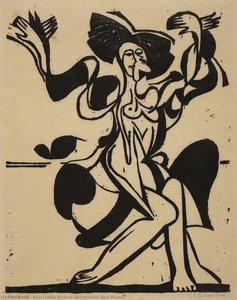 Die tanzende Mary Wigman - Ernst Ludwig Kirchner
To encounter Die tanzende Mary Wigman is to witness a moment of raw, kinetic energy frozen in the stark, evocative medium of the woodcut. As one of the most profound entries in our collection of the top 25 artworks of Ernst Ludwig Kirchner , this piece transcends mere portraiture; it is a visceral dialogue between the artist’s jagged line and the revolutionary movement of modern dance. Kirchner captures the legendary Mary Wigman not with delicate grace, but through distorted, elongated forms that pulse with the psychological intensity characteristic of the Die Brücke movement.
The monochromatic palette—deep, commanding blacks against a muted, creamy backdrop—creates a dramatic tension that commands any sophisticated space. The sharp, decisive strokes delineate a figure suspended between ecstasy and existential struggle, mirroring the social anxieties of post-war Germany. For the discerning collector or interior designer, this work offers more than historical significance; its bold, graphic silhouette and timeless emotional depth provide a powerful focal point, bringing an aura of avant-garde heritage and intellectual rigor to a refined contemporary interior.
The Drinker (self-portrait) - Ernst Ludwig Kirchner
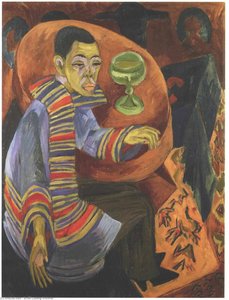 The Drinker (self-portrait) - Ernst Ludwig Kirchner
Owning The Drinker (self-portrait) by Ernst Ludwig Kirchner is not merely a purchase; it is an inheritance of the raw, visceral energy that defined German Expressionism. Painted in 1914, on the precipice of a world descending into chaos, this work serves as a haunting window into the artist's psyche. Kirchner captures himself in a moment of profound isolation, seated with a goblet that symbolizes both indulgence and the heavy weight of mortality.
The composition is a masterclass in psychological tension, utilizing Die Brücke ’s signature jarring color palettes—where cool, somber blues clash against feverish oranges. The figure appears fragmented, almost mask-like, through distorted perspectives and sharp, angular lines that echo the anxieties of modern urban life. As you observe the thick, expressive brushstrokes, you feel the restless energy of a man lost in thought, looking through the viewer rather than at them. To bring this masterpiece into your collection via ArtsDot is to invite a lineage of taste into your home, where the shadows and light of Kirchner’s soul become a permanent part of your architectural narrative.
Toilette, Frau vor Spiegel - Ernst Ludwig Kirchner
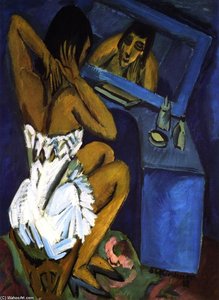 Toilette, Frau vor Spiegel - Ernst Ludwig Kirchner
In Toilette, Frau vor Spiegel , Ernst Ludwig Kirchner does not merely capture a moment of morning ritual; he composes a psychological sonata. As one of the most profound entries in our collection of the top 25 artworks of Ernst Ludwig Kirchner , this 1913 masterpiece uses light not as mere illumination, but as a visceral language of introspection. The artist does not simply paint the scene; he invents a fractured reality where bold, angular lines and an uneasy palette of muted yellows and deep blues collide.
The subject, poised before her mirror, becomes a vessel for the anxieties of the modern age. Through masterful impasto techniques, Kirchner creates a textured, rhythmic surface that mirrors the turbulent emotions beneath the skin. The mirror serves as a portal, reflecting not just a face, but the fragmented identity central to German Expressionism . To possess such a work is to invite a window into the soul of the early 20th century, turning your private space into a gallery of profound emotional depth and historical significance.
Bridge in Wiesen - Ernst Ludwig Kirchner
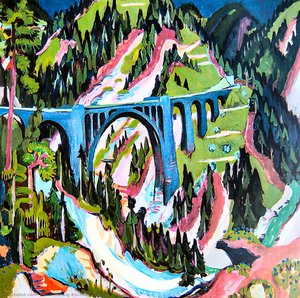 Bridge in Wiesen - Ernst Ludwig Kirchner
To stand before Bridge in Wiesen is to witness the profound psychological landscape of Ernst Ludwig Kirchner at his most evocative. Painted in 1926, this masterpiece transcends a mere architectural study of the Landwasser Viaduct; it is a cinematic window into the soul of post-war Europe. The canvas vibrates with the restless energy of German Expressionism, where the stark, parabolic arches of the bridge intersect with the lush, mountainous terrain of Davos. Kirchner employs a masterful impasto technique , using thick, rhythmic brushstrokes that lend a tactile, breathing quality to the alpine scenery.
The composition is a study in tension and balance, where the vibrant reds of the signal disc clash against the deep, tranquil blues and greens of the valley, mirroring the era's struggle between industrial progress and natural serenity. For the discerning collector or interior designer, this work offers more than decoration; it provides an anchor of intellectual depth. Its bold color palette and emotive texture serve to inspire reflection and command presence, making it a transformative centerpiece for any sophisticated modern space seeking to evoke strength and historical resonance.
Varieté, Englisches Tanzpaar - Ernst Ludwig Kirchner
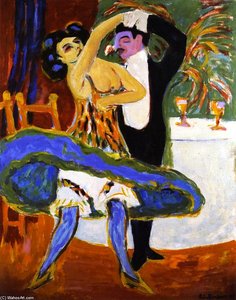 Varieté, Englisches Tanzpaar - Ernst Ludwig Kirchner
To step into the world of early twentieth-century Berlin is to encounter a sensory overload of rhythm and unrest, a feeling perfectly distilled in Varieté, Englisches Tanzpaar by Ernst Ludwig Kirchner . As one of the most captivating entries in our collection of the top 25 artworks of Ernst Ludwig Kirchner, this 1910 masterpiece captures the electric pulse of a society on the precipice of change. The canvas vibrates with the kinetic energy of a man and woman locked in a rhythmic embrace, their forms rendered through the jagged, emotive brushwork characteristic of the Die Brücke movement.
Kirchner employs a daring, clashing palette to evoke the heat and psychological tension of the dance hall, where light and shadow dance as wildly as the subjects themselves. The composition, layered with peripheral figures and a sense of urban voyeurism, pulls the viewer into a theatrical, vaudeville-inspired spectacle. For the modern collector, this work remains a profound testament to how raw, expressive color can transform a space, bringing a timeless, sophisticated vitality to any curated interior.
The Three Old Women - Ernst Ludwig Kirchner
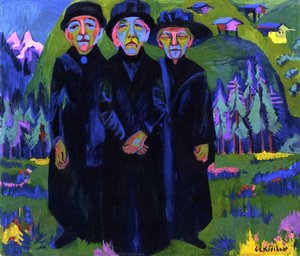 The Three Old Women - Ernst Ludwig Kirchner
To encounter The Three Old Women by Ernst Ludwig Kirchner is to stand before a profound testament of human resilience, a work that commands reverence within any serious collection of German Expressionism. As one of the most evocative pieces in our exploration of the top 25 artworks of Ernst Ludwig Kirchner, this 1925 masterpiece transcends mere portraiture to offer a psychological window into the soul of an era marked by profound uncertainty.
Kirchner employs a masterful, visceral technique, utilizing thick impasto and a jarring, vibrant palette of reds, yellows, and greens to animate the landscape. The three figures, rendered with the artist's signature deliberate distortion, emerge from the earth with a stoic dignity that contrasts beautifully against the imposing, timeless mountains in the background. For the discerning collector or interior designer, this painting offers more than just visual impact; it brings a sophisticated depth and a conversation of texture and light to a refined space. It is a soulful integration of raw emotion and architectural strength, embodying a legacy of beauty found within the complexities of mortality.
Straße - Ernst Ludwig Kirchner
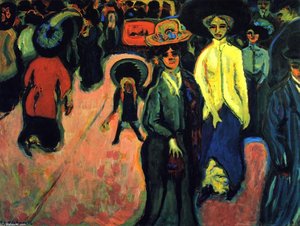 Straße - Ernst Ludwig Kirchner
In Straße , Ernst Ludwig Kirchner captures not just a bustling German thoroughfare, but the very pulse of urban anxiety and the haunting beauty of anonymity. As you gaze into this 1908 masterpiece, you are met with a vibrant, almost jarring collision of saturated colors and jagged, rhythmic brushstrokes that evoke the restless energy of early 20th-century street life. The figures move through a flattened, claustrophobic perspective, their forms distorted by the psychological weight of modernization.
This work stands as a cornerstone in the top 25 artworks of Ernst Ludwig Kirchner because it serves as a universal mirror to the human condition—capturing that profound sense of being alone even within a crowd. The tension between the vivid, Fauvist palette and the underlying sense of alienation creates an emotional depth that is both unsettling and deeply captivating. Integrating such a powerful piece into your collection can transform a private sanctuary into a space for profound reflection, inviting a sophisticated dialogue between the historical intensity of Die Brücke and the contemporary soul of your home.
Hoffmann and Wife - Ernst Ludwig Kirchner
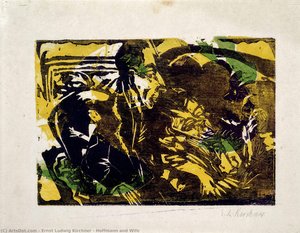 Hoffmann and Wife - Ernst Ludwig Kirchner
To encounter Hoffmann and Wife by Ernst Ludwig Kirchner is to step into a private, psychological sanctuary, a moment of profound intimacy captured with the raw, electric energy that defines one of the top 25 artworks of Ernst Ludwig Kirchner. In this 1913 masterpiece, the artist transcends mere portraiture to present a tableau of shared solitude. The figures are enveloped in a hazy, amber light, rendered through a palette of ochre and muted greens that evoke both domestic warmth and a haunting sense of ephemeral beauty.
Kirchner’s signature Expressionist technique—characterized by flattened perspectives and urgent, visible brushstrokes—imbues the scene with an unmistakable emotional intelligence. The composition possesses a rhythmic tension; while the couple sits in close proximity, there is a palpable, melancholic distance in their averted gazes. For the discerning collector or interior designer, this work offers more than just historical significance; it brings a sophisticated, avant-garde soul to a refined space, serving as a timeless testament to the complexities of the human condition and the enduring legacy of the Die Brücke movement.
Sitzende Frau mit Holzplastik - Ernst Ludwig Kirchner
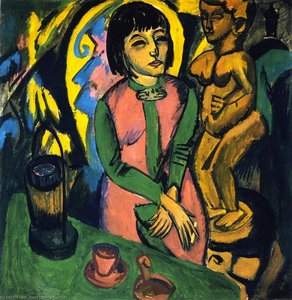 Sitzende Frau mit Holzplastik - Ernst Ludwig Kirchner
In Sitzende Frau mit Holzplastik , the viewer is immediately struck by the visceral, rhythmic application of paint that defines Ernst Ludwig Kirchner’s mastery. The brushwork does not merely sit upon the canvas; it carves out a psychological space, using jagged, angular strokes to create a sense of fractured intimacy. This 1912 masterpiece utilizes flattened planes of muted reds and somber blues, rejecting classical depth to instead emphasize the raw, emotional weight of the subject’s introspection. The presence of the wooden sculptures acts as a silent, sculptural counterpoint to the woman's palpable vulnerability, making this one of the most profound entries in the top 25 artworks of Ernst Ludwig Kirchner.
At ArtsDot.com, we believe such emotional intensity should be felt, not just seen. Our hand-painted oil reproductions are meticulously crafted to preserve this tactile, three-dimensional quality. By employing authentic impasto techniques on fine cotton canvas, our artists recreate the visible brushstrokes and textured depth of Kirchner’s original vision, allowing collectors to bring the soul of German Expressionism into their own private sanctuaries with unparalleled authenticity.
The Visit - Couple and Newcomer - Ernst Ludwig Kirchner
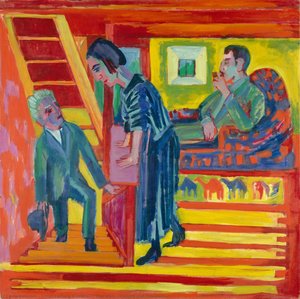 The Visit - Couple and Newcomer - Ernst Ludwig Kirchner
To encounter The Visit - Couple and Newcomer is to step directly into the psychological tremors of Weimar-era Germany. In this 1922 masterpiece, Ernst Ludwig Kirchner does not merely paint a domestic gathering; he captures the very friction of human connection. As you gaze upon the vibrant, clashing reds and deep blues, you feel the palpable tension between the seated figures and the unexpected arrival that disrupts their private orbit.
Kirchner utilizes his signature Expressionist vocabulary—angular distortions and heavy, impasto brushstrokes—to transform a simple room filled with chairs, vases, and books into a stage of profound social anxiety. The composition vibrates with an unsettled energy, reflecting the alienation of a modernizing world. Owning such a pivotal work from the top 25 artworks of Ernst Ludwig Kirchner is not merely a purchase; it is an inheritance of raw emotion. Through ArtsDot, this lineage of taste moves from the museum archives to your private collection, allowing you to host the restless spirit of German Expressionism within your own walls.
Winter lunar landscape - Ernst Ludwig Kirchner
 Winter lunar landscape - Ernst Ludwig Kirchner
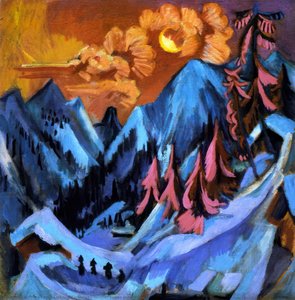
Imagine standing amidst a profound, nocturnal stillness, where the biting chill of winter is eclipsed by a surreal, feverish glow. In Winter Lunar Landscape , Ernst Ludwig Kirchner invites us into a dreamscape that transcends mere topography. Painted in 1919, this masterpiece captures the psychological tremors of post-war Europe through a lens of vibrant, non-naturalistic color. The canvas vibrates with unexpected magentas, deep oranges, and electric blues, transforming a snowy mountain pass into an emotive theater of light and shadow.
This work earns its place among the top 25 artworks of Ernst Ludwig Kirchner because it embodies the very soul of German Expressionism—the rejection of objective reality in favor of raw, internal truth. The silhouetted figures and the sudden intrusion of a modern car against the primordial moonlit peaks create a tension between nature and modernity. For the discerning collector, bringing such a piece into a contemporary space offers more than decoration; it provides a window into a transformative era, injecting a sense of profound movement and intellectual depth into the modern home.
Kitchen in an Alpine Hut - Ernst Ludwig Kirchner
 Kitchen in an Alpine Hut - Ernst Ludwig Kirchner
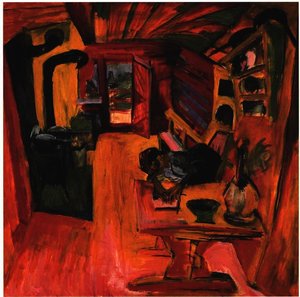
In Kitchen in an Alpine Hut , Ernst Ludwig Kirchner offers far more than a domestic vignette; he invites us into a profound meditation on resilience and the search for sanctuary. As one of the most poignant entries in our collection of the top 25 artworks of Ernst Ludwig Kirchner, this 1918 masterpiece captures the artist’s soul during his convalescence following the trauma of World War I. The painting vibrates with the raw energy of German Expressionism, utilizing a jarring yet captivating palette of sun-drenched yellows and deep, emotive shadows that reject traditional realism in favor of psychological truth.
The scene is a masterclass in texture, where thick impasto brushstrokes breathe life into the rustic interior, creating a tactile experience that resonates with modern collectors. For the discerning interior designer, this work provides a striking focal point; its bold, flattened perspectives and vibrant color contrasts offer an avant-garde edge to contemporary spaces, bringing a sense of historical depth and dramatic atmosphere to any curated gallery wall or sophisticated living area.
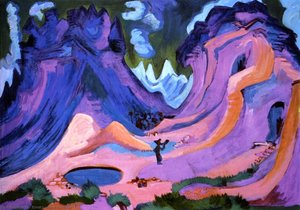
Landscape with blue rocks - Ernst Ludwig Kirchner
 Landscape with blue rocks - Ernst Ludwig Kirchner
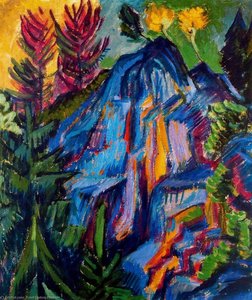
In the pantheon of German Expressionism, Landscape with Blue Rocks stands as a profound psychological testament to the era's fractured spirit. Painted in 1919, this masterpiece captures the raw, vibrating tension of a post-war world through a lens that is both deeply personal and universally evocative. Its inclusion in our selection of the top 25 artworks of Ernst Ludwig Kirchner is essential; it represents the pinnacle of his ability to transmute geological form into emotional landscape.
The work commands attention through its visceral use of color and texture. The imposing, indigo-hued rocks—rendered with a heavy, tactile impasto—act as anchors of melancholy amidst a chaotic symphony of fiery reds and jagged greens. Kirchner’s deliberate distortion of perspective creates a claustrophobic, dreamlike atmosphere that challenges our very perception of nature. For the discerning collector or interior designer, this piece offers more than mere decoration; it provides a sophisticated focal point for modern spaces, inviting a timeless conversation about the beauty found within unrest and the enduring power of the human psyche to find expression in the most turbulent of times.
Bathers on the Lawn - Ernst Ludwig Kirchner
 Bathers on the Lawn - Ernst Ludwig Kirchner
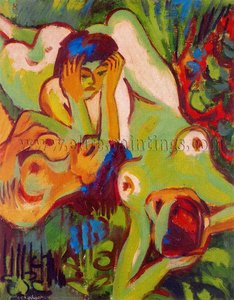
In Bathers on the Lawn , Ernst Ludwig Kirchner achieves a profound structural tension that secures its place among the top 25 artworks of Ernst Ludwig Kirchner . The composition is defined by a deliberate flattening of space, where jagged, broken lines and elongated, organic shapes replace traditional perspective. This geometric distortion creates a rhythmic balance between the central nude figures and the vibrant, emerald-green landscape, establishing a sense of raw, structural harmony that feels both primal and meticulously orchestrated.
The painting’s internal equilibrium—a dance of clashing lemon yellows, cerulean blues, and unsettling scarlet accents—offers a striking parallel to the principles of modern minimalist design . Much like contemporary aesthetics that rely on bold color blocking and clean, impactful forms, Kirchner’s work uses simplified shapes to ground a complex emotional narrative. This ability to marry visceral, expressive energy with a structured, almost architectural arrangement is precisely what gives this masterpiece its enduring appeal for the modern collector seeking art that is both emotionally profound and visually sophisticated.
old hut - Ernst Ludwig Kirchner
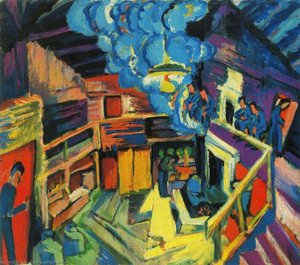 old hut - Ernst Ludwig Kirchner
In the pantheon of German Expressionism, Old Hut by Ernst Ludwig Kirchner stands as a visceral masterclass in emotional distortion. As one of the most profound entries in our collection of the top 25 artworks of Ernst Ludwig Kirchner, this 1913 piece transcends mere landscape to become a psychological landscape. The painting rejects the comfort of traditional perspective, instead thrusting the viewer into a claustrophobic, fragmented interior where jagged, angular forms and a dissonant palette of electric blues, searing yellows, and deep purples collide.
Kirchner utilizes a heavy impasto technique, creating a tactile surface where visible brushstrokes pulse with the anxiety of a pre-war Europe. For the modern collector or interior designer, this work offers an unparalleled dramatic edge; its bold, non-naturalistic colors and geometric energy provide a sophisticated focal point for contemporary spaces seeking depth and movement. It is not merely a depiction of a dwelling, but a window into the fractured soul of modernity, making it an essential cornerstone for any serious appreciation of the Die Brücke movement.
Rhätische Bahn, Davos - Ernst Ludwig Kirchner
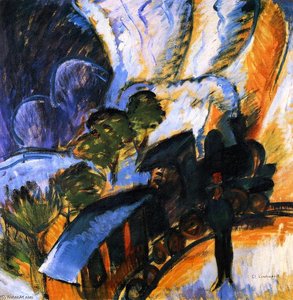 Rhätische Bahn, Davos - Ernst Ludwig Kirchner
What story does the rugged, alpine landscape of Rhätische Bahn, Davos by Ernst Ludwig Kirchner tell us about the search for solace amidst global upheaval? Painted in 1917, this oil on canvas masterpiece emerges from a period of profound personal and social transition. As a cornerstone of the top 25 artworks of Ernst Ludwig Kirchner, this piece captures the artist's retreat to the Swiss mountains, where the frantic energy of German Expressionism met the quiet majesty of the Alps.
The composition is a masterclass in tension and movement; a train surges along the tracks, occupying the lower half of the frame, while a solitary figure stands near the foreground, grounding the scene. With bold, rhythmic brushstrokes and a vibrant palette, Kirchner weaves together the mechanical pulse of modernity with the organic serenity of trees and a soaring bird. For the discerning collector, integrating such a dynamic work into a curated interior offers more than mere decoration; it provides a window into a historical escape, bringing a sense of textured depth and emotive prestige to any sophisticated home.
Fehmarn Coast - Ernst Ludwig Kirchner
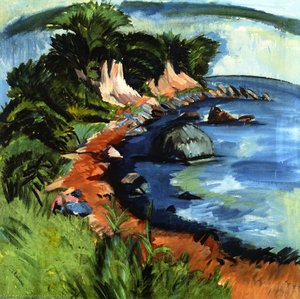 Fehmarn Coast - Ernst Ludwig Kirchner
Acquiring a piece as profound as Fehmarn Coast by Ernst Ludwig Kirchner is more than an aesthetic choice; it is a deliberate investment in the legacy of German Expressionism and a testament to a collector's refined taste. As one of the top 25 artworks of Ernst Ludwig Kirchner, this 1913 masterpiece captures a pivotal moment before the world changed forever. The painting transcends mere landscape, utilizing a visceral palette of deep blues and earthy ochres to mirror the psychological tensions of the era.
Through thick, textured impasto and jagged, distorted forms, Kirchner transforms the Baltic shoreline into an emotional conduit. The interplay of light upon the rocky cliffs and the solitary boat creates a rhythmic, almost restless energy that commands attention. For the modern connoisseur, this work offers unparalleled aesthetic authority. Whether displayed in a minimalist penthouse or a grand estate, a high-quality oil reproduction of Fehmarn Coast brings the raw, sophisticated soul of the Die Brücke movement into contemporary luxury interiors, serving as a powerful focal point of cultural prestige.
Doris with high neck - Ernst Ludwig Kirchner
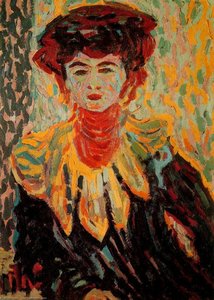 Doris with high neck - Ernst Ludwig Kirchner
There is a gaze in Doris with High Neck by Ernst Ludwig Kirchner that follows you—not with judgment, but with understanding . This isn’t merely a portrait; it is a mirror reflecting the psychological tremors of a world on the brink of transformation. As one of the most profound entries in our collection of the top 25 artworks of Ernst Ludwig Kirchner, this piece captures the very soul of German Expressionism.
Kirchner utilizes a visceral, impasto technique, where thick strokes of fiery oranges, deep reds, and jarring yellows collide with shadows of midnight blue. The subject’s high-necked attire suggests a sense of containment, yet her direct, unblinking eyes pierce through the flattened perspective to establish an intimate, almost unsettling connection. The angular, distorted lines do not seek anatomical perfection but rather an emotional truth—conveying the anxiety and vibrant energy of the early 20th century. Now, imagine that gaze in your space. Not watching you, but reminding you : you are seen. You are part of the story.
Variety Dancer - Ernst Ludwig Kirchner
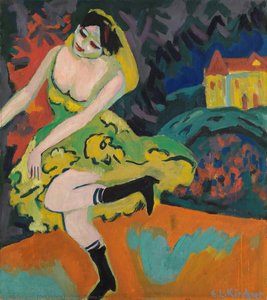 Variety Dancer - Ernst Ludwig Kirchner
In Variety Dancer , Ernst Ludwig Kirchner invites us into the flickering, electric pulse of the vaudeville era. This 1910 masterpiece is far more than a mere depiction of a performer; it is a sensory immersion into the theatrical spirit of the early 20th century. At the heart of the composition, a dancer in a luminous yellow dress commands the stage, her pose exuding both the confidence of the spotlight and the raw, unrefined energy characteristic of the Die Brücke movement.
The painting captures a profound sense of nostalgia through Kirchner’s signature Expressionist lens. The vibrant, sun-drenched hue of her attire contrasts with the darker, more structured elements of the background, where a distant house provides a grounding, almost dreamlike depth to the outdoor setting. Through agitated brushwork and a deliberate focus on movement, Kirchner transforms a moment of performance into an eternal dance of light and shadow. To possess such a work is to bring the rhythmic, emotive soul of German Expressionism into your own collection, turning a private space into a profound gallery of human emotion.
Sertigweg - Ernst Ludwig Kirchner
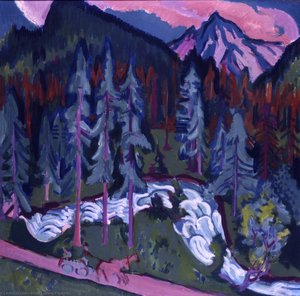 Sertigweg - Ernst Ludwig Kirchner
While the world of Weimar Germany was fracturing under post-war tension, Ernst Ludwig Kirchner sought a profound, silent sanctuary within the Bavarian Alps. In 1926, he produced Sertigweg , a work that transcends mere landscape painting to become a crystallized moment of Expressionist introspection. This piece stands as a cornerstone in our collection of the top 25 artworks of Ernst Ludwig Kirchner because it captures the artist's transition from urban anxiety to a rugged, spiritual resilience.
The canvas breathes with a visceral energy; thick, textured impasto layers muted blues and earthy browns, creating a biting winter chill that is suddenly interrupted by sharp, emotive flashes of red and yellow. As you gaze upon the snow-draped peaks and the solitary horse standing sentinel near a winding river, the scattered bicycles suggest a poignant sense of aimless wandering amidst permanence. The technical mastery required to balance such heavy emotional weight with striking visual composition is breathtaking. Integrating a masterpiece like Sertigweg into a modern study or home office provides more than just decor; it introduces an atmosphere of profound focus and contemplative strength, perfect for the discerning collector seeking inspiration in every brushstroke.
Street Scene - Ernst Ludwig Kirchner
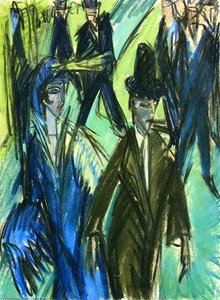 Street Scene - Ernst Ludwig Kirchner
Imagine walking through the pulsating, neon-lit arteries of 1913 Berlin, where the air is thick with the electric tension of a world on the precipice of change. In Street Scene , Ernst Ludwig Kirchner does not merely paint a city; he captures its very heartbeat—anxious, fragmented, and profoundly alive. This masterpiece earns its place among the top 25 artworks of Ernst Ludwig Kirchner through its visceral ability to translate urban alienation into a visual symphony of jagged lines and jarring, emotive colors.
The composition rejects traditional perspective, pulling the viewer into a claustrophobic dance of elongated figures and sharp, angular forms. Deep blues and acidic greens collide with sudden flashes of orange, mirroring the psychological turbulence of the German Expressionist movement. As you contemplate this work, you feel the weight of modernity's isolation, yet there is an undeniable magnetism in its raw honesty. Bringing such a powerful piece into a contemporary space does more than decorate a wall; it introduces a profound dialogue between history and the present, inviting a sense of deep, reflective meaning into the modern home.
Conclusion
To wander through the works of Ernst Ludwig Kirchner is to traverse the very nerves of the modern soul. His canvases do more than merely depict a moment in time; they pulse with a restless, vibrant energy that refuses to be silenced by the passing decades. As we conclude this journey through his most profound masterpieces, we are reminded that these paintings are not static relics confined to the hushed halls of museums, but living, breathing presences. They carry within their jagged lines and emotive color palettes a profound truth about the human condition—the tension between urban alienation and natural longing, the beauty found in distortion, and the raw courage required to face a changing world.
There is a unique transformative power in inviting such intensity into one's own sanctuary. To hang a Kirchner reproduction is to introduce a dialogue of texture and emotion into your space, allowing his bold, expressionistic spirit to serve as a daily reminder of the grace found within complexity. Whether it is the electric atmosphere of a Berlin street scene or the quiet, primal strength of his landscapes, these works offer an opportunity to surround yourself with art that breathes, challenges, and inspires. We invite you to explore the full collection and discover which of these historical echoes might find a permanent home within your walls, turning your private environment into a gallery of enduring human creativity.