Introduction
Imagine walking into a room where the walls don't just hold color, but pulse with the very heartbeat of a changing world. To step into the universe of Ernst Ludwig Kirchner is to abandon the comfort of soft edges and polite landscapes for something far more electric, raw, and deeply human. As a pioneer of the Die Brücke movement, Kirchner didn't just paint scenes; he painted the psychological tremors of an era caught between tradition and the dizzying rush of modernity.
Born in the quiet of Bavaria but finding his soul in the restless energy of German urban life, Kirchner’s work serves as a vivid window into the early 20th century. He was a rebel with a brush, rejecting the polished perfection of academic art to embrace jagged lines, jarring color palettes, and an emotional honesty that felt almost startling at the time. His canvases capture the frantic rhythm of Berlin street life, the intimate tension of the human form, and the profound sense of alienation and excitement that defined a generation standing on the precipice of a new age.
Why do these works continue to captivate us in our own modern, fast-paced era? Because Kirchner understood the beauty in the breakdown. His ability to translate internal anxiety into external brilliance—using bold, expressive strokes that you can almost feel beneath your fingertips—resonates with anyone who has ever felt the beautiful chaos of life. Whether it is the vibrant, clashing hues of a city street or the haunting stillness of a landscape, his art invites us to look past the surface and feel the underlying emotion.
In the following curation, we invite you to discover twenty-five of his most transformative masterpieces. From the iconic, sharp-edged figures of his street scenes to his more intimate, experimental explorations, each piece is a milestone in the history of Expressionism. Prepare to be moved, challenged, and inspired as we journey through the essential works of a true visionary.
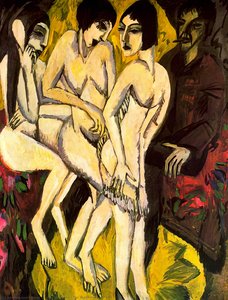
The Judgement of Paris - Ernst Ludwig Kirchner
In The Judgement of Paris , Ernst Ludwig Kirchner invites us into a visceral, emotionally charged world where the boundaries between intimacy and tension dissolve. As one of the most striking entries in our collection of the top 25 artworks of Ernst Ludwig Kirchner , this piece captures the raw, pulsating energy of the Die Brücke movement. The composition centers on nude figures entwined in a dynamic, almost claustrophobic embrace, rendered with angular lines and a dramatic, theatrical light that highlights the musculature and vulnerability of the subjects.
The palette is a masterclass in German Expressionism; intense ochres and sun-drenched yellows clash against deep, brooding reds and blacks, creating a sense of movement that feels both ancient and urgently modern. This interplay of warm and cool tones offers a profound exploration of human desire and conflict. In today’s curated interiors, such a bold, textured work serves as a powerful focal point, bringing a sophisticated edge to contemporary spaces by bridging the gap between historical avant-garde rebellion and modern aesthetic depth.
Self Portrait with Cat - Ernst Ludwig Kirchner
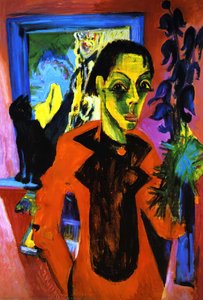 Self Portrait with Cat - Ernst Ludwig Kirchner
In the turbulent landscape of 1919, as the echoes of World War I reverberated through Europe, Ernst Ludwig Kirchner captured a moment of profound psychological intimacy in Self Portrait with Cat . This masterpiece is far more than a mere likeness; it is a visual distillation of an artist navigating the delicate boundary between solitude and solace. Painted during his retreat to Switzerland following a military breakdown, the canvas breathes with the tension of a man seeking healing.
The painting’s power lies in its masterful rejection of realism. Kirchner employs a thick impasto technique , where energetic brushstrokes create a palpable sense of movement. The color palette is strikingly bold—the vibrant red of his jacket commands attention, clashing beautifully with deep blues and sun-drenched yellow curtains. Beside him, a black cat perched on the windowsill introduces a symbolic anchor of comfort amidst his isolation. To own such a piece is to invite this raw, transformative energy into your home, turning a simple wall into a gallery of the soul .
Portrat Gewecke - Ernst Ludwig Kirchner
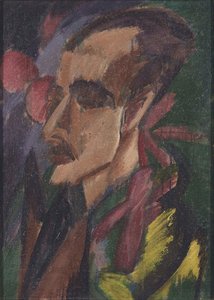 Portrat Gewecke - Ernst Ludwig Kirchner
In Portrat Gewecke , Ernst Ludwig Kirchner masterfully utilizes a simplified, vertical geometry to anchor the viewer's gaze directly into the subject's psychological depths. The composition relies on a striking balance of heavy, gestural lines and flattened planes, where the structural tension between the subject’s torso and the dark, indistinct background creates an unforgettable focal point. This reduction of form into essential, almost geometric shapes provides a sense of profound stability amidst the swirling emotional energy of the brushwork.
As one of the top 25 artworks of Ernst Ludwig Kirchner , this piece offers a fascinating bridge to modern aesthetics; its focus on raw, unadorned shapes and a somber, earthy palette mirrors the principles of modern minimalist design . By stripping away unnecessary detail, Kirchner achieves a timelessness that allows the painting to ground a contemporary room with both weight and sophistication. The thick, tactile impasto and the interplay of muted greens with sudden flashes of crimson invite you to experience the visceral, rhythmic pulse of German Expressionism right in your own home.
The Red Tower at Halle - Ernst Ludwig Kirchner
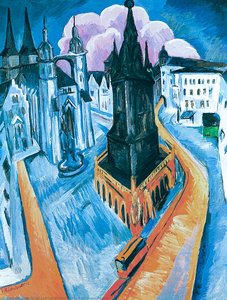 The Red Tower at Halle - Ernst Ludwig Kirchner
In The Red Tower at Halle , Ernst Ludwig Kirchner captures the electric, often unsettling pulse of the modern city just before the world changed forever in 1914. As one of the most significant entries in our collection of the top 25 artworks of Ernst Ludwig Kirchner , this piece serves as a masterclass in German Expressionism. Through a skewed, high-angle perspective, Kirchner invites us to look down upon a landscape where architecture and emotion collide.
The painting is a sensory feast; thick, impasto brushstrokes create a tactile energy, while a striking palette of deep purals, vibrant oranges, and moody blues evokes the restless spirit of the Die Brücke movement. The imposing tower stands as a symbol of historical stability amidst the swirling, chaotic motion of urban life. For the modern collector, this artwork offers more than just decoration; it brings a profound conversation about perception and the beauty found in tension. Integrating such a dynamic masterpiece into a curated room—perhaps as a focal point in a contemporary living space—infuses your home with a timeless, sophisticated energy that celebrates the raw vitality of human experience.
Die tanzende Mary Wigman - Ernst Ludwig Kirchner
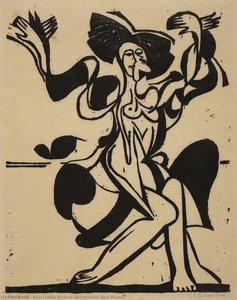 Die tanzende Mary Wigman - Ernst Ludwig Kirchner
There is a profound, breathless magic in witnessing a single moment of motion frozen forever. In Die tanzende Mary Wigman , Ernst Ludwig Kirchner does more than just depict a dancer; he captures the very pulse of human emotion. Through the stark, rhythmic energy of this woodcut, we feel the tension and release of modern dance, where every bold, black line vibrates with the psychological intensity of the German Expressionist movement.
This masterpiece earns its place among the top 25 artworks of Ernst Ludwig Kirchner because it perfectly embodies the spirit of Die Brücke —breaking boundaries to reveal the raw, unvarnished soul beneath the surface. The way the elongated, stylized limbs reach toward the void evokes a sense of both vulnerability and fierce strength that remains deeply relatable today.
At ArtsDot.com, we believe such evocative energy shouldn't be confined to museum walls. Our hand-painted oil reproductions are meticulously crafted to preserve these striking contrasts and decisive brushstrokes, allowing you to bring the transformative power of Kirchner’s vision into your own living space with authentic, tactile depth.
The Drinker (self-portrait) - Ernst Ludwig Kirchner
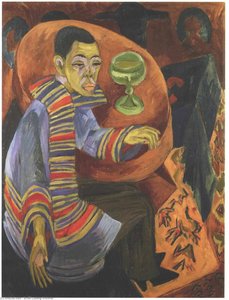 The Drinker (self-portrait) - Ernst Ludwig Kirchner
Imagine sitting alone in a quiet, dimly lit room, where the weight of the world feels heavy, yet the air is charged with an electric, restless energy. This is the atmosphere captured in Ernst Ludwig Kirchner’s 1914 masterpiece, The Drinker (Self-Portrait) . As you stand before this work, you aren't just observing a man at a table; you are witnessing a profound psychological moment frozen in time.
This painting earns its place among the top 25 artworks of Ernst Ludwig Kirchner because it serves as a raw, visceral window into the soul of German Expressionism. Through jarring, angular lines and a striking palette of cool blues clashing against fiery oranges, Kirchner communicates the profound alienation and urban anxiety felt on the eve of World War I. The way his gaze seems to look through the viewer creates an unsettling intimacy that is impossible to ignore. Bringing such a powerful piece into your home allows you to embrace this depth of emotion, transforming a modern living space into a sanctuary of reflection and intellectual discovery.
Toilette, Frau vor Spiegel - Ernst Ludwig Kirchner
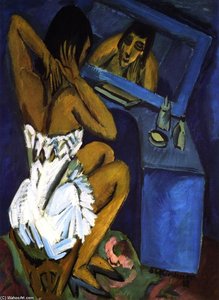 Toilette, Frau vor Spiegel - Ernst Ludwig Kirchner
Stepping into the presence of Toilette, Frau vor Spiegel is like peering through a fractured lens into the very soul of German Expressionism. Painted in 1913, this masterpiece by Ernst Ludwig Kirchner transcends simple portraiture; it is a profound exploration of identity and the quiet anxieties of the modern age. As you gaze upon the woman at her vanity, you aren't just seeing a moment of morning ritual, but a study in psychological depth. Kirchner uses bold, angular lines and a striking palette of muted yellows and deep blues to create an atmosphere that feels both intimate and unsettling.
The thick, tactile impasto technique brings a restless energy to the canvas, where every visible brushstroke echoes the artist's emotional urgency. The mirror serves as a powerful symbol of introspection, reflecting not just a face, but the fragmented self. Owning a piece of this legacy means bringing a lineage of taste into your own home. With our hand-painted reproductions, this profound moment of 1913 can become a soulful centerpiece for your walls, allowing you to live alongside the raw, transformative power of Kirchner’s vision.
Bridge in Wiesen - Ernst Ludwig Kirchner
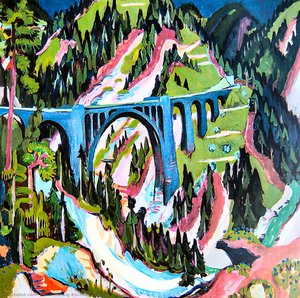 Bridge in Wiesen - Ernst Ludwig Kirchner
In Bridge in Wiesen , Ernst Ludwig Kirchner invites us into a landscape that vibrates with a restless, psychological energy. Rather than a simple view of the Landwasser Viaduct, this 1926 masterpiece captures a profound sense of tension between human engineering and the raw Alpine spirit. As you gaze upon the bold, thick impasto strokes and the striking contrast of vibrant reds against muted valley greens, you feel the weight of the era—a moment in history defined by both industrial progress and deep-seated uncertainty.
As one of the top 25 artworks of Ernst Ludwig Kirchner , this piece serves as a universal mirror for anyone navigating the complexities of modern life. The way the architectural arches slice through the natural scenery creates a captivating visual rhythm that is both jarring and mesmerizing. Bringing such an emotive work into your home can transform a quiet corner into a space for profound reflection. Whether you are drawn to its German Expressionist intensity or its structural beauty, displaying this painting allows you to anchor your personal sanctuary with a piece of history that celebrates the raw, unvarnished truth of human emotion.
Varieté, Englisches Tanzpaar - Ernst Ludwig Kirchner
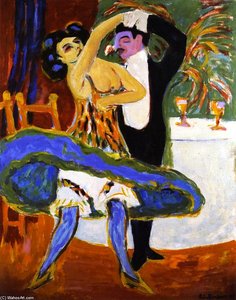 Varieté, Englisches Tanzpaar - Ernst Ludwig Kirchner
In Varieté, Englisches Tanzpaar , Ernst Ludwig Kirchner invites us to step into the electric pulse of a 1910 dance floor, where the boundaries between individual intimacy and urban spectacle dissolve. As a cornerstone of the German Expressionist movement, this work captures more than just a man and woman in motion; it captures the very vibration of modern life. The canvas is alive with jagged, energetic brushstrokes and a palette of clashing, vibrant hues that mirror the psychological tension and exhilaration of the Die Brücke spirit.
The composition breathes with a sense of theatrical chaos, where silhouettes linger in the hazy periphery, suggesting the sensory overload of a crowded vaudeville setting. To possess a piece like this is to embrace a lineage of taste; it is an inheritance of emotion. At ArtsDot.com, we bring this legacy to your home, allowing you to transform your walls with the raw, transformative energy of Kirchner’s most iconic visions. It is not merely decor—it is a window into a world of light, shadow, and enduring human connection.
The Three Old Women - Ernst Ludwig Kirchner
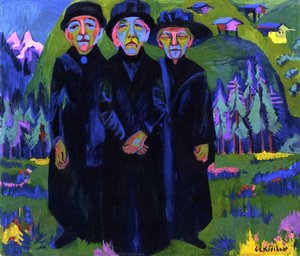 The Three Old Women - Ernst Ludwig Kirchner
In the quiet strength of The Three Old Women by Ernst Ludwig Kirchner, time seems to pause, capturing a profound moment of human resilience frozen in vibrant oil. This masterpiece earns its place among the top 25 artworks of Ernst Ludwig Kirchner through its breathtaking ability to blend raw psychological depth with the striking visual language of German Expressionism. As you gaze upon the canvas, the bold, rhythmic brushstrokes and thick impasto textures breathe life into the figures, while a palette of deep greens, earthy browns, and sudden flashes of light creates a sensory experience that is both unsettling and deeply moving.
The composition—featuring three elderly women set against an imposing mountain backdrop—uses deliberate distortion to whisper stories of wisdom and endurance amidst the anxieties of a changing world. For the modern collector, this piece offers more than just historical significance; its dramatic contrast and soulful energy bring a sophisticated, intellectual edge to any contemporary space. Whether placed in a sunlit study or a minimalist living room, the painting acts as a window into the human spirit, inviting a sense of contemplative depth and timelessness into your home.
Straße - Ernst Ludwig Kirchner
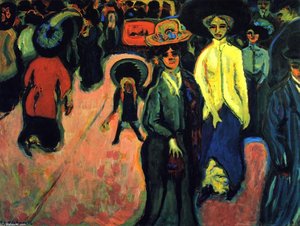 Straße - Ernst Ludwig Kirchner
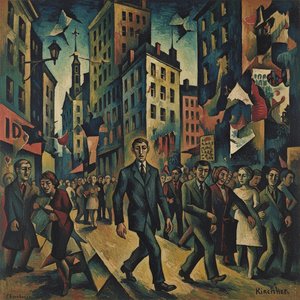
Step into the vibrant, pulsing heart of 1908 Berlin with Straße by Ernst Ludwig Kirchner. As you gaze upon this masterpiece, you aren't just looking at a street scene; you are feeling the electric, slightly unsettling hum of a city in motion. Kirchner uses a breathtaking palette of saturated, non-naturalistic colors and jagged, energetic brushstrokes to capture the raw tension of urban life. The figures move through a flattened perspective, creating a cinematic sense of movement where bright hats and elegant silhouettes emerge from the shadows of modern anonymity.
This work is a cornerstone of the German Expressionist movement, blending the bold colors of Fauvism with a fragmented, almost Cubist energy. It captures that profound human paradox: being surrounded by a crowd yet feeling a sense of quiet isolation. Bringing a reproduction of this iconic piece into your home adds a sophisticated layer of drama and intellectual depth. Whether placed in a contemporary living room or a creative studio, Straße serves as a powerful conversation starter, injecting a sense of historical soul and rhythmic vitality into your personal sanctuary.
Hoffmann and Wife - Ernst Ludwig Kirchner
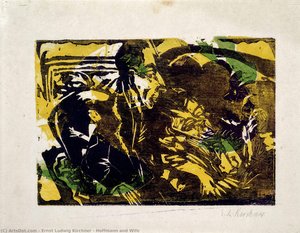 Hoffmann and Wife - Ernst Ludwig Kirchner
While many recognize Ernst Ludwig Kirchner for his frenetic urban street scenes, Hoffmann and Wife reveals a much more intimate, haunting side of the German Expressionist master. Painted in 1913, this work transcends simple portraiture by transforming the celebrated Romantic author E.T.A. Hoffmann and his wife into a tableau of shared solitude. Kirchner utilizes a striking, almost feverish palette of ochre, amber, and deep greens to envelop the couple in a hazy, atmospheric light that feels both warm and unsettlingly transient.
The technical genius of this piece lies in its rejection of traditional perspective; by flattening the space and employing thick, urgent brushstrokes, Kirchner captures the psychological weight of the moment rather than mere physical likeness. There is a palpable tension between their physical proximity and their emotional distance, a hallmark of the top 25 artworks of Ernst Ludwig Kirchner . This profound exploration of introspection and quiet melancholy makes the painting an extraordinary choice for a sophisticated study or home office, where its deep tones and contemplative mood can inspire a space of focused, soulful productivity.
Sitzende Frau mit Holzplastik - Ernst Ludwig Kirchner
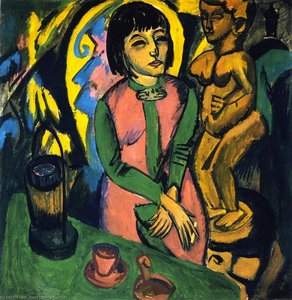 Sitzende Frau mit Holzplastik - Ernst Ludwig Kirchner
In Sitzende Frau mit Holzplastik , Ernst Ludwig Kirchner masterfully manipulates light not to illuminate a room, but to expose the psychological weight of a moment. The light source feels internal and fractured, casting soft yet unsettling shadows across the seated woman’s contemplative face and the angular wooden sculptures. This interplay of muted illumination and deep, somber tones creates a sense of Expressionist solitude that has secured this piece's place among the top 25 artworks of Ernst Ludwig Kirchner . The way the light catches the edges of the cups and bowls against the darker, rhythmic planes of color invites the viewer into a private, melancholic sanctuary.
For those looking to bring a sense of historical depth to a modern home, a high-quality reproduction of this work offers more than just color; it brings an atmosphere of sophisticated introspection. When rendered with visible, textured brushstrokes on canvas, the dramatic contrast between light and shadow adds a luxurious, museum-like dimension to any contemporary wall, transforming a simple space into a gallery of emotional resonance.
The Visit - Couple and Newcomer - Ernst Ludwig Kirchner
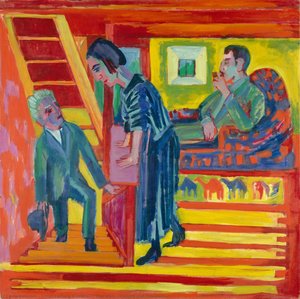 The Visit - Couple and Newcomer - Ernst Ludwig Kirchner
Stepping into Ernst Ludwig Kirchner’s 1922 masterpiece, The Visit - Couple and Newcomer , feels like walking directly into a whispered secret from the Weimar era. This isn't just a painting; it is an inheritance of raw emotion, capturing the subtle, vibrating tensions of a domestic moment caught in the gears of a changing world. Kirchner uses his signature Expressionist language—angular forms and a jarring, vibrant palette of reds, blues, and yellows—to transform a simple family gathering into a profound psychological study.
As you gaze upon the figures, you sense the weight of unspoken narratives. The way the light hits the scattered objects—a solitary book, delicate vases, and the heavy presence of the furniture—grounds the scene in reality while simultaneously heightening the sense of modern alienation. To own a reproduction of this work is to bring a lineage of taste into your own home, inviting that same electric, soulful energy onto your walls. It serves as a poignant reminder that even in moments of quiet connection, the shadows of modernity are always dancing just beneath the surface.
Winter lunar landscape - Ernst Ludwig Kirchner
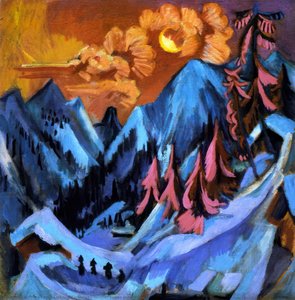 Winter lunar landscape - Ernst Ludwig Kirchner
What if I told you that “Winter Lunar Landscape” by Ernst Ludwig Kirchner was born from a moment of rebellion—a stroke of defiance against the ordinary? This masterpiece does not merely depict a snowy night; it reimagines reality through a feverish, emotional lens. As one of the most striking entries in our collection of the top 25 artworks of Ernst Ludwig Kirchner, this piece earns its place by shattering traditional palettes. Instead of muted whites, we are met with a vibrant, surreal dance of magentas, deep oranges, and electric blues that pulse with the energy of German Expressionism.
The composition captures a profound sense of solitude, where silhouetted figures and a glowing moon transform a cold landscape into a dreamlike sanctuary. At ArtsDot.com, we believe art should do more than decorate; it should evoke. Bringing this much-loved work into your home—perhaps as a large-scale canvas print above a reading nook—turns a simple wall into a window to another dimension. It is a powerful reminder that your space is not just a room; it is a statement of soul and depth.
Kitchen in an Alpine Hut - Ernst Ludwig Kirchner
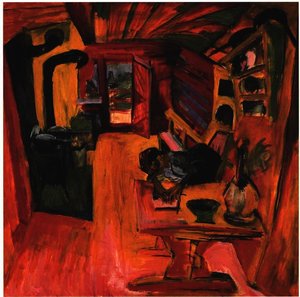 Kitchen in an Alpine Hut - Ernst Ludwig Kirchner
There is a gaze in Kitchen in an Alpine Hut by Ernst Ludwig Kirchner that follows you—not with judgment, but with understanding . This isn’t merely a depiction of a domestic scene; it is a mirror reflecting the profound human need for sanctuary. Painted in 1918 as Kirchner sought solace following the trauma of World War I, this masterpiece captures a moment of quiet resilience amidst global chaos.
As you wander through this vibrant, textured world, you encounter jarring yellows and deep, emotive shadows that pulse with the energy of German Expressionism. The thick, impasto brushstrokes create a tactile landscape where books, plants, and figures coexist in a beautifully unsettled harmony. To hang this piece among your collection is to invite a conversation about strength and stillness into your home. It serves as a powerful reminder: even in moments of great transition, there is beauty to be found in the retreat. In the list of the top 25 artworks of Ernst Ludwig Kirchner, this work stands as a soulful testament to finding light within the shadows.
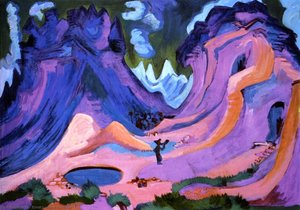
Landscape with blue rocks - Ernst Ludwig Kirchner
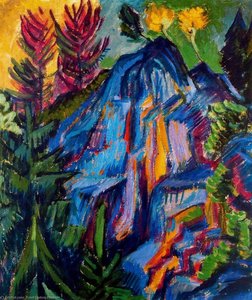 Landscape with blue rocks - Ernst Ludwig Kirchner
In Landscape with Blue Rocks , Ernst Ludwig Kirchner captures a world where nature breathes with a restless, electric pulse, freezing a moment of raw emotional intensity in time. This masterpiece stands among the top 25 artworks of Ernst Ludwig Kirchner because it perfectly embodies the soul of German Expressionism, moving far beyond mere scenery to reveal a psychological landscape. The painting vibrates with a striking palette: deep, melancholic indigos and cerulean blues collide with fiery reds and sun-drenched yellows in the stylized foliage.
As you gaze upon the thick, impasto brushstrokes, you can almost feel the tactile energy of the heavy, blocky rocks that dominate the frame. The distorted perspective and flattened depth create a captivating sense of movement, making the canvas feel alive with tension and drama. For the modern collector, bringing this piece into a home offers more than just decoration; it introduces a sophisticated focal point of conversation and character. Whether placed in a minimalist study or a vibrant living space, its bold colors and expressive textures provide an unmistakable aura of prestige and avant-garde spirit.
Bathers on the Lawn - Ernst Ludwig Kirchner
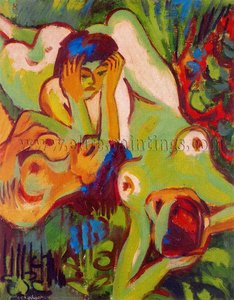 Bathers on the Lawn - Ernst Ludwig Kirchner
Owning Bathers on the Lawn by Ernst Ludwig Kirchner isn’t merely a purchase; it is an inheritance of the raw, pulsating energy that defined German Expressionism. This masterpiece serves as a profound window into the soul of the Die Brücke movement, where the tranquility of nature meets a restless, psychological depth. As you gaze upon the canvas, you are met with a symphony of unsettlingly beautiful colors: vibrant emerald greens and jagged scarlet foliage clash against the soft, lemon-yellow and cerulean tones of the reclining figures.
Kirchner utilizes a masterful impasto technique , where thick, visible brushstrokes create a tactile landscape of emotion rather than mere scenery. The flattened perspective and distorted, elongated forms strip away reality to reveal an intimate, almost feverish connection between the subjects. It is a work of intense sensory impact, where light does not illuminate, but rather heightens the drama of the human form. Bringing this piece into your home allows you to carry forward a lineage of taste , transforming your walls into a curated gallery of historical significance and emotional resonance.
old hut - Ernst Ludwig Kirchner
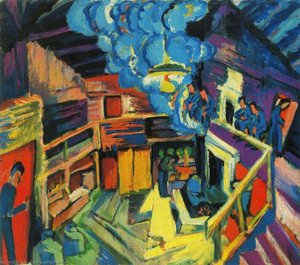 old hut - Ernst Ludwig Kirchner
To encounter Old Hut by Ernst Ludwig Kirchner is to step directly into the fractured psyche of the German Expressionist movement. This 1913 masterpiece does not merely depict a dwelling; it captures a moment of profound psychological tension. As you gaze upon the canvas, you are met with a jarring, asymmetrical world where traditional perspective dissolves into a dance of sharp, angular planes and claustrophobic energy.
Kirchner utilizes a brilliantly dissonant palette—clashing swathes of electric blue, sun-drenched yellow, and deep purple that vibrate against one another. The thick, tactile impasto technique brings a raw, physical urgency to the surface, making every visible brushstroke feel like an emotional outburst. There is no comfort in this space; instead, there is a captivating sense of unease and modern anxiety. For the collector seeking more than mere decoration, this work offers a transformation of the domestic sphere into a gallery of the soul, inviting the viewer to find beauty within the beautiful chaos of the human experience.
Rhätische Bahn, Davos - Ernst Ludwig Kirchner
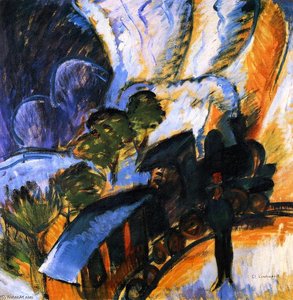 Rhätische Bahn, Davos - Ernst Ludwig Kirchner
In Rhätische Bahn, Davos , we encounter a profound moment of stillness amidst the movement of the modern age. Created in 1917, this masterpiece captures the essence of Ernst Ludwig Kirchner’s transition toward a more structured yet deeply emotive landscape. As one of the top 25 artworks of Ernst Ludwig Kirchner, this piece stands as a testament to his ability to infuse industrial progress with raw, human feeling. The composition—featuring a train traversing the tracks alongside a solitary figure—uses bold, rhythmic brushstrokes and a vibrant palette to bridge the gap between man and machine.
The painting invites us to reflect on our own relationship with the passing of time; the bird in flight and the surrounding trees offer a sense of natural continuity against the energy of the locomotive. For those looking to bring a sense of historical depth and dynamic energy into a modern home, this work serves as a stunning focal point. Its interplay of light and tension makes it an ideal selection for a curated collection, offering a timeless conversation between the anxieties of the early 20th century and the sophisticated aesthetics of contemporary interior design.
Fehmarn Coast - Ernst Ludwig Kirchner
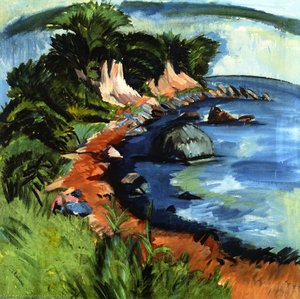 Fehmarn Coast - Ernst Ludwig Kirchner
In Fehmarn Coast , Ernst Ludwig Kirchner invites us into a world where the boundary between nature and the human psyche dissolves. As one of the most profound entries in our collection of the top 25 artworks of Ernst Ludwig Kirchner , this 1913 masterpiece transcends simple landscape painting to become a visceral emotional experience. The Baltic shoreline is not merely depicted; it is felt through jagged rocks, sparse trees, and a restless sea that pulses with the artist's inner tension.
Kirchner utilizes a striking visual language of bold impasto and dissonant color palettes—deep blues clashing with earthy ochres—to capture the anxieties of a modernizing world. The thick, textured brushstrokes create a rhythmic energy that feels incredibly contemporary, echoing today's desire for art that communicates raw, unfiltered authenticity. For the modern decorator, this piece offers more than just a coastal view; it brings a sense of quiet prestige and psychological depth to any room, serving as a powerful conversation piece that celebrates the beauty found within turbulence.
Doris with high neck - Ernst Ludwig Kirchner
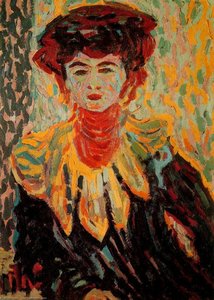 Doris with high neck - Ernst Ludwig Kirchner
In the tapestry of German Expressionism, Doris with High Neck stands as a breathtakingly raw encounter with the human psyche. Painted between 1906 and 1909, this masterpiece captures the very essence of Ernst Ludwig Kirchner’s revolutionary spirit. It is far more than a portrait; it is an emotional landscape where the subject's direct, confronting gaze meets a world of vibrant, unsettling energy.
Kirchner utilizes a striking palette of fiery reds, oranges, and yellows, set against deep, moody blues, applied with thick, tactile impasto strokes that make the canvas pulse with life. The angular, distorted lines and flattened perspective strip away traditional beauty to reveal a profound sense of modern anxiety and vulnerability. For the contemporary collector, this work offers a sophisticated way to introduce drama and movement into a room. Its bold, non-naturalistic colors and textured surfaces pair beautifully with modern, minimalist interiors, providing a soulful focal point that transforms a simple wall into a window of historical intensity and avant-garde elegance.
Variety Dancer - Ernst Ludwig Kirchner
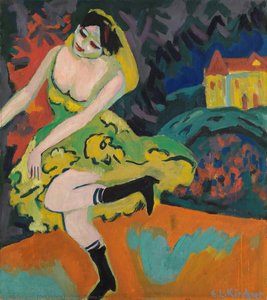 Variety Dancer - Ernst Ludwig Kirchner
In Variety Dancer , the raw, agitated brushstrokes of Ernst Ludwig Kirchner come alive, inviting you to feel the textured energy of a bygone era. As you observe the vibrant yellow of the dancer’s dress, you can almost sense the thick, rhythmic application of paint that defines this 1910 masterpiece. This work stands as a vital entry in our collection of the top 25 artworks of Ernst Ludwig Kirchner because it perfectly captures the spirit of the vaudeville performer through the lens of German Expressionism—using bold, non-naturalistic colors and a sense of theatrical movement to evoke nostalgia and emotion.
At ArtsDot.com, we believe that art should be felt, not just seen. That is why our handmade oil reproductions focus on preserving this essential tactile, three-dimensional quality . By meticulously recreating Kirchner’s visible impasto and the dramatic interplay of light and shadow, we bring the soul of the original onto your walls. Whether you are a new collector or a seasoned enthusiast, our custom paintings allow you to experience the physical depth and emotional resonance of this Expressionist icon in the comfort of your own home.
Sertigweg - Ernst Ludwig Kirchner
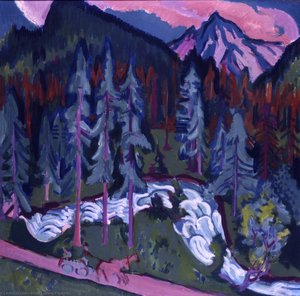 Sertigweg - Ernst Ludwig Kirchner
In Sertigweg , Ernst Ludwig Kirchner invites us into a frozen reverie, where the raw emotional power of German Expressionism meets the quiet majesty of the Bavarian Alps. As one of the most profound entries in our collection of the top 25 artworks of Ernst Ludwig Kirchner, this 1926 masterpiece transcends mere landscape painting; it is a psychological map of resilience. The composition, featuring snow-draped mountains and a winding river, uses a striking palette of muted blues and earthy browns, punctuated by sudden, energetic flashes of red and yellow that mirror the artist's inner turbulence.
The presence of scattered bicycles and a solitary, sentinel-like horse adds a layer of narrative mystery, suggesting journeys through both physical and metaphorical wilderness. For the modern collector, Sertigweg offers an incredible way to introduce texture and depth to a room. Its heavy impasto brushstrokes and wintry atmosphere provide a sophisticated focal point for contemporary interiors, bringing a sense of contemplative strength and historical soul to any curated space.
Street Scene - Ernst Ludwig Kirchner
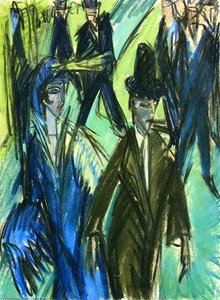 Street Scene - Ernst Ludwig Kirchner
Acquiring a piece like Street Scene by Ernst Ludwig Kirchner is more than an aesthetic choice; it is an investment in the raw, pulsating legacy of German Expressionism. As one of the most significant works within the top 25 artworks of Ernst Ludwig Kirchner, this 1913 masterpiece captures the electric, often unsettling energy of Berlin’s urban pulse. The composition vibrates with jagged, angular lines and a striking palette of deep blues, acidic greens, and sudden flashes of orange that mirror the psychological friction of the era.
Kirchner masterfully uses distorted forms to evoke a sense of modern alienation, turning a crowded sidewalk into a profound study of human isolation. For the discerning collector, the textured brushstrokes and dramatic tonal contrasts offer a window into the soul of Die Brücke . Today, this work finds a breathtaking second life in modern luxury interiors. A high-quality, hand-painted reproduction carries the same commanding aesthetic authority, providing a sophisticated focal point that brings a sense of historical depth and avant-garde prestige to any contemporary living space.
Conclusion
As we draw the curtain on this journey through Kirchner’s vibrant, restless world, we are left with more than just a list of masterpieces; we carry with us the lingering pulse of German Expressionism. These works, with their jagged rhythms and unapologetic colors, do not belong solely to the quiet halls of museums or the pages of history books. Instead, they exist as living, breathing presences that continue to challenge our perceptions and stir our deepest emotions. To bring a piece of this legacy into your own home is to invite a conversation between the past and the present—a way to infuse your personal sanctuary with the same raw energy and profound human truth that Kirchner captured on canvas over a century ago.
Whether it is the electric tension of an urban street scene or the soulful solitude of a landscape, these paintings serve as windows into the complexities of the modern soul. They remind us that art is not merely decoration, but a mirror held up to our own anxieties, joys, and transformations. As you consider how these bold strokes might rest upon your walls, remember that you are participating in an eternal dialogue between creativity and everyday life, finding beauty in the distortion and strength in the expression. We invite you to continue your discovery and find the piece that speaks to your unique story within our full collection .