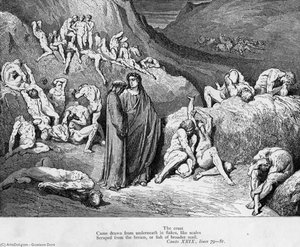

Introduction
To step into the world of Paul Gustave Doré is to enter a realm where light and shadow engage in a perpetual, dramatic dance. His work does not merely illustrate a story; it breathes life into the very soul of the narrative, pulling the viewer from the mundane reality of the nineteenth century into the profound depths of myth, scripture, and literary legend. As you wander through this curated selection of his top twenty-five masterpieces, you are not just observing fine art—you are witnessing the heartbeat of Romanticism captured in ink and imagination.
Born in Strasbourg amidst a period of immense cultural transformation, Doré possessed an almost supernatural ability to navigate the boundaries between the real and the fantastic. From his early days as a sharp-witted caricaturist in Paris to his monumental collaborations with literary titans like Dante, Cervantes, and Edgar Allan Poe , Doré redefined the role of the illustrator. He transformed the printed page into a window of immense scale, using intricate cross-hatching and dramatic chiaroscuro to evoke the weight of human destiny and the ethereal beauty of the divine.
These works remain profoundly meaningful today because they touch upon the universal archetypes of the human experience: the struggle between good and evil, the loneliness of the hero, and the sublime terror of the unknown. In an era of fleeting digital images, Doré’s compositions offer a tactile, enduring gravity that commands attention in any modern collection. His ability to render texture—the roughness of stone, the softness of mist, the heavy drape of velvet—creates a sensory experience that transcends time.
In the following pages, we invite you to explore a definitive journey through his most impactful creations. From the haunting depths of his biblical visions to the whimsical yet melancholic landscapes of classic literature, this list celebrates the enduring legacy of a master who taught us how to see the shadows as clearly as the light.
The Neophyte (First Experience of the Monastery) - Paul Gustave Doré
 The Neophyte (First Experience of the Monastery) - Paul Gustave Doré
While many recognize Gustave Doré for the epic scale of his biblical illustrations, The Neophyte (First Experience of the Monastery) reveals a much more intimate, psychological mastery. Created between 1866 and 1868, this work serves as a visceral plunge into existential longing, inspired by the emotional turbulence found in George Sand’s novel Sipiridion . Doré does not merely illustrate a scene; he captures a spiritual crisis through a masterful use of monochrome light and shadow.
The composition is a technical triumph of the Romantic movement. Within a dimly lit, claustrophobic corridor, the stark contrast between the youthful, sorrowful novice and the weathered, bowed figures of the elderly monks creates an overwhelming sense of isolation and regret. The converging lines of the monastery walls draw the eye directly into the heart of this silent, heavy atmosphere. For the discerning collector, integrating such a profound piece into a modern study or home office provides more than just decor; it introduces a sense of deep reflection and intellectual gravity, fostering a sophisticated space for focused, contemplative work.
Souvenir of Loch Lomond - Paul Gustave Doré
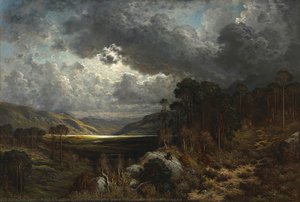 Souvenir of Loch Lomond - Paul Gustave Doré
In Souvenir of Loch Lomond by Paul Gustave Doré, a profound, brooding indigo dominates the canvas, casting a veil of melancholic prestige over the Scottish landscape. This deep, nocturnal blue does more than depict water; it establishes an atmosphere of sublime mystery, setting a mood of quiet introspection that is quintessential to Doré’s mastery of Romanticism. The innovative palette—transitioning from heavy, shadowed foregrounds to ethereal, light-drenched horizons—is precisely why this work earns its place among the top 25 artworks of Paul Gustave Doré .
For the discerning interior designer or collector, this painting offers a sophisticated blueprint for emotional lighting. The interplay of dark, atmospheric tones and soft, diffused highlights can be used to anchor a modern dining room or a grand library, providing a sense of depth and historical weight. Integrating such a masterpiece allows one to curate a space defined by texture and drama, where the subtle gradations of light evoke the tranquil yet powerful spirit of the Highlands, transforming a contemporary room into a sanctuary of timeless elegance.
The Inferno, Canto 9, lines 87-89. To the gate He came, and with his wand touch’d it, whereat Open without impediment it flew. - Paul Gustave Doré
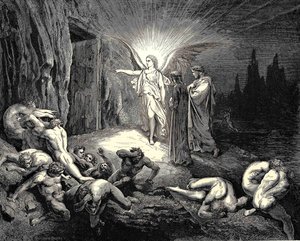 The Inferno, Canto 9, lines 87-89. To the gate He came, and with his wand touch’d it, whereat Open without impediment it flew. - Paul Gustave Doré
In the profound shadows of Paul Gustave Doré’s The Inferno, Canto 9 , we encounter a moment of breathtaking spiritual tension that transcends the boundaries of 19th-century illustration. This masterpiece stands within our top 25 selection not merely for its technical brilliance, but for its ability to capture the sublime intersection of divine grace and eternal despair. As the angel’s wand touches the gate, Doré utilizes a masterful command of chiaroscuro—the stark, dramatic contrast between light and dark—to guide the viewer through a landscape of profound psychological depth.
The engraving breathes with a visceral energy; the fine, meticulous lines create a sense of weight and movement that makes the descent into Dante’s vision feel palpably real. This work invites us to reflect on the eternal human struggle between hope and darkness, a theme that remains strikingly relevant in our modern era. For the discerning collector or interior designer, integrating such a powerful, monochromatic narrative into a curated space offers more than mere decoration; it introduces a timeless conversation about the complexities of the human soul, lending an air of intellectual prestige and dramatic elegance to any sophisticated environment.
Paradise Lost - Paul Gustave Doré
 Paradise Lost - Paul Gustave Doré
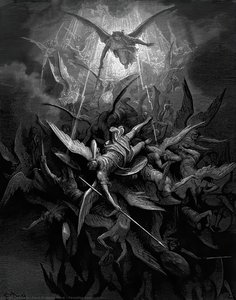
In the vast canon of the top 25 artworks of Paul Gustave Doré , few pieces command the room with such visceral, cinematic gravity as Paradise Lost . This 1867 masterpiece is not merely an illustration of Milton’s epic; it is a profound meditation on the duality of existence—the eternal friction between divine grace and the descent into chaos. Through his unparalleled mastery of copperplate etching, Doré captures the chilling moment of Lucifer’s expulsion, transforming a theological narrative into a breathtaking symphony of light and shadow.
The composition functions as a visual vortex; luminous, ascending angels on the left clash against the heavy, descending darkness of demons on the right. This dramatic use of chiaroscuro and atmospheric perspective creates a sense of infinite depth that continues to captivate modern collectors. In today’s curated interiors, where the tension between classical grandeur and moody, monochromatic aesthetics is highly sought after, Doré’s work serves as a powerful cultural touchstone. It remains a definitive study of rebellion and consequence, offering an emotional intensity that transcends its 19th-century origins to resonate within the contemporary soul.
The Acrobats - Paul Gustave Doré
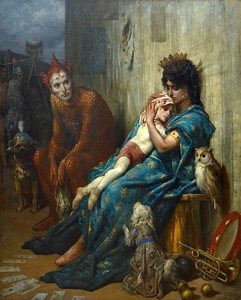 The Acrobats - Paul Gustave Doré
In the pantheon of Paul Gustave Doré’s most evocative works, The Acrobats stands as a profound masterclass in atmospheric storytelling. This piece transcends mere illustration, offering an immersive descent into a world where theatricality meets a poignant, quiet melancholy. As one of the top 25 artworks of Paul Gustave Doré, it captures the artist's unparalleled ability to manipulate chiaroscuro , using dramatic pools of light to illuminate a vulnerable central figure amidst deep, velvety shadows. The composition—featuring a woman in a striking blue dress nestled in a moment of repose—is enriched by the presence of a loyal dog and scattered objects like antique clocks and weathered books, creating a sense of lived-in history.
For the discerning collector or interior designer, this work brings an unparalleled sense of depth and narrative weight to a space. Its muted palette of blues, browns, and grays offers a sophisticated anchor for modern, moody interiors, providing a window into the Victorian era's fascination with spectacle and social realism. To possess such a piece is to invite the very soul of Romanticism into one's home.
untitled (8555) - Paul Gustave Doré
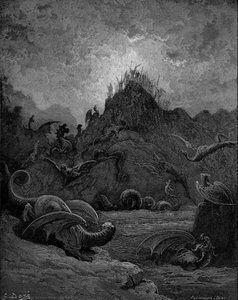 untitled (8555) - Paul Gustave Doré
In untitled (8555) , the lines of Paul Gustave Doré are not merely drawn; they are choreographed . This piece is far more than a monochromatic engraving; it is a dance frozen in time, where a writhing mass of serpentine creatures moves with a rhythmic, unsettling vitality. As you gaze upon this fantastical realm, your eyes are guided by diagonal currents of shadow and light, sweeping from the chaotic, dragon-filled depths toward a silent, fortress-crowned peak.
The composition achieves something miraculous: it makes profound chaos feel like harmony. Through masterful hatching and deep, velvety blacks, Doré creates a tactile landscape that feels as though it could breathe against your very walls. It is a window into the Romantic imagination, evoking a sense of awe and primordial mystery. For the discerning collector, bringing such a work into a home offers more than decoration; it invites a sense of rhythmic depth and dramatic narrative, allowing your space to hold the same breathtaking balance found in the master's most legendary illustrations.
The Inferno, Canto 25, lines 59-61. The other two Look’d on exclaiming. “Ah, how dost thou change, Agnello!” - Paul Gustave Doré
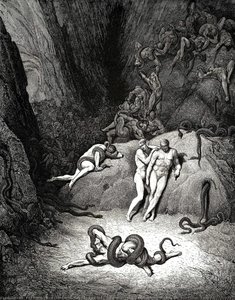 The Inferno, Canto 25, lines 59-61. The other two Look’d on exclaiming. “Ah, how dost thou change, Agnello!” - Paul Gustave Doré
In the haunting depths of The Inferno, Canto 25 , Paul Gustave Doré captures a moment of profound ontological shock. As the lines “Ah, how dost thou change, Agnello!” suggest, this work is not merely an illustration of Dante’s descent, but a visceral meditation on the corruption of the soul and the terrifying fluidity of identity. Within this masterwork, Doré utilizes a masterful chiaroscuro to navigate the boundary between the divine and the demonic, where light struggles against an encroaching, claustrophobic darkness.
The engraving’s intricate cross-hatching creates a tactile sense of dread, making the writhing forms and serpentine shadows feel almost palpable to the viewer. In contemporary interior curation, such dramatic, monochromatic narratives serve as powerful focal points for collectors seeking art with psychological depth. This piece remains a cornerstone of the top 25 artworks of Paul Gustave Doré because it transcends mere literary accompaniment; it embodies the Romantic obsession with the sublime, offering a timeless exploration of moral consequence and the shadows that reside within the human psyche.
The Inferno, Canto 21, line 70. “Be none of you outrageous.” - Paul Gustave Doré
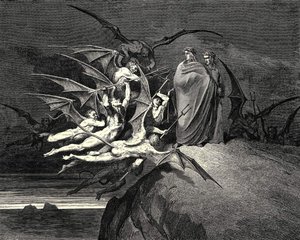 The Inferno, Canto 21, line 70. “Be none of you outrageous.” - Paul Gustave Doré
To witness The Inferno, Canto 21, line 70. “Be none of you outrageous.” by Paul Gustave Doré is to stand on the precipice of a divine storm. This engraving does not merely illustrate Dante’s vision; it breathes the very atmosphere of chaos and celestial intervention. Through a masterful use of chiaroscuro, Doré directs our gaze from the light-drenched angelic figures down into a swirling, monochromatic vortex of demonic shadows, where every etched line vibrates with the tension between salvation and damnation.
Its inclusion in our Top 25 collection is essential because it redefines the boundaries of narrative illustration, proving that shadow can be just as expressive as light. This work captures a moment of profound psychological and spiritual upheaval, making it a cornerstone of Romanticism. At ArtsDot.com, we believe such monumental energy should not be confined to museum archives. Whether as a breathtaking oil reproduction or a museum-quality print, bringing this masterpiece into your home or professional space transforms a mere wall into a gateway for contemplation, turning your personal sanctuary into a gallery of historical depth and dramatic prestige.
Orlando Furioso - Paul Gustave Doré
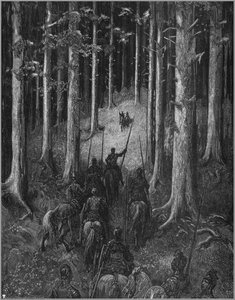 Orlando Furioso - Paul Gustave Doré
In Orlando Furioso , the lines of Gustave Doré are not merely drawn; they are choreographed . This is not a static composition; it is a dance of shadow and steel frozen in time. As you stand before this masterpiece, you are pulled into a dense, Gothic thicket where armored figures emerge from the gloom, their horses surging through a landscape of profound psychological tension. Doré utilizes a masterful chiaroscuro technique, employing intricate cross-hatching to create a world where light and darkness struggle for dominance.
The monochromatic palette of deep blacks and silvery grays lends a somber, epic weight to the scene, mirroring the gravity of Ariosto’s poem. Every texture—from the rugged bark of ancient trees to the polished sheen of knightly armor—is rendered with an almost sculptural precision. This work is a tribute to Doré's ability to make chaotic pursuit feel like a harmonious, rhythmic movement. Imagine the impact of such dramatic depth in your own collection; it is art that allows a room to breathe rhythm and command a sense of historical grandeur.
The Crowned Virgin Vision Of John - Paul Gustave Doré
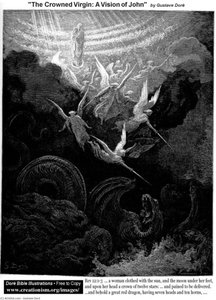 The Crowned Virgin Vision Of John - Paul Gustave Doré
In The Crowned Virgin Vision Of John , the profound dominance of deep, velvety blacks and stark, ethereal whites establishes a mood of celestial tension and sublime awe. This monochromatic mastery is precisely why this work remains a cornerstone among the top 25 artworks of Paul Gustave Doré . By eschewing color, Doré utilizes intricate crosshatching to sculpt light itself, creating a dramatic chiaroscuro that breathes life into the apocalyptic struggle between the divine and the demonic. The interplay of shadow does not merely depict darkness; it creates a palpable atmosphere of spiritual weight.
For the discerning collector or interior designer, integrating this piece into a modern residence offers an unparalleled opportunity to anchor a room with dramatic emotional lighting. In a sophisticated dining room or a minimalist study, the stark contrast of this engraving can serve as a powerful focal point, harmonizing with charcoal accents or metallic textures to evoke a sense of historical grandeur and quiet introspection. It is a masterful way to introduce the Romantic sublime into contemporary architectural spaces.
Ecce Homo - Paul Gustave Doré
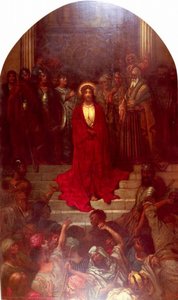 Ecce Homo - Paul Gustave Doré
To encounter Ecce Homo by Paul Gustave Doré is to stand before a monumental testament to the sublime, an artwork that commands the room with its sheer emotional gravity. As one of the most profound entries in our collection of the top 25 artworks of Paul Gustave Doré, this 1877 masterpiece transcends mere biblical illustration; it is a visceral immersion into the heights of human suffering and divine sacrifice. Doré utilizes a masterful symphony of chiaroscuro, where stark, dramatic lighting pierces through deep shadows to illuminate Christ’s tortured form against the impassive, cold faces of the Roman guards.
The composition, rich with heavy textures and forceful diagonal lines, creates an atmosphere of intense spiritual tension that remains breathtaking even centuries later. For the discerning collector or interior designer, such a piece serves as a powerful focal point in a refined space, offering a legacy of Romanticism that speaks to themes of resilience and profound beauty. It is not merely a painting, but a window into the soul of 19th-century dramatic art.
Flower Sellers of London - Paul Gustave Doré
 Flower Sellers of London - Paul Gustave Doré
In Flower Sellers of London , the lines of Paul Gustave Doré are not merely drawn; they are choreographed . This is not a simple depiction of Victorian street life, but a dance frozen in time , where the heavy shadows of poverty meet the delicate, fleeting brilliance of a petal. As you stand before this masterpiece from his profound London: A Pilgrimage series, you witness Doré’s ability to transform the grim reality of the working class into something profoundly rhythmic and soulful.
The composition follows a masterful pyramidal structure, anchoring the viewer's gaze upon a central woman and child. Through a muted palette of earth tones, Doré captures the sad beauty of resilience amidst hardship. The soft, diffused light breathes life into the textures of worn fabric and organic blossoms, creating a visual harmony that makes the chaos of the metropolis feel balanced. What if your own walls could breathe rhythm ? To possess such a work is to invite a moment of quiet reflection and historical depth into your sanctuary, mirroring the profound emotional gravity found in the top 25 artworks of Paul Gustave Doré.
Curs_d wolf thy fury inward on thyself prey and consume thee - Paul Gustave Doré
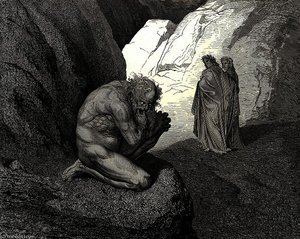 Curs_d wolf thy fury inward on thyself prey and consume thee - Paul Gustave Doré
In the hauntingly profound "Curs’d wolf! Thy fury inward on thyself prey, and consume thee" by Paul Gustave Doré, the mastery of chiaroscuro serves as the very heartbeat of the composition. The light does not merely illuminate; it pierces through a suffocating darkness, emanating from a distant, spectral opening to cast dramatic, jagged shadows across the kneeling figure. This interplay of brilliant highlights and abyssal blacks creates a visceral sense of psychological torment, capturing the precise moment where spiritual supplication meets the crushing weight of sin.
Doré’s command of this extreme contrast is what secures this engraving's place among the top 25 artworks of Paul Gustave Doré . By using light to sculpt form and emotion, he transformed a literary illustration into a monumental exploration of the human soul. For the discerning collector, a high-quality reproduction of this piece offers more than mere decoration; the deep tonal range and dramatic movement bring an unparalleled sense of intellectual depth and cinematic luxury to a contemporary gallery wall, inviting a contemplative atmosphere into any sophisticated interior.
dore gustave - (66) - Paul Gustave Doré
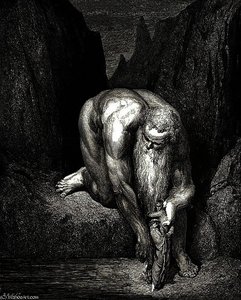
To encounter dore gustave - (66) is to step directly into the abyss of the human psyche. As part of our curated selection of the top 25 artworks by Paul Gustave Doré, this breathtaking engraving serves as a visceral gateway to Dante’s Inferno . It is not merely an illustration; it is a masterclass in the architecture of despair.
Doré utilizes a revolutionary technique of dense cross-hatching and dramatic chiaroscuro to sculpt form out of shadow. The composition is anchored by a colossal, muscular figure whose hunched posture radiates palpable anguish, dwarfing a smaller, vulnerable supplicant. This stark imbalance creates an atmosphere of profound unease, where the jagged, desolate landscape mirrors the internal torment of the soul. Through meticulous linework, Doré achieves a textural depth that feels almost tactile—the roughness of cold stone contrasting with the tension in straining muscle. For the discerning collector, possessing such a piece means more than decorating a wall; it is about inviting the sublime, dark romanticism of the 19th century into your private gallery to transform a room into a profound space of reflection and storytelling.
Le reve du moine (The Dream of a Monk) - Paul Gustave Doré
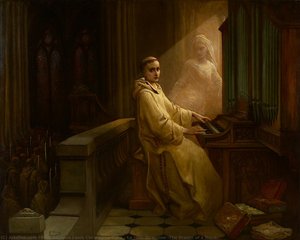 Le reve du moine (The Dream of a Monk) - Paul Gustave Doré
Acquiring Le rêve du moine (The Dream of a Monk) by Paul Gustave Doré is more than an acquisition; it is an investment in a profound legacy of Romantic mastery and refined taste. As one of the most evocative entries in our collection of the top 25 artworks of Paul Gustave Doré, this 1880 masterpiece stands as a testament to the artist's unparalleled ability to navigate the boundary between the physical and the ethereal. The composition is a triumph of chiaroscuro, where a singular, divine shaft of light pierces a somber Gothic interior, illuminating a young monk amidst the velvety shadows of an organ console. Beside him, a spectral, translucent woman emerges—a ghostly presence that transforms the scene into a hauntingly beautiful meditation on faith and the subconscious.
The rich palette of deep golds, warm browns, and midnight blacks creates a sensory experience of quiet prestige. For the discerning collector or interior designer, a high-quality hand-painted oil reproduction of this work brings an unmatched aesthetic authority to modern luxury interiors, offering the same dramatic depth and historical soul as the original masterpiece.
crusades battle of nicaea - Paul Gustave Doré
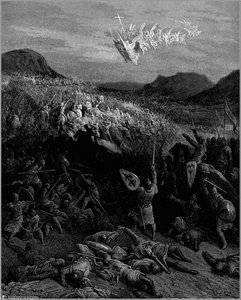 crusades battle of nicaea - Paul Gustave Doré
In the Crusades Battle of Nicaea , one does not merely observe a historical event; one is thrust into the very heart of human turbulence. The primary emotion captured by Paul Gustave Doré is a breathtaking tension between terrestrial chaos and celestial hope. As your eyes trace the diagonal surge of armored warriors, you encounter a central figure raising his sword—a singular beacon of defiance amidst a monochromatic symphony of gray. This masterful use of light and shadow, achieved through intricate hatching and cross-hatching, creates a visceral atmosphere where the grit of battle meets the ethereal descent of angelic figures.
As one of the most profound entries in our collection of the top 25 artworks of Paul Gustave Doré , this piece serves as a universal mirror of the human struggle between duty and despair. For the discerning collector or interior designer, integrating such a powerful, dramatic narrative into a private study or grand hall can transform a room into a space for profound reflection. It invites a quiet contemplation of history's weight, turning a personal sanctuary into a gallery of monumental storytelling.
A Celestial Light - Paul Gustave Doré
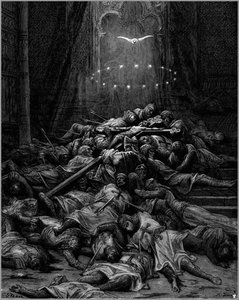 A Celestial Light - Paul Gustave Doré
In A Celestial Light , the lines of Gustave Doré are not merely drawn; they are choreographed . This is not a simple composition; it is a dance frozen in time, where the heavy weight of human suffering meets the ethereal grace of divine intervention. Within this masterpiece, Doré utilizes his signature mastery of hatching and cross-hatching to transform a monochromatic landscape into a visceral experience of texture and emotion.
The scene unfolds in a breathtakingly chaotic arrangement of figures amidst rubble, yet a pyramidal structure guides the eye upward toward a central figure bearing the cross. A piercing, directional light emanates from above, cutting through the deep, velvety shadows to create a moment of profound revelation. It is a study in contrasts—the cold hardness of armor against the soft glow of hope. As one of the top 25 artworks of Paul Gustave Doré , this piece invites you to contemplate the balance between despair and redemption. What if your own walls could hold such dramatic tension? Imagine a space where your collection does not just decorate, but breathes rhythm and tells a story of eternal light piercing through the dark.
Then my guide his palms expanding on the ground thence filled with earth - Paul Gustave Doré
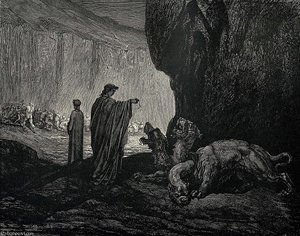 Then my guide his palms expanding on the ground thence filled with earth - Paul Gustave Doré
There is a profound, unsettling gravity in “Then my guide his palms expanding on the ground thence filled with earth” by Paul Gustave Doré that lingers long after you turn away. As one of the most haunting entries in our collection of the top 25 artworks of Paul Gustave Doré, this engraving does not merely illustrate a moment from Dante’s Inferno ; it invites you into the very throat of the abyss. Through masterful use of chiaroscuro and intricate cross-hatching, Doré captures the terrifying spectacle of Lucifer attempting to consume the earth, his hands grasping at soil in a desperate, symbolic act of fallen ambition.
The composition is a masterclass in Romantic dread, where sharp diagonal lines pull the viewer’s gaze downward into a monochromatic landscape of shadow and stone. To possess such a piece is to hold a mirror to the human condition—a reminder of the tension between light and darkness, pride and humility. In a curated space, this work acts as a powerful anchor, bringing an intellectual depth and a sophisticated, dramatic atmosphere that commands silent contemplation.
The Scottish Highlands - Paul Gustave Doré
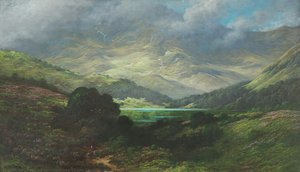 The Scottish Highlands - Paul Gustave Doré
In The Scottish Highlands , Paul Gustave Doré transcends mere landscape painting to offer a profound meditation on the sublime. Created in 1875, this masterpiece serves as a breathtaking testament to his ability to blend Romantic idealism with meticulous observation. Rather than providing a rigid topographical record, Doré captures what he called "reminiscences of the Highlands," prioritizing an atmospheric impression that evokes deep emotion. The viewer is swept into a world of granite peaks and shimmering lochs, where the rugged textures of the mountains meet the serene, reflective surface of the water.
The composition is imbued with a sense of melancholy and grandeur; the towering landscape stands as a symbol of permanence against the fleeting nature of modern life. Through layered oil techniques, Doré renders the light and shadow of the untamed wilderness with unparalleled clarity. Owning this work from the top 25 artworks of Paul Gustave Doré is not merely a purchase; it is an inheritance of taste. With ArtsDot, you can bring this lineage of historical majesty to your own walls, preserving the spirit of the Highlands for generations.
Don Quixote (122) - Paul Gustave Doré
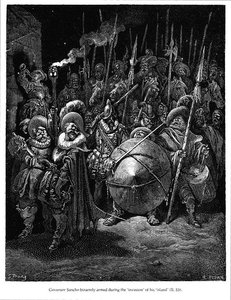 Don Quixote (122) - Paul Gustave Doré
In the pantheon of Paul Gustave Doré’s most profound achievements, Don Quixote stands as a breathtaking symphony in gray, capturing the very essence of Romanticism. This work is far more than a literary illustration; it is a visual meditation on the thin veil between noble delusion and harsh reality. Through his masterful command of wood engraving, Doré utilizes intricate hatching and dramatic chiaroscuro to sculpt light from darkness, turning a monochromatic scene into a tactile experience of weathered stone and heavy fabric.
Securing its place among the top 25 artworks of Gustave Doré, this piece exemplifies how he could breathe life into Cervantes’ epic, using a single lantern's glow to illuminate the poignant loyalty of Sancho Panza. The composition, rich with depth and atmospheric perspective, invites us to reflect on our own perceptions of heroism and madness. For the discerning collector or interior designer, integrating such a powerful, high-contrast masterpiece into a curated space offers a timeless dialogue between historical grandeur and modern sophistication, bringing a sense of narrative depth and intellectual weight to any architectural setting.
dsjslafls - Paul Gustave Doré
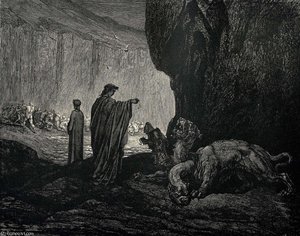 dsjslafls - Paul Gustave Doré
Before the world recognized him as a master of the sublime, Gustave Doré was a young caricaturist navigating the satirical streets of Paris, yet in dsjslafls , we witness the moment his pen transcended mere wit to touch the divine and the damned. This monumental engraving, part of his legendary series for Dante’s Inferno , captures a visceral descent into psychological torment through an unparalleled mastery of light and shadow.
The technical genius of this piece lies in Doré's ability to manipulate fine etched lines to create a suffocating, cavernous atmosphere. A colossal, jagged rock formation anchors the composition, directing the eye toward a terrifying demonic presence emerging from the gloom. The stark, monochromatic contrast—the interplay of deep, velvety blacks and piercing highlights—renders the textures of rough stone and flowing robes with breathtaking realism. As one of the top 25 artworks of Paul Gustave Doré , this work exemplifies the Romantic era's obsession with the shadows of the human soul. For the discerning collector, displaying such a profound exploration of depth and drama provides an atmosphere of quiet prestige and intellectual rigor, perfect for inspiring focus within a sophisticated modern study or private library.
Semiramide, spidocchiatrice di straccioni - Paul Gustave Doré
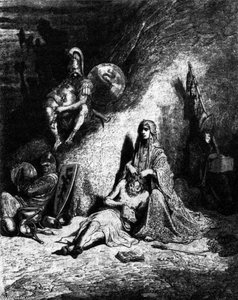
Acquiring a piece as profound as Semiramide, spidocchiatrice di straccioni by Paul Gustave Doré is more than an acquisition; it is an investment in a legacy of dramatic storytelling and refined taste. As one of the most hauntingly beautiful works within the top 25 artworks of Paul Gustave Doré, this 1854 masterpiece exemplifies the height of Romanticism. Through his unparalleled mastery of wood engraving, Doré manipulates light and shadow to create a breathtaking chiaroscuro that breathes life into the biblical tragedy of Semiramide.
The composition draws the eye into a world of profound melancholy, where the texture of stone and the heavy folds of fabric are rendered with surgical precision. The stark, monochromatic palette relies on intricate hatching to evoke a sense of palpable despair and spiritual tension. For the discerning collector, a high-quality oil reproduction of this work offers an unparalleled aesthetic authority. Its dramatic interplay of light and darkness provides a sophisticated focal point for modern luxury interiors, bringing the timeless prestige of 19th-century fine art into the contemporary architectural landscape.
Satan's Flight Through Chaos - Paul Gustave Doré
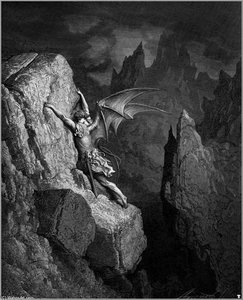
In Satan's Flight Through Chaos , the lines of Paul Gustave Doré aren’t merely drawn; they are choreographed . This is not a simple illustration from Milton’s Paradise Lost ; it is a dance frozen in time , where the jagged descent of the fallen angel meets the rhythmic violence of a fractured landscape. As you observe this 1868 masterpiece, you witness a visceral plunge into Romanticism, where thick, expressive hatching and dramatic chiaroscuro transform a grayscale palette into a tempest of emotion.
Doré masterfully uses light to highlight the muscular strain of Satan’s struggle, casting deep, velvety shadows that suggest an infinite, terrifying abyss. The composition utilizes a dynamic diagonal thrust, pulling the viewer into the very heart of the turmoil. It is a work that makes chaos feel like harmony through sheer technical virtuosity. What if your own walls could breathe rhythm ? Bringing such a profound sense of movement and architectural depth into a modern interior allows one to hold that same delicate balance between light and shadow, even amidst the most turbulent of themes.
They heard, and were abashed, and up they sprung - Paul Gustave Doré
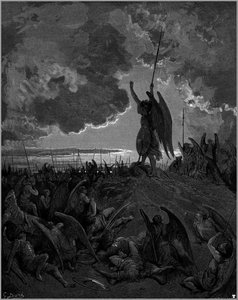 They heard, and were abashed, and up they sprung - Paul Gustave Doré
There is a profound, unsettling energy in “They heard, and were abashed, and up they sprang” by Paul Gustave Doré that lingers long after you turn away. This isn't merely an illustration from Milton’s Paradise Lost ; it is a visceral encounter with the sublime. As you stand before this masterpiece, the stark, monochromatic landscape of the engraving seems to breathe with the weight of divine judgment. Doré masterfully employs a pyramidal composition, where the towering presence of authority looms over the chaotic, prostrate forms of the fallen angels, creating a sense of scale that is both humbling and magnificent.
The interplay of light and shadow—achieved through meticulous cross-hatching and intricate etching—transforms a simple black-and-white scene into a tempest of emotion. You can almost feel the turbulent winds of the stormy sky and the crushing gravity of spiritual defeat. To possess such a work is to invite a piece of literary history into your home, a dramatic reminder of the eternal struggle between light and darkness. It does not just decorate a wall; it anchors a room with its monumental gravity.
The Agony In The Garden - Paul Gustave Doré
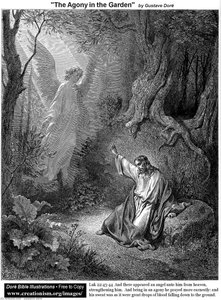 The Agony In The Garden - Paul Gustave Doré
In The Agony In The Garden , one does not merely observe a biblical moment; one feels the weight of an impending storm. As you gaze upon the central figure of Jesus, his posture of profound supplication captures a raw, visceral vulnerability that transcends scripture. Doré masterfully utilizes the intaglio etching technique to weave a tapestry of shadow and light, where the oppressive darkness of Gethsemane seems to press against the very edges of the frame.
This masterpiece stands as a cornerstone in our collection of the top 25 artworks of Paul Gustave Doré because it serves as a universal mirror for the human condition—capturing that solitary, quiet moment of spiritual and psychological struggle. The dramatic interplay of light illuminating the figure against the tangled, monochromatic foliage creates an atmosphere of intense introspection. For the discerning collector, integrating such a powerful work into a private study or a quiet corner of a home can transform a personal sanctuary into a space for profound reflection, offering a window into the sublime beauty of resilience amidst despair.
Conclusion
To wander through the works of Paul Gustave Doré is to traverse a landscape where light and shadow engage in an eternal, dramatic dialogue. His masterpieces are far more than mere relics of the nineteenth century; they are living presences that continue to pulse with the same intensity, heartache, and wonder that first captivated the world. Whether it is the haunting depth of his biblical scenes or the epic scale of his literary imaginings, Doré’s artistry possesses a rare ability to bridge the gap between the historical past and our contemporary emotional reality, offering a profound connection to the human spirit that transcends time.
At ArtsDot.com , we believe that such profound beauty should not be confined to the silent halls of a museum, but should instead become a part of your daily life—a soulful presence within your home or professional space. We invite you to bring this legacy of shadow and light into your own surroundings through our bespoke, hand-painted reproductions. Each piece is meticulously reborn by our skilled artists, who honor the original's soul, texture, and intricate detail, ensuring that every brushstroke carries the weight of Doré’s incomparable genius.
As you reflect on these twenty-five monumental works, we invite you to explore the full collection and discover how a single canvas can transform an interior into a sanctuary of history and inspiration. Allow the mastery of Doré to breathe new life into your walls, turning a mere room into a curated experience of timeless elegance.