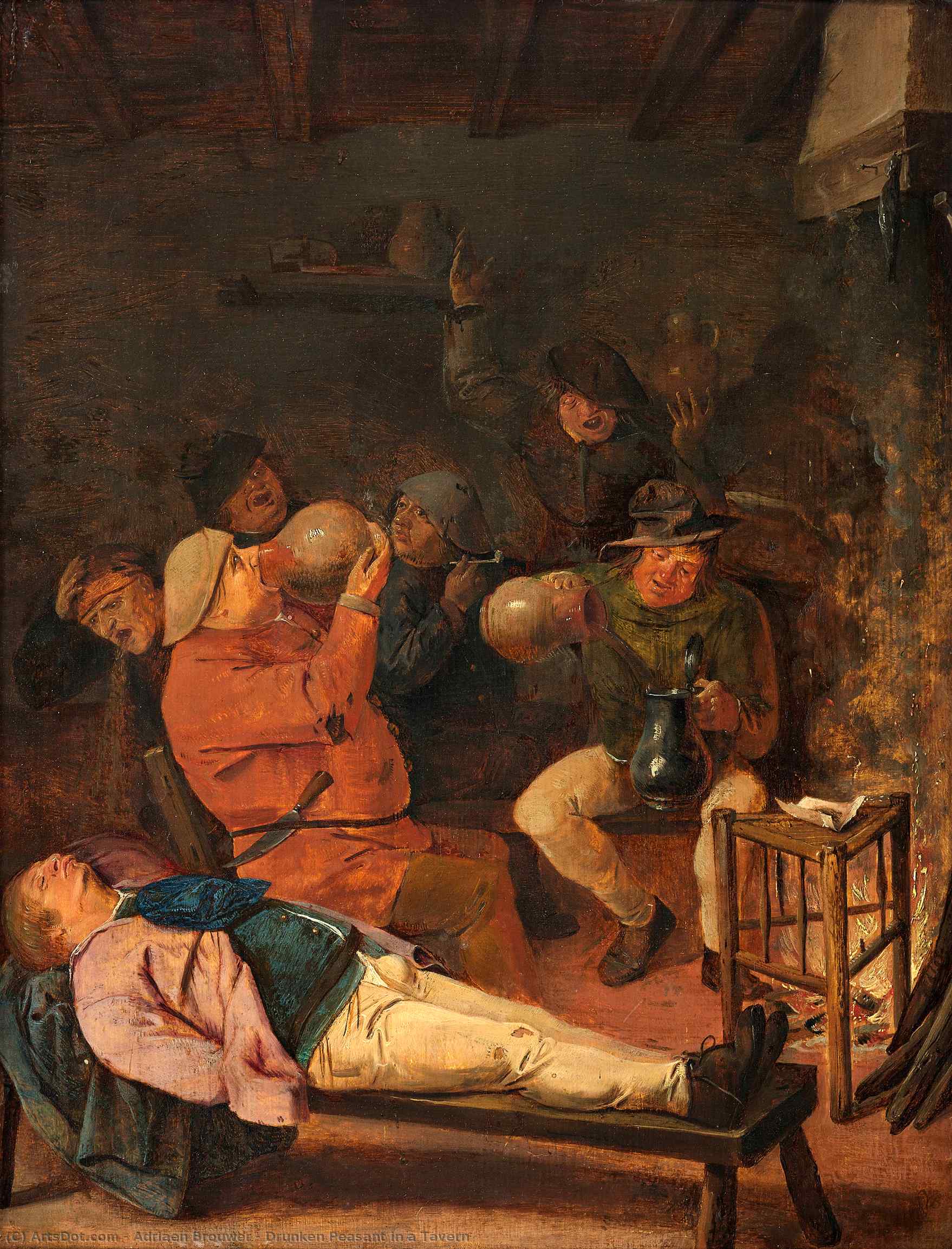
Adriaen Brouwer’s "Drunken Peasant" captures Baroque tavern life! Explore this 1624 oil painting's dynamic realism & symbolic depth at the Boijmans Van Beuningen.
Discover Adriaen Brouwer (1605-1638), a Flemish Baroque painter celebrated for his lively genre scenes of peasant life, taverns, and everyday moments. Explore his art!
Explore Museum Boijmans Van Beuningen's vast collection – from Rembrandt to modern art! Discover Dutch & European masterpieces at the Depot, a unique public art depot.
A Window Into Flemish Baroque: Adriaen Brouwer’s “Drunken Peasant in a Tavern”
Adriaen Brouwer's "Drunken Peasant in a Tavern," completed in 1624, stands as an arresting emblem of the Dutch Golden Age and a cornerstone of genre painting—a movement dedicated to portraying scenes from everyday life with remarkable realism. Housed within the Museum Boijmans Van Beuningen in Rotterdam, Netherlands, this canvas transcends mere depiction; it’s a masterful distillation of Baroque artistic principles infused with astute observation of human behavior and societal dynamics.
The Scene Unfolds: Chaos Amidst Revelry
The painting plunges viewers into a bustling tavern interior bathed in dramatic chiaroscuro—the interplay of light and shadow—a technique favored by Rubens and other masters of the era. Brouwer captures a moment of palpable disorder, populated by men engaged in boisterous drinking, gesturing emphatically, and indulging in what appears to be drunken merriment. At the heart of the composition lies a fallen peasant figure sprawled on the floor, surrounded by onlookers who react with amusement and concern. This juxtaposition—the vulnerability of the individual against the backdrop of collective indulgence—immediately establishes a tension that defines Brouwer’s artistic vision.
Technical Brilliance: Oil Paint and Textured Surfaces
Brouwer's masterful command of oil paint on panel is evident in every brushstroke. The medium lends itself to achieving rich, textured surfaces that convincingly simulate fabric, skin, and wood—essential elements for conveying the physicality of the scene. Careful attention to detail—the folds of clothing, the gleam of wine glasses, the expressions etched onto faces—underscores Brouwer’s commitment to realism. Furthermore, the artist skillfully utilizes perspective to create a sense of depth within the confined space of the tavern, guiding the viewer's gaze and enhancing the dramatic impact of the composition.
Symbolism Beyond Surface Appearance
More than just a snapshot of tavern life, “Drunken Peasant in a Tavern” operates on multiple symbolic levels. The prone figure serves as a poignant reminder of mortality—a common preoccupation within Baroque art—while the reactions of the onlookers reflect moral ambiguity. Brouwer subtly critiques societal excesses and explores the complexities of human emotion, prompting contemplation about themes of honor, shame, and the consequences of unchecked desire.
A Legacy Bridging Flemish Tradition
Brouwer’s work cemented his place as a pivotal figure in bridging the stylistic gap between Flemish and Dutch genre painting. Compared favorably to Jan Steen's similarly evocative depictions of domestic life, Brouwer’s masterpiece exemplifies the movement’s ambition to portray human experience with unflinching honesty—a legacy that continues to inspire artists and collectors alike. Its enduring appeal lies not only in its visual splendor but also in its profound insight into the human condition.