A Moment Frozen in Time: Adriaen Brouwer’s “Feeling”
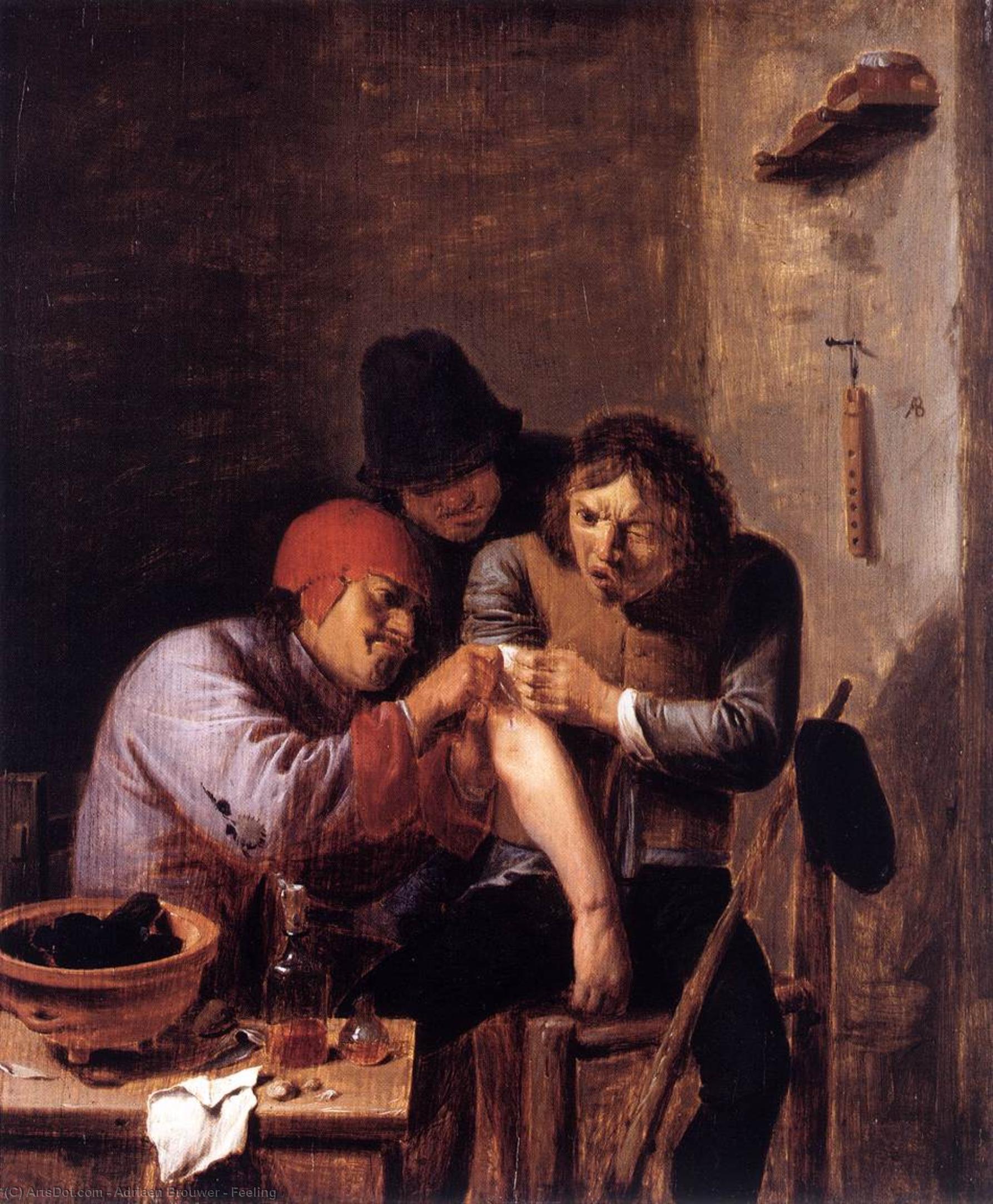
Adriaen Brouwer's "Feeling," painted in 1635, is more than just a depiction of a domestic scene; it’s a poignant snapshot of human vulnerability and the quiet dramas that unfold within everyday life. Executed in the rich, dramatic style characteristic of the Baroque period, this small yet powerfully evocative work offers a glimpse into the world of 17th-century Flanders, a world grappling with religious upheaval, economic change, and the enduring complexities of human emotion. Measuring just 24 x 20 cm, the painting’s intimacy draws the viewer in, fostering a sense of complicity with the scene's unfolding narrative.
The Baroque Vision: Genre Painting at its Finest
Brouwer was a pioneer of genre painting – a movement that sought to capture scenes from ordinary life rather than grand historical or mythological subjects. Unlike his contemporaries who often favored opulent portraits or religious narratives, Brouwer focused on the realities of peasant and urban existence. His technique is immediately recognizable: bold brushstrokes, a dynamic sense of space, and an almost theatrical use of light and shadow – hallmarks of the Baroque style. The artist’s masterful manipulation of chiaroscuro creates a dramatic tension, highlighting the figures' expressions and gestures while simultaneously enveloping the scene in a hazy atmosphere. Notice the meticulous detail with which he renders the textures of the fabrics, the worn surfaces of the furniture, and the glint of light on the metal objects – all contributing to the painting’s palpable sense of realism.
A Study in Human Emotion
The central figure, slumped over the table with an apparent injury or illness, immediately commands attention. The posture, the expression of distress, and the surrounding details—the scattered bowls, bottles, and knives – speak volumes about a moment of profound vulnerability. Brouwer doesn’t offer easy answers or moral judgments; instead, he presents us with raw emotion, inviting contemplation on themes of suffering, resilience, and the fragility of human existence. The two figures standing around him are equally compelling, their expressions suggesting concern, perhaps even anxiety. This ambiguity is central to Brouwer's genius – he avoids explicit storytelling, allowing viewers to interpret the scene’s meaning for themselves.
Historical Context and Symbolism
"Feeling" was created during a period of significant social and economic change in Europe. The rise of merchant capitalism and urban centers brought new opportunities but also increased inequality and hardship. Brouwer's paintings reflect this duality, offering glimpses into both the prosperity and the struggles of ordinary people. The clock on the wall serves as a subtle reminder of time’s relentless passage – a theme frequently explored in Baroque art. The composition itself, with its carefully arranged figures and objects, suggests a deliberate attempt to capture a fleeting moment, an ‘instant’ of human experience frozen in time. Brouwer's brief life, tragically cut short at the age of just 36, adds another layer of poignancy to this remarkable work.