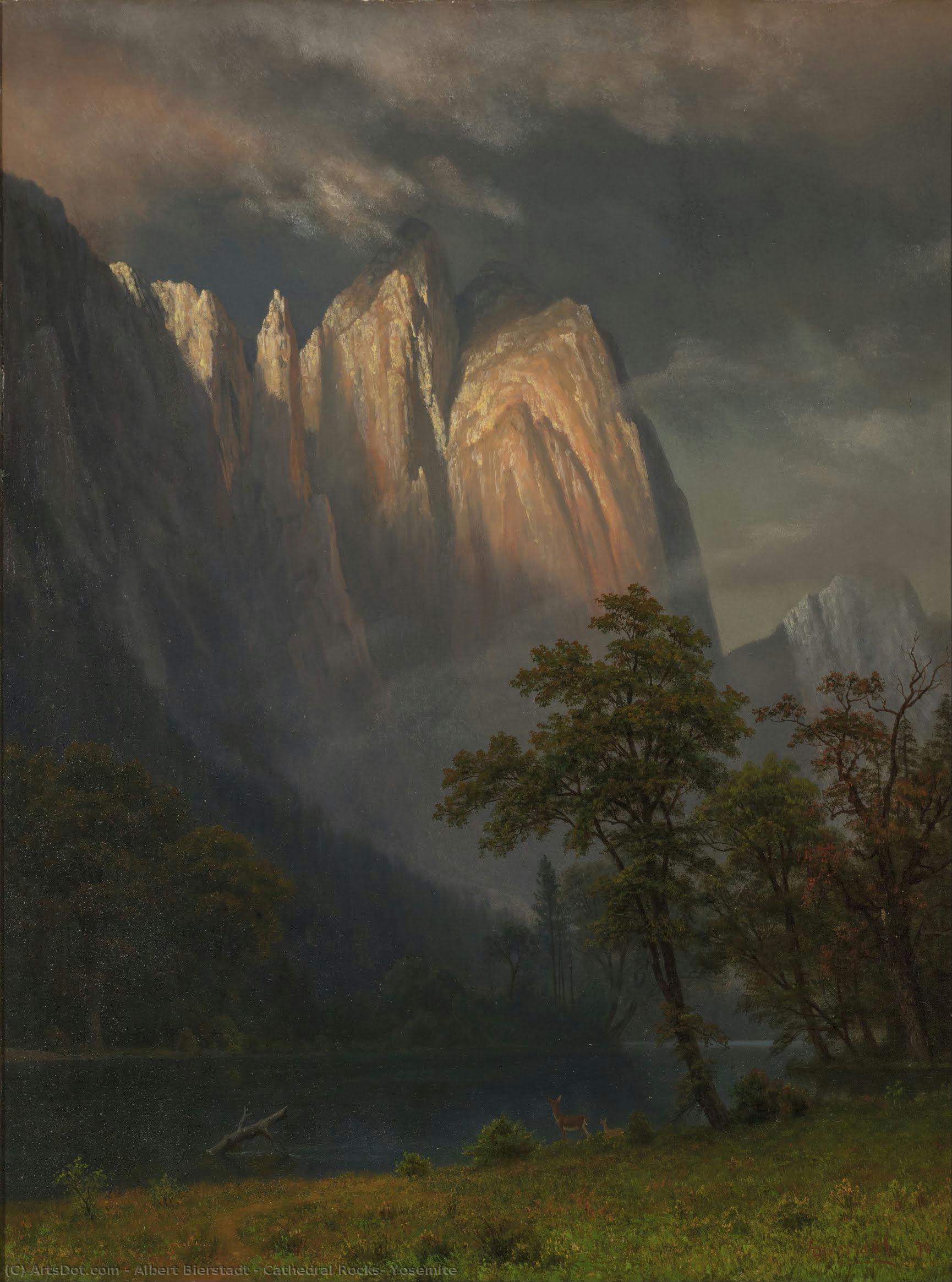
A Vision of Sublime Wilderness: Albert Bierstadt’s Cathedral Rocks
Albert Bierstadt's "Cathedral Rocks," painted in 1870, stands as an iconic testament to the Hudson River School’s fascination with capturing the grandeur and spiritual power of the American West. More than just a depiction of scenery, it embodies a profound philosophical response to the burgeoning frontier spirit—a yearning for transcendence amidst untamed landscapes. The painting portrays Ferrar Glacier and its surrounding peaks in breathtaking detail, showcasing Bierstadt's masterful command of light and color. Watkins’ mammoth photograph served as inspiration for this artwork.
- Subject Matter: The scene depicts Cathedral Rock, a dramatic cliff face dominated by snow-capped mountains situated within the Royal Society Range of Antarctica. Its jagged peaks pierce through swirling clouds, creating an atmosphere of awe and majesty.
- Style & Technique: Bierstadt adhered to the Hudson River School’s stylistic conventions—characterized by monumental scale, meticulous realism, and a deliberate use of atmospheric perspective. He employed oil paints on canvas with painstaking accuracy, layering glazes to achieve luminous tonal gradations that convey the palpable chill of glacial ice and the radiant glow of sunlight filtering through high altitudes.
- Historical Context: Painted during a period of intense exploration and westward expansion in America, “Cathedral Rocks” reflects the Romantic ideal of confronting nature’s sublime beauty. It aligns perfectly with Carleton Watkins' photographic expeditions documenting the American West, furthering the visual documentation of this era.
Symbolism & Emotional Impact
The painting transcends mere topographical representation; it speaks to a deeper spiritual yearning. The towering Cathedral Rock symbolizes resilience and permanence against the forces of time and erosion—a metaphor for humanity’s relationship with the natural world. Bierstadt's deliberate composition aims to evoke feelings of reverence and humility, prompting viewers to contemplate the immensity of creation and their own insignificance within its vastness. The ethereal light captures a moment of sublime beauty, mirroring the Romantic preoccupation with experiencing profound emotion.
- Color Palette: Bierstadt utilized a predominantly cool color palette—dominantly blues and whites—to depict the glacial environment, emphasizing the icy expanse and conveying a sense of solitude. However, warmer hues like ochre and amber highlight the sunlit peaks, creating visual contrast and reinforcing the painting’s dramatic impact.
- Composition: The pyramidal arrangement of Cathedral Rock and its surrounding mountains directs the viewer's gaze upwards, mirroring the spiritual aspiration inherent in the Hudson River School movement. Bierstadt skillfully employs atmospheric perspective—reducing detail and color intensity with distance—to simulate the effects of altitude and enhance the illusion of depth.
A Legacy Enduring Inspiration
“Cathedral Rocks” continues to inspire artists and designers alike, demonstrating the enduring power of landscape painting to communicate emotion and convey philosophical ideas. Its meticulous technique and evocative imagery exemplify the Hudson River School’s commitment to capturing the sublime—a concept championed by Edmund Burke and Coleridge—and solidify Bierstadt's place as one of America’s foremost Romantic painters. Reproductions offer a remarkable opportunity to experience this masterpiece firsthand, bringing its breathtaking beauty into any interior space.