A Miracle Captured in Light and Shadow
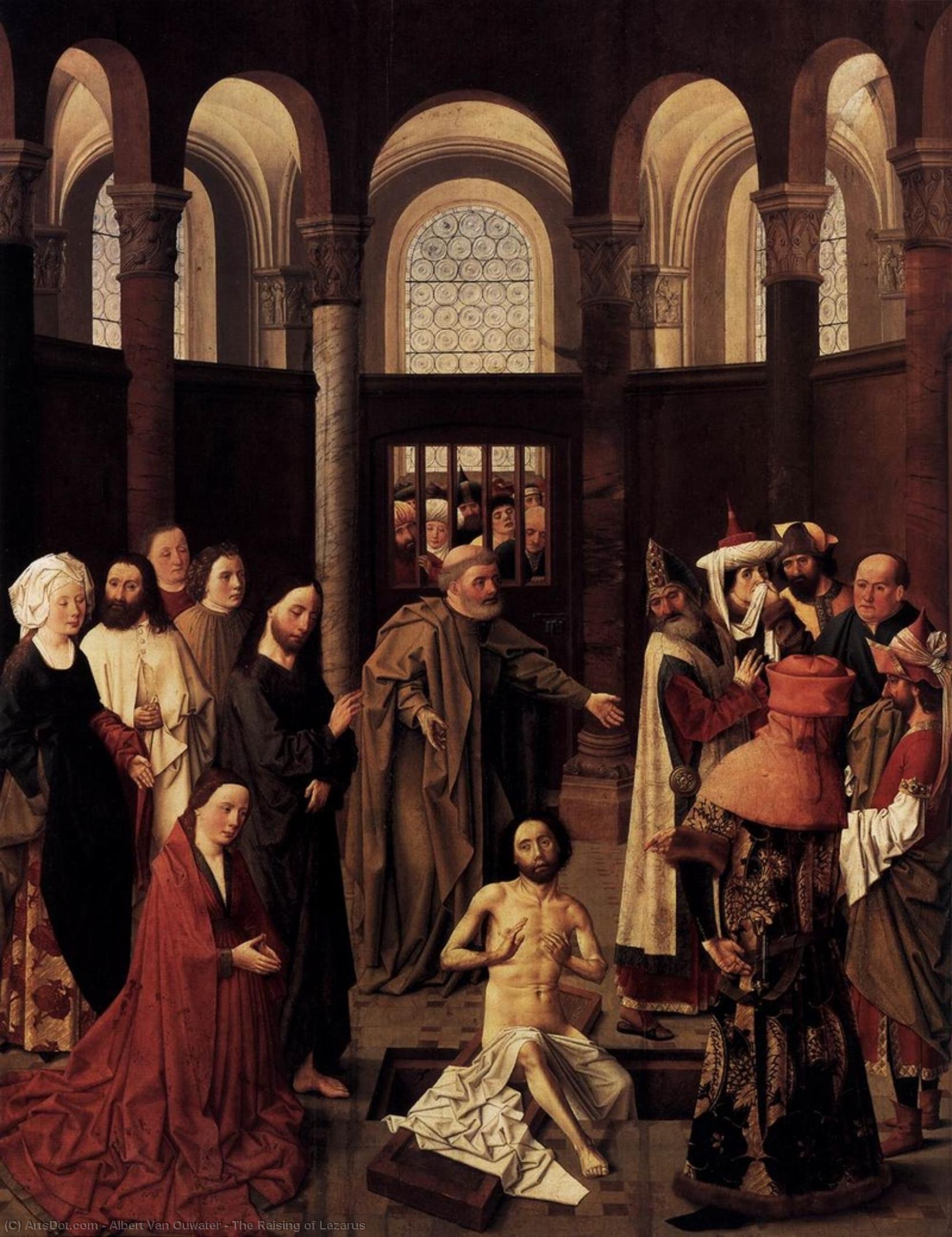
In the quiet, hallowed corridors of art history, few works possess the enigmatic power of Albert van Ouwater’s The Raising of Lazarus. This singular masterpiece, a rare survivor from the mid-15th century, serves as a profound window into the dawn of Early Netherlandish painting. The scene captures the very moment of divine intervention: Jesus Christ, standing with a presence that commands both reverence and awe, reaches out to call Lazarus back from the threshold of death. As the figure of Lazarus begins to stir, emerging from the shadows of his tomb, the viewer is drawn into a visceral experience of transition—from the stillness of mortality to the sudden, breathtaking pulse of life.
The composition is a masterclass in balanced tension. Within the architectural embrace of what appears to be a Romanesque apse, Ouwater orchestrates a gathering of souls, each reacting to the miracle with a unique spectrum of human emotion. To one side, the sisters Martha and Mary witness the resurrection with a mixture of grief and burgeoning hope, while apostles and rabbis stand in various states of contemplation and disbelief. The interplay of light through a large window does more than merely illuminate the room; it acts as a spiritual protagonist, casting a luminous glow that highlights the textures of fabric and skin, symbolizing the divine light breaking into the earthly realm.
Technical Brilliance and the Splendor Style
For the discerning collector or lover of classical technique, this painting offers an unparalleled study in Prächtigkeit Stil, or the Splendor Style. Executed with meticulous precision on an oak panel using tempera, Ouwater demonstrates a technical prowess that bridges the gap between Northern mysticism and burgeoning Renaissance realism. His palette is remarkably sophisticated; rather than relying on overwhelming opulence, he utilizes a restrained yet luminous array of earthy tones, punctuated by sudden, vibrant strikes of crimson and deep azure. These colors do not merely decorate the scene but breathe life into it, creating a sense of palpable immediacy.
The artist’s ability to render texture is nothing short of extraordinary. One can almost feel the weight of the heavy drapery, the coolness of the stone walls, and the delicate, fragile nature of the skin as Lazarus awakens. This attention to detail creates a tactile reality that grounds the supernatural event in the physical world. For those seeking to incorporate such depth into an interior space, a high-quality reproduction of this work provides more than just decoration; it introduces a layer of historical gravity and textural richness that can serve as a profound focal point in any curated collection.
An Enduring Legacy of Faith and Vision
Beyond its technical merits, The Raising of Lazarus resonates on a deeply emotional level, offering a timeless meditation on faith, loss, and renewal. As one of the few surviving links to the early Dutch school of painting, the work carries the weight of a lost era. It is a piece that invites long periods of contemplation, rewarding the viewer with new discoveries in every shadow and every subtle expression. Whether viewed as a historical document of the Northern Netherlands or as a spiritual icon, the painting remains an evocative testament to the human capacity for wonder.
Integrating a reproduction of this masterpiece into a modern or classical interior allows for a dialogue between the past and the present. It brings an atmosphere of quiet dignity and intellectual depth to a room, making it an ideal choice for designers looking to evoke a sense of timelessness and soulfulness. To possess such an image is to hold a fragment of a miracle, preserved through the centuries by the hand of a true pioneer.