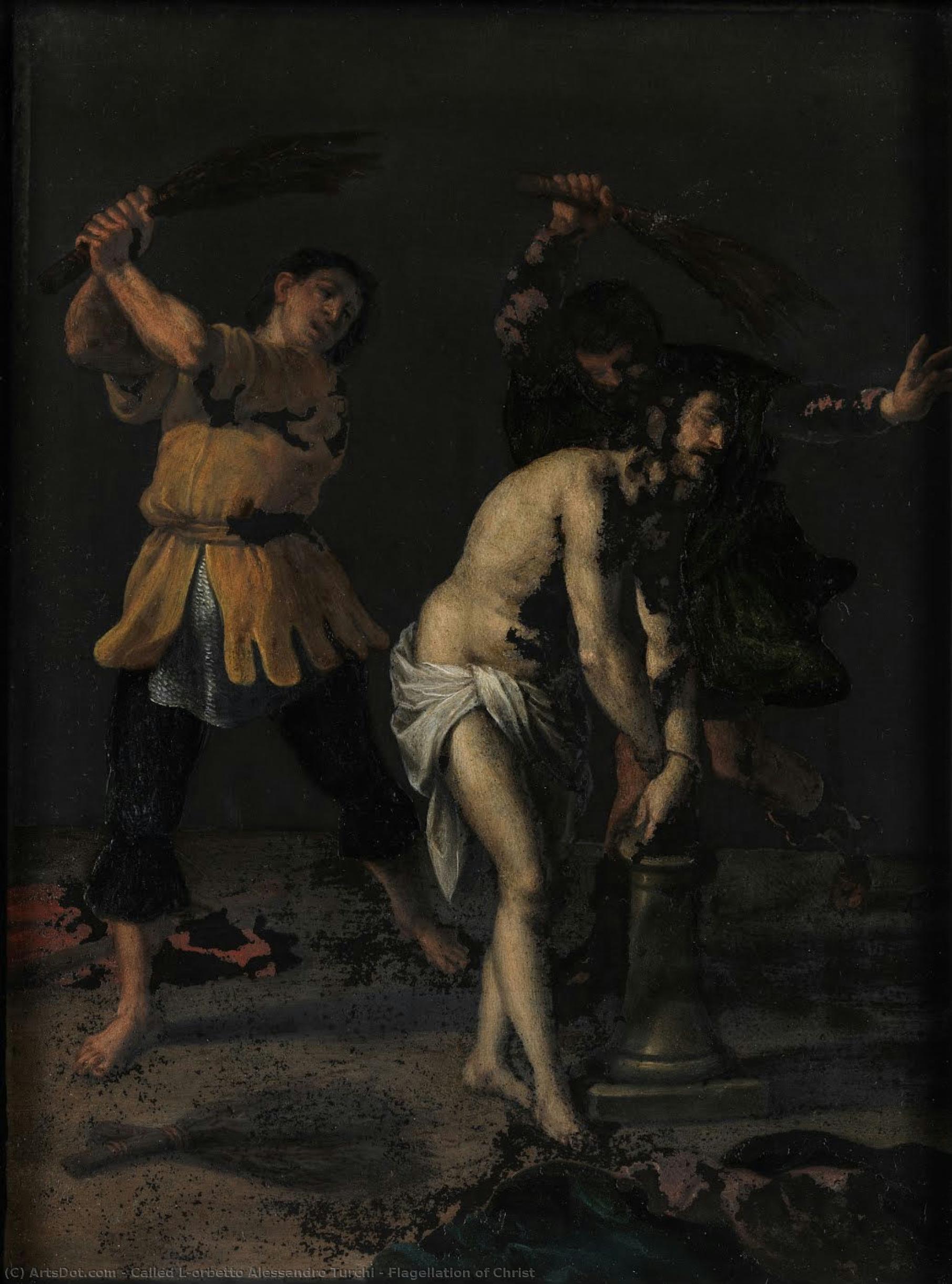
Witness the dramatic Flagellation of Christ by Alessandro Turchi (1600). Explore this Baroque masterpiece featuring intense emotion and meticulous detail, showcasing the artist's skill.
Discover Alessandro Turchi (L'Orbetto), an Italian Baroque master renowned for his soft yet dramatic style, blending Caravaggism with lyrical grace. Explore historical & religious masterpieces from Verona & Rome.
Explore Castelvecchio Museum in Verona, Italy! Discover medieval & Renaissance art – Mantegna, Pisanello – within a stunning castle restored by Carlo Scarpa. Weapons, ceramics & more await!
Alessandro Turchi’s “Flagellation of Christ” – A Study in Dramatic Light and Baroque Intensity
The year is 1607, and Rome—a city perpetually simmering with artistic fervor—is witnessing the arrival of Alessandro Turchi, a Veronese painter already known for his meticulous technique and burgeoning talent. His “Flagellation of Christ,” now housed within the Museo Nazionale di Capodimonte in Naples, isn’t merely a depiction of a biblical scene; it's a visceral experience, a carefully orchestrated drama rendered with an intensity that foreshadowed the revolutionary style of Caravaggio himself. This painting, commissioned by the wealthy and pious di Franco family for their chapel in San Domenico Maggiore, immediately captivated Naples and signaled the arrival of a new master to the city’s artistic landscape. It's a work steeped in religious symbolism, yet powerfully grounded in human emotion—a testament to Turchi’s ability to bridge the gap between classical restraint and Baroque dynamism.
A Composition Rooted in Tradition, Transformed by Innovation
Turchi’s composition draws heavily from earlier depictions of the Flagellation, notably Sebastiano del Piombo's fresco in San Pietro in Montorio, a seminal work that established the scene as a brutal ballet of suffering. However, Turchi doesn’t simply copy; he reimagines it with a startlingly modern sensibility. The compressed space—a deliberate departure from the expansive format of its predecessor—forces the viewer into an immediate and unsettling proximity to the unfolding tragedy. The figures are not presented as idealized saints but as profoundly human, their faces etched with pain and vulnerability. Notice particularly the posture of Christ himself – a slumped, almost defeated figure, rendered with a realism that transcends mere representation. The use of slate as a support is crucial; its inherent ability to create stark contrasts between light and shadow amplifies the drama, mimicking the effect of an artificial illumination—a technique likely influenced by Caravaggio’s own explorations of chiaroscuro.
The Language of Light and Shadow – A Masterclass in Baroque Technique
Turchi's mastery of *chiaroscuro* is nothing short of breathtaking. The painting is dominated by pools of deep, almost impenetrable darkness that engulf the scene, punctuated by shafts of brilliant light. This dramatic interplay isn’t merely decorative; it serves to isolate and emphasize key elements—the contorted faces of the tormentors, the bloodied wounds on Christ's body, and the desperate plea in his eyes. The application of paint is remarkably loose and expressive, a hallmark of Caravaggio’s style, contributing to the sense of immediacy and raw emotion. The brushstrokes are visible, adding texture and dynamism to the composition, while the subtle gradations of color create a remarkable sense of depth and volume. The use of black pigment, particularly in the shadows, is exceptionally skillful, lending an almost velvety quality to the dark areas.
Symbolism and Emotional Resonance – A Portrait of Suffering
Beyond its technical brilliance, “Flagellation of Christ” resonates deeply with viewers through its potent symbolism. The act of flagellation itself represents penance, humility, and sacrifice—core tenets of Christian faith. The figures surrounding Christ are not simply bystanders; they embody various aspects of human response to suffering: the anguish of the onlookers, the brutal efficiency of the executioners, and the desperate hope for redemption. The placement of the objects – a chair near the bottom right corner, a vase towards the center-right, and two umbrellas in the upper part – adds layers of context, grounding the scene within a specific setting and inviting contemplation about the human condition. The painting’s emotional impact is profound—a stark reminder of humanity's capacity for both cruelty and compassion. It compels us to confront uncomfortable truths about faith, suffering, and the nature of good and evil.
A Legacy Forged in Light – Turchi’s Enduring Influence
Alessandro Turchi’s “Flagellation of Christ” stands as a pivotal work in his oeuvre and a significant bridge between the late Mannerism of Verona and the burgeoning Baroque style of Rome. While often associated with Caravaggio, Turchi developed a distinct voice—a synthesis of classical restraint and dramatic intensity that cemented his place as one of the most important artists of his generation. Reproductions of this powerful image offer an opportunity to experience firsthand the artist’s extraordinary skill and profound understanding of human emotion – a timeless testament to the enduring power of art to illuminate the darkest corners of the human spirit.