 Preview
 Send
Send Share
Share
 Details

 Download
 Similars
 X-Ray
X-Ray Diaporama
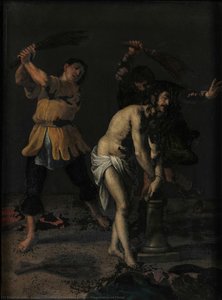
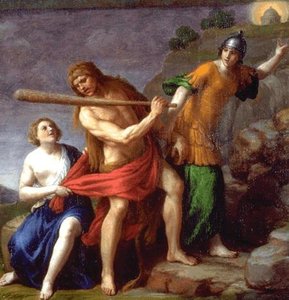
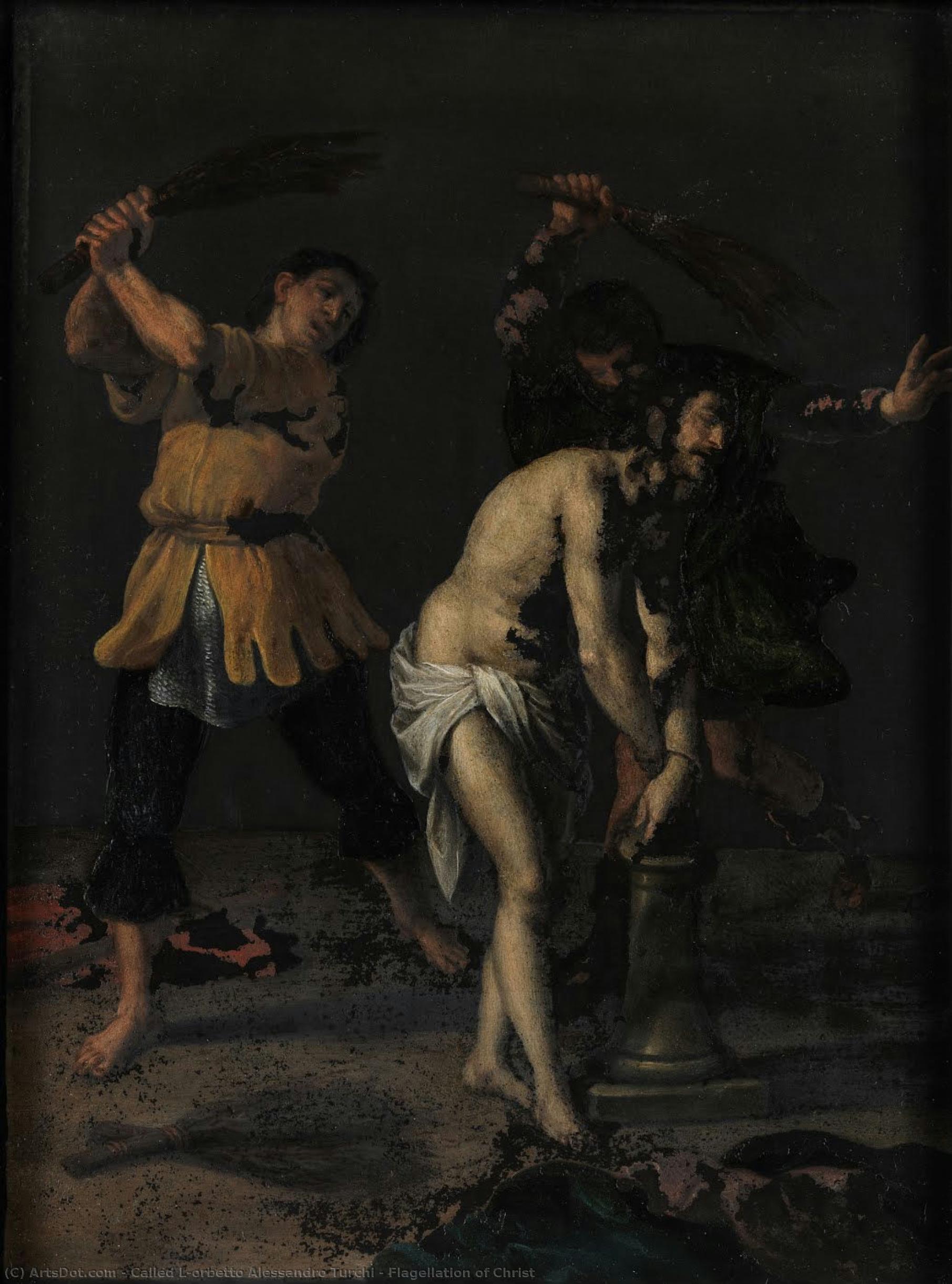
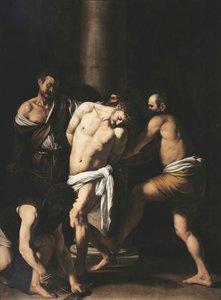
Flagellation of Christ


 Read More
Hand Made Oil Reproduction
Hand-painted oil on canvas in your size and frame, made to order by our artists. ( Buy Print Buy Image)




P118B $10

P118H $10

P118W $10

P438Z $10

P508JH $12

P508YH $12

P805H $10

P805Z $10

P919BZ $10

P919G $10

P919XJ $10

P959ZH $10

P968JZ $12

W106C $8

W218G $10

W218JH $8

W218Y $10

W307PJ $10

W316G $10

W316PJ $8

W316Y $10

W398PJ $8

W4111J $10

W500HY $15

W500JH $15

W692G $12

W849H $8

W940BG $15

W953PJ $8




Pick from our preset sizes that match the artwork's original proportions.

You may enter your own dimensions to fit a specific frame or space. If your selected size does not match the original image's proportions, we will either crop the artwork or extend the painting with additional hand-painted elements. A digital mockup will be sent for your approval before production begins.
Please note that the on-screen preview does not reflect the actual cropping or extension. Only the mockup will accurately show the final composition.
While custom sizes are available, we recommend selecting a dimension from the predefined list to preserve the original proportions.
After order, ArtsDot.com team will email client for instructions and provide a mockup preview
Worldwide Delivery () in 3/4 weeks instead of standard 5 weeks. (17 August). No compromise on quality.

Free Worldwide Express Shipping

High-Quality Linen Canvas

Full Shipping Insurance

Customs Tax Refund Guarantee

True Color Matching Guarantee

60-Day Return Policy (Defects Only)

100% Money-Back Guarantee

Bulk Discount Offer
 Glass option is only available in size under 110 CM

Flagellation of Christ
Reproduction Medium
Reproduction Size
-


Total Price
$ 263
Artwork Description
Alessandro Turchi’s “Flagellation of Christ” – A Study in Dramatic Light and Baroque Intensity
The year is 1607, and Rome—a city perpetually simmering with artistic fervor—is witnessing the arrival of Alessandro Turchi, a Veronese painter already known for his meticulous technique and burgeoning talent. His “Flagellation of Christ,” now housed within the Museo Nazionale di Capodimonte in Naples, isn’t merely a depiction of a biblical scene; it's a visceral experience, a carefully orchestrated drama rendered with an intensity that foreshadowed the revolutionary style of Caravaggio himself. This painting, commissioned by the wealthy and pious di Franco family for their chapel in San Domenico Maggiore, immediately captivated Naples and signaled the arrival of a new master to the city’s artistic landscape. It's a work steeped in religious symbolism, yet powerfully grounded in human emotion—a testament to Turchi’s ability to bridge the gap between classical restraint and Baroque dynamism.A Composition Rooted in Tradition, Transformed by Innovation
Turchi’s composition draws heavily from earlier depictions of the Flagellation, notably Sebastiano del Piombo's fresco in San Pietro in Montorio, a seminal work that established the scene as a brutal ballet of suffering. However, Turchi doesn’t simply copy; he reimagines it with a startlingly modern sensibility. The compressed space—a deliberate departure from the expansive format of its predecessor—forces the viewer into an immediate and unsettling proximity to the unfolding tragedy. The figures are not presented as idealized saints but as profoundly human, their faces etched with pain and vulnerability. Notice particularly the posture of Christ himself – a slumped, almost defeated figure, rendered with a realism that transcends mere representation. The use of slate as a support is crucial; its inherent ability to create stark contrasts between light and shadow amplifies the drama, mimicking the effect of an artificial illumination—a technique likely influenced by Caravaggio’s own explorations of chiaroscuro.The Language of Light and Shadow – A Masterclass in Baroque Technique
Turchi's mastery of *chiaroscuro* is nothing short of breathtaking. The painting is dominated by pools of deep, almost impenetrable darkness that engulf the scene, punctuated by shafts of brilliant light. This dramatic interplay isn’t merely decorative; it serves to isolate and emphasize key elements—the contorted faces of the tormentors, the bloodied wounds on Christ's body, and the desperate plea in his eyes. The application of paint is remarkably loose and expressive, a hallmark of Caravaggio’s style, contributing to the sense of immediacy and raw emotion. The brushstrokes are visible, adding texture and dynamism to the composition, while the subtle gradations of color create a remarkable sense of depth and volume. The use of black pigment, particularly in the shadows, is exceptionally skillful, lending an almost velvety quality to the dark areas.Symbolism and Emotional Resonance – A Portrait of Suffering
Beyond its technical brilliance, “Flagellation of Christ” resonates deeply with viewers through its potent symbolism. The act of flagellation itself represents penance, humility, and sacrifice—core tenets of Christian faith. The figures surrounding Christ are not simply bystanders; they embody various aspects of human response to suffering: the anguish of the onlookers, the brutal efficiency of the executioners, and the desperate hope for redemption. The placement of the objects – a chair near the bottom right corner, a vase towards the center-right, and two umbrellas in the upper part – adds layers of context, grounding the scene within a specific setting and inviting contemplation about the human condition. The painting’s emotional impact is profound—a stark reminder of humanity's capacity for both cruelty and compassion. It compels us to confront uncomfortable truths about faith, suffering, and the nature of good and evil.A Legacy Forged in Light – Turchi’s Enduring Influence
Alessandro Turchi’s “Flagellation of Christ” stands as a pivotal work in his oeuvre and a significant bridge between the late Mannerism of Verona and the burgeoning Baroque style of Rome. While often associated with Caravaggio, Turchi developed a distinct voice—a synthesis of classical restraint and dramatic intensity that cemented his place as one of the most important artists of his generation. Reproductions of this powerful image offer an opportunity to experience firsthand the artist’s extraordinary skill and profound understanding of human emotion – a timeless testament to the enduring power of art to illuminate the darkest corners of the human spirit.Related Artworks
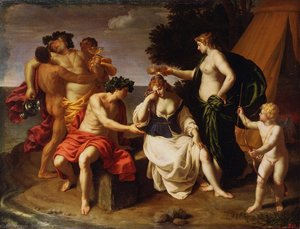
Artist Biography
A Veronese Master in the Roman Baroque: The Life and Art of Alessandro Turchi
Alessandro Turchi, affectionately known as “L’Orbetto” – the little urchin – was a pivotal figure bridging the late Mannerist traditions of Verona with the burgeoning drama of the early Roman Baroque. Born in 1578 into a Verona touched by artistic fervor, Turchi's journey reflects a fascinating interplay between regional styles and the magnetic pull of Rome’s artistic innovations. His initial training under Felice Riccio (il Brusasorci), a prominent Veronese painter, laid a solid foundation in technique and composition. This apprenticeship instilled within him a meticulous approach to form and a sensitivity to color that would characterize his early works. By 1603, Turchi had established himself as an independent artist, quickly gaining recognition for his emerging talent. A significant early commission – the organ shutters for the Accademia Filarmonica of Verona (1606-1609) – demonstrated not only his technical skill but also his versatility in handling large-scale decorative projects. This period solidified his position within the Veronese art scene, preparing him for a broader artistic horizon.From Verona to Rome: A Blossoming Career
The death of Felice Riccio in 1605 proved a turning point. Turchi, alongside Pasquale Ottino, stepped forward to complete several canvases left unfinished by their master, an act that further honed his skills and cemented his reputation within the artistic community. This collaborative effort wasn’t merely about finishing existing works; it was a crucial period of learning and refinement, allowing Turchi to absorb Riccio's stylistic nuances while simultaneously developing his own unique voice. His ambition soon led him beyond Verona. By 1616, he had ventured to Rome, the epicenter of artistic innovation, where he quickly became immersed in the vibrant atmosphere of papal patronage and artistic competition. His involvement in the fresco decoration of the Sala Reggia at the Quirinal Palace – depicting the Gathering of Manna – marked his arrival on the Roman stage. This commission brought him into contact with leading artists of the day and exposed him to the dramatic intensity that defined the emerging Baroque style. A particularly notable achievement during this period was *Christ, Magdalen, and Angels*, commissioned by Cardinal Scipione Borghese, a powerful patron known for his discerning taste and support of artistic talent.A Synthesis of Styles: Caravaggism and Grace
Turchi’s artistic style is remarkably distinctive – a compelling blend of softness and dramatic intensity. While deeply influenced by the works of Carlo Cagliari and, crucially, his early mentor Felice Riccio, he didn't simply imitate their styles. Instead, he forged a unique path that set him apart from his contemporaries. The influence of Caravaggio is undeniable; Turchi masterfully employed *chiaroscuro* – the dramatic use of light and shadow – to create a sense of theatricality and emotional depth in his paintings. However, unlike some of Caravaggio’s more starkly realistic depictions, Turchi tempered this intensity with a lyrical grace and a refined sensitivity to color. His figures possess a sculptural quality, yet they are imbued with a gentle humanity that softens the dramatic impact. This ability to balance these seemingly opposing forces – drama and delicacy – is what defines his artistic signature. He frequently employed black marble as a background in his historical scenes, creating a striking contrast that further enhanced the emotional power of his compositions.Legacy and Recognition: A Prince of the Roman Art World
Throughout his career, Alessandro Turchi wasn’t only an accomplished painter but also a dedicated mentor. He generously shared his knowledge and expertise with promising young artists, including Giovanni Ceschini and Giovanni Battista Rossi (il Gobbino), both of whom went on to establish successful careers in Verona. His professional standing continued to ascend; in 1637, he was elected “principe” – director – of the Accademia di San Luca, a testament to his leadership and artistic authority within the Roman art world. A year later, in 1638, he joined the prestigious Papal Guild of Artists, known as the Pontifical Academy of Fine Arts and Letters of the Virtuosi al Pantheon, further solidifying his position among Rome’s elite artists. Turchi's contributions to early Baroque painting are now recognized for their skillful blending of dramatic intensity with a gentle aesthetic sensibility. His compelling religious and historical works continue to captivate viewers, offering a glimpse into the artistic ferment of 17th-century Italy. He left behind a legacy not only through his paintings but also through the artists he inspired, ensuring that his unique vision would endure for generations to come. His work remains a testament to the power of artistic synthesis and the enduring appeal of beauty tempered with drama.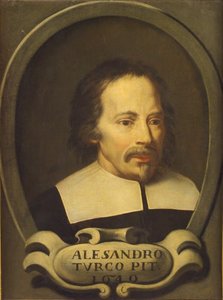
Alessandro Turchi
1578 - 1649 , Italy
Quick Facts
- Artistic Movement Or Style: Early Baroque
- Artists Or Movements Influenced By This Artist:
- Giovanni Ceschini
- Giovanni B. Rossi
- Artists Who Influenced This Artist:
- Felice Riccio
- Carlo Cagliari
- Date Of Birth: 1578
- Date Of Death: 1649
- Full Name: Alessandro Turchi
- Nationality: Italian
- Notable Artworks:
- The Assumption Altarpiece
- Christ, Magdalen & Angels
- Judgment of Paris
- Cephalus and Procris
- Place Of Birth: Verona, Italy
Related Articles

The Visceral Stage: Exploring Dramatic Narratives & Emotional Intensity in Baroque Art
Explore the dramatic world of Baroque art! Discover iconic masters like Caravaggio & Rembrandt, their techniques, and the movement's lasting impact. Expert insights for collectors & enthusiasts at ArtsDot.

Baroque Drama: Bringing Opulence & Emotion into Contemporary Interiors
Explore the opulent world of Baroque interior design! Discover key elements, modern applications & how to bring dramatic elegance into your home with 's authentic reproductions.

Baroque Masterpieces: 10 Paintings That Defined an Era |
Journey through the drama & grandeur of Baroque art! Explore 10 masterpieces by Caravaggio, Rembrandt, Rubens & more. Discover stunning oil paintings, rich colors & timeless stories. Find museum-quality reproductions at .

The Dramatic Flourish: Exploring the Baroque Movement's Enduring Legacy in Art History
Explore the dramatic world of Baroque art! Discover iconic artists like Caravaggio & Rubens, defining techniques, and its lasting impact on art history. Expert insights for collectors & enthusiasts at ArtsDot.
Simon Vouet: A Baroque Master's Journey from Italian Influence to French Classicism
Explore the life & art of Simon Vouet, a pivotal French Baroque painter who introduced Italian styles to France. Discover his masterpieces and lasting influence on 17th-century art.