Early Influences: Vouet’s Formative Years and Italian Apprenticeship
 Wikipedia: Simon Vouet
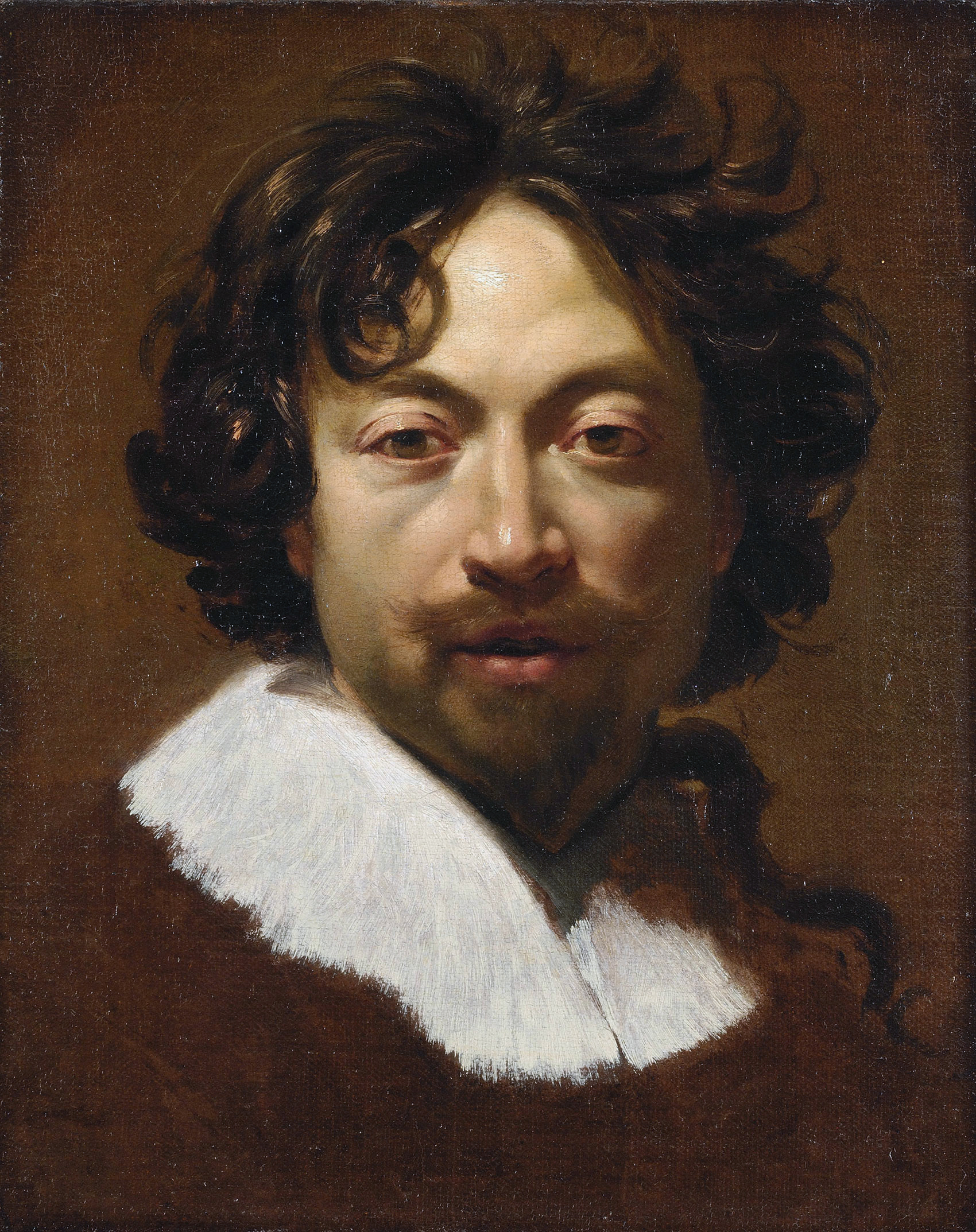
Simon Vouet (French pronunciation: [simɔ̃ vwɛ]; 9 January 1590 – 30 June 1649) was a French painter who studied and rose to prominence in Italy before being summoned by Louis XIII to serve as Premier peintre du Roi in France. He and his studio of art...
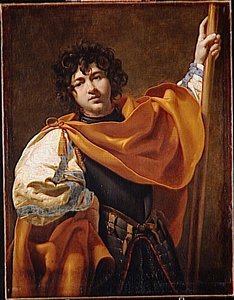
Simon Vouet, a name synonymous with the burgeoning Baroque movement in France, wasn't born into a fully formed artistic vision. His story is one of deliberate cultivation, a journey that began in the Parisian workshops of his father, Laurent Vouet, a painter himself, and blossomed amidst the vibrant artistic ferment of Italy. Born in 1590, young Simon received his initial training within the family circle, laying the groundwork for a career that would ultimately redefine French painting. However, it was his sojourn to England at the tender age of fourteen – commissioned to paint a portrait – that first hinted at the ambition and talent that lay within. This early success paved the way for more significant travels, most notably his extended stay in Italy beginning in 1612. He initially found himself drawn into the orbit of the Ottoman Empire as part of Baron de Sancy’s entourage, but it was Venice, and then Rome, that truly captured his imagination.
The Rome Vouet encountered was a city pulsating with artistic energy. The High Renaissance had given way to a dynamic new style – the Baroque – characterized by dramatic lighting, intense emotion, and a heightened sense of realism. This wasn’t merely an aesthetic shift; it represented a fundamental change in how artists approached their craft. Vouet immersed himself in this environment, absorbing influences from masters like Caravaggio, whose revolutionary *tenebrism*—the stark contrast between light and shadow—immediately captivated him. But Vouet was no mere imitator. He possessed an intellectual curiosity that led him to study the works of other prominent artists, including Guido Reni, Il Guercino, and Domenichino, each offering a different facet of the Italian Baroque sensibility.
The Roman Baroque Style: Absorbing Caravaggio, Reni, and Beyond
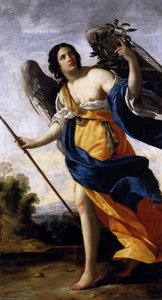
 Saint William of Aquitaine
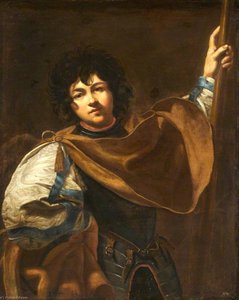
Simon Vouet’s "Saint William of Aquitaine" – a stunning Baroque portrait showcasing dramatic lighting & opulent detail. Explore this 17th-century masterpiece!
Vouet’s early Roman paintings reveal a fascinating evolution. Initially, he embraced the raw emotional power and dramatic chiaroscuro of Caravaggio, evident in works like his *Two Lovers*. This period demonstrates a clear fascination with capturing intense psychological states through masterful manipulation of light and shadow. However, Vouet quickly moved beyond simple imitation. He began to temper Caravaggio’s stark realism with a more refined elegance, influenced by the classical composure and idealized forms favored by artists such as Guido Reni. His *St. Bruno* (1620) exemplifies this shift, showcasing a softer palette and a greater emphasis on graceful composition.
The influence of other Bolognese masters further shaped Vouet’s style. He admired the clarity and balance of Carracci, while also absorbing the dynamic compositions and expressive brushwork of Guercino and Lanfranco. This synthesis wasn't haphazard; it was a deliberate attempt to forge a unique artistic voice. He didn’t simply adopt elements from these artists but integrated them into his own vision, creating a style that was both powerful and refined. His *Time Vanquished* (1627) marks a turning point, moving away from the intense tenebrism of his earlier works towards a more evenly diffused light – a characteristic that would define his later paintings.
Premier Peintre du Roi: Vouet's Ascendancy at the French Court
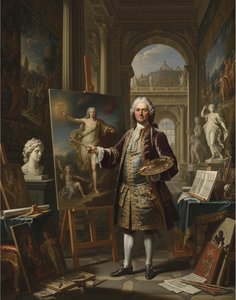
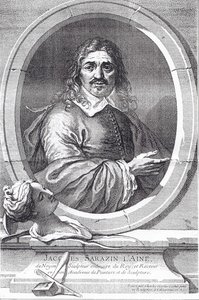 Jacques Sarazin
Jacques Sarazin (1592-1660): French Baroque sculptor of the Louis XIV style, renowned for the Louvre's Caryatides & collaborations with Simon Vouet. Explore his art!
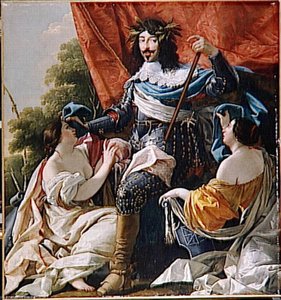
In 1627, Louis XIII summoned Vouet back to France, recognizing the potential of this artist who had absorbed the latest Italian trends. His appointment as *Premier peintre du Roi* (First Painter to the King) was a watershed moment, not just for Vouet but for French art itself. It signaled a conscious effort by the monarchy to elevate French painting to rival the artistic achievements of Italy. This wasn’t merely about commissioning portraits; it was about establishing a new aesthetic standard.
Vouet quickly became the dominant artistic force in Paris, securing virtually all important commissions. He oversaw ambitious decorative schemes for royal palaces like the Louvre and the Château de Saint-Germain-en-Laye, transforming these spaces into showcases of Baroque splendor. His influence extended beyond his own paintings; he maintained a large and active workshop, training a generation of artists who would carry on his style. He wasn’t simply executing commissions; he was building an artistic empire.
Defining a French Baroque Aesthetic: Synthesis and Innovation in Vouet’s Paintings
Vouet's genius lay not just in his technical skill but in his ability to synthesize diverse influences into a distinctly French Baroque aesthetic. He adapted the Italian emphasis on drama and emotion, but tempered it with a sense of classical restraint and elegance that resonated with French sensibilities. His paintings are characterized by soft, smooth modeling, sensuous forms, bright colors, and a *facile* virtuosity – an apparent ease of execution that belied years of rigorous training.
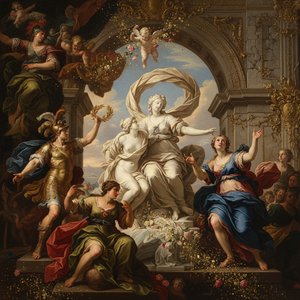
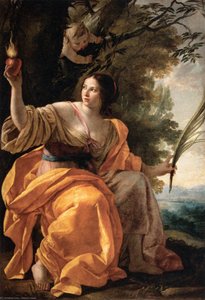
Works like *Riches* (c. 1630) exemplify this synthesis. The painting depicts abundance and prosperity with rich detail and symbolic imagery, showcasing Vouet’s mastery of composition and color. He also excelled in religious paintings, such as *St. Charles Borromeo* (c. 1640), which demonstrate a restrained Baroque style that balanced emotional intensity with classical composure. His *Madonna* (c. 1640) and *Diana* (1637) further illustrate his signature style – idealized figures, luminous colors, and a sense of graceful movement.
Key Works & Lasting Legacy: 'La Madeleine Repentante,' 'LA RICHESSE,' and Beyond
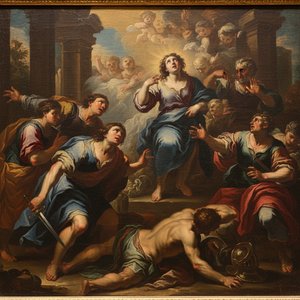
While many of Vouet’s large-scale decorative schemes have been lost to time, surviving paintings like *La Madeleine Repentante* and *LA RICHESSE* offer compelling glimpses into his artistic vision. *La Madeleine Repentante* is a stunning example of Baroque drama, capturing the emotional turmoil of Mary Magdalene with intense realism and psychological depth. The rich detail and masterful use of light and shadow create a powerful and moving image.
LA RICHESSE, as its name suggests, embodies abundance and prosperity, showcasing Vouet’s ability to depict luxurious textures and vibrant colors. Beyond these iconic works, his portraits – including *Saint William of Aquitaine* – reveal a keen understanding of human character and a remarkable technical skill. Vouet's influence extended far beyond his own paintings; he shaped the artistic landscape of France for decades to come, paving the way for later Baroque masters.
Vouet’s Circle of Influence: Students, Collaborators, and the Spread of Italianate Style
Simon Vouet wasn’t a solitary genius. He fostered a vibrant workshop that nurtured a generation of talented artists, ensuring the continuation of his style long after his death in 1649. Among his notable pupils were Charles Le Brun and Valentin de Boulogne, both of whom went on to achieve significant success in their own right. He also collaborated with other prominent artists, including François Perrier, Jacques Sarazin, and Claude Mellan, further disseminating the Italianate Baroque style throughout France.
Perrier, known for his classical sculpture prints and ceiling decorations, helped introduce Roman Baroque techniques to a wider audience. Sarazin, renowned for his sculptures in the Louis XIV style, collaborated with Vouet on several projects, blending painting and sculpture into harmonious compositions. Mellan, a master of line engraving, created numerous prints based on Vouet’s paintings, ensuring their widespread dissemination. Through these collaborations and the efforts of his students, Vouet left an indelible mark on French art, transforming it from a regional style into a major force in European painting.