 Preview
 Send
Send Share
Share
 Details

 Download
 Similars
 X-Ray
X-Ray Diaporama
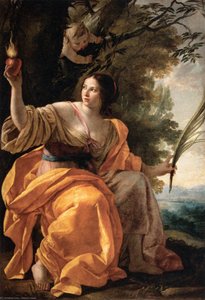
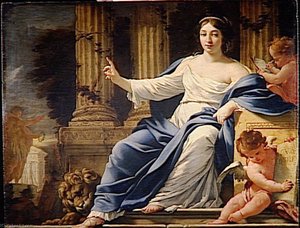
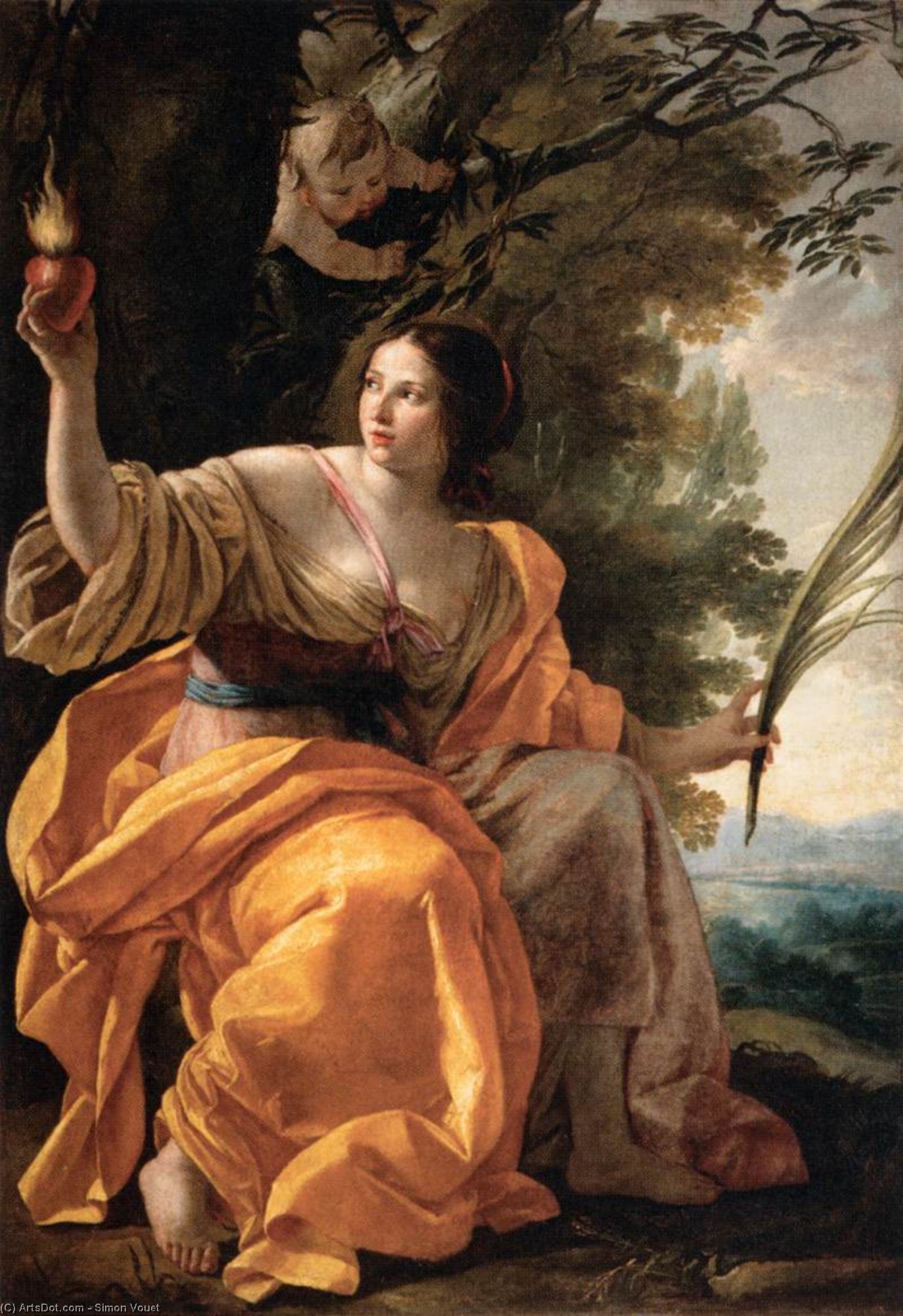
Heavenly Charity
 Acrylic On Canvas
- WallArt
- Baroque
 1640
1640 192.0 x 132.0 cm
 The Louvre
 Read More
Hand Made Oil Reproduction
Hand-painted oil on canvas in your size and frame, made to order by our artists. ( Buy Print Buy Image)




P118B $10

P118H $10

P118W $10

P438Z $10

P508JH $12

P508YH $12

P805H $10

P805Z $10

P919BZ $10

P919G $10

P919XJ $10

P959ZH $10

P968JZ $12

W106C $8

W218G $10

W218JH $8

W218Y $10

W307PJ $10

W316G $10

W316PJ $8

W316Y $10

W398PJ $8

W4111J $10

W500HY $15

W500JH $15

W692G $12

W849H $8

W940BG $15

W953PJ $8




Pick from our preset sizes that match the artwork's original proportions.

You may enter your own dimensions to fit a specific frame or space. If your selected size does not match the original image's proportions, we will either crop the artwork or extend the painting with additional hand-painted elements. A digital mockup will be sent for your approval before production begins.
Please note that the on-screen preview does not reflect the actual cropping or extension. Only the mockup will accurately show the final composition.
While custom sizes are available, we recommend selecting a dimension from the predefined list to preserve the original proportions.
After order, ArtsDot.com team will email client for instructions and provide a mockup preview
Worldwide Delivery () in 3/4 weeks instead of standard 5 weeks. (16 August). No compromise on quality.

Free Worldwide Express Shipping

High-Quality Linen Canvas

Full Shipping Insurance

Customs Tax Refund Guarantee

True Color Matching Guarantee

60-Day Return Policy (Defects Only)

100% Money-Back Guarantee

Bulk Discount Offer
 Glass option is only available in size under 110 CM

Heavenly Charity
Reproduction Medium
Reproduction Size
-


Total Price
$ 263
Artwork Description
A Beacon of Baroque Virtue: Simon Vouet’s Heavenly Charity
Simon Vouet's "Heavenly Charity," completed around 1640, stands as a cornerstone of French Baroque painting—a testament to Louis XIII’s patronage and the burgeoning influence of Italian artistic ideals. More than just a portrait, it’s an elaborate allegory designed to convey profound spiritual truths, skillfully executed by Vouet's studio in Paris. This magnificent canvas captures a woman bathed in golden light, embodying Christian compassion amidst a serene landscape—a scene brimming with symbolic resonance that continues to captivate viewers today.The Artist and His Context
Born in 1590, Simon Vouet emerged from a family steeped in artistic tradition – his father Laurent was a painter himself, establishing Vouet’s early exposure to the visual arts. Recognizing his prodigious talent, Vouet embarked on an ambitious journey to Rome at the age of twenty-two, immersing himself in the vibrant atmosphere of the papal court and absorbing the stylistic innovations championed by artists like Caravaggio and Guido Reni. This formative experience profoundly shaped Vouet's artistic vision, propelling him toward a style characterized by dramatic chiaroscuro—the masterful interplay of light and shadow—and an unwavering commitment to realism infused with idealized beauty. Returning to Paris in 1635, Vouet swiftly ascended to prominence as Louis XIII’s premier painter, overseeing monumental decorative schemes for the royal palace and securing commissions that solidified his reputation as France's foremost Baroque artist.A Symphony of Symbolism: Decoding the Imagery
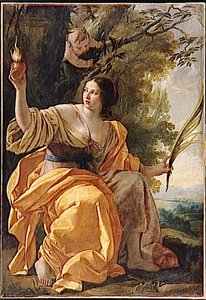
The painting depicts a woman seated beneath a blossoming tree—a deliberate choice reflecting biblical imagery associated with Paradise and divine grace. Her hand holds an apple and a banana, representing earthly nourishment and fulfillment alongside spiritual contemplation. The woman’s dress is adorned in rich yellow hues, symbolizing illumination and holiness – a color favored by artists during the Counter-Reformation to convey piety and virtue. Notably, a bird perched atop the tree symbolizes hope and divine providence—a subtle reminder of God's watchful care over humanity.Technique and Artistic Mastery
Vouet’s meticulous technique exemplifies the Baroque ideal of illusionistic painting. The artist employed oil paints on canvas with painstaking detail, layering translucent glazes to achieve a luminous surface that captures the subtleties of light and texture. Observe how Vouet skillfully renders the drapery—flowing and voluminous—creating an impression of movement and grandeur. Furthermore, the artist’s masterful use of chiaroscuro enhances the dramatic impact of the composition, emphasizing the woman's serene countenance and highlighting the radiant heart held aloft—a visual embodiment of compassion and divine love.Legacy and Emotional Resonance
“Heavenly Charity” transcends mere representation; it aspires to elevate the viewer spiritually. Vouet’s depiction of virtue—embodied in the woman’s posture, gaze, and attire—resonates with the moral concerns prevalent during Louis XIII's reign. The painting serves as a powerful reminder of Christian ideals – compassion, humility, and faith – inviting contemplation on themes of divine grace and human responsibility. Its enduring beauty continues to inspire artists and collectors alike, cementing Vouet’s place among the titans of French Baroque art.Related Artworks
Artist Biography
Simon Vouet: A Pioneer of French Baroque Painting
- Born: January 9, 1590, Paris, France
- Died: June 30, 1649, Paris, France
Simon Vouet was a pivotal figure in the transition of French painting from Mannerism to the Baroque style. Born into an artistic family – his father Laurent was a painter and his brother Aubin also pursued art – Vouet received early training that laid the foundation for his future success. His grandson, Ludovico Dorigny, would continue the family’s artistic legacy.
Early Career and Italian Influences (1608-1627)
- Early Portraiture: Vouet began his career as a portraitist, demonstrating early talent.
- Travel to England (1608): At the young age of 14, he traveled to England to paint a commissioned portrait, showcasing his burgeoning reputation.
- Ottoman Empire and Venice: In 1611, Vouet joined the entourage of Baron de Sancy, French ambassador to the Ottoman Empire, again for portraiture work. This journey took him through Constantinople and then to Venice in 1612.
- Rome (1614-1627): His time in Rome proved transformative. He remained there for thirteen years, immersing himself in the vibrant artistic scene of the burgeoning Baroque period.
During his Italian sojourn, Vouet absorbed a diverse range of influences. He studied the dramatic lighting techniques pioneered by Caravaggio, embraced elements of Italian Mannerism, and meticulously analyzed the color palettes and di sotto in su (foreshortened perspective) employed by Paolo Veronese. He also drew inspiration from the works of Carracci, Guercino, Lanfranco, and Guido Reni, synthesizing these diverse styles into a unique artistic vision.
Development of Vouet’s Distinctive Style
- Election to Accademia di San Luca (1624): His success in Rome culminated in his election as president of the prestigious Accademia di San Luca, a testament to his skill and recognition within the Italian art world.
- Synthesis of Influences: Vouet’s style was characterized by its ability to absorb and distill various artistic influences. He didn't simply copy; he integrated these elements into a cohesive and distinctly Italianate Baroque aesthetic.
- Introduction of Baroque to France: Upon his return to France in 1627, Vouet played a crucial role in introducing the Italian Baroque style to French painting, significantly impacting the artistic landscape of the country.
Major Achievements and Legacy
- Premier Peintre du Roi: Vouet was appointed Premier peintre du Roi (First Painter to the King) – a position of considerable prestige and influence.
- Prolific Workshop: He maintained a large and active workshop, training numerous artists who would shape the subsequent generation of French painters.
- Notable Pupils: Among his most influential pupils were Charles Le Brun (who later organized all decorative painting at Versailles), Valentin de Boulogne, Charles Alphonse du Fresnoy, Pierre Mignard, Eustache Le Sueur, and Claude Mellan.
- Influence on French Art: Vouet’s impact extended beyond his own works; his students carried his style and techniques throughout France, establishing a distinctively Baroque school of painting. His influence is particularly evident in the grand decorative schemes commissioned by Louis XIV.
Historical Significance
Simon Vouet's legacy rests on his pivotal role as a bridge between Italian and French art. He successfully imported the dynamism and grandeur of the Italian Baroque, transforming it into a style that resonated with the tastes of the French court and aristocracy. His influence is undeniable in the development of French painting during the 17th century, and his contributions continue to be recognized by art historians today.
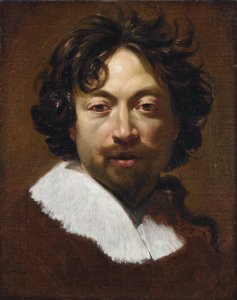
Simon Vouet
1590 - 1649 , France
Quick Facts
- Artistic Movement Or Style: Baroque painting
- Artists Or Movements Influenced By This Artist:
- Charles Le Brun
- Valentin de Boulogne
- French Baroque painting
- Artists Who Influenced This Artist:
- Caravaggio
- Paolo Veronese
- Carracci
- Guercino
- Lanfranco
- Guido Reni
- Date Of Birth: January 9, 1590
- Date Of Death: June 30, 1649
- Full Name: Simon Vouet
- Nationality: French
- Place Of Birth: Paris, France
Related Articles

Simon Vouet: A Baroque Master's Journey from Italian Influence to French Classicism
Explore the life & art of Simon Vouet, a pivotal French Baroque painter who introduced Italian styles to France. Discover his masterpieces and lasting influence on 17th-century art.
Decoding Baroque Grandeur: A Guide to the Drama and Emotion of 17th-Century Art
Explore the breathtaking drama of 17th-century Baroque art. Our expert guide decodes the use of chiaroscuro, emotional intensity, and historical grandeur to help you appreciate and curate timeless masterpieces for your collection.

Baroque Drama: Bringing Opulence & Emotion into Contemporary Interiors
Explore the opulent world of Baroque interior design! Discover key elements, modern applications & how to bring dramatic elegance into your home with 's authentic reproductions.
Charles Le Brun: Master of French Baroque Classicism & His Enduring Legacy
Explore the life & art of Charles Le Brun, master of French Baroque Classicism. Discover his royal commissions, influence on Versailles, and enduring legacy through detailed analysis & stunning artworks.

The Dramatic Flourish: Exploring the Baroque Movement's Enduring Legacy in Art History
Explore the dramatic world of Baroque art! Discover iconic artists like Caravaggio & Rubens, defining techniques, and its lasting impact on art history. Expert insights for collectors & enthusiasts at ArtsDot.