The Historical Crucible: Counter-Reformation and the Rise of Absolutism
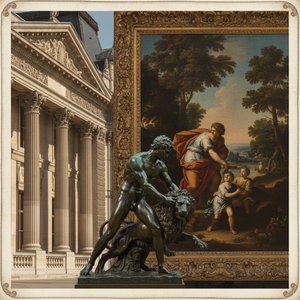 Baroque Classicism: The Grandeur of Order and Drama in 17th-Century Art History
The Historical Crucible: Counter-Reformation and the Rise of Absolutism Baroque Classicism: Reconciling Drama & Order in 17th-Century Art The Historical Context: Counter-Reformation & Absolutism Wikipedia: Counter-Reformation The Counter-Reformation ...
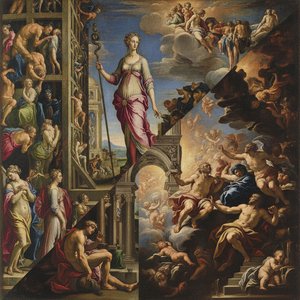
To understand the breathtaking tension within Baroque Classicism, one must first look back at the seismic shifts that fractured the European consciousness during the 17th century. This was an era defined by profound upheaval, where the serene stability of the High Renaissance had given way to a landscape of religious and political struggle. The Protestant Reformation had challenged the very foundations of papal authority, prompting the Catholic Church to launch the Counter-Reformation—a period of spiritual resurgence known as the Catholic Revival. This movement was far more than a theological debate; it was a visual campaign. Through the decrees of the Council of Trente, the Church sought to reclaim its dominance by commissioning art that could move the soul, inspire awe, and visually demonstrate the triumph of faith.
Simultaneously, the political architecture of Europe was being rebuilt through the rise of absolutist monarchies. As sovereigns consolidated their power, they demanded an aesthetic that projected strength, wealth, and a divine right to rule. This convergence of religious fervor and political ambition created a unique demand for art that could be both emotionally stirring and intellectually imposing. The era required a new visual language—one that moved away from the artificiality of Mannerism toward something more direct and visceral. It was within this crucible of conflict and reconstruction that the seeds of Baroque Classicism were sown, promising a style that could reconcile the raw energy of human emotion with the enduring dignity of classical tradition.
Chiaroscuro and Contrast: The Visual Language of Light and Shadow
 Chiaroscuro
In art, chiaroscuro (English: kee-AR-ə-SKOOR-oh, -SKURE-, Italian: [ˌkjaroˈskuːro]; lit. 'light-dark') is the use of strong contrasts between light and dark, usually bold contrasts affecting a whole composition. It is also a technical term used by a...
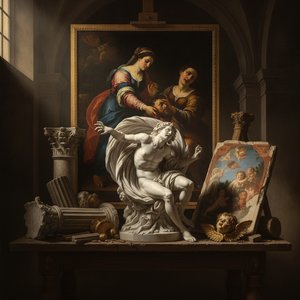
At the heart of the Baroque's sensory whirlwind lies one of its most transformative technical innovations: chiaroscuro. Derived from the Italian words for light and dark, this technique involves the use of strong, bold contrasts to achieve a sense of volume and dramatic focus. In the hands of masters, chiaroscuro was not merely a way to model three-dimensional figures; it was a tool for psychological storytelling. By plunging large portions of the canvas into deep, impenetrable shadow, artists could force the viewer's eye toward a singular, illuminated subject, creating a cinematic intensity that feels remarkably modern even centuries later.
This interplay of light and dark reaches its most extreme expression in tenebrism, where the shadows become a dominant, atmospheric force. Consider the works of the Spanish master Francisco de Zurbarán, whose style was characterized by a profound spiritual intensity and an almost photographic precision. His use of dramatic chiaroscuro allowed him to render the heavy textures of monastic robes and the soft glow of skin with a realism that felt both humble and mystical. In these darkened spaces, light does not just illuminate; it reveals truth, sanctifies the subject, and creates a sanctuary of shadow where the viewer can engage in quiet contemplation.
A Symphony of Motion: Capturing Drama and Movement in Composition
 Baroque
The Baroque (UK: bə-ROK, US: bə-ROHK, French: [baʁɔk]) is a Western style of architecture, music, dance, painting, sculpture, poetry, and other arts that flourished from the early 1600s until the 1750s. It followed Renaissance art and Mannerism and p...
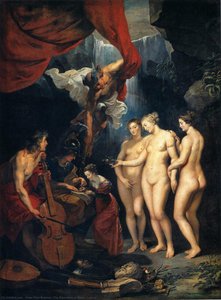
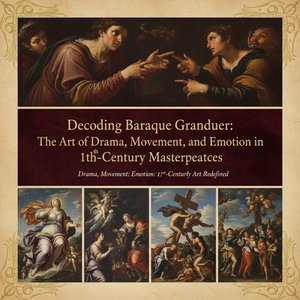
If the Renaissance was defined by the circle and the square—symbols of stability and perfection—the Baroque is defined by the diagonal and the spiral. The movement of this era sought to break free from the static boundaries of the past, embracing a sense of exuberant detail and unexpected motion. Compositions became crowded, dense, and overlapping, designed specifically to provoke shock and awe. Artists utilized sweeping diagonals to lead the eye through the canvas, creating a rhythmic flow that mimics the pulse of life itself.
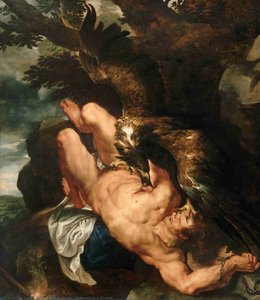
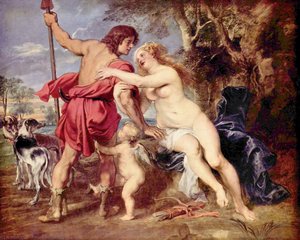
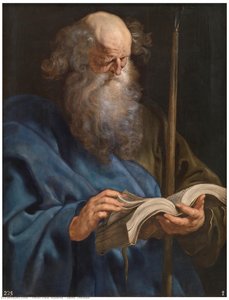
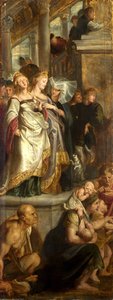
This sense of movement is perhaps most vibrantly embodied in the Flemish tradition, particularly in the works of Peter Paul Rubens. His canvases are masterclasses in dynamic energy, where limbs interlock, fabrics swirl, and figures seem to burst from the frame. This was not art meant for passive observation; it was art designed to be experienced as a sensory event. Whether through the muscular tension of a mythological scene or the intricate, swirling details of a landscape, the Baroque artist aimed to capture a moment in flux, ensuring that the viewer felt the very breath and momentum of the painted world.
Mastering Emotion: The Spiritual Intensity of Baroque Religious Art
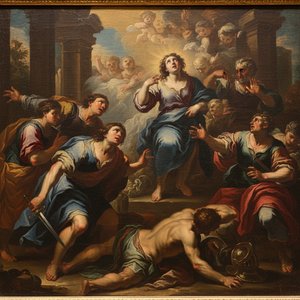 The Dramatic Flourish: Exploring Baroque Painting's Emotional Intensity & Artistic Innovations
The Historical Context: Counter-Reformation & the Birth of Baroque Wikipedia: Counter-Reformation The Counter-Reformation (Latin: Contrareformatio), also sometimes called the Catholic Revival, was the period of Catholic resurgence that was initiated ...
The primary mission of much Baroque art was to serve as an emotional bridge between the human and the divine. Because the Church viewed art as an indispensable weapon in its ideological battle, painters were tasked with creating works that were explicitly didactic—intended to move the viewer toward religious conviction through sheer emotional impact. This necessitated a shift away from intellectualized symbols toward a heightened sense of realism and visceral feeling.
In these sacred compositions, we see the portrayal of saints, martyrs, and biblical narratives not as distant icons, but as flesh-and-blood humans experiencing profound ecstasy, agony, or devotion. The goal was to evoke empathy. When a viewer witnesses the weight of a martyr's sacrifice or the quiet humility of a monk, the art transcends the canvas to become a shared spiritual experience. This commitment to emotional depth ensured that the Baroque era would remain one of the most powerful periods in history for expressing the complexities of the human soul and its relationship with the infinite.
From Grandeur to Grace: Distinguishing Baroque from Rococo Aesthetics
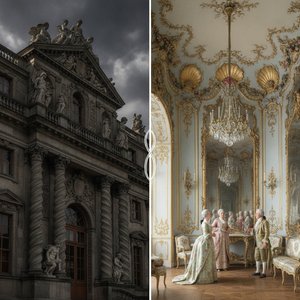 Baroque vs. Rococo: A Definitive Guide to the Drama of Grandeur and the Elegance of Grace
The Baroque Era: A Symphony of Drama, Light, and Divine Grandeur Baroque Masterpieces: 10 Paintings That Defined an Era | Introduction To gaze upon the masterpieces of the Baroque is to step into a world ablaze with drama, emotion, and an almost over...
As the 17th century transitioned into the 18th, the heavy, dramatic grandeur of the Baroque began to evolve into something lighter and more ornamental: the Rococo. While often referred to as "late Baroque," the distinction is vital for any enthusiast. If the Baroque is a thunderous orchestral symphony, the Rococo is a delicate chamber concerto. The Baroque era focused on themes of power, religion, and intense emotion, utilizing deep colors and massive scales to command respect.
In contrast, the Rococo style emerged with a preference for grace, playfulness, and intimacy. The heavy shadows of chiaroscuro gave way to pastel palettes, and the dramatic tension of the previous century was replaced by the lightheartedness of aristocratic leisure. Where Baroque art sought to overwhelm the senses with awe, Rococo sought to delight them with elegance. Understanding this shift allows us to appreciate how the "flawed pearl" of the Baroque—so named for its irregular, complex beauty—eventually smoothed into the refined, decorative curves of a new age.
Bringing the Baroque Home: Curating Dramatic Masterpieces for Modern Interiors
For the modern collector or interior designer, the allure of the Baroque lies in its ability to provide a focal point of profound character and soul. Integrating these dramatic elements into a contemporary space requires a thoughtful approach to balance. A large-scale, multi-panel Baroque reproduction can serve as a breathtaking architectural statement on a wide wall or staircase, bringing a sense of historical weight to a minimalist room. The deep tones and rich textures of an oil painting can ground a bright, airy space, providing a necessary anchor of warmth and history.
When curating your own collection, consider the "vibe" of your room. A piece featuring intense chiaroscuro might suit a study or library, creating an atmosphere of scholarly introspection. Meanwhile, a more vibrant, Rubens-inspired work could energize a dining area with its sense of movement and life. By selecting works that resonate with your personal emotional landscape, you do more than decorate; you create a living dialogue between the triumphs of the 17th century and the comforts of your modern home.
Discovering Artistry with ArtsDot.com
At ArtsDot.com, we believe that the grandeur of the Old Masters should be accessible to every home. We specialize in high-quality, hand-painted oil reproductions that capture the very essence of the Baroque—from the visible, textured brushstrokes of the impasto technique to the profound depth of light and shadow. Whether you are looking to transform a personal photograph into a 17th-century masterpiece or wish to hang a museum-quality reproduction of a classic, our master artists are dedicated to preserving human creativity for a modern audience. Explore our vast library and bring the drama of history into your space today.