The Baroque Era: A Symphony of Drama, Light, and Divine Grandeur
 Baroque Masterpieces: 10 Paintings That Defined an Era |
Introduction To gaze upon the masterpieces of the Baroque is to step into a world ablaze with drama, emotion, and an almost overwhelming sense of grandeur. This wasn’t merely a style; it was a cultural earthquake, reshaping art, architecture, music, ...
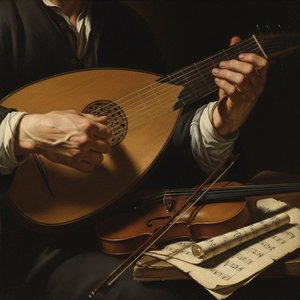
To step into the world of the Baroque is to surrender oneself to a sensory whirlwind. Emerging at the dawn of the 17th century, this movement was far more than a mere stylistic shift; it was a seismic cultural earthquake that sought to shatter the balanced, static harmony of the Renaissance. Born from the religious fervor of the Counter-Reformation, the Baroque served as a visual instrument for the Catholic Church, designed to reassert its divine authority through overwhelming spectacle and emotional intensity. It was an era where art did not merely sit upon a wall; it reached out to touch the viewer, demanding engagement through movement, complexity, and a profound sense of awe.
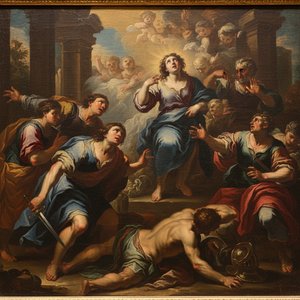
The heartbeat of Baroque artistry lies in its mastery of chiaroscuro—the dramatic interplay between deep, impenetrable shadows and piercing, brilliant light. This technique, pioneered by masters such as Caravaggio, allowed artists to sculpt figures out of darkness, imbuing every scene with a visceral, cinematic immediacy. In the hands of painters like Gérard de Lairesse or the intense compositions of the Italian masters, light became a divine protagonist, highlighting the muscularity of saints and the raw reality of human suffering. There is no stillness here; even in the most solemn religious subjects, there is an inherent dynamism, a sense that the figures are caught in a moment of eternal transition, forever suspended in a state of spiritual or physical tension.
This period was characterized by an unapologetic embrace of the monumental. Whether through the soaring, asymmetrical towers of church façades or the sweeping, muscular compositions of altarpieces, the Baroque aimed to inspire a sense of the infinite. It utilized deep colors, exuberant details, and a heavy, tactile presence to remind the observer of the power of both God and State. To gaze upon a Baroque masterpiece is to witness the triumph of emotion over intellect, a deliberate attempt to bypass the mind and strike directly at the soul.
The Rococo Revolution: Embracing Playful Elegance and Intimate Grace
 Rococo's Radiant Legacy: 10 Masterpieces for Your Home |
Introduction Imagine stepping into a world bathed in soft light, where delicate curves replace rigid lines and playful scenes of love, leisure, and mythology unfold before your eyes. This is the essence of Rococo – an artistic revolution that swept a...
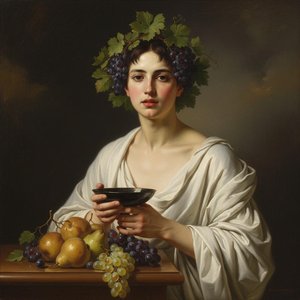
As the heavy, dramatic curtains of the Baroque era began to part in the early 18th century, a new, lighter sensibility emerged from the salons of France: the Rococo. If the Baroque was a thunderous organ concerto, the Rococo was a delicate, fluttering flute solo. This movement represented a profound shift away from the formal, often intimidating grandeur of the previous century toward an aesthetic of intimacy, leisure, and charm. The focus moved from the monumental halls of power to the private, exquisitely decorated boudoirs and salons of the aristocracy, where the primary goal was no longer to inspire awe, but to delight.
The Rococo aesthetic is defined by its rejection of rigid lines in favor of the rocaille—the delicate, shell-like curves and organic motifs that give the era its name. Where the Baroque utilized heavy shadows to create depth, the Rococo embraced a luminous, pastel palette of soft pinks, mint greens, and sky blues. The atmosphere became airy and weightless, characterized by an obsession with light, grace, and the ephemeral beauty of nature. This was an art of pleasure, celebrating themes of love, mythology, and the idyllic joys of aristocratic life, often presented through scenes of effortless elegance and whimsical movement.
In Rococo painting, the intense psychological weight of the Baroque is replaced by a sense of playful escapism. The compositions are lighter, often featuring swirling, asymmetrical arrangements that lead the eye through landscapes of dreamlike beauty. Artists like Jean-François de Troy began to bridge these worlds, maintaining a level of technical precision while infusing their subjects with a burgeoning Rococo grace. This era celebrated beauty for its own sake, creating a visual language where every curve and every brushstroke served to enhance a sense of refined, effortless sophistication.
Architectural Contrasts: From Monumental Power to Delicate Ornamentation
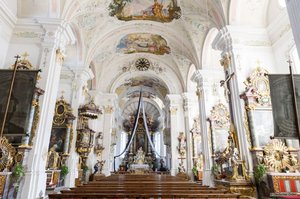 Former Augustinian Church
A Baroque Gem: The Former Augustinian Church in Weyarn Weyarn’s Former Augustinian Church stands as a testament to Bavaria’s artistic heritage—a beautifully preserved Baroque masterpiece that invites visitors into a captivating journey through centur...
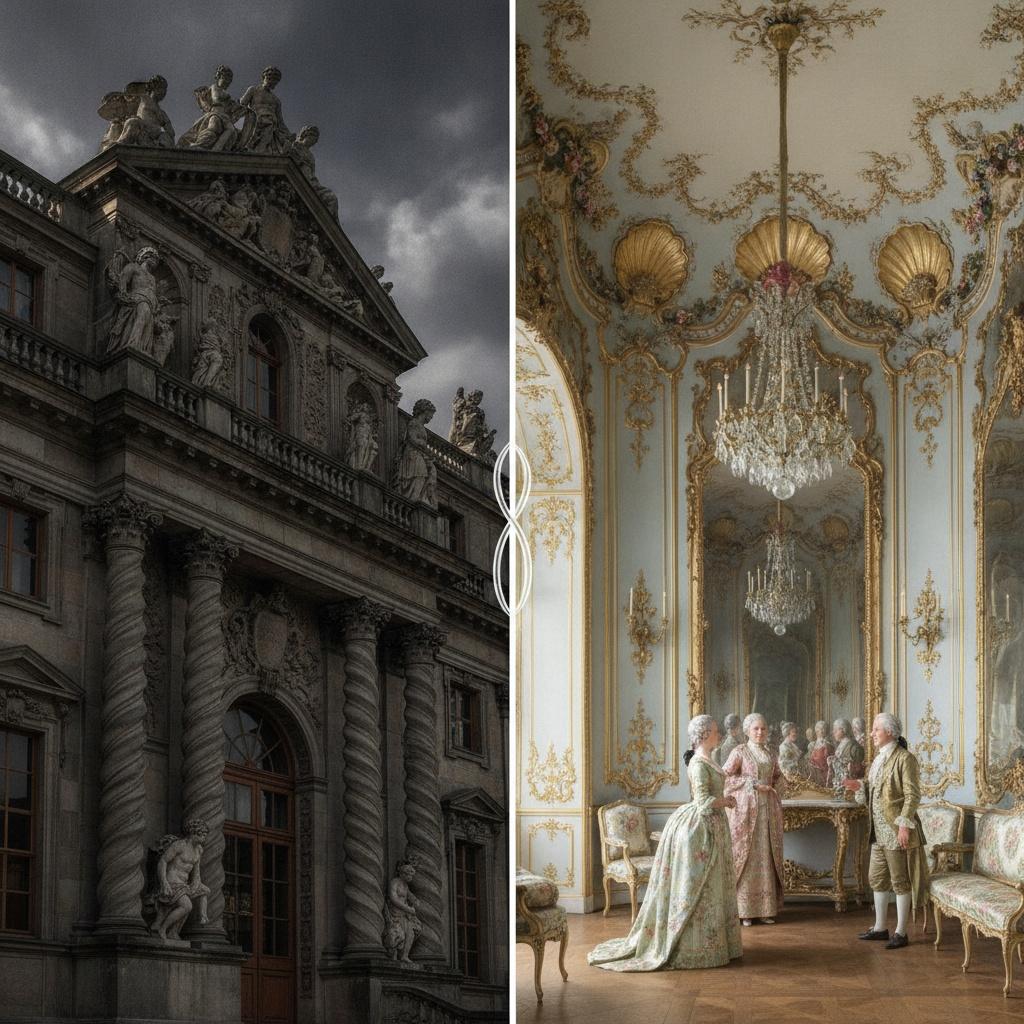
The architectural evolution from Baroque to Rococo offers one of the most striking visual narratives in art history. Baroque architecture was designed to dominate the landscape and command respect. It utilized massive scales, heavy ornamentation, and complex geometries to create structures that felt as though they were part of a larger, divine order. The use of colonnades, grand domes, and dramatic façades—such as those seen in the Former Augustinian Church in Weyarn—was intended to reflect the strength and permanence of the institutions it housed.
In contrast, Rococo architecture sought to dissolve the boundaries between structure and decoration. The goal was not to overwhelm the viewer with mass, but to enchant them with detail. Interiors became much more integrated, where walls, ceilings, and furniture flowed together in a seamless dance of stucco reliefs and gilded flourishes. While a Baroque church might use heavy stone and deep shadows to create a sense of solemnity, a Rococo interior utilized light-colored marbles, mirrors, and intricate plasterwork to expand the space and invite a feeling of airy lightness.
This architectural transition is perfectly embodied in the works of figures like Gabriel Germain Boffrand, who mastered the ability to blend the monumental scale inherited from the Baroque with the delicate, illusionistic ornamentation of the Rococo. The result was an environment where architecture became a stage for social grace, transforming rigid spaces into immersive, decorative sanctuaries that celebrated the beauty of the human experience.
Mastering the Brush: Chiaroscuro vs. Pastel Palettes in Painting
 Chiaroscuro
In art, chiaroscuro (English: kee-AR-ə-SKOOR-oh, -SKURE-, Italian: [ˌkjaroˈskuːro]; lit. 'light-dark') is the use of strong contrasts between light and dark, usually bold contrasts affecting a whole composition. It is also a technical term used by a...
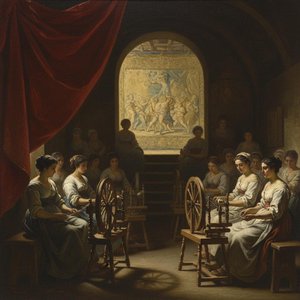
At the core of the distinction between these two eras lies the technical application of light and color. The Baroque painter worked with a palette of earth tones, deep crimsons, and rich ochres, using chiaroscuro to create volume through extreme contrast. This technique was essential for achieving the "tenebrism" found in works by Caravaggio, where the subject seems to emerge from an abyss of darkness. The brushwork in Baroque painting often feels heavy and purposeful, emphasizing the physical presence and weight of the figures.
The Rococo painter, however, moved toward a more luminous and atmospheric approach. The palette shifted dramatically toward light-saturated pastels, where the goal was to capture the soft glow of dawn or the shimmering light of a summer afternoon. Instead of using shadow to define form, Rococo artists used subtle gradations of color and delicate highlights. The brushwork became more fluid and decorative, often emphasizing the texture of silk, the softness of skin, and the lightness of clouds.
This technical divergence reflects the changing emotional landscape of Europe. The Baroque brushstroke carries the weight of religious and political gravity, while the Rococo stroke carries the lightness of a whispered secret. To study these two styles side-by-side is to observe the fundamental tension between the desire for profound truth through drama and the pursuit of aesthetic perfection through grace.
Historical Transitions: How the Counter-Reformation Led to Aristocratic Indulgence
 Baroque painting
Baroque painting is the painting associated with the Baroque cultural movement. The movement is often identified with Absolutism, the Counter Reformation and Catholic Revival, but the existence of important Baroque art and architecture in non-absolut...
Understanding the shift from Baroque to Rococo requires an understanding of the shifting tides of European power. The Baroque was a tool of the Counter-Reformation, a period when the Catholic Church used art as a persuasive force to combat the austerity of Protestantism. It was an era of intense religious and political struggle, where art served as propaganda for the divine right of kings and the spiritual authority of the Pope. The scale and drama were necessary because the stakes—the very souls of Europe—were perceived to be at risk.
_