The Great Reset: Moving from Renaissance Calm to Baroque Chaos
 The Visceral Stage: Exploring Dramatic Narratives & Emotional Intensity in Baroque Art
The Baroque Embrace of Emotion: A Shift from Renaissance Rationality Wikipedia: Baroque painting Baroque painting is the painting associated with the Baroque cultural movement. The movement is often identified with Absolutism, the Counter Reformation...
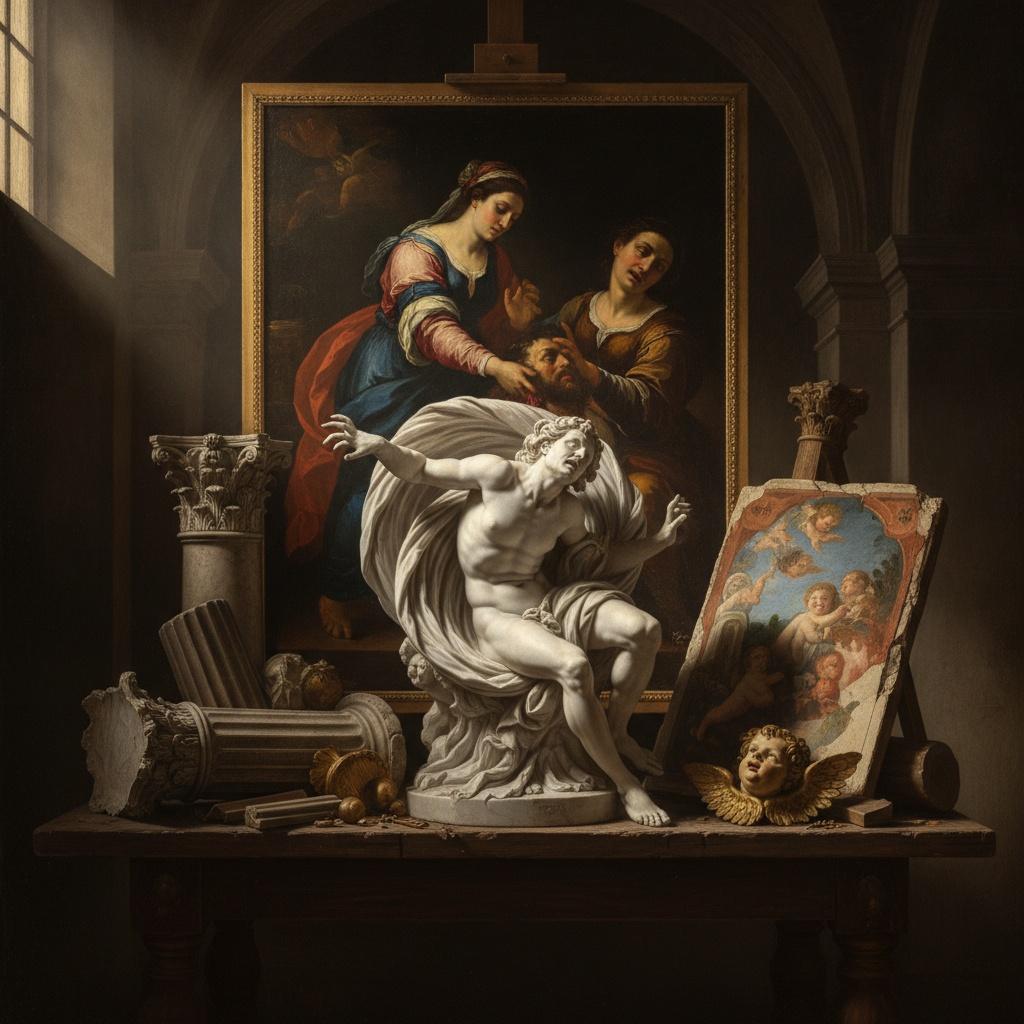
For centuries, the art world played by a strict set of rules defined by balance, symmetry, and a pursuit of idealized beauty. The Renaissance was the era of reason, where masters like Raphael sought a harmonious perfection that felt almost untouchable in its clarity. But then, everything shifted. Imagine the transition from a perfectly composed, static photograph to a high-octane, cinematic action sequence. That is exactly what happened when the Baroque movement erupted from the heart of 17th-century Rome. It wasn't just a change in style; it was an artistic earthquake that shattered the calm of the previous era.
This wasn't a rejection of Renaissance principles, but rather an explosive expansion of them. Where the Renaissance offered intellectual contemplation through proportion, the Baroque demanded immediate emotional impact. The stability of the past gave way to a new aesthetic of movement and tension. It was as if the canvas itself became a stage, no longer content to simply depict a scene, but striving to pull the viewer into a moment of profound psychological or spiritual crisis. This era introduced a visceral energy that turned art from something you observe into something you experience with your entire being.
Chiaroscuro & Tenebrism: The High-Contrast Aesthetic of Drama
 Chiaroscuro
In art, chiaroscuro (English: kee-AR-ə-SKOOR-oh, -SKURE-, Italian: [ˌkjaroˈskuːro]; lit. 'light-dark') is the use of strong contrasts between light and dark, usually bold contrasts affecting a whole composition. It is also a technical term used by a...
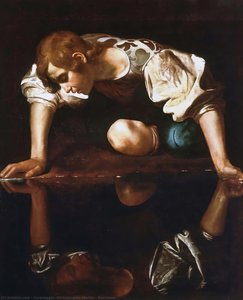
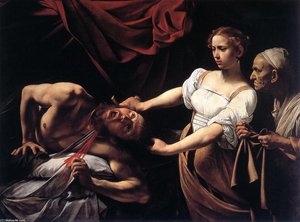
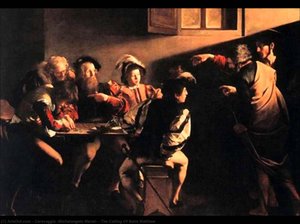
If you want to understand the visual pulse of the Baroque, you have to look at the shadows. This period mastered the language of chiaroscuro—the intense, dramatic interplay between light and dark. It is a technique that does far more than just create volume; it directs the soul. By utilizing extreme contrasts, artists could sculpt figures out of total darkness, making them appear three-dimensional and startlingly real. This wasn't subtle lighting; this was high-contrast, low-key drama that feels as impactful today as a modern noir film or a moody, cinematic wide shot.
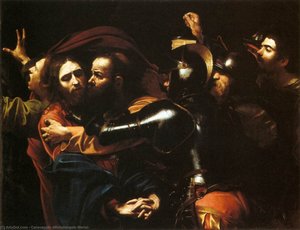
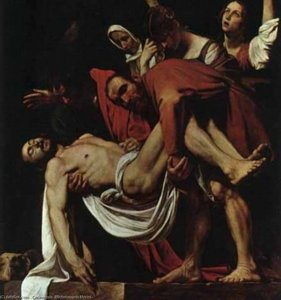
Taking this to its extreme is tenebrism, where the shadows become an active character in the composition. In works like those by Caravaggio, the darkness isn't just empty space; it is a heavy, palpable presence that pushes the illuminated subjects toward the viewer. This selective illumination creates a sense of focus and urgency, stripping away unnecessary background noise to highlight the raw emotion on a face or the tension in a hand. It is through this masterful manipulation of light that Baroque artists achieved a level of realism and intensity that remains unmatched in the history of Western painting.
The Counter-Reformation Vibe: Art as a Visual Power Move
 The Dramatic Flourish: Exploring the Baroque Movement's Enduring Legacy in Art History
The Genesis of Grandeur: Historical Context & The Counter-Reformation Wikipedia: Counter-Reformation The Counter-Reformation (Latin: Contrareformatio), also sometimes called the Catholic Revival, was the period of Catholic resurgence that was initiat...
To understand why art became so intense, you have to look at the political and religious landscape of the time. The early 17th century was a period of profound upheaval. The Protestant Reformation had fractured the unity of Europe, challenging the authority of the Roman Catholic Church. In response, the Church launched the Counter-Reformation—a massive, strategic campaign of spiritual and cultural restoration. Art became the ultimate tool in this visual counter-offensive. The goal wasn't just to decorate churches; it was to inspire awe, piety, and unshakeable loyalty through spectacle.
The Council of Trent established new guidelines, demanding that art be clear, powerful, and emotionally engaging. They wanted imagery that could communicate complex theological truths directly to the heart of the faithful. This led to an unprecedented demand for works that were didactic yet deeply moving. The result was a surge in monumental architecture and painting designed to overwhelm the senses. From the grand, ornate churches in Rome to the massive canvases commissioned by religious orders, every brushstroke was intended to reaffirm the strength and majesty of the institution through sheer, unadulterated grandeur.
Mastering the Motion: Dynamic Compositions and Emotional Intensity
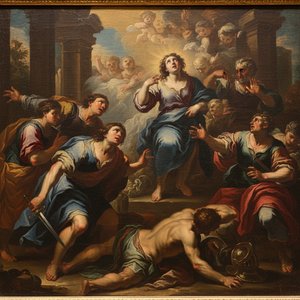
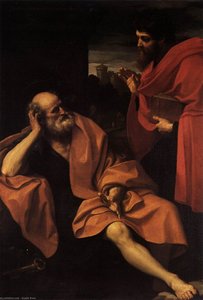 Sts Peter and Paul
Guido Reni’s *Sts Peter and Paul*: A Baroque Masterpiece of Dramatic Emotion Guido Reni's *Sts Peter and Paul*, painted around the early 17th century, is a profoundly moving work that exemplifies the height of Baroque art. Measuring 197 x 140 cm, thi...
Baroque art thrives on the diagonal. While Renaissance masters loved the stability of the pyramid and the horizontal line, Baroque artists embraced the energy of the dynamic diagonal. This technique creates a sense of perpetual motion, as if the scene is caught in mid-action. Figures don't just sit; they twist, lunge, and fall. The compositions are often asymmetrical, forcing the viewer’s eye to dance across the canvas, following the flow of drapery or the arc of a limb.
This movement is inextricably linked to the era's focus on intense human emotion. Whether it is the ecstasy of a saint, the terror of a martyr, or the quiet struggle of a laborer, the Baroque artist captures the peak of a psychological moment. We see characters caught in states of profound joy, sorrow, or even divine terror. This isn't art for passive viewing; it is art that vibrates with life. The use of heavy textures and visible brushwork further enhances this feeling, adding a tactile dimension that makes the emotional stakes feel incredibly personal and immediate.
Modern Remix: Bringing Baroque Grandeur into Contemporary Spaces
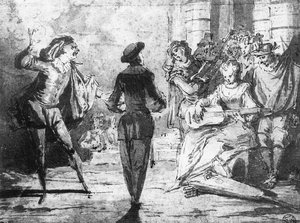 Italian Comedians
Claude Gillot’s “Italian Comedians”: A Baroque Dance of Humor and Shadow Claude Gillot (1673 – 1722) stands as a cornerstone of late Baroque French art, primarily celebrated for his masterful assimilation of Watteau and Lancret—artists who irrevocabl...
While we often think of the Baroque as a relic of the 17th century, its DNA is everywhere in modern visual culture. The high-contrast lighting found in contemporary photography, the dramatic tension in cinematic storytelling, and even the bold, graphic impact of street art all owe a debt to the innovations of the Italian masters. For the modern collector or design enthusiast, the Baroque offers a way to inject "soul" and weight into a space that might otherwise feel too minimal or sterile.
Bringing this era into a contemporary home is about embracing that same sense of drama. Imagine a large-scale, multi-panel reproduction of a dramatic Baroque scene acting as a focal point in a modern loft, its deep shadows and rich ochres providing a striking contrast to clean, industrial lines. It is about using art to create an atmosphere of importance and narrative depth. Whether through a custom "remix" that blends historical techniques with modern subjects or a carefully selected print that captures the essence of chiaroscuro, the Baroque remains a powerful tool for anyone looking to make a bold, unforgettable visual statement.