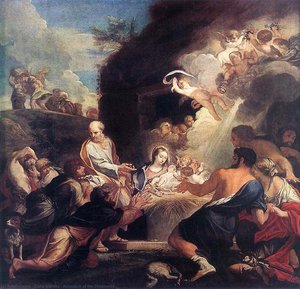
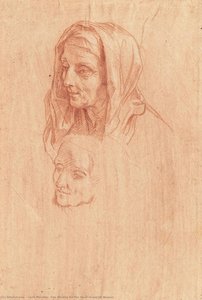
The Historical Crucible: Counter-Reformation and the Rise of Absolutism
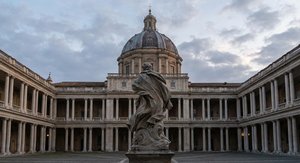 Baroque Classicism: Reconciling Drama & Order in 17th-Century Art
The Historical Context: Counter-Reformation & Absolutism Wikipedia: Counter-Reformation The Counter-Reformation (Latin: Contrareformatio), also sometimes called the Catholic Revival, was the period of Catholic resurgence that was initiated in respons...
To understand the breathtaking tension within Baroque Classicism, one must first look back at the seismic shifts that fractured the European consciousness during the 17th century. This was an era defined by profound upheaval, where the serene stability of the High Renaissance had given way to a landscape of religious and political struggle. The Protestant Reformation had challenged the very foundations of papal authority, prompting the Catholic Church to launch the Counter-Reformation—a period of spiritual resurgence known as the Catholic Revival. This movement was not merely a theological debate; it was a visual campaign. Through the decrees of the Council of Trent, the Church sought to reclaim its dominance by commissioning art that could move the soul, inspire awe, and visually demonstrate the triumph of faith.
Simultaneously, the political architecture of Europe was being rebuilt through the rise of absolutist monarchies. As sovereigns consolidated their power, they demanded an aesthetic that projected strength, wealth, and a divine right to rule. This convergence of religious fervor and political ambition created a unique demand for art that could be both emotionally stirring and intellectually imposing. The era required a new visual language—one that moved away from the artificiality of Mannerism toward something more direct and visceral. It was within this crucible of conflict and reconstruction that the seeds of Baroque Classicism were sown, promising a style that could reconcile the raw energy of human emotion with the enduring dignity of classical tradition.
Defining Baroque Classicism: The Synthesis of Dramatic Tension and Classical Order
Some of the qualities most frequently associated with the Baroque are grandeur, sensuous richness, drama, vitality, movement, tension, emotional exuberance, and ...
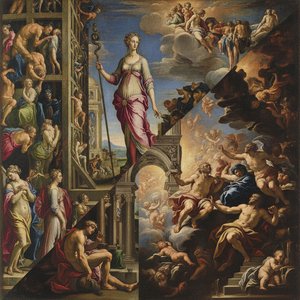
Baroque Classicism stands as one of art history's most compelling paradoxes. While much of the broader Baroque movement is celebrated for its unrestrained exuberance, swirling compositions, and theatricality, the Classicist strain sought a more measured approach. It was a sophisticated synthesis of opposites: the ability to capture the height of drama while maintaining a sense of profound order. Unlike the High Renaissance, which often depicted the calm moment before an event, Baroque artists frequently chose the most pivotal, action-oriented moment—the very instant when the stone is hurled or the blade descends. Yet, in the Classicist tradition, this movement was tempered by a commitment to clarity, balance, and restraint.
This aesthetic did not reject the Baroque's fascination with vitality; rather, it reinterpreted it through a lens of intellectual rigor. The goal was to achieve a harmonious design that avoided the chaotic distortions of earlier styles. In these works, we see figures that possess a palpable sense of weight and presence, draped in elegant, meticulously rendered fabrics, yet caught in gestures of intense spiritual or emotional significance. It is a style that breathes with life but remains anchored by compositional stability. This delicate equilibrium allowed artists to communicate complex theological and political narratives without sacrificing the aesthetic grace inherited from the masters of antiquity.
Masters of the Roman Style: The Influence of Andrea Sacchi and Carlo Maratta
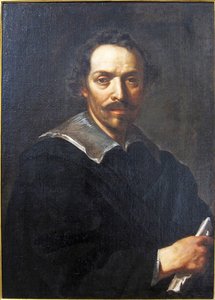 Andrea Sacchi
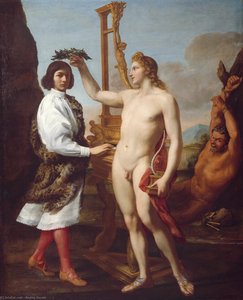
A Life Rooted in Roman Baroque Classicism Andrea Sacchi, born in Nettuno near Rome in 1599 and passing in 1661, stands as a compelling figure within the dynamic landscape of High Baroque painting. Though often overshadowed by contemporaries like Piet...
The heart of this movement beat most strongly in Rome, where the intellectual debates regarding classical ideals versus Baroque exuberance were most vibrant. At the center of this dialogue stood figures like Andrea Sacchi, a painter whose work served as a cornerstone for the Roman Baroque Classicizing style. Moving away from the flamboyant compositions of his contemporaries, Saciente championed a measured approach rooted in classical restraint. His training and commitment to balanced compositions provided a blueprint for an art form that prioritized harmony over spectacle, proving that profound emotion could be conveyed through subtle, thoughtful arrangement rather than mere sensory overload.
The lineage of this tradition was carried forward by the pivotal figure Carlo Maratta, often referred to as Maratti. Having entered the studio of Sacchi at a young age, Maratta became the bridge between the High Baroque and a more refined, classically inspired aesthetic. His work embodies the transition toward a style characterized by graceful figures, elegant drapery, and a restrained emotionalism that would dominate Roman painting for decades. Through his mastery, the principles of clarity and balance were infused with a new sense of spiritual depth, ensuring that the classical foundations remained relevant even as the era's broader dramatic currents continued to surge.
Light, Shadow, and Spirit: Chiaroscuro as a Tool for Devotion
 Chiaroscuro
In art, chiaroscuro (English: kee-AR-ə-SKOOR-oh, -SKURE-, Italian: [ˌkjaroˈskuːro]; lit. 'light-dark') is the use of strong contrasts between light and dark, usually bold contrasts affecting a whole composition. It is also a technical term used by a...
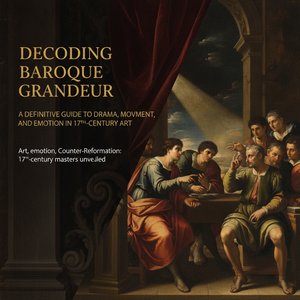
No discussion of the Baroque era is complete without addressing the transformative power of chiaroscuro. This technical mastery of light and dark—the bold contrast between brilliant illumination and deep, enveloping shadow—served as much more than a mere stylistic flourish; it was a psychological and spiritual instrument. In the hands of masters like Guido Reni, light became a tool for focus and revelation. In works such as his Sts Peter and Paul, the use of shadow does not simply represent an absence of light but acts as a deliberate void that intensifies the impact of the figures, drawing the viewer’s eye directly to the expressions of faith and the tension of human discourse.
This interplay of light and dark allowed artists to sculpt three-dimensional volume on a flat canvas, imbuing figures with a palpable sense of reality. When applied to religious subjects, chiaroscuro could simulate the divine presence breaking through the darkness of the earthly realm. The dramatic spotlighting seen in the works of the era creates an immersive experience, forcing the viewer into a state of contemplation. Whether it is the visceral martyrdom in Rubens’s depictions or the luminous landscapes of Guercino, the manipulation of light remains the heartbeat of Baroque emotion, turning every canvas into a stage where the struggle between the mortal and the divine is perpetually enacted.
The Legacy of Grandeur: From Religious Iconography to European Courtly Splendor
 Baroque painting
Baroque painting is the painting associated with the Baroque cultural movement. The movement is often identified with Absolutism, the Counter Reformation and Catholic Revival, but the existence of important Baroque art and architecture in non-absolut...
As the 17th century progressed, the grandeur of Baroque Classicism expanded far beyond the walls of Roman basilicas. The aesthetic principles of order and drama found fertile ground in the courts of Europe, where they were adapted to serve the needs of a burgeoning era of architectural and decorative splendor. This legacy is visible in the way art began to integrate seamlessly with architecture, creating total environments—from massive ceiling frescoes that seem to open the heavens to intricately designed altarpieces that anchor the spiritual life of a community. The movement left an indelible mark on the very concept of how space and power are communicated through visual media.
Today, we look back at these masterpieces not merely as relics of a bygone religious era, but as profound achievements in human expression. They remind us of a time when art was tasked with the monumental responsibility of bridging the gap between the seen and the unseen. For the modern collector or history enthusiast, these works offer an unparalleled window into a period of intense intellectual and spiritual searching. Whether through the preservation of these canonical works or the creation of high-quality oil reproductions that capture their tactile depth and visible brushstrokes, the grandeur of Baroque Classicism continues to inspire awe, inviting us to experience the eternal tension between the chaos of life and the enduring beauty of order.