A Fragmented Soul: Unpacking Amadeo de Souza-Cardoso's 'Head'
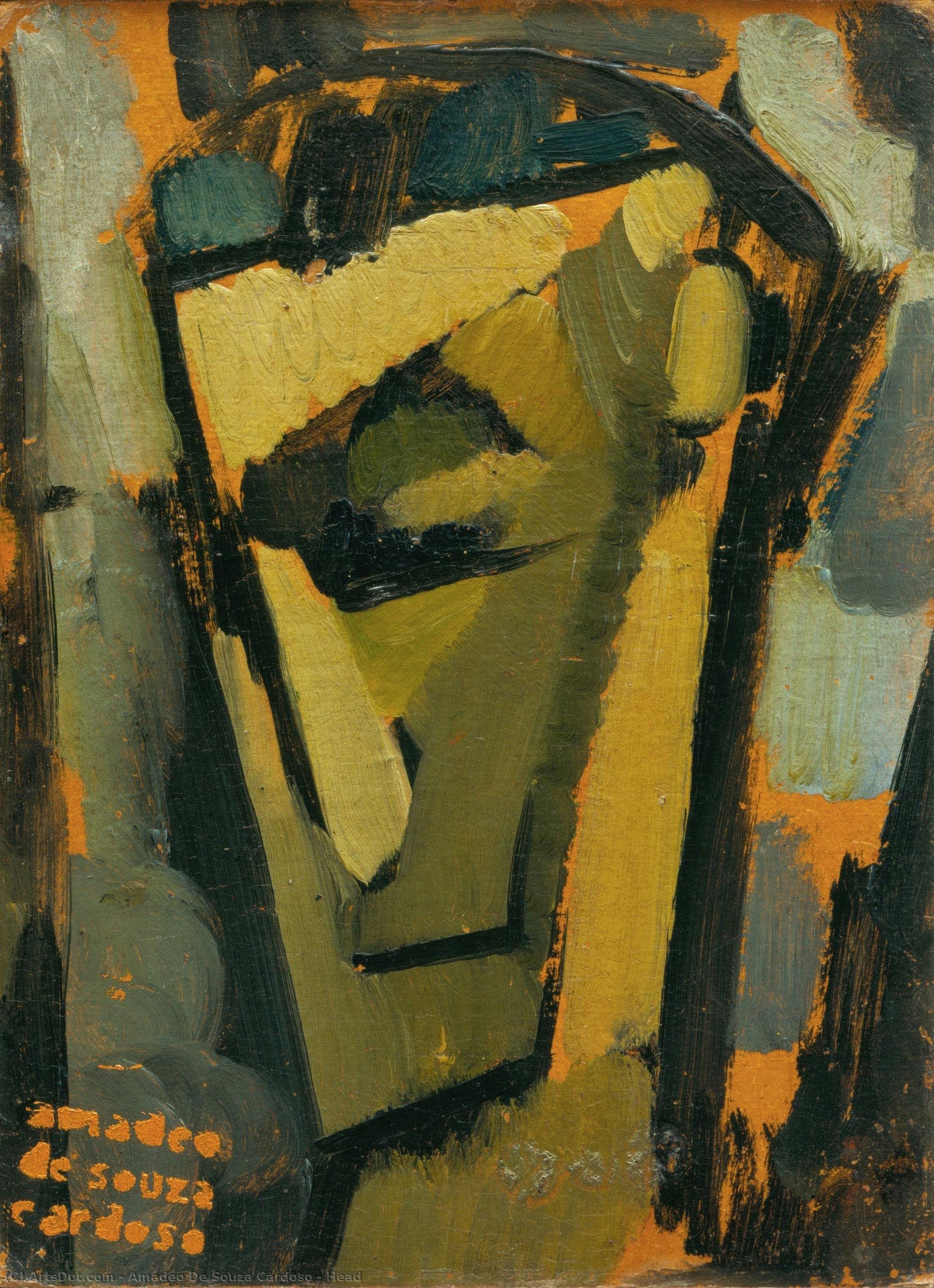
Amadeo de Souza-Cardoso’s “Head,” painted in 1915, isn’t merely a portrait; it’s a distilled essence of the anxieties and artistic ferment swirling through early 20th-century Europe. This small yet powerfully evocative canvas captures a profound sense of isolation and introspection, rendered with a striking blend of Cubist fragmentation and Expressionistic intensity. The painting immediately draws the eye to its central subject – a figure whose features are deliberately obscured, dissolving into planes of dark pigment and sharp angles. This deliberate distortion isn’t an exercise in mere visual trickery; it speaks volumes about the artist's exploration of identity and the fractured nature of modern experience.
Souza-Cardoso, a pivotal figure in Portuguese Modernism, was deeply influenced by the avant-garde movements of Paris. He sought to break free from traditional representational techniques, embracing abstraction and exploring new ways to convey emotion through form and color. “Head” exemplifies this ambition perfectly. The background, a somber expanse of muted tones – predominantly browns and blacks – serves as a stark counterpoint to the figure’s face, emphasizing its vulnerability and drawing attention to the internal turmoil suggested by the composition. The use of thick impasto adds texture and depth, creating a tactile quality that invites close examination.
Cubism's Echoes: Deconstructing Form and Perception
While often associated with Picasso and Braque, Souza-Cardoso’s engagement with Cubism is distinct. Here, the fragmentation isn’t solely about geometric deconstruction; it’s a means of conveying psychological states. The head itself is broken down into interlocking planes, reminiscent of a shattered mirror reflecting a fragmented self. This technique forces the viewer to actively participate in the construction of meaning, piecing together the image and confronting its inherent ambiguity. The influence of Cézanne's emphasis on structure and form is also evident, particularly in the careful manipulation of volume and shadow.
Souza-Cardoso’s use of color further enhances this sense of unease. The predominantly dark palette – punctuated by flashes of yellow – evokes a feeling of melancholy and perhaps even despair. The strategic placement of these brighter hues acts as visual anchors, drawing the eye to specific areas of the face while simultaneously contributing to the overall atmosphere of somber contemplation. It’s a masterful demonstration of how color can be used not just to represent reality but to shape our emotional response to it.
Symbolism and the Weight of the Unspoken
Beyond its formal qualities, “Head” is rich in symbolic potential. The obscured features suggest a loss of identity, a sense of alienation from oneself and the world. The dark tones could represent grief, sorrow, or perhaps even the burden of consciousness. Some art historians have linked the painting to Souza-Cardoso’s own struggles with mental health, which were exacerbated by his travels through Europe and his experiences within the Parisian avant-garde. The overall impression is one of profound introspection – a portrait not just of a face but of a soul grappling with its own complexities.
The border between the head and the background is particularly significant. It’s a deliberate attempt to isolate the figure, creating a sense of claustrophobia and reinforcing the feeling of isolation. The use of color within this border – a vibrant contrast against the muted tones of the background – suggests a desperate yearning for connection or perhaps simply a futile struggle against encroaching darkness. “Head” remains a hauntingly beautiful testament to the power of art to capture the most elusive aspects of human experience.