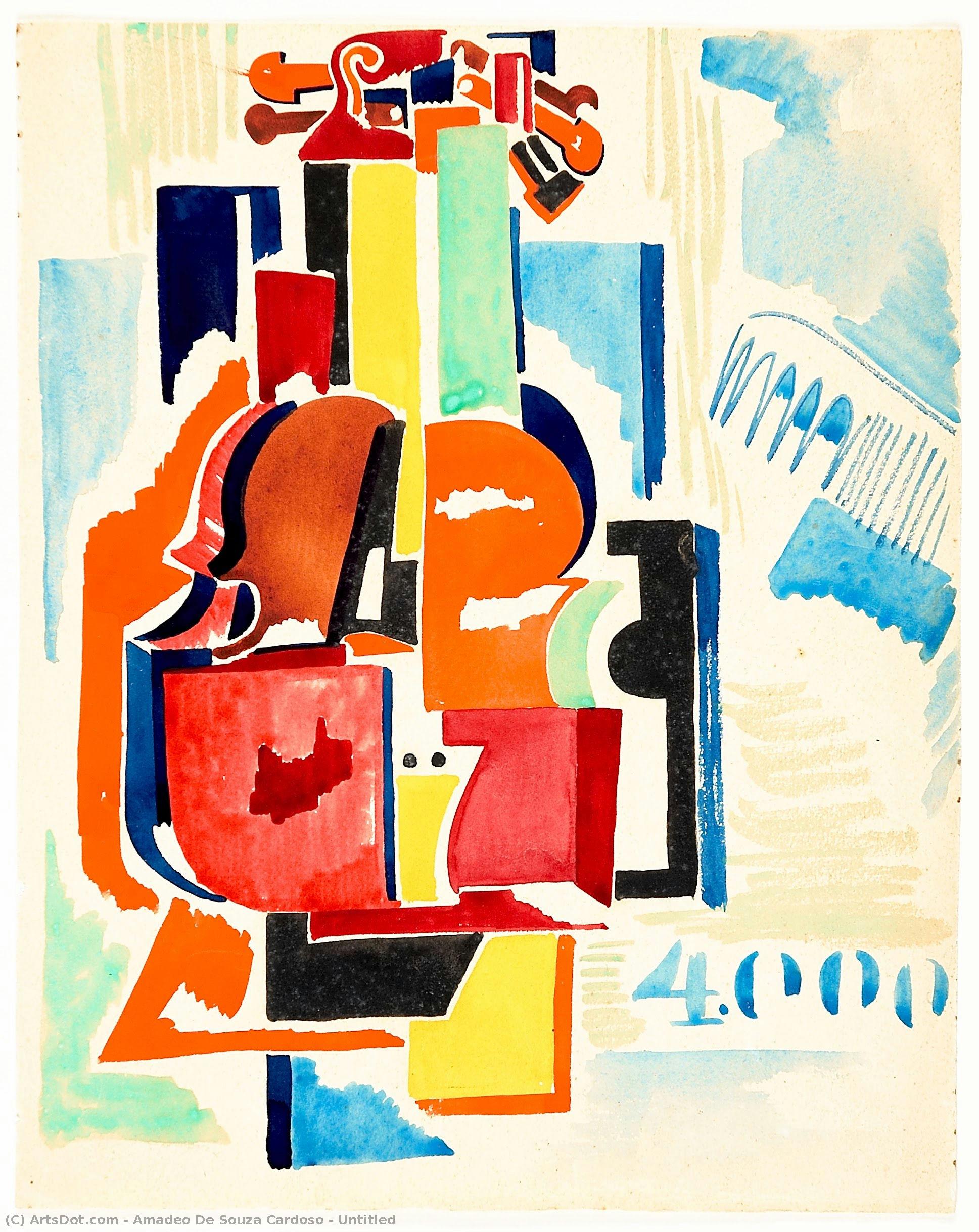
A Fragmented Vision: Amadeo de Souza-Cardoso’s “Untitled” (1916)
Emerging from the crucible of early 20th-century European modernism, Amadeo de Souza-Cardoso's "Untitled" is a captivating study in fractured space and vibrant color. Painted in 1916, during a period of intense artistic experimentation, this work transcends mere representation, instead offering an intensely personal and emotionally charged exploration of form and feeling. It’s a testament to Cardoso’s embrace of Cubist principles while simultaneously forging his own distinct voice within the burgeoning landscape of Portuguese Expressionism.
The canvas explodes with a dynamic interplay of geometric shapes – sharp triangles, assertive rectangles, and softer, almost organic curves – all rendered in a bold palette dominated by deep blues, fiery reds, and earthy ochres. These colors aren’t simply decorative; they vibrate with an underlying energy, suggesting movement and a restless spirit. The composition is deliberately unbalanced, a calculated disruption of traditional perspective that forces the viewer to actively engage with the artwork, piecing together its fragmented narrative.
The Influence of Cubism and Beyond
Souza-Cardoso’s artistic journey was profoundly shaped by his time in Paris, where he encountered the revolutionary ideas of Picasso and Braque. “Untitled” clearly reflects this influence, particularly in its deconstruction of form – objects are broken down into their essential geometric components and reassembled in a new, often unsettling, arrangement. However, Cardoso doesn’t simply mimic Cubism; he imbues it with his own unique sensibility. The loose brushstrokes, the expressive layering of color, and the underlying emotional intensity bear witness to the influence of Expressionism, a movement that prioritized subjective experience over objective reality.
Furthermore, the painting's exploration of spatial ambiguity echoes the broader anxieties of the era – a world undergoing rapid technological and social change. The lack of a clear focal point or discernible depth mirrors this sense of disorientation, inviting viewers to contemplate their own place within an increasingly complex and uncertain world. The work’s almost claustrophobic feel, despite its expansive color palette, hints at the pressures and uncertainties of modern life.
Technique and Materials: A Dance of Color
Close examination reveals a meticulous technique characterized by layered application of oil paint or watercolor on canvas (or possibly paper). Cardoso masterfully employed *alla prima* painting – working directly onto the surface without extensive underpainting – to achieve a sense of immediacy and spontaneity. The loose brushstrokes, visible in areas of color transition, contribute to the work’s dynamic energy. The texture is deliberately uneven, with some areas appearing almost wet and glistening, while others are built up with thicker impasto, creating a rich and tactile surface.
The choice of colors themselves is significant. The deep blues evoke feelings of melancholy and introspection, while the fiery reds suggest passion, energy, and perhaps even danger. The earthy ochres ground the composition, providing a visual anchor amidst the chaos of geometric forms. This careful orchestration of color contributes significantly to the painting’s emotional impact.
Symbolism and Emotional Resonance
While “Untitled” resists straightforward interpretation, it's impossible not to sense an underlying current of melancholy and perhaps even a hint of despair. The fragmented composition can be read as a metaphor for the fragmentation of modern experience – the breakdown of traditional values, the loss of connection, and the overwhelming nature of the contemporary world. The painting’s raw emotionality invites viewers to project their own feelings and experiences onto its surface.
Despite its inherent complexity, “Untitled” remains a profoundly moving work of art. It's a testament to Cardoso’s artistic vision and his ability to capture the spirit of a turbulent era. Reproductions of this piece offer a powerful way to bring this dynamic composition into any space, injecting a dose of modernism and emotional depth.