 Preview
 Send
Send Share
Share
 Details

 Download
 Similars
 X-Ray
X-Ray Diaporama
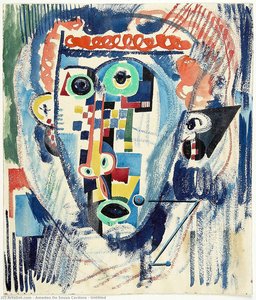
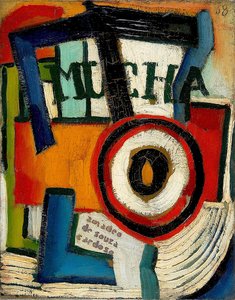
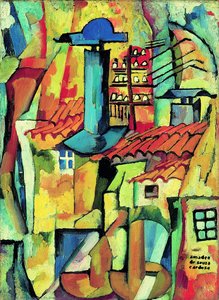
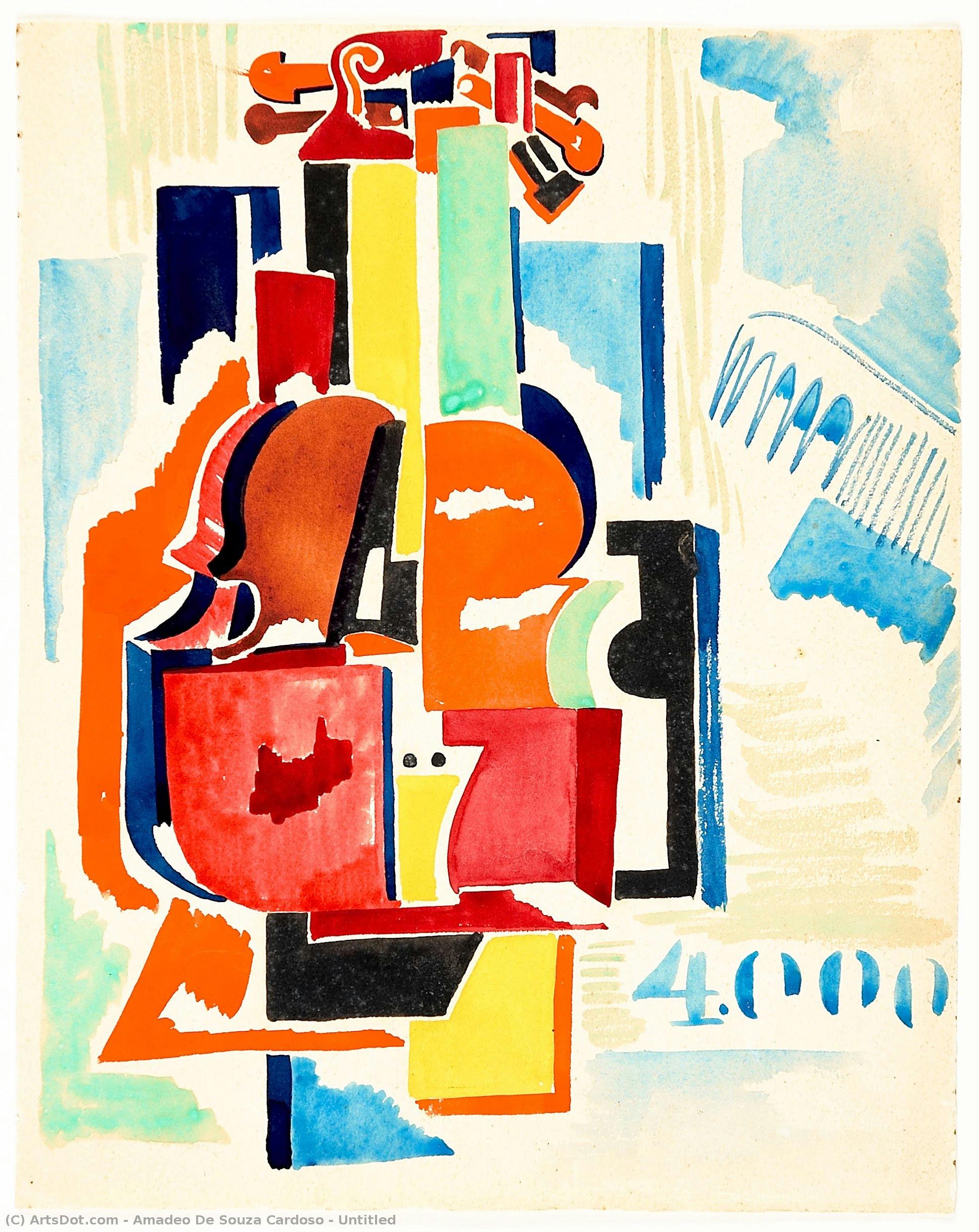
Untitled
 Oil On Canvas
- WallArt
- Cubism
 1916
1916 23.0 x 19.0 cm
 Centro de Arte Moderna Gulbenkian
 Read More
Hand Made Oil Reproduction
Hand-painted oil on canvas in your size and frame, made to order by our artists. ( Buy Print Buy Image)




P118B $10

P118H $10

P118W $10

P438Z $10

P508JH $12

P508YH $12

P805H $10

P805Z $10

P919BZ $10

P919G $10

P919XJ $10

P959ZH $10

P968JZ $12

W106C $8

W218G $10

W218JH $8

W218Y $10

W307PJ $10

W316G $10

W316PJ $8

W316Y $10

W398PJ $8

W4111J $10

W500HY $15

W500JH $15

W692G $12

W849H $8

W940BG $15

W953PJ $8




Pick from our preset sizes that match the artwork's original proportions.

You may enter your own dimensions to fit a specific frame or space. If your selected size does not match the original image's proportions, we will either crop the artwork or extend the painting with additional hand-painted elements. A digital mockup will be sent for your approval before production begins.
Please note that the on-screen preview does not reflect the actual cropping or extension. Only the mockup will accurately show the final composition.
While custom sizes are available, we recommend selecting a dimension from the predefined list to preserve the original proportions.
After order, ArtsDot.com team will email client for instructions and provide a mockup preview
Worldwide Delivery () in 3/4 weeks instead of standard 5 weeks. (17 August). No compromise on quality.

Free Worldwide Express Shipping

High-Quality Linen Canvas

Full Shipping Insurance

Customs Tax Refund Guarantee

True Color Matching Guarantee

60-Day Return Policy (Defects Only)

100% Money-Back Guarantee

Bulk Discount Offer
 Glass option is only available in size under 110 CM

Untitled
Reproduction Medium
Reproduction Size
-


Total Price
$ 263
Artwork Description
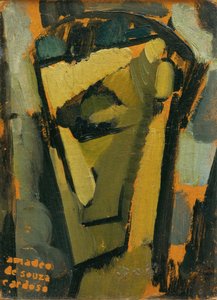
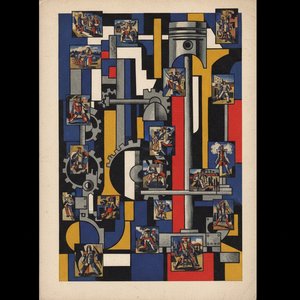
A Fragmented Vision: Amadeo de Souza-Cardoso’s “Untitled” (1916)
Emerging from the crucible of early 20th-century European modernism, Amadeo de Souza-Cardoso's "Untitled" is a captivating study in fractured space and vibrant color. Painted in 1916, during a period of intense artistic experimentation, this work transcends mere representation, instead offering an intensely personal and emotionally charged exploration of form and feeling. It’s a testament to Cardoso’s embrace of Cubist principles while simultaneously forging his own distinct voice within the burgeoning landscape of Portuguese Expressionism.
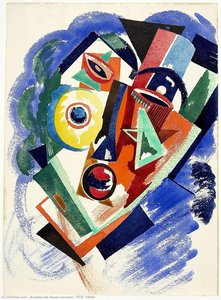
The canvas explodes with a dynamic interplay of geometric shapes – sharp triangles, assertive rectangles, and softer, almost organic curves – all rendered in a bold palette dominated by deep blues, fiery reds, and earthy ochres. These colors aren’t simply decorative; they vibrate with an underlying energy, suggesting movement and a restless spirit. The composition is deliberately unbalanced, a calculated disruption of traditional perspective that forces the viewer to actively engage with the artwork, piecing together its fragmented narrative.
The Influence of Cubism and Beyond
Souza-Cardoso’s artistic journey was profoundly shaped by his time in Paris, where he encountered the revolutionary ideas of Picasso and Braque. “Untitled” clearly reflects this influence, particularly in its deconstruction of form – objects are broken down into their essential geometric components and reassembled in a new, often unsettling, arrangement. However, Cardoso doesn’t simply mimic Cubism; he imbues it with his own unique sensibility. The loose brushstrokes, the expressive layering of color, and the underlying emotional intensity bear witness to the influence of Expressionism, a movement that prioritized subjective experience over objective reality.
Furthermore, the painting's exploration of spatial ambiguity echoes the broader anxieties of the era – a world undergoing rapid technological and social change. The lack of a clear focal point or discernible depth mirrors this sense of disorientation, inviting viewers to contemplate their own place within an increasingly complex and uncertain world. The work’s almost claustrophobic feel, despite its expansive color palette, hints at the pressures and uncertainties of modern life.
Technique and Materials: A Dance of Color
Close examination reveals a meticulous technique characterized by layered application of oil paint or watercolor on canvas (or possibly paper). Cardoso masterfully employed *alla prima* painting – working directly onto the surface without extensive underpainting – to achieve a sense of immediacy and spontaneity. The loose brushstrokes, visible in areas of color transition, contribute to the work’s dynamic energy. The texture is deliberately uneven, with some areas appearing almost wet and glistening, while others are built up with thicker impasto, creating a rich and tactile surface.
The choice of colors themselves is significant. The deep blues evoke feelings of melancholy and introspection, while the fiery reds suggest passion, energy, and perhaps even danger. The earthy ochres ground the composition, providing a visual anchor amidst the chaos of geometric forms. This careful orchestration of color contributes significantly to the painting’s emotional impact.
Symbolism and Emotional Resonance
While “Untitled” resists straightforward interpretation, it's impossible not to sense an underlying current of melancholy and perhaps even a hint of despair. The fragmented composition can be read as a metaphor for the fragmentation of modern experience – the breakdown of traditional values, the loss of connection, and the overwhelming nature of the contemporary world. The painting’s raw emotionality invites viewers to project their own feelings and experiences onto its surface.
Despite its inherent complexity, “Untitled” remains a profoundly moving work of art. It's a testament to Cardoso’s artistic vision and his ability to capture the spirit of a turbulent era. Reproductions of this piece offer a powerful way to bring this dynamic composition into any space, injecting a dose of modernism and emotional depth.
Related Artworks
Artist Biography
A Pioneer of Portuguese Modernism: The Life and Art of Amadeo de Souza-Cardoso
Amadeo de Souza-Cardoso, a name resonating with the vibrant energy of early 20th-century modernism, remains a somewhat enigmatic figure despite his pivotal role in bridging Portuguese art to the international avant-garde. Born on November 14, 1887, in Manhufe, a picturesque parish of Amarante in Portugal, his brief but intensely creative life was marked by a restless spirit and an unwavering dedication to artistic innovation. From humble beginnings rooted in the rural landscapes of his homeland, Souza-Cardoso embarked on a journey that would lead him to the heart of Parisian modernism, where he forged connections with some of the most influential artists of his time – Modigliani, Brancusi, Delaunay, and Gris among them. His early education began with architectural studies in Lisbon, but it was the allure of painting, particularly the expressive power of caricature, that truly captured his imagination and set him on a path toward artistic exploration. This initial foray into art wasn’t merely technical training; it was an awakening to the potential of visual language as a means of commentary and self-expression.Parisian Encounters and Artistic Development
The year 1906 marked a turning point, as Souza-Cardoso relocated to Paris, immersing himself in the city’s thriving artistic milieu. Initially continuing his architectural pursuits, he soon gravitated towards painting, quickly absorbing the radical ideas that were reshaping the art world. The influence of Cubism and Futurism became increasingly apparent in his work around 1910, establishing him as one of Portugal's first true modern painters. However, Souza-Cardoso didn’t simply mimic these movements; he synthesized them with his own unique sensibility, creating a style characterized by bold forms, vibrant colors, and dynamic compositions. His paintings weren’t merely representations of reality but rather explorations of perception, emotion, and the very essence of form itself. Works like *Saut du Lapin* (1911) and *Cabeça* (1913) exemplify this period, showcasing his experimentation with fragmented perspectives and a heightened sense of chromatic intensity. These weren’t chaotic arrangements but carefully balanced structures, revealing a deliberate artistic vision beneath the surface of apparent randomness. He participated in key exhibitions, including the Salon des Indépendants and, crucially, the groundbreaking 1913 Armory Show in New York, bringing his innovative work to an international audience.A Synthesis of Influences: Between Portugal and Paris
Souza-Cardoso’s artistic journey wasn't a complete severance from his Portuguese roots. Despite embracing the avant-garde spirit of Paris, he maintained a strong connection to his homeland, frequently returning to Manhufe. This duality is reflected in his art, where themes and motifs drawn from Portuguese culture – religious processions, rural landscapes, folk traditions – are interwoven with modernist techniques. *Entrada* (1917) and *Pintura* (1917), created during a period of renewed engagement with Portugal, demonstrate this synthesis, showcasing an increasing tendency towards abstraction while retaining a distinctly Portuguese flavor. This ability to reconcile seemingly disparate influences was a hallmark of his artistic genius. He wasn’t simply adopting styles; he was transforming them, imbuing them with his own unique perspective and creating something entirely new. His work became a dialogue between cultures, a testament to the power of art to transcend geographical boundaries.Legacy and Remembrance: A Lasting Impact
Tragically, Amadeo de Souza-Cardoso’s promising career was cut short by his untimely death on October 25, 1918, at the age of just thirty. He succumbed to pneumonia during the Spanish Flu pandemic, leaving behind a relatively small but remarkably impactful body of work. For many years, his contributions were overlooked, overshadowed by more prominent figures in the modernist movement. However, in recent decades, there has been a growing recognition of his significance as a pioneer of Portuguese modernism and an important voice within the broader European avant-garde. Two major retrospectives – one in 1958 and another at the Grand Palais in Paris in 2016 – have helped to reintroduce his work to a wider audience, solidifying his place in art history. Today, his paintings can be found in museums around the world, including the Plymouth City Museum and Art Gallery, alongside works by other notable artists. His legacy continues to inspire contemporary artists, serving as a reminder of the power of artistic innovation and the enduring importance of cultural exchange.Key Characteristics of Souza-Cardoso’s Work
- Innovative Style: A pioneering approach to modern Portuguese art, blending Cubism, Futurism, and his own unique sensibility.
- Vivid Color Palette: Characterized by aggressive and vibrant use of color, creating dynamic and emotionally resonant compositions.
- Dynamic Composition: Often employing fragmented perspectives and seemingly chaotic arrangements that are, in fact, carefully balanced and structured.
- Cultural Synthesis: A unique ability to integrate Portuguese themes and motifs with modernist techniques, creating a dialogue between cultures.
- Early Abstraction: Exploration of abstraction, particularly in his later works, pushing the boundaries of representational art.
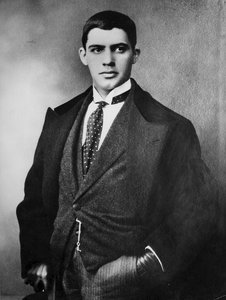
Amadeo de Souza-Cardoso
1887 - 1918 , Portugal
Quick Facts
- Artistic Movement Or Style: Cubism, Futurism, Modernism
- Artists Who Influenced This Artist:
- Modigliani
- Brancusi
- Delaunay
- Date Of Birth: November 14, 1887
- Date Of Death: October 25, 1918
- Full Name: Amadeo de Souza-Cardoso
- Nationality: Portuguese
- Notable Artworks:
- Saut du lapin
- Cabeça
- Entrada
- Pintura
- Place Of Birth: Manhelices, Portugal
Related Articles

Geometric Abstraction's 10 Defining Masterpieces | Art for Your Home - ArtsDot
Explore 10 defining masterpieces of Geometric Abstraction! Discover Kandinsky, Mondrian & Malevich’s iconic works. Find museum-quality art reproductions and curated decor ideas to elevate your home at ArtsDot.com.
Fernand Léger's Masterpieces: 25 Iconic Paintings & The Machine Age Aesthetic | ArtsDot
Explore 25 iconic Fernand Léger paintings that defined the Machine Age & Cubism. Discover the stories behind his bold colors, geometric forms & avant-garde style. Find museum-quality art reproductions on ArtsDot.com.

Kandinsky's Masterpieces: 25 Paintings That Define Abstract Art | ArtsDot
Journey through Wassily Kandinsky's 25 most iconic abstract paintings. Explore his revolutionary use of color, form & spiritual expressionism. Find museum-quality Kandinsky reproductions and elevate your home decor with ArtsDot.com. Discover all masterpieces on ArtsDot.com!
Beyond Form & Color: Geometric Abstraction's Evolution in 20th/21st Century Art
Explore the evolution of geometric abstraction from Cubism to contemporary art. Discover key artists like Malevich & Mondrian, investment insights, and expert collecting advice at ArtsDot.
Beyond Form & Color: Geometric Abstraction's Enduring Legacy in Art History
Explore the captivating world of geometric abstraction! Discover its origins, key artists like Malevich & Mondrian, and why this movement remains highly valued by art collectors today. Expert insights at ArtsDot.