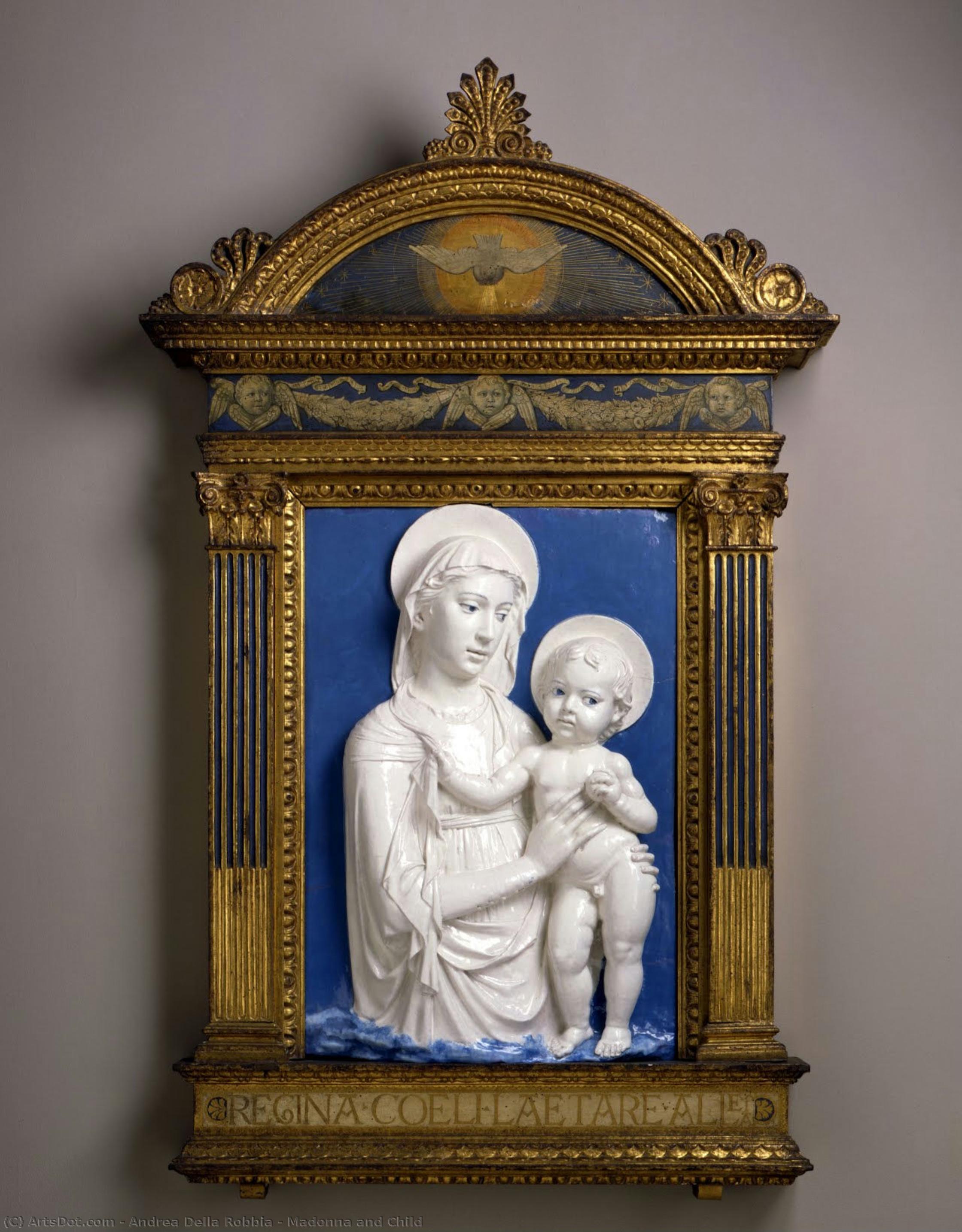
Andrea della Robbia’s 1470 ‘Madonna and Child’ showcases the artist's mastery of glazed terracotta, depicting a tender moment between Mary and Jesus within a gold-framed composition. Discover this exquisite Renaissance masterpiece and bring timeless beauty into your space.
Andrea della Robbia (1435-1525): Florentine Renaissance sculptor renowned for vibrant, glazed terracotta reliefs. Explore his devotional works, Madonna & Child sculptures, and architectural decorations – a key figure in Italian art.
Explore world-class art at the Toledo Museum of Art! Discover stunning glass collections, European masterpieces & modern works – all with free admission. Plan your visit today!
A Timeless Embrace: Andrea della Robbia’s Madonna and Child (1470)
This exquisite rendition of the Virgin Mary cradling the infant Jesus, painted in 1470 by the Florentine master Andrea della Robbia, is more than just a devotional image; it's a testament to the profound beauty achievable through meticulous craftsmanship and an understanding of human emotion. Measuring a substantial 512 x 737 cm, this artwork immediately commands attention with its elegant gold frame, a detail that elevates the scene to one of refined grace. The painting captures a moment of serene intimacy – Mary’s blue dress, rich in color, contrasts beautifully with the delicate form of the baby Jesus nestled close to her chest, creating a visual harmony that speaks volumes about maternal love and divine protection.
The Poetic Soul of Teracotta
Andrea della Robbia's genius lay not in monumental sculpture but in his mastery of glazed terracotta – a technique he inherited from his uncle, Luca della Robbia. This particular reproduction expertly mimics the original’s signature style: a remarkable ability to imbue humble clay with an astonishing level of realism and emotional depth. The surface is meticulously crafted, showcasing subtle textures that suggest the softness of Mary's garments and the vulnerability of the infant Jesus. The use of tin-glazed terra-cotta, a technique perfected by Luca, allowed for vibrant colors – achieved through careful layering and firing – to appear almost luminous against the dark terracotta background. This was revolutionary at the time, moving away from the purely functional aspects of sculpture towards an exploration of beauty and expressive form.
A Renaissance Symbolism
The composition itself is steeped in Renaissance symbolism. The Madonna and Child motif has been a cornerstone of Christian art since its inception, representing Mary’s role as the New Eve – a figure of redemption and hope. Jesus, held close to Mary's heart, symbolizes divine grace and salvation. The pose—Mary gently presenting her child—evokes an image of offering and protection, central themes within the religious narrative. The golden frame further amplifies these symbolic elements, representing divinity and illuminating the sacred subject matter.
Historical Context & Artistic Influence
Created in 1470, this artwork reflects the burgeoning artistic spirit of Florence during the High Renaissance. Andrea della Robbia was a pivotal figure in shaping the aesthetic sensibilities of his time, moving away from the more austere styles of earlier Gothic sculpture and embracing the humanist ideals that celebrated beauty, proportion, and human emotion. His work profoundly influenced subsequent generations of artists, particularly in the realm of devotional sculpture. This reproduction offers a tangible connection to this rich artistic heritage, allowing you to experience firsthand the brilliance of one of Florence’s most beloved masters.