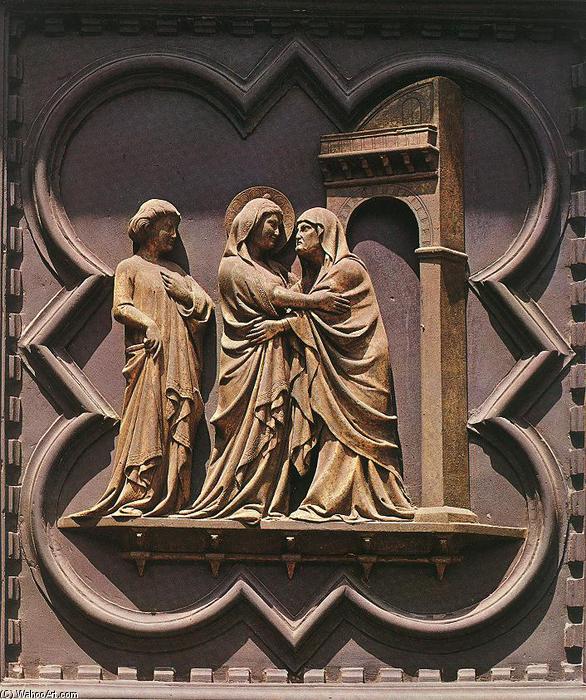
The Visitation (panel of the south doors): A Gothic Masterpiece Reflecting Faith and Hope
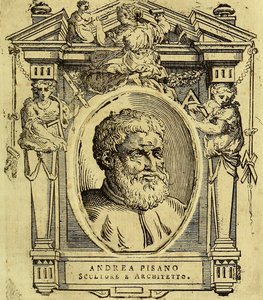
Andrea Pisano’s “The Visitation,” one of the monumental bronze panels adorning the south doors of Florence Baptistery, stands as a cornerstone of Gothic sculpture and embodies the spiritual fervor of its era. Completed in 1330 during the zenith of Florentine artistic ambition—a period fueled by papal patronage and burgeoning civic pride—this artwork transcends mere decoration; it’s a profound meditation on divine grace and familial devotion.
Style & Technique: Pisano, deeply influenced by Giotto di Bondone's revolutionary naturalism, skillfully blended Byzantine artistic traditions with innovative sculptural approaches. The panel exemplifies Gothic style through its meticulous attention to detail—particularly in the drapery folds—creating an illusion of movement and texture that captures the solemn beauty of the biblical narrative. The bronze casting technique itself was groundbreaking for its time, demanding immense skill and precision from Florentine artisans.
Historical Context: Florence Cathedral’s construction coincided with a dramatic shift in artistic sensibilities. Giotto's pioneering use of perspective and naturalistic representation challenged established conventions, prompting artists like Pisano to push boundaries and explore new expressive possibilities. The Baptistery doors were commissioned by the powerful Calimala guild—a testament to Florence’s economic prosperity and its commitment to commemorating religious saints.
Symbolism & Narrative: “The Visitation” depicts Mary's pilgrimage to Elizabeth, marking a pivotal moment in Christian theology – the annunciation of Jesus Christ. Each figure is imbued with symbolic significance; Mary embodies humility and piety, while Elizabeth represents divine motherhood and unwavering faith. The infant John the Baptist symbolizes innocence and foreshadowing—a reminder that even amidst earthly struggles, God’s plan unfolds miraculously.
Emotional Impact: Pisano's masterful depiction of human emotion – serene contemplation in Mary’s gaze, tender affection between Elizabeth and Mary – resonates powerfully with viewers centuries later. The panel evokes a sense of spiritual serenity and conveys the profound beauty of familial love within a sacred context. It serves as an enduring emblem of faith, hope, and divine compassion—a timeless masterpiece that continues to inspire awe and contemplation.
- Further Exploration: You can delve deeper into Pisano’s artistic legacy by visiting Andrea Pisano’s Artist Database.
- Related Artwork: Admire Nino Pisano's iconic sculptures! Master sculptor of the Renaissance, known for Madonna & Child works, innovative techniques, & influence on art history. See more at Nino Pisano Artist Database.
- Detailed View: Explore the South doors panels: 3. Visitation by PISANO, Andrea in detail at The WGA Art Database.
- Inspiring Insight: Discover how Andrea Pisano, South doors, Baptistery of Saint John, Florence is interpreted by Smarthistory at Smarthistory Analysis.