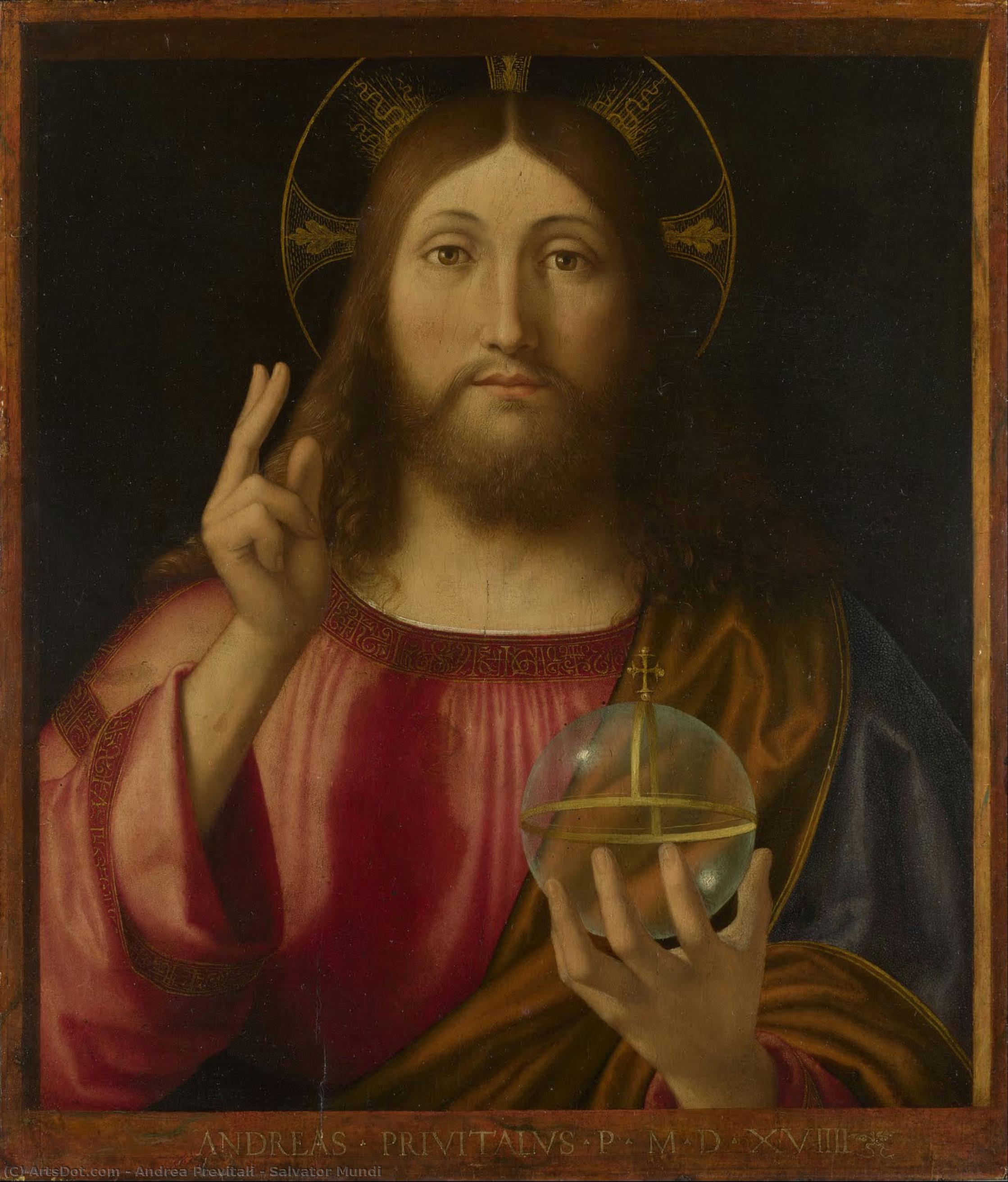
A Divine Radiance: The Enigma of Salvator Mundi
In the quiet, hallowed halls of The National Gallery in London, there exists a window into the spiritual heart of the High Renaissance. Salvator Mundi, an exquisite oil on panel executed by Andrea Previtali in 1519, is far more than a mere portrait; it is a profound theological meditation captured in pigment and light. The painting presents the figure of Jesus Christ as the Savior of the World, his gaze both penetrating and infinitely compassionate. He holds aloft a crystalline orb, a globe encircled by delicate rays of light that suggest the divine providence overseeing the cosmos. To behold this work is to step into an era where the boundaries between the earthly and the divine were blurred by the masterful brushstrokes of the Venetian school.
The composition is anchored by a sense of monumental stillness, a characteristic that invites the viewer into a state of contemplation. Previtali, having honed his craft under the legendary Giovanni Bellini, brings to this piece a sophisticated understanding of atmospheric depth and tonal harmony. The figure of Christ emerges from a subtle, dark background, a technique that allows the luminosity of his skin and the ethereal glow of the orb to command the viewer's undivided attention. This interplay of light and shadow—the chiaroscuro of the Renaissance—creates a sculptural presence, making the sacred subject feel tangibly present within our own space.
The Venetian Legacy and Technical Mastery
To understand the soul of this painting, one must look to the vibrant streets of Venice and Bergamo where Previtali’s journey began. His apprenticeship under Bellini instilled in him a reverence for color and a meticulous approach to glazing. In Salvator Mundates, this is evident in the way light seems to permeate the layers of oil paint, creating a soft, translucent quality that mimics the warmth of human flesh and the cold, clear brilliance of the glass sphere. The technique is not merely about imitation but about capturing the essence of life itself through the careful manipulation of pigment.
The artist’s ability to balance the heavy, symbolic weight of the globe with the delicate, almost weightless rays of light demonstrates a technical virtuosity that continues to captivate art historians. Every stroke serves the narrative of salvation, reinforcing the idea that the universe is held within a divine, protective grasp. For the collector or the lover of fine art, this piece represents a pinnacle of Renaissance humanism, where the scientific observation of the natural world meets the profound mysteries of faith.
An Eternal Presence for the Discerning Collector
For those seeking to infuse their interiors with a sense of history, serenity, and intellectual depth, a reproduction of Salvator Mundi offers an unparalleled opportunity. This artwork is not merely a decorative element; it is a focal point that commands respect and invites quiet reflection. Its rich textures and deep, emotive tones harmonize beautifully with classical, traditional, or even contemporary minimalist settings, providing a sophisticated anchor to any curated space.
Whether placed in a private study, a grand library, or an elegant living salon, the painting brings with it an aura of timelessness. It serves as a reminder of the enduring power of beauty and the human quest for meaning. Owning a piece that echoes the mastery of Andrea Previtali is to possess a fragment of the Renaissance spirit—a legacy of light, color, and the eternal search for the divine.