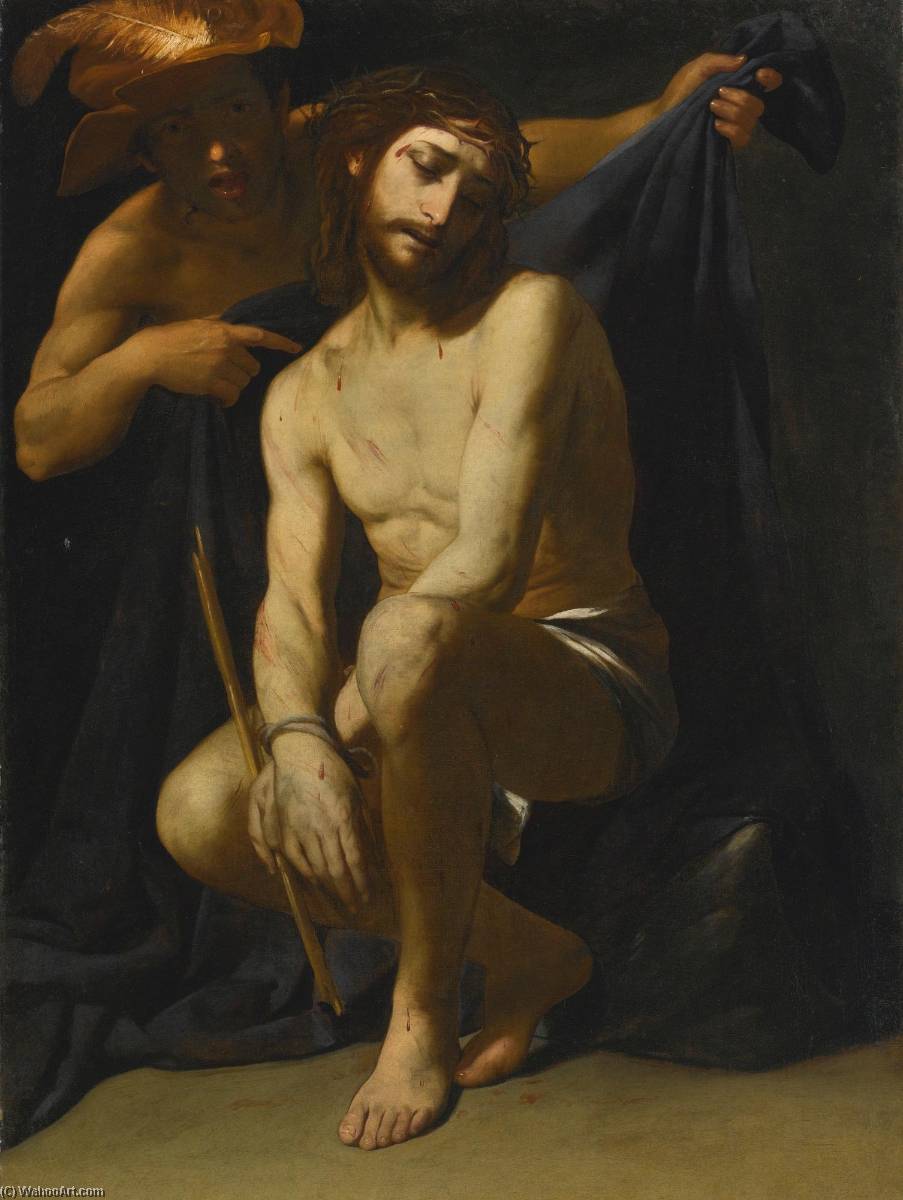
Witness the raw emotion of Antonio de Bellis' 'Mocking of Christ.' This Baroque masterpiece captures a pivotal moment with dramatic chiaroscuro and intense realism. Explore its profound religious symbolism.
Discover Antonio de Bellis, a Baroque painter from Naples influenced by Caravaggio. Explore his dramatic religious scenes & masterpieces like 'Mocking of Christ'.
A Harrowing Scene: Unveiling Antonio de Bellis' "Mocking of Christ"
This powerful oil painting by Antonio de Bellis depicts a pivotal moment in Christian tradition – the mocking of Jesus prior to his crucifixion. The scene is rendered with stark realism, characteristic of the Baroque period and heavily influenced by Caravaggio’s dramatic style. Two figures dominate the foreground, their expressions conveying cruelty and derision as they taunt Christ, who is partially obscured by a cloth covering his head. A third figure points accusingly, while another wears a hat, adding to the unsettling atmosphere. The inclusion of three indistinct figures in the background suggests a larger crowd complicit in this act of humiliation, further amplifying the sense of injustice and suffering. Notably, the presence of an object resembling a baseball bat on the ground introduces a curious element that warrants deeper consideration – perhaps a symbolic representation of contemporary brutality or simply a detail reflecting the artist's observational skill.
Baroque Drama and Caravaggesque Influence
De Bellis, active in Naples during the 17th century alongside masters like Ribera, Cavallino, and Stanzioni, was deeply impacted by Caravaggio’s revolutionary use of *chiaroscuro* – the dramatic contrast between light and shadow. This technique is vividly employed here to highlight the faces of the tormentors, emphasizing their expressions of malice while shrouding Christ in a veil of darkness. The painting's composition is dynamic, drawing the viewer's eye directly to the central figures and immersing them in the emotional intensity of the moment. The Baroque style, known for its theatricality and emotional fervor, finds full expression in this work, aiming not just to depict an event but to evoke a profound response within the observer.
Historical Context and Religious Symbolism
Painted during a period of intense religious devotion and artistic innovation, "Mocking of Christ" reflects the Counter-Reformation's emphasis on emotional engagement with biblical narratives. The scene itself is drawn from the Passion story, representing a moment of profound suffering and humiliation endured by Jesus before his crucifixion. Beyond the literal depiction, the painting carries significant symbolic weight. The cloth covering Christ’s head alludes to his vulnerability and the loss of dignity he suffered. The gestures of the mocking figures represent human cruelty and indifference towards divine suffering. De Bellis' work serves as a poignant meditation on faith, sacrifice, and the enduring power of religious iconography.
Emotional Impact and Artistic Legacy
"Mocking of Christ" is not merely a historical depiction; it’s an emotionally charged portrayal of human cruelty and divine suffering. The artist masterfully captures the psychological tension of the scene, prompting viewers to confront uncomfortable truths about human nature and the cost of faith. De Bellis' ability to convey such raw emotion through his brushstrokes solidified his place among the leading Neapolitan Baroque painters. Owning a reproduction of this artwork offers an opportunity to bring a piece of profound religious history and artistic brilliance into your space, sparking contemplation and admiration for De Bellis’ skill and vision.