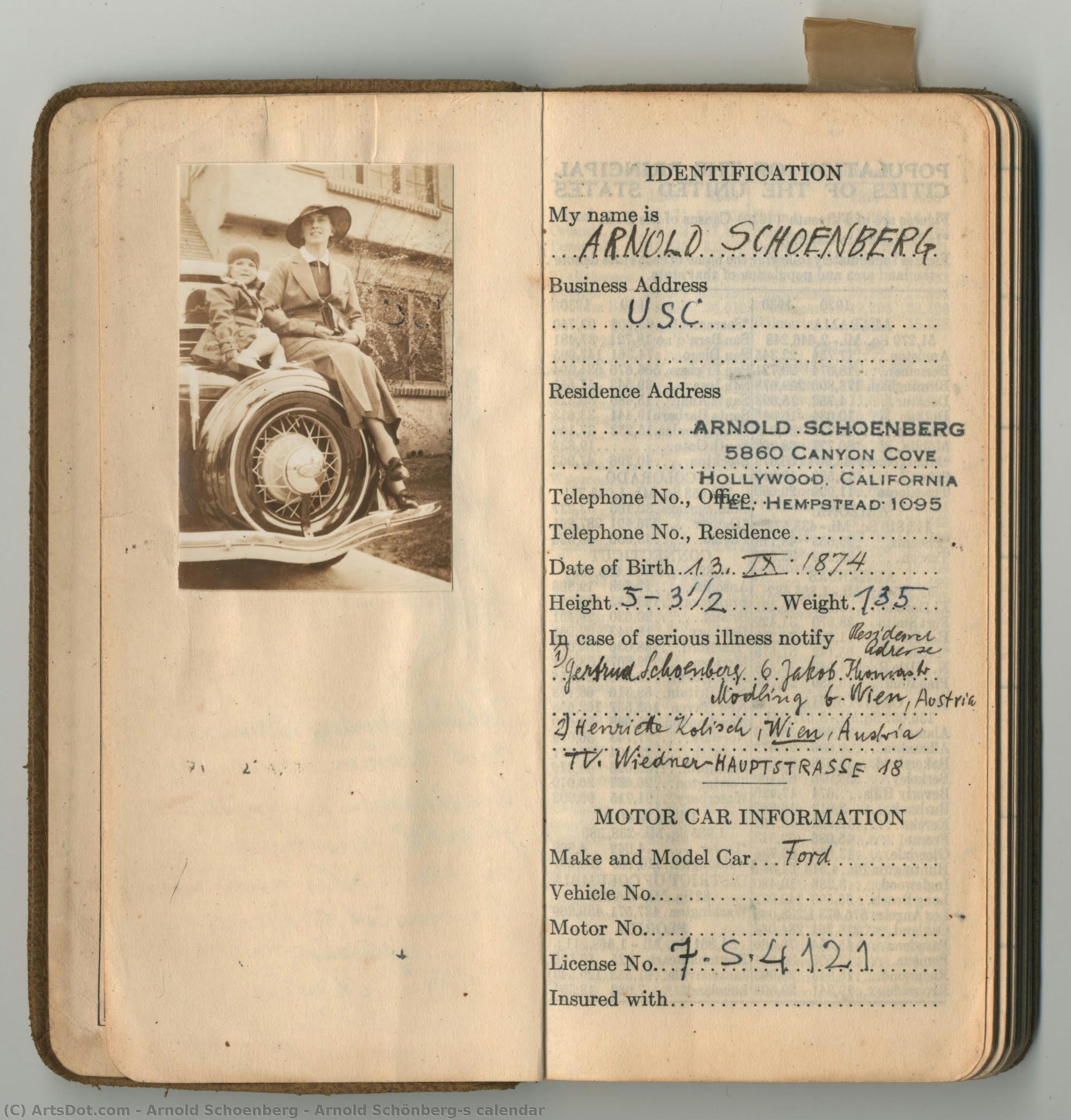
A Snapshot of Hollywood Harmony: Arnold Schönberg’s Calendar
The image captures a moment frozen in time – a candid photograph depicting Arnold Schönberg alongside his wife, Gertrud Kolisch Schoenberg, seated in the backseat of a vintage automobile. Taken in 1935 during their relocation to Los Angeles, California, this seemingly simple tableau speaks volumes about the artist’s life and creative spirit amidst the burgeoning American landscape. The woman, dressed in a hat that exudes an aura of bygone elegance, radiates warmth and companionship as she gazes out at the road ahead—a visual testament to the quiet joys of domesticity interwoven with artistic ambition.
- Subject Matter: Domestic Tranquility
- Style: Documentary Photography – Capturing Everyday Life
The photograph’s aesthetic leans heavily into the stylistic conventions of documentary photography prevalent in the mid-1930s. Photographers sought to portray reality as authentically as possible, eschewing idealized representations for a more honest depiction of human experience. The composition is deliberately unpretentious, prioritizing natural light and capturing the spontaneous interaction between Schönberg and his wife—a deliberate rejection of formal artistic conventions favored by many composers of the era.
- Technique: Silver Halide Printing – Utilizing Traditional Photographic Processes
- Camera Type: Likely a Leica Camera – Reflecting Technological Advancements of the Time
The image was produced using silver halide printing, a technique that remained dominant in photographic studios throughout the decade. This process involved exposing sensitized photographic emulsion to light through a lens and subsequently developing the latent image onto paper—a meticulous craft requiring considerable skill and precision. The Leica camera, introduced in 1925, revolutionized photography by offering portability and superior image quality compared to earlier models, marking a significant step forward in capturing fleeting moments with remarkable clarity.
- Historical Context: The Rise of Hollywood & Artistic Exile
- Symbolism: Represents Stability Amidst Uncertainty – Reflecting Schönberg’s Personal Journey
The photograph's setting—Hollywood, California—holds profound symbolic significance. By 1935, Los Angeles had rapidly transformed into a global epicenter of filmmaking and cultural innovation, attracting artists and intellectuals from across Europe who sought refuge from the escalating pressures of Nazi Germany. Schönberg’s decision to relocate to America embodies this spirit of artistic exile, representing not merely physical displacement but also a profound reimagining of creative identity—a quest for solace and inspiration amidst the transformative forces reshaping the world around him. The woman's gaze symbolizes resilience and optimism—a quiet declaration of faith in the enduring power of human connection as Schönberg navigated his turbulent path toward artistic fulfillment.
- Emotional Impact: Evokes Nostalgia & Warmth – Capturing a Moment of Familial Happiness
Ultimately, “Arnold Schönberg’s Calendar” succeeds in conveying an unmistakable emotional resonance—a palpable sense of nostalgia for a bygone era and an enduring appreciation for the simple pleasures of familial companionship. The photograph's understated beauty resides precisely in its ability to capture a fleeting glimpse into Schönberg’s daily life—a reminder that even amidst groundbreaking artistic endeavors, human connection remains paramount—a cornerstone of creativity and personal contentment. It serves as a poignant testament to the artist’s unwavering spirit and his enduring legacy as one of the most influential figures in 20th-century music.