Menu
FREE ART CONSULTATION
PreviewPreview AR previewAR preview Buy Print Buy PrintBuy Image Buy Image SendSend
DetailsDetails Add to favorites Add to favorites DownloadDownload SimilarsSimilars X-RayX-Ray DiaporamaDiaporama

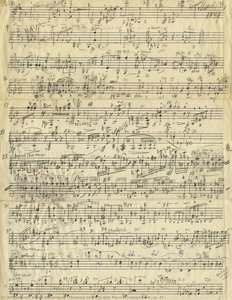
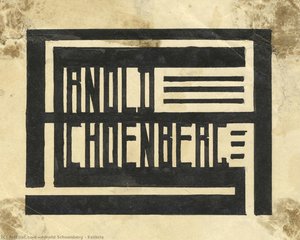
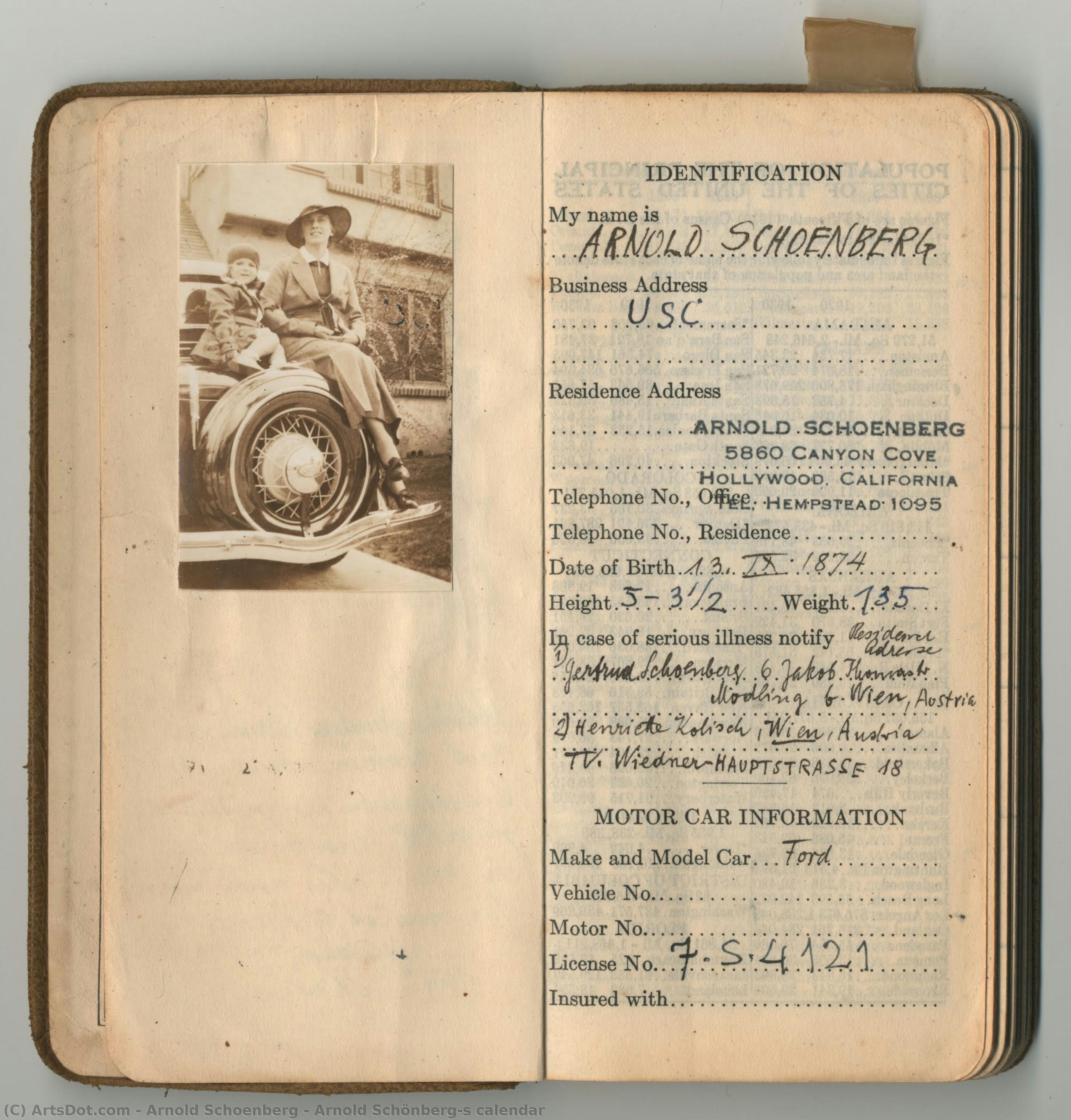
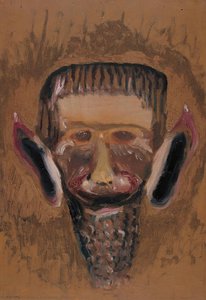
Arnold Schönberg’s calendar

Explore Arnold Schoenberg's revolutionary music – atonality, twelve-tone technique & influence on 20th-century composers. Discover his legacy at the Schönberg Center.

Hand Made Oil Reproduction

Hand-painted oil on canvas in your size and frame, made to order by our artists. (Buy Print Buy PrintBuy Image Buy Image)

P118B $10
P118H $10
P118W $10

P438Z $10

P508JH $12

P508YH $12

P805H $10

P805Z $10

P919BZ $10

P919G $10

P919XJ $10

P959ZH $10

P968JZ $12

W106C $8

W218G $10

W218JH $8

W218Y $10

W307PJ $10

W316G $10

W316PJ $8

W316Y $10

W398PJ $8

W4111J $10

W500HY $15

W500JH $15

W692G $12

W849H $8

W940BG $15

W953PJ $8

Standard
custom
CM
INCH

Pick from our preset sizes that match the artwork's original proportions.

width
height

You may enter your own dimensions to fit a specific frame or space. If your selected size does not match the original image's proportions, we will either crop the artwork or extend the painting with additional hand-painted elements. A digital mockup will be sent for your approval before production begins.
Please note that the on-screen preview does not reflect the actual cropping or extension. Only the mockup will accurately show the final composition.
While custom sizes are available, we recommend selecting a dimension from the predefined list to preserve the original proportions.

Examples of what can be changed: Replace face with customer photo; Add pet (e.g., replace cat with dog); Include hidden message in background; Change background landscape or elements.
After order, ArtsDot.com team will email client for instructions and provide a mockup preview

Worldwide Delivery () in 3/4 weeks instead of standard 5 weeks. (17 August). No compromise on quality.

why_choose_icon
Free Worldwide Express Shipping
why_choose_icon
High-Quality Linen Canvas
why_choose_icon
Full Shipping Insurance
why_choose_icon
Customs Tax Refund Guarantee
why_choose_icon
True Color Matching Guarantee
why_choose_icon
60-Day Return Policy (Defects Only)
why_choose_icon
100% Money-Back Guarantee
why_choose_icon
Bulk Discount Offer

Total Price

$ 263

reproduction

Arnold Schönberg’s calendar

Reproduction Medium

Reproduction Size

-

Total Price

$ 263

Quick Facts

  • Dimensions: 14 x 14 cm
  • Medium: Ink on paper
  • Artistic style: Avant-garde
  • Subject or theme: Daily life
  • Year: 1935
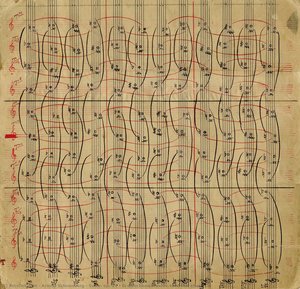
  • Notable elements or techniques: Twelve-tone technique
  • Title: Arnold Schönberg’s calendar

Art Quiz

There is only one correct answer for each question.

Question 1:
What is the primary subject matter depicted in Arnold Schönberg’s calendar?
Question 2:
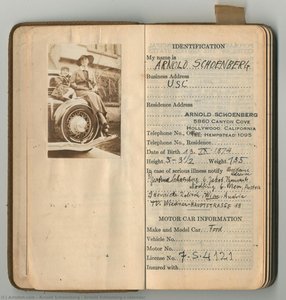
The photograph showcases a woman driving with her husband in what type of vehicle?
Question 3:
Arnold Schoenberg is considered a pivotal figure in the development of which musical movement?
Question 4:
What artistic technique is prominently employed in the calendar image?
Question 5:
Where was Arnold Schoenberg’s Hollywood residence located?

Artwork Description

A Snapshot of Hollywood Harmony: Arnold Schönberg’s Calendar

The image captures a moment frozen in time – a candid photograph depicting Arnold Schönberg alongside his wife, Gertrud Kolisch Schoenberg, seated in the backseat of a vintage automobile. Taken in 1935 during their relocation to Los Angeles, California, this seemingly simple tableau speaks volumes about the artist’s life and creative spirit amidst the burgeoning American landscape. The woman, dressed in a hat that exudes an aura of bygone elegance, radiates warmth and companionship as she gazes out at the road ahead—a visual testament to the quiet joys of domesticity interwoven with artistic ambition.
  • Subject Matter: Domestic Tranquility
  • Style: Documentary Photography – Capturing Everyday Life
The photograph’s aesthetic leans heavily into the stylistic conventions of documentary photography prevalent in the mid-1930s. Photographers sought to portray reality as authentically as possible, eschewing idealized representations for a more honest depiction of human experience. The composition is deliberately unpretentious, prioritizing natural light and capturing the spontaneous interaction between Schönberg and his wife—a deliberate rejection of formal artistic conventions favored by many composers of the era.
  • Technique: Silver Halide Printing – Utilizing Traditional Photographic Processes
  • Camera Type: Likely a Leica Camera – Reflecting Technological Advancements of the Time
The image was produced using silver halide printing, a technique that remained dominant in photographic studios throughout the decade. This process involved exposing sensitized photographic emulsion to light through a lens and subsequently developing the latent image onto paper—a meticulous craft requiring considerable skill and precision. The Leica camera, introduced in 1925, revolutionized photography by offering portability and superior image quality compared to earlier models, marking a significant step forward in capturing fleeting moments with remarkable clarity.
  • Historical Context: The Rise of Hollywood & Artistic Exile
  • Symbolism: Represents Stability Amidst Uncertainty – Reflecting Schönberg’s Personal Journey
The photograph's setting—Hollywood, California—holds profound symbolic significance. By 1935, Los Angeles had rapidly transformed into a global epicenter of filmmaking and cultural innovation, attracting artists and intellectuals from across Europe who sought refuge from the escalating pressures of Nazi Germany. Schönberg’s decision to relocate to America embodies this spirit of artistic exile, representing not merely physical displacement but also a profound reimagining of creative identity—a quest for solace and inspiration amidst the transformative forces reshaping the world around him. The woman's gaze symbolizes resilience and optimism—a quiet declaration of faith in the enduring power of human connection as Schönberg navigated his turbulent path toward artistic fulfillment.
  • Emotional Impact: Evokes Nostalgia & Warmth – Capturing a Moment of Familial Happiness
Ultimately, “Arnold Schönberg’s Calendar” succeeds in conveying an unmistakable emotional resonance—a palpable sense of nostalgia for a bygone era and an enduring appreciation for the simple pleasures of familial companionship. The photograph's understated beauty resides precisely in its ability to capture a fleeting glimpse into Schönberg’s daily life—a reminder that even amidst groundbreaking artistic endeavors, human connection remains paramount—a cornerstone of creativity and personal contentment. It serves as a poignant testament to the artist’s unwavering spirit and his enduring legacy as one of the most influential figures in 20th-century music.

Artist Biography

early life and musical beginnings

arnold schoenberg, an austrian-american composer, was born on september 13, 1874, in vienna, austria. his early life was marked by a humble beginning, with his father being a shoe-shopkeeper. despite this, schoenberg's innate passion for music led him to largely self-educate himself in the field. schoenberg's early works, such as verklärte nacht (1899), showcased a brahmsian–wagnerian synthesis. as he progressed, he became the central figure of the second viennese school, alongside anton webern and alban berg. his compositions, including string quartet no. 2 (1907–1908), erwartung (1909), and pierrot lunaire (1912), exemplified his innovative approach to atonality. schoenberg resigned from the prussian academy of arts in 1933 due to the nazi's rise to power, labeling his music as "degenerate." he then taught in the us, including at the university of california, los angeles (1936–1944), where facilities are named in his honor. [https://ArtsDot.com/@/arnold-schoenberg](discover more about schoenberg's life and works on ArtsDot). as the world learned of the holocaust, schoenberg memorialized its victims in a survivor from warsaw (1947). the israel conservatory and academy of music elected him honorary president in 1951. [https://ArtsDot.com/@@/a@d3bqc7-the-museum-destroyed-by-fire-(united-states)](learn more about the impact of his work on ArtsDot). key points: * schoenberg's innovative music was among the most influential and polemicized of 20th-century classical music. * at least three generations of composers extended its somewhat formal principles. * his aesthetic and music-historical views influenced musicologists theodor w. adorno and carl dahlhaus. [https://ArtsDot.com/@@/a@d3cl2x--a-journey-through-art-history-with-ArtsDot-s-extensive-collection-](explore the vast collection of art on ArtsDot, spanning from the 12th to the 20th century).
arnold schoenberg

arnold schoenberg

1874 - 1951 , Austria

Quick Facts

  • Artistic Movement Or Style: Twelve-tone technique; Expressionism
  • Artists Or Movements Influenced By This Artist:
    • Anton Webern
    • Alban Berg
  • Artists Who Influenced This Artist:
    • Johannes Brahms
    • Richard Wagner
  • Date Of Birth: September 13, 1874
  • Date Of Death: 1951
  • Full Name: Arnold Schoenberg
  • Nationality: Austrian-American
  • Notable Artworks:
    • Suite, op. 29
    • Music Typewriter
    • Staffliner
  • Place Of Birth: Vienna, Austria
Explore artworks organized by themes, styles, and characteristics.