 Preview
 Send
Send Share
Share
 Details

 Download
 Similars
 X-Ray
X-Ray Diaporama
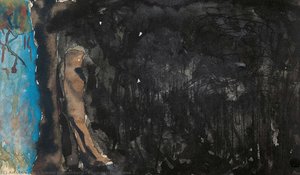
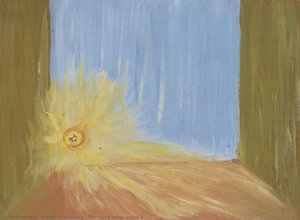
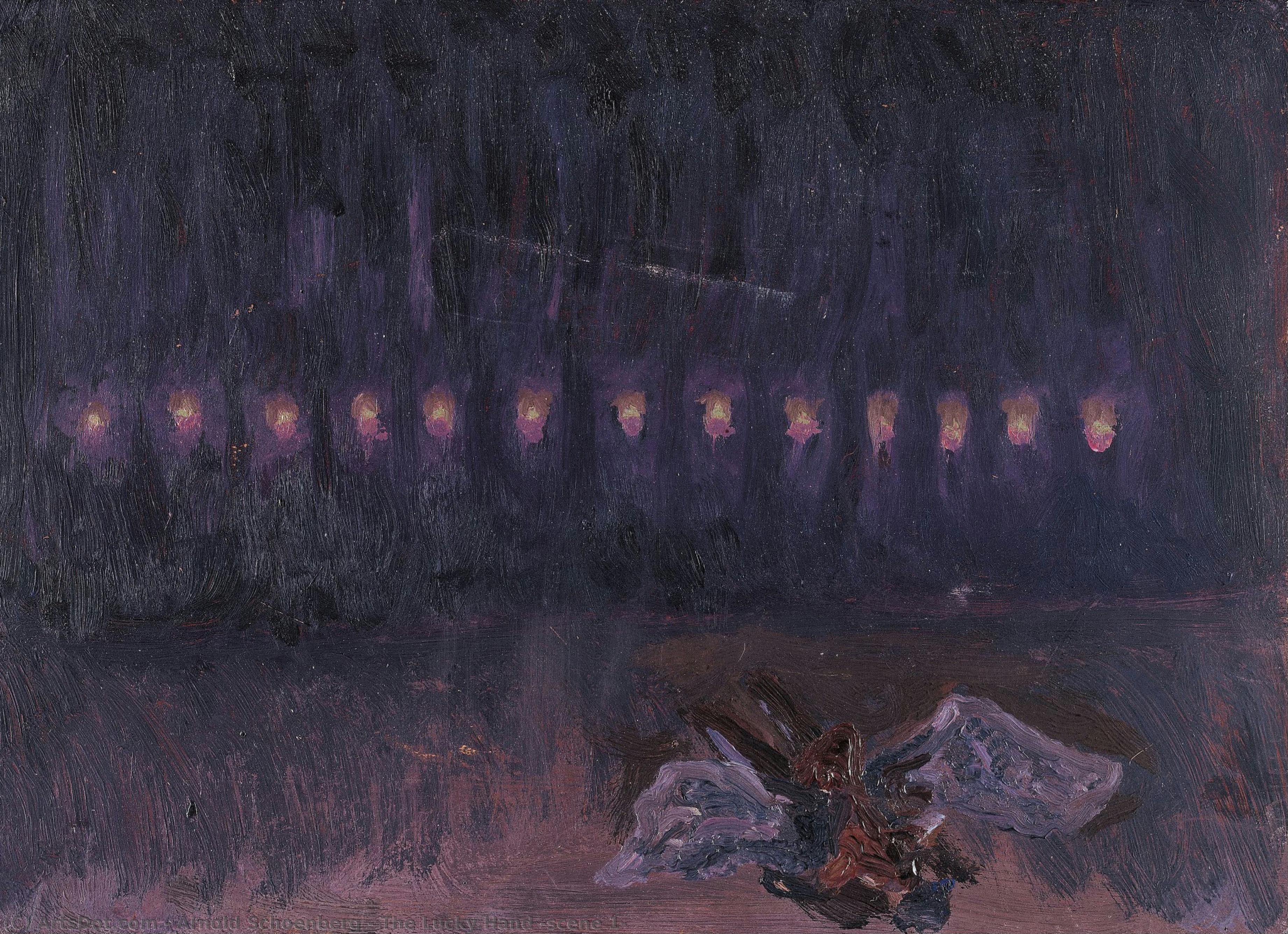
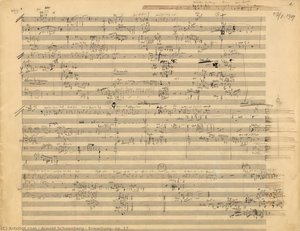
The Lucky Hand (scene 1)
 Acrylic On Canvas
- WallArt
- Expressionist Modernism
 1910
1910 30.0 x 21.0 cm
 Arnold Schönberg Center
 Read More
Hand Made Oil Reproduction
Hand-painted oil on canvas in your size and frame, made to order by our artists. ( Buy Print Buy Image)




P118B $10

P118H $10

P118W $10

P438Z $10

P508JH $12

P508YH $12

P805H $10

P805Z $10

P919BZ $10

P919G $10

P919XJ $10

P959ZH $10

P968JZ $12

W106C $8

W218G $10

W218JH $8

W218Y $10

W307PJ $10

W316G $10

W316PJ $8

W316Y $10

W398PJ $8

W4111J $10

W500HY $15

W500JH $15

W692G $12

W849H $8

W940BG $15

W953PJ $8




Pick from our preset sizes that match the artwork's original proportions.

You may enter your own dimensions to fit a specific frame or space. If your selected size does not match the original image's proportions, we will either crop the artwork or extend the painting with additional hand-painted elements. A digital mockup will be sent for your approval before production begins.
Please note that the on-screen preview does not reflect the actual cropping or extension. Only the mockup will accurately show the final composition.
While custom sizes are available, we recommend selecting a dimension from the predefined list to preserve the original proportions.
After order, ArtsDot.com team will email client for instructions and provide a mockup preview
Worldwide Delivery () in 3/4 weeks instead of standard 5 weeks. (16 August). No compromise on quality.

Free Worldwide Express Shipping

High-Quality Linen Canvas

Full Shipping Insurance

Customs Tax Refund Guarantee

True Color Matching Guarantee

60-Day Return Policy (Defects Only)

100% Money-Back Guarantee

Bulk Discount Offer
 Glass option is only available in size under 110 CM

The Lucky Hand (scene 1)
Reproduction Medium
Reproduction Size
-


Total Price
$ 263
Artwork Description
A Descent into the Unseen: "The Lucky Hand" (Scene 1) – A Reflection of Schönberg’s Dark Vision
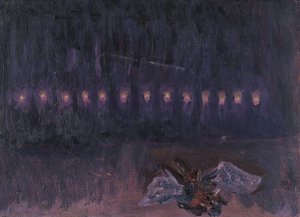
ArtsDot.com presents a meticulously crafted hand-painted reproduction of Arnold Schönberg's “The Lucky Hand” (Scene 1), a haunting tableau born from the composer’s intensely personal and profoundly unsettling drama, "Die glückliche Hand." Completed in 1910, this monochrome artwork transcends mere illustration; it is a visual embodiment of Schönberg’s exploration of fate, guilt, and the grotesque – themes that would dominate his later, more radical compositions. The scene, meticulously rendered in shades of grey and black, immediately draws the viewer into a space of palpable unease, mirroring the drama's core anxieties.
- Subject Matter: The artwork depicts a nightmarish scenario – a man lying prone on the stage, seemingly violated by a monstrous hybrid creature. This unsettling image is central to the play’s narrative, representing a descent into psychological torment and the consequences of transgression.
- Composition & Technique: Schönberg's meticulous attention to detail is evident in the layering of textures and the subtle manipulation of light and shadow. The use of a shallow curve for the stage emphasizes claustrophobia, while the strategically placed green-lit faces peering from behind the velvet curtain create an atmosphere of voyeurism and judgment. The artist’s skill lies in conveying both physical horror and psychological dread through a restrained palette.
Historical Context & Schönberg's Artistic Journey
Created during a period of immense artistic upheaval, “The Lucky Hand” reflects the broader anxieties of early 20th-century Europe. Schönberg was at the forefront of musical innovation, challenging traditional harmonic structures and paving the way for atonality – a compositional technique that abandoned established tonal centers. This radical shift mirrored a wider cultural questioning of established norms and values. Born in Vienna in 1874, Schönberg’s early works, such as “Verklärte Nacht,” demonstrated a synthesis of Brahmsian and Wagnerian influences before he fully embraced his revolutionary approach. The work's creation aligns with the period when Schönberg was developing his groundbreaking theories about tone color and exploring the expressive potential of dissonance – concepts that would profoundly impact 20th-century music.
Artist Information: Artist: Arnold Schönberg Birth Year: 1874 Death Year: 1951Symbolism & Emotional Resonance
The imagery within “The Lucky Hand” is laden with symbolic weight. The hyena-like creature, with its bat wings, represents a primal, almost demonic force – a manifestation of guilt and the subconscious. The man’s position, face down, suggests vulnerability and helplessness. The green light emanating from the hidden faces symbolizes judgment and the inescapable scrutiny of conscience. The candles, meticulously arranged on the wall, could represent fleeting moments of hope or perhaps the flickering remnants of sanity in the face of overwhelming darkness. The overall effect is profoundly unsettling, evoking a sense of dread and despair.
Dimensions & Acquisition
This hand-painted reproduction measures 30 x 21 cm (11.8 x 8.3 inches), making it ideal for a variety of settings – from intimate study spaces to larger art collections. Its monochrome palette lends itself beautifully to diverse interior design styles, offering a timeless and sophisticated aesthetic. Order your hand-painted reproduction of “The Lucky Hand” (Scene 1) today and bring this powerful work of art into your home or office.
Related Artworks
Artist Biography
early life and musical beginnings
arnold schoenberg, an austrian-american composer, was born on september 13, 1874, in vienna, austria. his early life was marked by a humble beginning, with his father being a shoe-shopkeeper. despite this, schoenberg's innate passion for music led him to largely self-educate himself in the field.- schoenberg explored film music and wrote more tonal music, completing his chamber symphony no. 2 in 1939.
- he satirized fascist tyrants in ode to napoleon (1942), after byron.
- post-war vienna offered him honorary citizenship, but he was ill, as depicted in his string trio (1946).
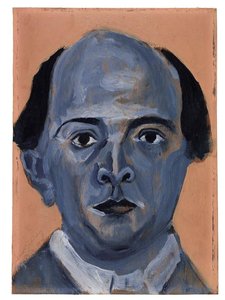
arnold schoenberg
1874 - 1951 , Austria
Quick Facts
- Artistic Movement Or Style: Twelve-tone technique; Expressionism
- Artists Or Movements Influenced By This Artist:
- Anton Webern
- Alban Berg
- Artists Who Influenced This Artist:
- Johannes Brahms
- Richard Wagner
- Date Of Birth: September 13, 1874
- Date Of Death: 1951
- Full Name: Arnold Schoenberg
- Nationality: Austrian-American
- Notable Artworks:
- Suite, op. 29
- Music Typewriter
- Staffliner
- Place Of Birth: Vienna, Austria
Related Articles

Giclée Prints: Archival Quality & Aesthetic Nuances for the Discerning Collector
Explore the world of giclée prints with ArtsDot. Learn about archival quality, aesthetic nuances & investment potential. Expert guidance for discerning art collectors seeking museum-quality reproductions and lasting value.

Dark Masterpieces: 10 Iconic Paintings Dominated by Black Tones |
Explore 10 iconic paintings dominated by black tones, from Rembrandt’s chiaroscuro to Goya's dark expressions. Discover the stories behind these masterpieces & find museum-quality art reproductions for your home at .

The Enduring Legacy of Fine Art Prints: Technique, History & Aesthetic Impact
Explore the rich history & techniques of fine art prints. Discover investment potential, assess authenticity, and learn how to preserve your collection with expert guidance. Trusted insights for discerning collectors.
Harmonies on Canvas: Exploring the Visual Representation of Music in Art History
Explore the fascinating history of music's visual representation in art! From ancient symbolism to modern abstraction, discover how artists have captured sound and emotion on canvas. Expert insights & stunning examples.

Echoes of Time: Exploring the Enduring Appeal & Historical Context of Vintage Art Prints
Explore the captivating world of vintage art prints! Discover their history, collecting tips & enduring appeal. Expert insights on chromolithography and building a legacy collection with ArtsDot.