 Send
Send Share
Share
 Details

 Download
 Similars
 Diaporama
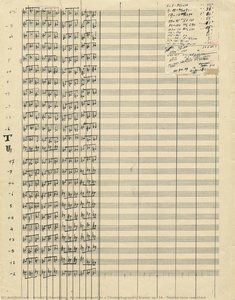
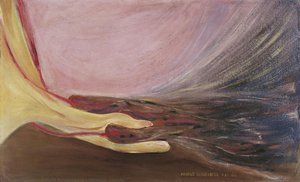
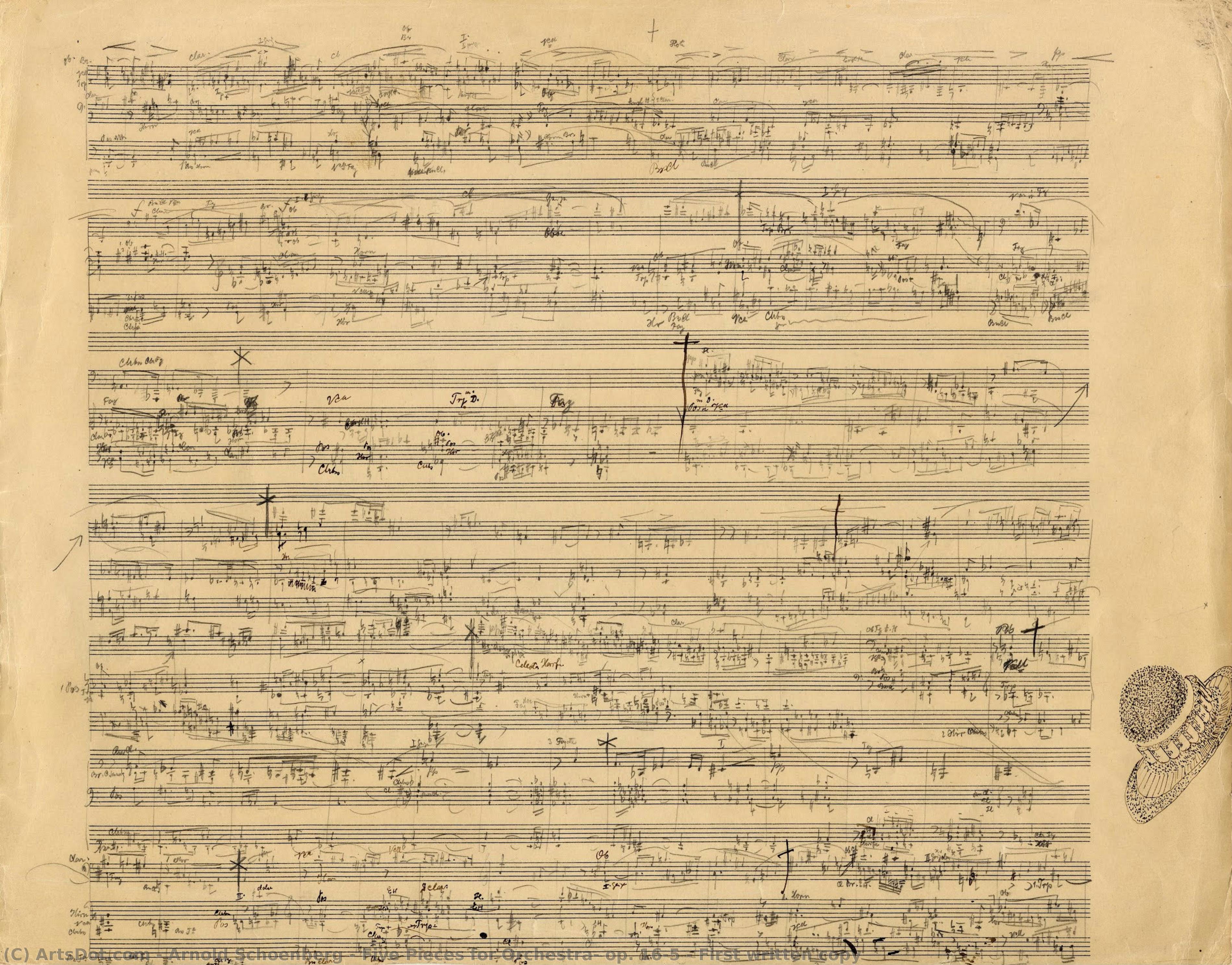
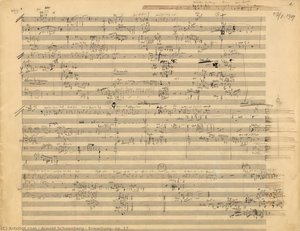
Five Pieces for Orchestra, op. 16/5 – First written copy
 Giclée Print
- Digital
- Expressionist Atonality
Expressionist Atonality
 1909
1909 36.0 x 28.0 cm
 Arnold Schönberg Center
 Read More
Hand Made Oil Reproduction
Hand-painted oil on canvas in your size and frame, made to order by our artists. ( Buy Print Buy Image)




































Pick from our preset sizes that match the artwork's original proportions.

You may enter your own dimensions to fit a specific frame or space. If your selected size does not match the original image's proportions, we will either crop the artwork or extend the painting with additional hand-painted elements. A digital mockup will be sent for your approval before production begins.
Please note that the on-screen preview does not reflect the actual cropping or extension. Only the mockup will accurately show the final composition.
While custom sizes are available, we recommend selecting a dimension from the predefined list to preserve the original proportions.
After order, ArtsDot.com team will email client for instructions and provide a mockup preview
Worldwide Delivery () in 3/4 weeks instead of standard 5 weeks. (16 August). No compromise on quality.

Free Worldwide Express Shipping

High-Quality Linen Canvas

Full Shipping Insurance

Customs Tax Refund Guarantee

True Color Matching Guarantee

60-Day Return Policy (Defects Only)

100% Money-Back Guarantee

Bulk Discount Offer
 Glass option is only available in size under 110 CM

Five Pieces for Orchestra, op. 16/5 – First written copy
Reproduction Medium
Reproduction Size
-


Total Price
$ 263
Artwork Description
A Window into Schoenberg's Revolutionary Soundscape
This meticulously crafted hand-painted reproduction offers an intimate glimpse into the genesis of Arnold Schoenberg’s groundbreaking “Five Pieces for Orchestra, op. 16/5,” a composition born from a summer of intense creative exploration in 1909. The original score, painstakingly preserved and now faithfully recreated, is not merely musical notation; it's a tangible artifact of a pivotal moment in the history of Western music – a testament to Schoenberg’s radical departure from traditional tonal harmony and his pioneering embrace of atonality.
- The Context: Steinakirchen 1909 The summer of 1909 found Schoenberg, alongside fellow modernist giants Zemlinsky, Berg, Webern, and Oppenheimer, sequestered in the idyllic Austrian village of Steinakirchen. This period proved extraordinarily productive, yielding not only the “Five Pieces” but also the Piano Piece op. 11 and the unsettling monodrama, *Erwartung* (Waiting), foreshadowing his later explorations into expressionism.
- Strauss’s Vision Schoenberg's correspondence with Richard Strauss reveals a deliberate intention to create music that eschewed grand symphonic structures. He envisioned “short orchestra pieces” – fleeting moments of color and mood, prioritizing emotional impact over architectural form. This directive shaped the very essence of *Five Pieces*.
- “Musical Prose” The score’s syntax is deliberately unconventional: atextonic melodies, thematic absence, and an emphasis on dynamic variation. Schoenberg termed this approach “musical prose,” describing it as music unlike anything heard before – a bold proclamation of new tonal beauty, seeking out unexpected accents and contrasts, and exploring previously uncharted emotional territories.
Decoding the Score: Technique and Style
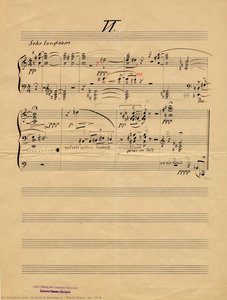
The hand-painted reproduction faithfully captures the intricate details of Schoenberg’s original score. The delicate lines representing individual notes, the precise placement of rests, and the nuanced markings indicating dynamics and tempo are rendered with exceptional care. The artist has skillfully recreated the characteristic handwriting style prevalent in early 20th-century musical scores, adding to the piece's historical authenticity. Note the use of clefs and staves – fundamental elements of musical notation that define the structure and organization of the composition.
- Material & Technique The reproduction utilizes archival quality paper mimicking the texture of period manuscripts, and traditional hand-painting techniques to achieve a level of detail and nuance that digital reproductions simply cannot replicate.
- Color Palette While a black and white photograph represents the original score, this reproduction employs a subtle tonal palette – primarily grays and browns – evocative of aged parchment, further enhancing its historical feel.
Symbolism and Emotional Resonance
More than just a musical score, this piece embodies Schoenberg’s revolutionary spirit. The “Five Pieces” represent a deliberate rejection of established conventions, a fearless exploration of dissonance and atonality, and an attempt to capture the raw essence of human emotion without the constraints of traditional harmony. The emphasis on "speaking music," as Schoenberg himself described it, suggests a desire for direct communication – a musical language that transcends words and speaks directly to the listener’s soul.
- Atonality's Impact The piece exemplifies atonality, a compositional technique where no single note is inherently "correct" or establishes a tonal center. This creates a sense of instability and ambiguity, reflecting the anxieties and uncertainties of the modern age.
- Emotional Intensity Despite its unconventional structure, the score conveys a profound emotional intensity – a blend of melancholy, longing, and perhaps even a hint of unease. The carefully crafted dynamics and melodic contours contribute to this powerful effect.
Dimensions & Acquisition
This hand-painted reproduction measures 36 x 28 cm (14 x 11 inches), making it suitable for display in a variety of settings – from private study to art gallery. It’s an ideal addition to any collection of modern art, musical memorabilia, or simply as a conversation starter.
Related Artworks
Artist Biography
early life and musical beginnings
arnold schoenberg, an austrian-american composer, was born on september 13, 1874, in vienna, austria. his early life was marked by a humble beginning, with his father being a shoe-shopkeeper. despite this, schoenberg's innate passion for music led him to largely self-educate himself in the field.- schoenberg explored film music and wrote more tonal music, completing his chamber symphony no. 2 in 1939.
- he satirized fascist tyrants in ode to napoleon (1942), after byron.
- post-war vienna offered him honorary citizenship, but he was ill, as depicted in his string trio (1946).
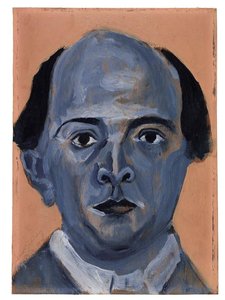
arnold schoenberg
1874 - 1951 , Austria
Quick Facts
- Artistic Movement Or Style: Twelve-tone technique; Expressionism
- Artists Or Movements Influenced By This Artist:
- Anton Webern
- Alban Berg
- Artists Who Influenced This Artist:
- Johannes Brahms
- Richard Wagner
- Date Of Birth: September 13, 1874
- Date Of Death: 1951
- Full Name: Arnold Schoenberg
- Nationality: Austrian-American
- Notable Artworks:
- Suite, op. 29
- Music Typewriter
- Staffliner
- Place Of Birth: Vienna, Austria
Related Articles

Giclée Prints: Archival Quality & Aesthetic Nuances for the Discerning Collector
Explore the world of giclée prints with ArtsDot. Learn about archival quality, aesthetic nuances & investment potential. Expert guidance for discerning art collectors seeking museum-quality reproductions and lasting value.
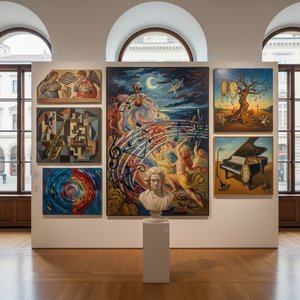
Harmonies on Canvas: Exploring the Visual Representation of Music in Art History
Explore the fascinating history of music's visual representation in art! From ancient symbolism to modern abstraction, discover how artists have captured sound and emotion on canvas. Expert insights & stunning examples.

The Enduring Legacy of Fine Art Prints: Technique, History & Aesthetic Impact
Explore the rich history & techniques of fine art prints. Discover investment potential, assess authenticity, and learn how to preserve your collection with expert guidance. Trusted insights for discerning collectors.

Echoes of Time: Exploring the Enduring Appeal & Historical Context of Vintage Art Prints
Explore the captivating world of vintage art prints! Discover their history, collecting tips & enduring appeal. Expert insights on chromolithography and building a legacy collection with ArtsDot.
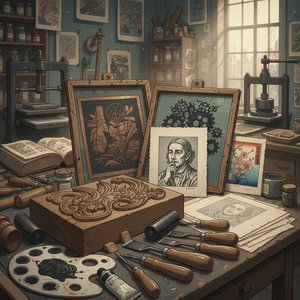
The Enduring Legacy of Printmaking: Techniques, Themes & Artistic Innovation Across Centuries
Explore the rich history of printmaking with ArtsDot. Discover techniques from intaglio to lithography, learn about collecting valuable prints & find museum-quality reproductions. Expert insights for art enthusiasts and collectors.