
The Ancient Roots: Music's Divine Origins in Early Art
Over the millennia of its development, Hinduism has adopted several iconic symbols, forming part of Hindu iconography, that are imbued with spiritual meaning based on either the scriptures or cultural traditions. The exact significance accorded to a...
Long before the advent of musical notation as we know it, music existed as an ethereal force—a vibration woven into the fabric of creation itself. Early civilizations didn’t merely *represent* music in their art; they sought to embody its very essence. In ancient Greece, the Muses, daughters of Zeus and Mnemosyne (Memory), were the patrons of the arts, each presiding over a different aspect of creative endeavor, with music at their core. Apollo, god of music, poetry, light, and healing, wielded the lyre not just as an instrument but as a symbol of order and harmony in a chaotic world. Depictions of Orpheus charming wild beasts with his melodies weren’t simply illustrations of a myth; they were visual testaments to music's power to transcend boundaries and pacify even the most untamed spirits. This belief in music’s transformative capabilities permeated religious iconography, laying the foundation for its enduring presence in art across cultures.
Moving eastward, we find equally profound connections between music and spirituality in Hindu traditions. Hindu iconography is replete with symbols imbued with spiritual meaning, often directly linked to sound and vibration. The Om (ॐ) symbol, representing the primordial sound of the universe, isn’t merely a visual element but a sonic one—a mantra believed to contain all creation within its resonance. Murtis, sacred representations of deities, are not simply idols but vessels for divine energy, often depicted with instruments like veenas or flutes, signifying their connection to cosmic harmony. The tilaka, vibhuti and rudraksha also represent devotion and the spiritual power of music in Hindu culture.
Baroque Brilliance: Capturing Sound, Drama, and Aristocratic Life
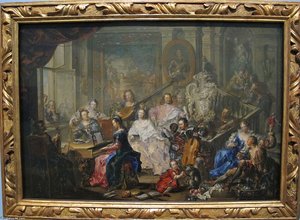 Concerto
Explore 'Concerto' by Johann Georg Platzer – a lavish Baroque oil painting of aristocratic music-making. Rich colors, dramatic lighting & intricate detail capture 18th-century leisure.
The Baroque period (roughly 1600-1750) witnessed an explosion of artistic expression fueled by a desire to evoke emotion and grandeur. This era wasn’t content with simply depicting music; it aimed to *capture* its very energy—the drama, the passion, the sheer exuberance of sound. Artists like Johann Georg Platzer, in his lavish oil painting “Concerto,” offer a glimpse into aristocratic leisure, showcasing musicians engaged in performance. The rich colors, dramatic lighting, and intricate detail aren’t merely aesthetic choices; they are deliberate attempts to convey the opulence and sophistication of 18th-century musical life. The figures themselves seem caught in the act of creation, their expressions reflecting the intensity of the moment.
This fascination with capturing movement and emotion aligns perfectly with the broader characteristics of Baroque art. As explored in detail by art historians, Baroque Realism prioritized illusion and dramatic transformation. Artists like Caravaggio and Rubens masterfully employed techniques such as chiaroscuro (the use of strong contrasts between light and dark) to create a sense of depth and dynamism. In musical scenes, this translated into depictions of heightened emotion—faces contorted in ecstasy, bodies caught mid-gesture, instruments gleaming under the spotlight. The period’s emphasis on theatricality extended beyond religious subjects, permeating genre scenes and portraits alike.
Iconography of Instruments: Deciphering Meaning Through Visual Clues
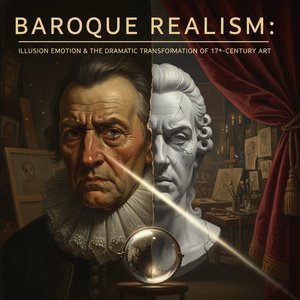 Baroque Realism: Illusion, Emotion & the Dramatic Transformation of 17th-Century Art
Explore the dramatic world of Baroque Realism! Discover iconic artists like Caravaggio & Rubens, their techniques, and the movement's lasting impact on art history. Expert insights for collectors & enthusiasts.
Beyond simply representing musical performances, artists embedded deeper meaning into their work through the careful selection and depiction of instruments. The lyre, as previously mentioned, carried connotations of Apollo, harmony, and divine inspiration. The lute, popular during the Renaissance and Baroque periods, often symbolized love, courtship, and refinement. Wind instruments, such as flutes and oboes, were frequently associated with pastoral scenes and idealized landscapes, evoking a sense of tranquility and natural beauty. However, it’s crucial to remember that symbolism wasn't static; its interpretation varied depending on the context and cultural traditions.
Winternitz’s extensive documentation of musical instruments in visual arts highlights the importance of iconography as a source for music history. By meticulously analyzing depictions of instruments across centuries, scholars can glean valuable insights into their construction, playing techniques, and social significance. For example, subtle details—the way an instrument is held, the presence or absence of specific ornamentation—can reveal clues about its intended use and the status of the musician. Studying these visual cues allows us to reconstruct a more nuanced understanding of musical practices in past eras.
From Abstract Expressionism to Sound Art: Modern Interpretations of Musicality
Sound art is an artistic activity in which sound is utilized as a primary time-based medium or material. Like many genres of contemporary art, sound art may be interdisciplinary in nature, or be used in hybrid forms. According to Brandon LaBelle, sou...
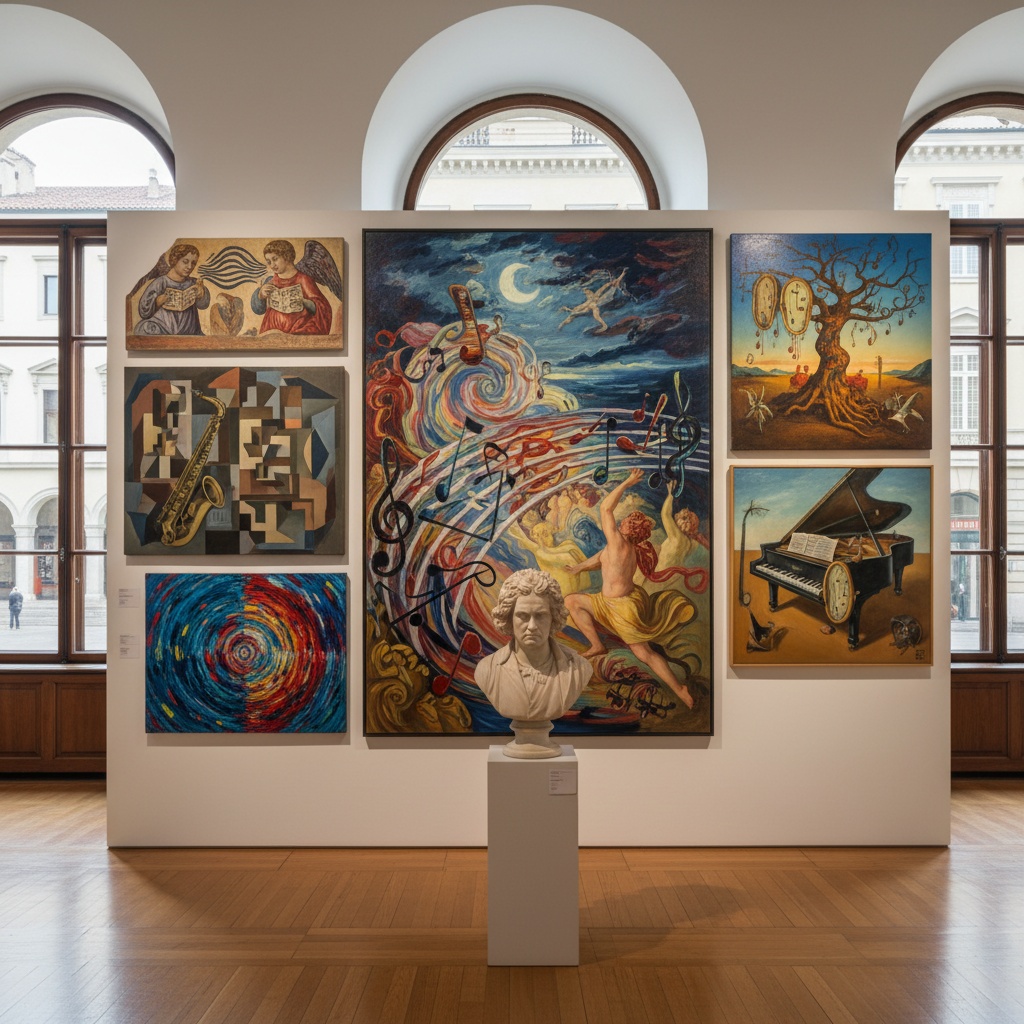
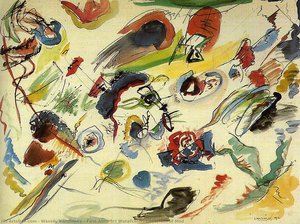
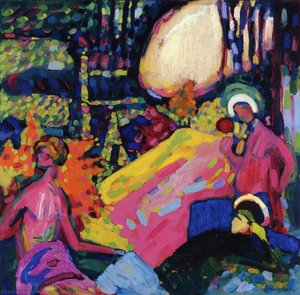
The 20th century witnessed a radical departure from traditional artistic conventions, with artists increasingly exploring abstract forms and challenging the boundaries between disciplines. Abstract Expressionists like Wassily Kandinsky sought to translate the intangible qualities of music—rhythm, harmony, emotion—into purely visual terms. Kandinsky believed that colors and shapes could evoke musical notes and emotional responses, creating paintings that resonated with a similar energy as orchestral pieces. His works are filled with dynamic compositions and bold hues, inviting viewers to experience art through a synesthetic lens.
This exploration of the relationship between sound and vision culminated in the emergence of Sound Art—an artistic activity where sound is utilized as the primary medium. From Luigi Russolo’s Intonarumori noise intoners in 1913 to contemporary installations that immerse audiences in sonic landscapes, Sound Art challenges our conventional understanding of music and art. It interrogates the very condition of sound, exploring its physical properties, psychological effects, and cultural significance. This movement represents a fascinating evolution from simply depicting music to actively creating it as an artistic experience.
Beyond Representation: Music as Emotional Landscape in Painting
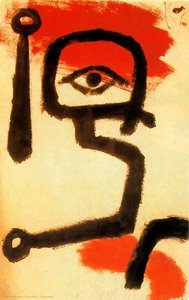
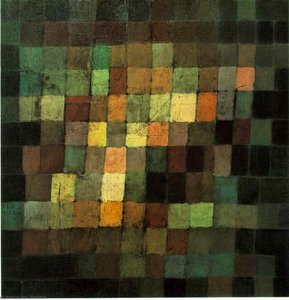
Ultimately, the enduring appeal of music in art lies not merely in its representation but in its ability to evoke emotion and create a sense of atmosphere. Artists throughout history have recognized that music can serve as a powerful catalyst for feeling—a means of expressing joy, sorrow, longing, or spiritual transcendence. Whether it’s Ribera's depiction of King David pouring his soul into a psalm, or Klee’s playful exploration of musical rhythms, the underlying goal is to connect with viewers on an emotional level.
The works in The Klesch Collection and beyond demonstrate that music isn’t simply a subject matter for artists; it's a fundamental aspect of the human experience. By exploring its visual representation across cultures and eras, we gain a deeper understanding not only of art history but also of ourselves—our capacity for emotion, our connection to spirituality, and our enduring fascination with the power of sound. At ArtsDot.com, we are dedicated to bringing these masterpieces closer to you, allowing you to experience the harmonies on canvas firsthand.