 Preview
 Send
Send Share
Share
 Details

 Download
 Similars
 X-Ray
X-Ray Diaporama
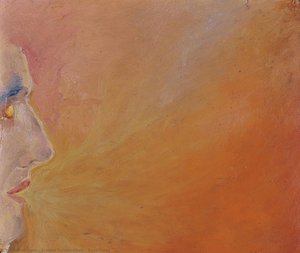
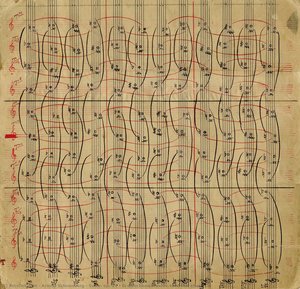
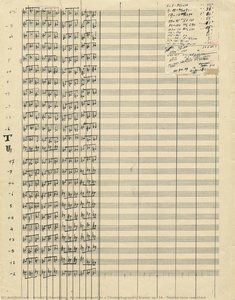
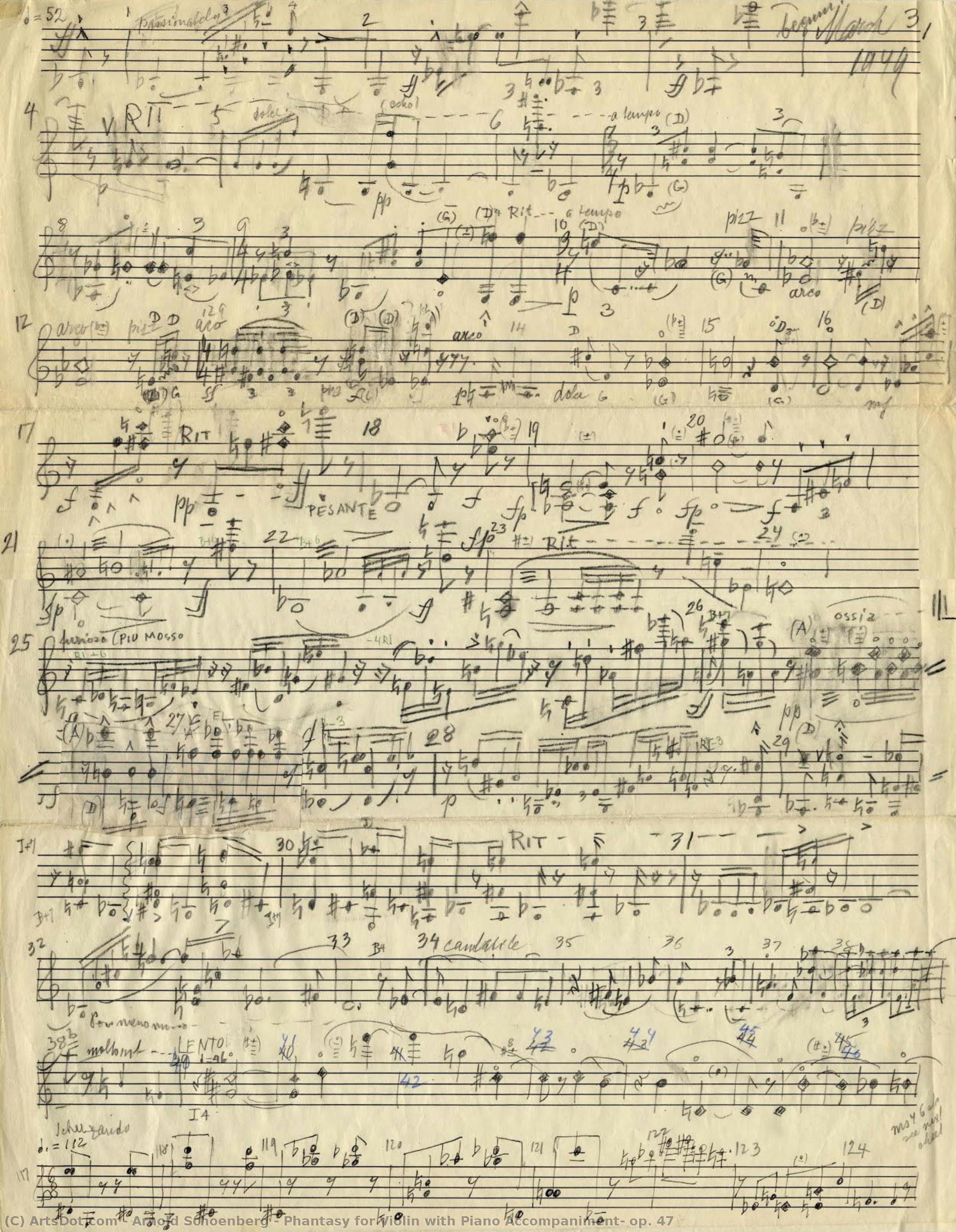
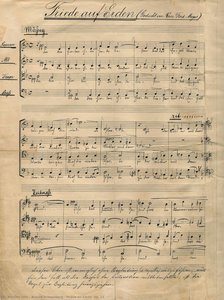
Phantasy for Violin with Piano Accompaniment, op. 47
 Acrylic On Canvas
- WallArt
- Expressionist Modernism
 1949
1949- 19th Century
 43.0 x 46.0 cm
 Arnold Schönberg Center
 Read More
Hand Made Oil Reproduction
Hand-painted oil on canvas in your size and frame, made to order by our artists. ( Buy Print Buy Image)




P118B $10

P118H $10

P118W $10

P438Z $10

P508JH $12

P508YH $12

P805H $10

P805Z $10

P919BZ $10

P919G $10

P919XJ $10

P959ZH $10

P968JZ $12

W106C $8

W218G $10

W218JH $8

W218Y $10

W307PJ $10

W316G $10

W316PJ $8

W316Y $10

W398PJ $8

W4111J $10

W500HY $15

W500JH $15

W692G $12

W849H $8

W940BG $15

W953PJ $8




Pick from our preset sizes that match the artwork's original proportions.

You may enter your own dimensions to fit a specific frame or space. If your selected size does not match the original image's proportions, we will either crop the artwork or extend the painting with additional hand-painted elements. A digital mockup will be sent for your approval before production begins.
Please note that the on-screen preview does not reflect the actual cropping or extension. Only the mockup will accurately show the final composition.
While custom sizes are available, we recommend selecting a dimension from the predefined list to preserve the original proportions.
After order, ArtsDot.com team will email client for instructions and provide a mockup preview
Worldwide Delivery () in 3/4 weeks instead of standard 5 weeks. (16 August). No compromise on quality.

Free Worldwide Express Shipping

High-Quality Linen Canvas

Full Shipping Insurance

Customs Tax Refund Guarantee

True Color Matching Guarantee

60-Day Return Policy (Defects Only)

100% Money-Back Guarantee

Bulk Discount Offer
 Glass option is only available in size under 110 CM

Phantasy for Violin with Piano Accompaniment, op. 47
Reproduction Medium
Reproduction Size
-


Total Price
$ 263
Artwork Description
A Fragment of Genius: Schönberg’s ‘Phantasy for Violin with Piano Accompaniment’
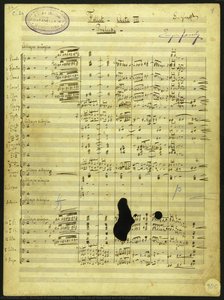
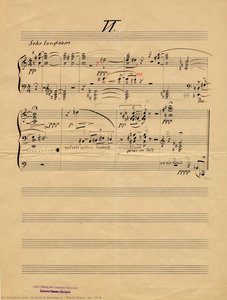
This meticulously crafted hand-painted reproduction captures a pivotal moment in the oeuvre of Arnold Schoenberg, a composer who irrevocably altered the landscape of 20th-century music. The piece, “Phantasy for Violin with Piano Accompaniment,” op. 47, born from a commission in 1949, represents more than just a musical composition; it’s a tangible link to a brilliant mind grappling with radical innovation and profound personal transformation. The photograph itself – a stark black-and-white image of the handwritten sheet music – immediately draws us into Schoenberg's creative process, revealing the intricate architecture of his sonic vision. The German script, a testament to his Viennese roots, adds an element of historical weight, grounding the abstract musical ideas in a specific cultural and intellectual context.
Technical Innovation and Atonal Exploration
Schoenberg’s compositional methods, meticulously documented within the manuscript sources, reveal a deliberate exploration of sound. The ‘Phantasy’ is characterized by a breathtaking technical range – from the demanding double-stopping of vast intervals to the ethereal beauty of harmonics and glissandi. The use of pizzicato and tremolo effects adds layers of texture, creating a delicate yet powerfully expressive soundscape. This wasn't simply composing music; it was an experiment in pushing the boundaries of tonal harmony, anticipating the developments of serialism that would dominate much of the mid-20th century. The inclusion of complex chord arpeggios demonstrates Schoenberg’s mastery of counterpoint and his ability to create intricate musical structures even within an atonal framework.
Context: Exile and a Birthday Gift
The creation of this ‘Phantasy’ is inextricably linked to Schoenberg's personal history. Having emigrated to the United States in 1933, fleeing the rising tide of Nazism, he was still deeply connected to his past. The commission from violinist Adolph Koldofsky, a figure Schoenberg regarded as an “ideal interpreter,” provided a crucial outlet for creative expression during this period of displacement. The piece’s premiere, coinciding with Schoenberg's 75th birthday in 1949, underscores the significance of this work – a testament to his enduring artistic spirit and a poignant reflection on a life dedicated to musical innovation.
Symbolism and Emotional Resonance
While rooted in atonality, “Phantasy” possesses an undeniable emotional depth. The rapid shifts in dynamics, the unsettling intervals, and the fragmented melodies evoke a sense of unease and longing – mirroring perhaps Schoenberg’s own experiences as an exile. The photograph itself, with its focus on the handwritten notation, symbolizes the act of creation, the struggle to translate abstract musical ideas into concrete form. This reproduction offers not just a visual representation of the music but also a window into the soul of one of the 20th century’s most influential composers.
Related Artworks
Artist Biography
early life and musical beginnings
arnold schoenberg, an austrian-american composer, was born on september 13, 1874, in vienna, austria. his early life was marked by a humble beginning, with his father being a shoe-shopkeeper. despite this, schoenberg's innate passion for music led him to largely self-educate himself in the field.- schoenberg explored film music and wrote more tonal music, completing his chamber symphony no. 2 in 1939.
- he satirized fascist tyrants in ode to napoleon (1942), after byron.
- post-war vienna offered him honorary citizenship, but he was ill, as depicted in his string trio (1946).
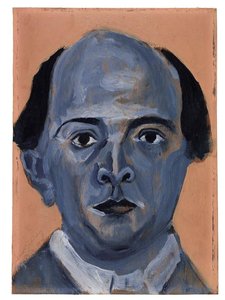
arnold schoenberg
1874 - 1951 , Austria
Quick Facts
- Artistic Movement Or Style: Twelve-tone technique; Expressionism
- Artists Or Movements Influenced By This Artist:
- Anton Webern
- Alban Berg
- Artists Who Influenced This Artist:
- Johannes Brahms
- Richard Wagner
- Date Of Birth: September 13, 1874
- Date Of Death: 1951
- Full Name: Arnold Schoenberg
- Nationality: Austrian-American
- Notable Artworks:
- Suite, op. 29
- Music Typewriter
- Staffliner
- Place Of Birth: Vienna, Austria
Related Articles

Giclée Prints: Archival Quality & Aesthetic Nuances for the Discerning Collector
Explore the world of giclée prints with ArtsDot. Learn about archival quality, aesthetic nuances & investment potential. Expert guidance for discerning art collectors seeking museum-quality reproductions and lasting value.

Dark Masterpieces: 10 Iconic Paintings Dominated by Black Tones |
Explore 10 iconic paintings dominated by black tones, from Rembrandt’s chiaroscuro to Goya's dark expressions. Discover the stories behind these masterpieces & find museum-quality art reproductions for your home at .
Harmonies on Canvas: Exploring the Visual Representation of Music in Art History
Explore the fascinating history of music's visual representation in art! From ancient symbolism to modern abstraction, discover how artists have captured sound and emotion on canvas. Expert insights & stunning examples.

The Enduring Legacy of Fine Art Prints: Technique, History & Aesthetic Impact
Explore the rich history & techniques of fine art prints. Discover investment potential, assess authenticity, and learn how to preserve your collection with expert guidance. Trusted insights for discerning collectors.
Neo-Classicism's Greatest Hits: 10 Masterpieces for Your Home |
Journey through Neo-Classicism's finest! Explore 10 iconic masterpieces by David, Ingres & Canova. Discover art history, techniques & timeless beauty – perfect for inspiring your home decor. Find museum-quality reproductions at