 Preview
 Send
Send Share
Share
 Details

 Download
 Similars
 X-Ray
X-Ray Diaporama
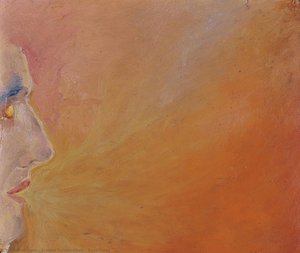
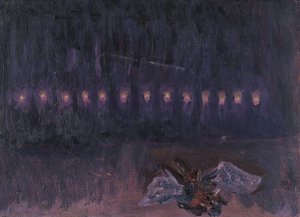
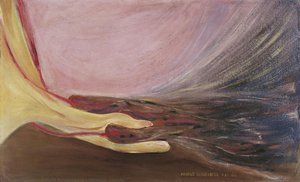
Piano Piece, op. 19/6
 Acrylic On Canvas
- WallArt
- Expressionist Modernism
 1911
1911 25.0 x 32.0 cm
 Arnold Schönberg Center
 Read More
Hand Made Oil Reproduction
Hand-painted oil on canvas in your size and frame, made to order by our artists. ( Buy Print Buy Image)




P118B $10

P118H $10

P118W $10

P438Z $10

P508JH $12

P508YH $12

P805H $10

P805Z $10

P919BZ $10

P919G $10

P919XJ $10

P959ZH $10

P968JZ $12

W106C $8

W218G $10

W218JH $8

W218Y $10

W307PJ $10

W316G $10

W316PJ $8

W316Y $10

W398PJ $8

W4111J $10

W500HY $15

W500JH $15

W692G $12

W849H $8

W940BG $15

W953PJ $8




Pick from our preset sizes that match the artwork's original proportions.

You may enter your own dimensions to fit a specific frame or space. If your selected size does not match the original image's proportions, we will either crop the artwork or extend the painting with additional hand-painted elements. A digital mockup will be sent for your approval before production begins.
Please note that the on-screen preview does not reflect the actual cropping or extension. Only the mockup will accurately show the final composition.
While custom sizes are available, we recommend selecting a dimension from the predefined list to preserve the original proportions.
After order, ArtsDot.com team will email client for instructions and provide a mockup preview
Worldwide Delivery () in 3/4 weeks instead of standard 5 weeks. (17 August). No compromise on quality.

Free Worldwide Express Shipping

High-Quality Linen Canvas

Full Shipping Insurance

Customs Tax Refund Guarantee

True Color Matching Guarantee

60-Day Return Policy (Defects Only)

100% Money-Back Guarantee

Bulk Discount Offer
 Glass option is only available in size under 110 CM

Piano Piece, op. 19/6
Reproduction Medium
Reproduction Size
-


Total Price
$ 263
Artwork Description
A Moment of Reflection: Schönberg's "Piano Piece, op. 19/6" – A Window into Grief and Innovation
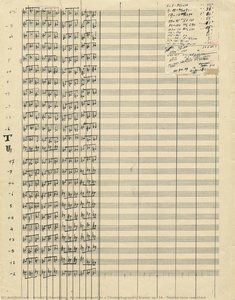
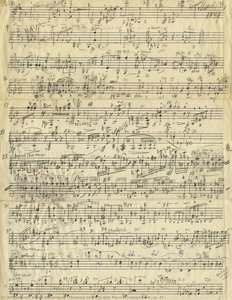
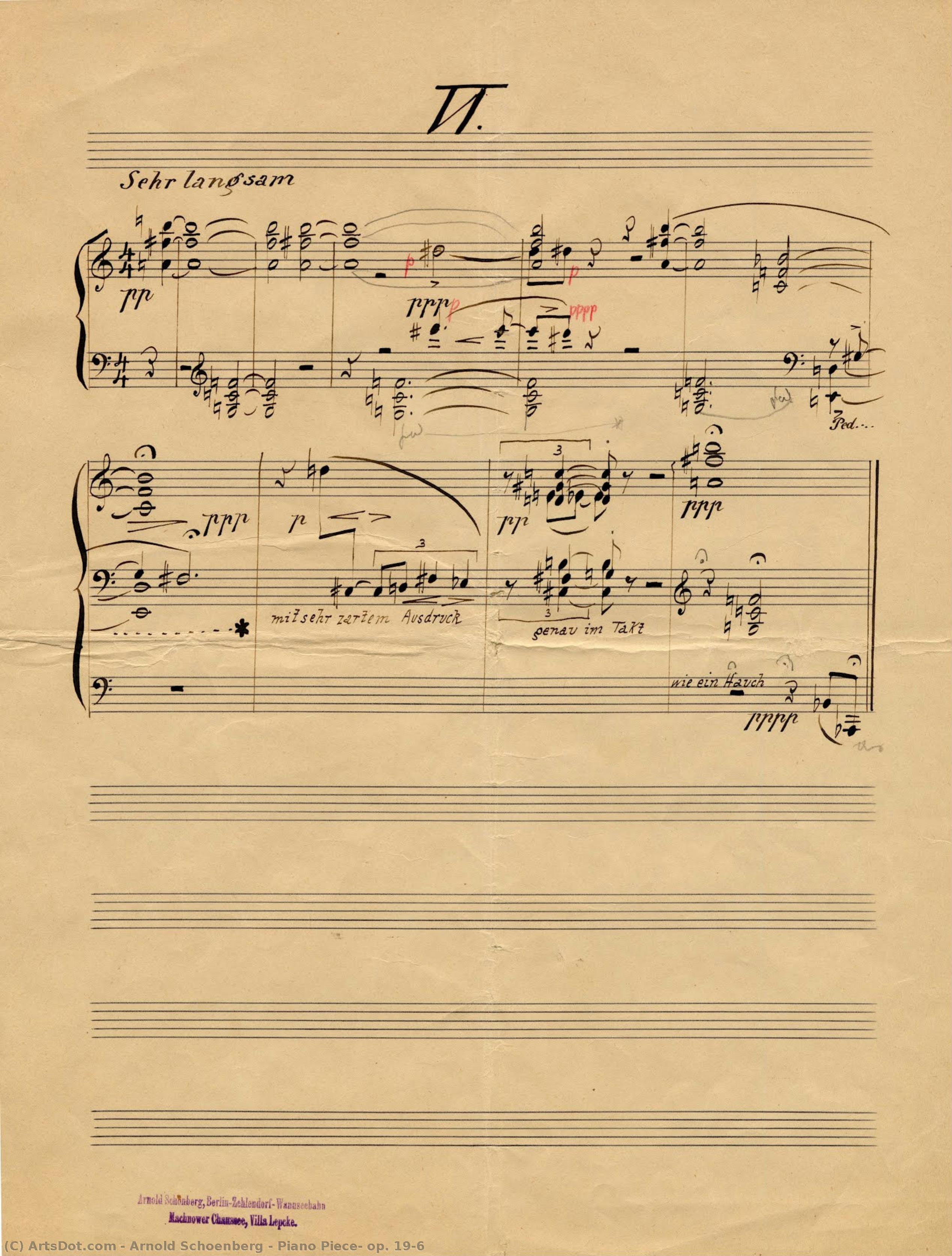
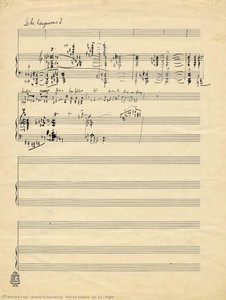
This meticulously crafted hand-painted reproduction captures Arnold Schönberg’s poignant “Piano Piece, op. 19/6,” a deceptively simple work born from a moment of profound grief and artistic experimentation. Created in 1911, shortly after the death of Gustav Mahler – a figure Schönberg deeply revered as both mentor and friend – the piece offers a rare glimpse into the composer’s emotional landscape during a period of intense creative upheaval. The image presented here isn't merely a musical score; it’s a tangible echo of a time when atonality was being forged, and the very foundations of Western harmony were being challenged.
- Historical Context: 1911 Vienna was a crucible of artistic innovation. Schönberg, along with Alban Berg and Anton Webern, spearheaded the Second Viennese School, rejecting traditional tonal structures in favor of new approaches to composition. Mahler’s untimely death deeply affected Schönberg, prompting this intensely personal response.
- The Miniature's Significance: The “Piano Pieces, op. 19” are remarkable for their brevity and aphoristic nature. Schönberg himself described them as a necessary space for Webern to "have time" to compose, highlighting the importance of dedicated creative periods. These pieces represent a crucial transitional phase in Schönberg’s career, foreshadowing his later dodecaphonic works while retaining a melodic sensibility.
- Technique and Detail: The reproduction faithfully recreates the original music sheet – a pale yellow expanse punctuated by meticulously rendered black musical notes. The inclusion of a stylized piano keyboard adds another layer of visual interest, emphasizing the intimate nature of the composition. The handwritten aesthetic lends an air of authenticity and invites the viewer to imagine Schönberg’s hand guiding the pen across the paper.
A Symphony of Emotion – Decoding the Symbolism
Beyond its musical merit, “Piano Piece, op. 19/6” is laden with symbolic weight. The piece's creation coincided with Mahler’s death, a loss that profoundly impacted Schönberg. The miniature format and fragmented melodies can be interpreted as reflections of grief – a scattering of memories and emotions struggling to coalesce into a coherent whole. The shift from expansive harmonies to epigrammatic forms mirrors the composer’s evolving artistic philosophy, moving away from grand symphonic structures towards more concise and emotionally direct expressions.
- Mahler's Influence: Schönberg’s deep respect for Mahler is evident throughout this work. The piece can be seen as a subtle homage to Mahler’s legacy, particularly his willingness to push boundaries and challenge conventional musical norms.
- Atonality as Expression: The use of atonality in the “Piano Pieces” wasn't simply an intellectual exercise; it was a deliberate attempt to convey emotional intensity without relying on traditional harmonic resolutions. This reflects Schönberg’s belief that music could express profound feelings beyond the limitations of established tonal systems.
Artistic Reproduction – Quality and Craftsmanship
This hand-painted reproduction is more than just an image; it's a meticulously crafted work of art in its own right. Utilizing traditional painting techniques, each detail—from the texture of the paper to the delicate rendering of the musical notes—is faithfully reproduced with exceptional accuracy. The size of 25 x 32 cm makes this piece ideal for display on a desk, shelf, or as part of a larger collection of classical music memorabilia.
- Materials: Printed on high-quality archival paper to ensure lasting vibrancy and color fidelity.
- Hand-Painted Detail: Each reproduction is painstakingly hand-painted by skilled artisans, guaranteeing a level of detail and nuance unattainable through digital printing methods.
- Perfect for Collectors & Design: This artwork will be a stunning addition to any music lover's collection or a sophisticated accent piece in an interior design setting.
Specifications
Title: Piano Piece, op. 19/6Artist: Arnold Schönberg
Date: 1911
Size: 25 x 32 cm
Technique: Hand-Painted Reproduction
Materials: Archival Paper, Pigments
Related Artworks
Artist Biography
early life and musical beginnings
arnold schoenberg, an austrian-american composer, was born on september 13, 1874, in vienna, austria. his early life was marked by a humble beginning, with his father being a shoe-shopkeeper. despite this, schoenberg's innate passion for music led him to largely self-educate himself in the field.- schoenberg explored film music and wrote more tonal music, completing his chamber symphony no. 2 in 1939.
- he satirized fascist tyrants in ode to napoleon (1942), after byron.
- post-war vienna offered him honorary citizenship, but he was ill, as depicted in his string trio (1946).
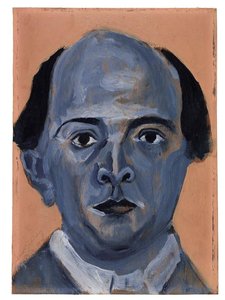
arnold schoenberg
1874 - 1951 , Austria
Quick Facts
- Artistic Movement Or Style: Twelve-tone technique; Expressionism
- Artists Or Movements Influenced By This Artist:
- Anton Webern
- Alban Berg
- Artists Who Influenced This Artist:
- Johannes Brahms
- Richard Wagner
- Date Of Birth: September 13, 1874
- Date Of Death: 1951
- Full Name: Arnold Schoenberg
- Nationality: Austrian-American
- Notable Artworks:
- Suite, op. 29
- Music Typewriter
- Staffliner
- Place Of Birth: Vienna, Austria
Related Articles

Victor Vasarely: Pioneering Op Art & Democratizing Visual Experience
Explore the revolutionary world of Victor Vasarely, father of Op Art. Discover his geometric masterpieces, artistic system, & lasting impact on modern design. A guide for discerning art collectors.

Secure Your Legacy with ArtsDot's 30-Day Money-Back Guarantee – Full Refunds, Free Replacements, No Shipping Risk for Elite Collectors
Experience unparalleled art craftsmanship with ArtsDot’s 30‑Day Money‑Back Guarantee—full refunds, free replacements, and zero shipping risk for elite collectors. Trust our master artists, secure your legacy, and invest in timeless beauty.

Terms & Conditions
Discover clear, expert Terms & Conditions for hand-painted reproductions, prints, and custom portraits. Trustworthy, secure payments, free worldwide shipping, 30-day money-back guarantee, and transparent policies designed for art lovers and collectors.

ArtsDot.com F.A.Q.: Hassle-Free International Customs & Duty Refunds
Discover ArtsDot.com's seamless international shipping solutions for elite collectors. Learn how we ensure a hassle-free experience with 100% customs and duty refunds, expert documentation, and secure global delivery of fine art reproductions.

F.A.Q.: Does Offer Free Art Consultation? Elevate Your Collection with Expert Guidance.
Elevate your art collection with 's free expert consultation! Our advisors guide elite collectors through personalized selection, investment potential & bespoke creations. Discover trusted artistry and unparalleled service.