 Preview
 Send
Send Share
Share
 Details

 Download
 Similars
 X-Ray
X-Ray Diaporama
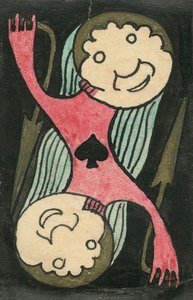
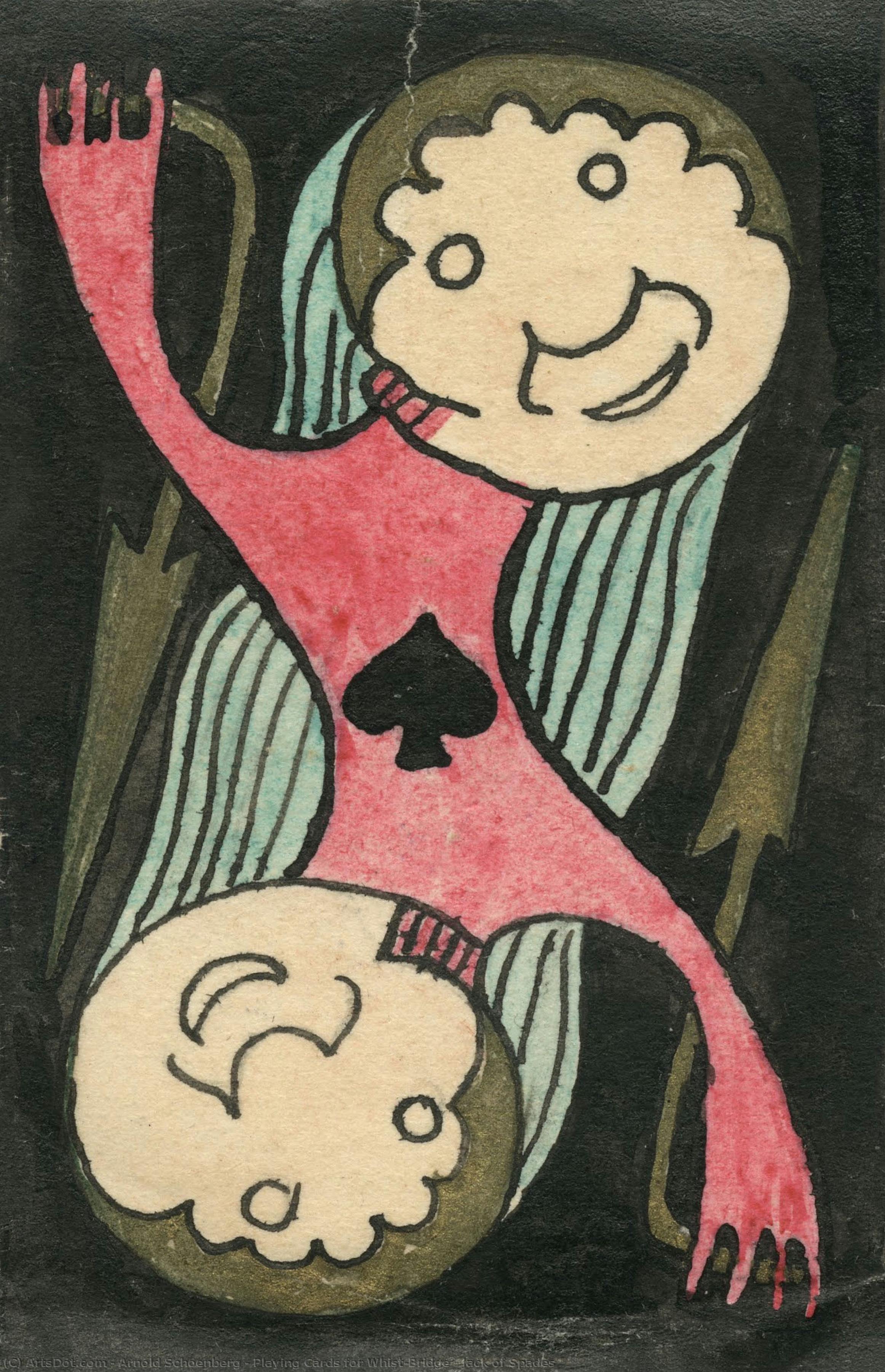
Playing Cards for Whist/Bridge - Jack of Spades
 Expressionism
 1910
1910- Modern
 4.0 x 6.0 cm
 Arnold Schönberg Center
 Read More
Hand Made Oil Reproduction
Hand-painted oil on canvas in your size and frame, made to order by our artists. ( Buy Print Buy Image)




P118B $10

P118H $10

P118W $10

P438Z $10

P508JH $12

P508YH $12

P805H $10

P805Z $10

P919BZ $10

P919G $10

P919XJ $10

P959ZH $10

P968JZ $12

W106C $8

W218G $10

W218JH $8

W218Y $10

W307PJ $10

W316G $10

W316PJ $8

W316Y $10

W398PJ $8

W4111J $10

W500HY $15

W500JH $15

W692G $12

W849H $8

W940BG $15

W953PJ $8




Pick from our preset sizes that match the artwork's original proportions.

You may enter your own dimensions to fit a specific frame or space. If your selected size does not match the original image's proportions, we will either crop the artwork or extend the painting with additional hand-painted elements. A digital mockup will be sent for your approval before production begins.
Please note that the on-screen preview does not reflect the actual cropping or extension. Only the mockup will accurately show the final composition.
While custom sizes are available, we recommend selecting a dimension from the predefined list to preserve the original proportions.
After order, ArtsDot.com team will email client for instructions and provide a mockup preview
Worldwide Delivery () in 3/4 weeks instead of standard 5 weeks. (1 September). No compromise on quality.

Free Worldwide Express Shipping

High-Quality Linen Canvas

Full Shipping Insurance

Customs Tax Refund Guarantee

True Color Matching Guarantee

60-Day Return Policy (Defects Only)

100% Money-Back Guarantee

Bulk Discount Offer
 Glass option is only available in size under 110 CM

Playing Cards for Whist/Bridge - Jack of Spades
Reproduction Medium
Reproduction Size
-


Total Price
$ 263
A Surreal Vision in Miniature: The Jack of Spades
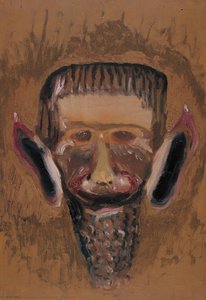
In the delicate, diminutive realm of 1910, Arnold Schoenberg presents us with a work that defies the traditional boundaries of playing card design. Playing Cards for Whist/Bridge - Jack of Spades is not merely a functional object of leisure, but a profound psychological landscape captured within a mere 4 x 6 cm frame. At first glance, the viewer is confronted by a startlingly surreal composition: a central figure whose very anatomy challenges our perception of reality, featuring a face positioned upon the back. This jarring anatomical displacement serves as an immediate gateway into the subconscious, inviting the observer to look beyond the surface of the card and into a dreamlike state where identity and form are fluid.
The painting is a dense tapestry of faces, creating a rhythmic, almost hypnotic movement across the small canvas. Surrounded by a chorus of secondary figures, the main subject—clad in a striking red shirt—holds a card with a sense of quiet purpose. The inclusion of an umbrella near the center adds a touch of the mundane to this otherwise uncanny scene, acting as a grounding element that paradoxically heightens the surrounding strangeness. This interplay between the familiar and the bizarre is a hallmark of the era's burgeoning interest in the depths of the human psyche, making this piece a captivating specimen for those who appreciate art that provokes deep contemplation.
The Mastery of Expression and Historical Resonance
Technically, this work exemplifies the experimental spirit that defined the early 20th century. Schoenberg, primarily celebrated as a titan of musical atonality, brings a similar sense of structural innovation to his visual explorations. The composition utilizes depth not through traditional perspective, but through the layering of faces and features, creating an intricate web of complexity that rewards repeated viewing. Each brushstroke contributes to a sense of layered meaning, where the boundaries between the individual and the collective seem to dissolve. For the collector, this piece offers a rare glimpse into a moment in history when the rules of representation were being radically rewritten.
For interior designers and art enthusiasts, this reproduction serves as an exquisite conversation piece. Its small scale belies its immense emotional weight, making it an ideal addition to a curated gallery wall or a sophisticated study where intimate details can be appreciated up close. The vibrant red of the figure's attire provides a focal point of warmth amidst the more enigmatic and shadowed elements of the background. Owning a reproduction of this work is not simply about possessing a beautiful object; it is about bringing a fragment of the Second Viennese School's revolutionary spirit into one's personal space, offering a permanent window into the beautiful, unsettling mysteries of the human mind.
Related Artworks
Artist Biography
early life and musical beginnings
arnold schoenberg, an austrian-american composer, was born on september 13, 1874, in vienna, austria. his early life was marked by a humble beginning, with his father being a shoe-shopkeeper. despite this, schoenberg's innate passion for music led him to largely self-educate himself in the field.- schoenberg explored film music and wrote more tonal music, completing his chamber symphony no. 2 in 1939.
- he satirized fascist tyrants in ode to napoleon (1942), after byron.
- post-war vienna offered him honorary citizenship, but he was ill, as depicted in his string trio (1946).
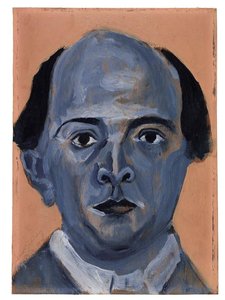
arnold schoenberg
1874 - 1951 , Austria
Quick Facts
- Artistic Movement Or Style: Twelve-tone technique; Expressionism
- Artists Or Movements Influenced By This Artist:
- Anton Webern
- Alban Berg
- Artists Who Influenced This Artist:
- Johannes Brahms
- Richard Wagner
- Date Of Birth: September 13, 1874
- Date Of Death: 1951
- Full Name: Arnold Schoenberg
- Nationality: Austrian-American
- Notable Artworks:
- Suite, op. 29
- Music Typewriter
- Staffliner
- Place Of Birth: Vienna, Austria
Related Articles

Crimson Threads of Narrative: Exploring Symbolism & Representation in Artworks Featuring the Red Dress
Explore the rich symbolism of the red dress in art history! From ancient power displays to iconic portraits like Cézanne’s 'Madame Cezanne', discover the cultural and artistic significance behind this captivating color. Expert analysis & insights.

Mark Rothko's Masterpieces: 25 Paintings That Define Abstract Expressionism | ArtsDot
Explore 25 iconic Mark Rothko paintings that define Abstract Expressionism. Discover the stories, colors & emotions behind these masterpieces. Find museum-quality art reproductions and curated decor ideas at ArtsDot.com.

Dreamscapes & Disrupted Realities: Exploring Surrealism's Enduring Influence
Explore the fascinating world of Surrealism! Discover its origins, key artists like Dalí & Magritte, and enduring influence on art & culture. Expert insights & high-quality reproductions at ArtsDot.
Surrealism's Greatest Hits: 10 Masterpieces for Your Home |
Journey into the dreamlike world of Surrealism! Explore 10 masterpieces by Dali, Magritte & Miró. Discover the stories behind these iconic paintings and find museum-quality art reproductions for your home at .
Max Ernst's Masterpieces: 25 Surreal Visions for Art Lovers & Home Decor
Journey into the surreal world of Max Ernst! Explore 25 iconic paintings, from Dada to abstract expressionism. Discover the stories behind his masterpieces & find museum-quality art reproductions for your home decor at ArtsDot.com.