 Send
Send Share
Share
 Details

 Download
 Similars
 Diaporama
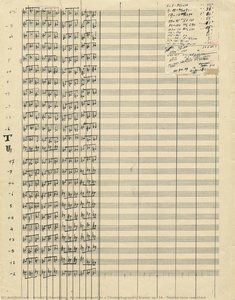
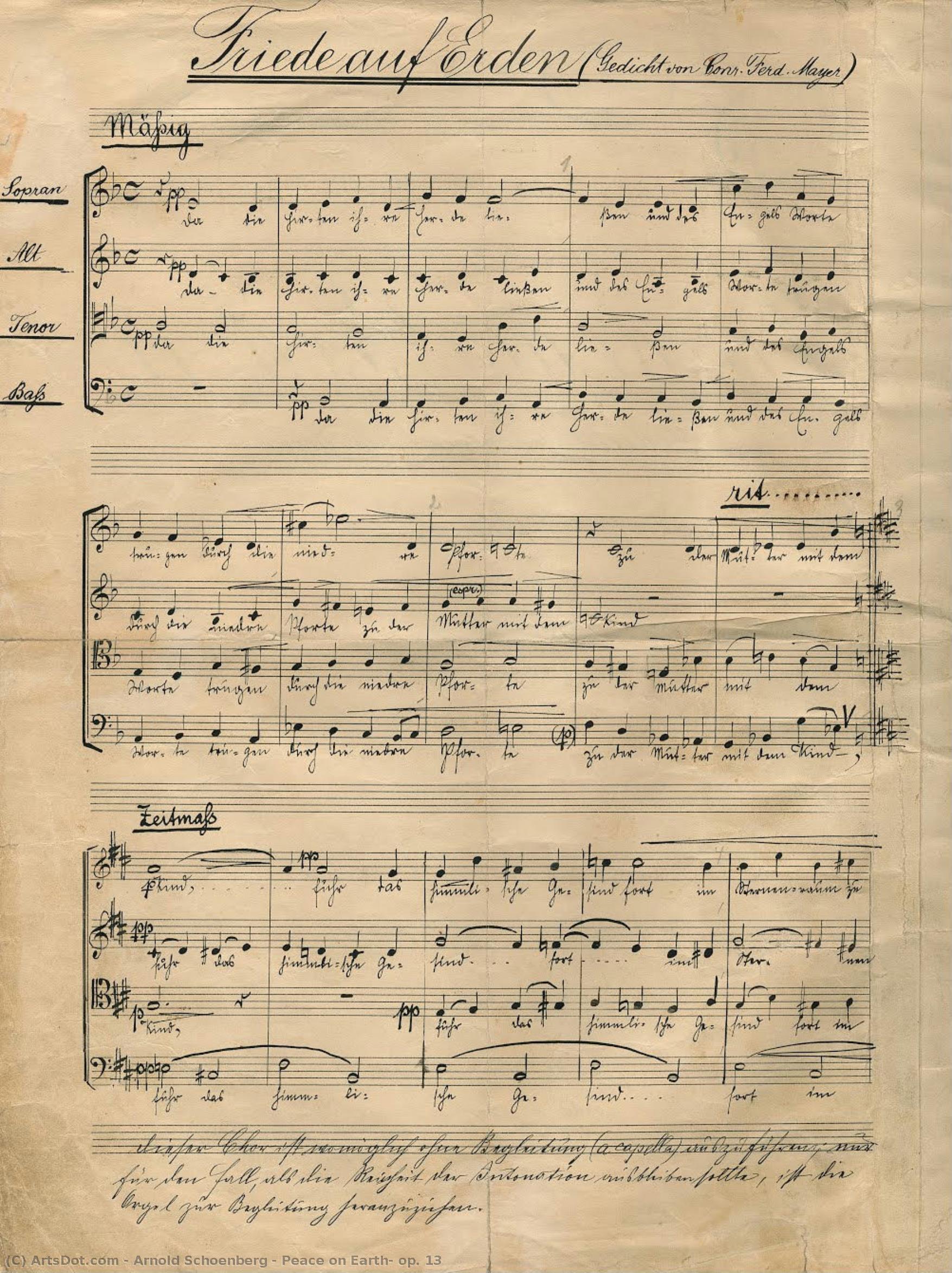
Peace on Earth, op. 13
 Black and White Photography
- Photo
 1907
1907 25.0 x 34.0 cm
 Arnold Schönberg Center
 Read More
Hand Made Oil Reproduction
Hand-painted oil on canvas in your size and frame, made to order by our artists. ( Buy Print Buy Image)




































Pick from our preset sizes that match the artwork's original proportions.

You may enter your own dimensions to fit a specific frame or space. If your selected size does not match the original image's proportions, we will either crop the artwork or extend the painting with additional hand-painted elements. A digital mockup will be sent for your approval before production begins.
Please note that the on-screen preview does not reflect the actual cropping or extension. Only the mockup will accurately show the final composition.
While custom sizes are available, we recommend selecting a dimension from the predefined list to preserve the original proportions.
After order, ArtsDot.com team will email client for instructions and provide a mockup preview
Worldwide Delivery () in 3/4 weeks instead of standard 5 weeks. (16 August). No compromise on quality.

Free Worldwide Express Shipping

High-Quality Linen Canvas

Full Shipping Insurance

Customs Tax Refund Guarantee

True Color Matching Guarantee

60-Day Return Policy (Defects Only)

100% Money-Back Guarantee

Bulk Discount Offer
 Glass option is only available in size under 110 CM

Peace on Earth, op. 13
Reproduction Medium
Reproduction Size
-


Total Price
$ 263
Artwork Description
A Symphony in Silence: Exploring Peace on Earth, op. 13
To gaze upon this depiction of Arnold Schoenberg's "Peace on Earth, op. 13" is not merely to look at an aged sheet of music; it is to encounter a preserved echo of profound human yearning. This composition, born from the charged atmosphere of early twentieth-century Europe, transcends its musical notation to become a tangible artifact of hope. The visual evidence—the sepia tones, the delicate creases, the faint patina of time upon the black and white score—whispers tales of dedication, competition, and the enduring quest for tranquility.
Historical Resonance and Creative Genesis
Composed around 1907, this work arrived at a pivotal moment in cultural history. Schoenberg himself was navigating the burgeoning currents of modern musical thought, pushing boundaries that would redefine art for generations to come. The context surrounding "Peace on Earth" is rich; it was associated with competitions, notably the 1st Styrian Music Festival, an event spurred by the recent success of Richard Strauss's opera, Salome. This suggests a vibrant, competitive artistic milieu where grand statements were expected. Furthermore, the text itself draws from Conrad Ferdinand Meyer’s Christmas poem, grounding this lofty musical aspiration in deeply rooted cultural and seasonal symbolism.
Symbolism Woven into the Notes
The very title speaks volumes: "Peace on Earth." The accompanying narrative reveals that the piece contemplates a journey from the tidings of peace found within a sacred story to an examination of world history—a cycle marked by conflict, yet persistently upheld by the unwavering belief in justice. This duality is the core symbolism here. It suggests that true peace is not merely an absence of noise, but an active, hard-won state of grace built upon enduring ideals. For collectors and admirers, this piece offers a potent meditation on humanity's cyclical struggle between discord and harmony.
Aesthetic Appeal for the Modern Space
While intrinsically musical, the physical representation—the aged manuscript photograph—lends itself beautifully to interior design. Its monochromatic palette and visible signs of history lend an air of scholarly gravitas and nostalgic romance. Reproducing this piece allows one to infuse a space with intellectual depth. Imagine it displayed in a library, a study, or a gallery lounge; the subtle texture and historical weight elevate any setting from merely decorated to deeply curated. It speaks to an appreciation for foundational artistic movements and the enduring power of human aspiration.
The Enduring Emotional Impact
Ultimately, "Peace on Earth" resonates emotionally because it is universal. Regardless of one's personal background or era, the desire for a lasting peace remains the most potent human sentiment. Owning a reproduction of this score is akin to possessing a visual manifesto—a beautiful reminder that even amidst the cacophony of modern life, the hope for a better tomorrow, articulated through art and music, continues to resonate with breathtaking clarity.
Related Artworks

Artist Biography
early life and musical beginnings
arnold schoenberg, an austrian-american composer, was born on september 13, 1874, in vienna, austria. his early life was marked by a humble beginning, with his father being a shoe-shopkeeper. despite this, schoenberg's innate passion for music led him to largely self-educate himself in the field.- schoenberg explored film music and wrote more tonal music, completing his chamber symphony no. 2 in 1939.
- he satirized fascist tyrants in ode to napoleon (1942), after byron.
- post-war vienna offered him honorary citizenship, but he was ill, as depicted in his string trio (1946).
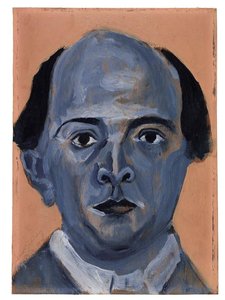
arnold schoenberg
1874 - 1951 , Austria
Quick Facts
- Artistic Movement Or Style: Twelve-tone technique; Expressionism
- Artists Or Movements Influenced By This Artist:
- Anton Webern
- Alban Berg
- Artists Who Influenced This Artist:
- Johannes Brahms
- Richard Wagner
- Date Of Birth: September 13, 1874
- Date Of Death: 1951
- Full Name: Arnold Schoenberg
- Nationality: Austrian-American
- Notable Artworks:
- Suite, op. 29
- Music Typewriter
- Staffliner
- Place Of Birth: Vienna, Austria
Related Articles

Giclée Prints: Archival Quality & Aesthetic Nuances for the Discerning Collector
Explore the world of giclée prints with ArtsDot. Learn about archival quality, aesthetic nuances & investment potential. Expert guidance for discerning art collectors seeking museum-quality reproductions and lasting value.

The Enduring Legacy of Fine Art Prints: Technique, History & Aesthetic Impact
Explore the rich history & techniques of fine art prints. Discover investment potential, assess authenticity, and learn how to preserve your collection with expert guidance. Trusted insights for discerning collectors.
Harmonies on Canvas: Exploring the Visual Representation of Music in Art History
Explore the fascinating history of music's visual representation in art! From ancient symbolism to modern abstraction, discover how artists have captured sound and emotion on canvas. Expert insights & stunning examples.

Echoes of Time: Exploring the Enduring Appeal & Historical Context of Vintage Art Prints
Explore the captivating world of vintage art prints! Discover their history, collecting tips & enduring appeal. Expert insights on chromolithography and building a legacy collection with ArtsDot.
German Expressionism's 10 Defining Masterpieces | Art for Your Home
Explore 10 defining German Expressionism masterpieces – from Munch's 'The Scream' to Kandinsky’s abstracts. Discover the artists, stories & bold colors behind this powerful art movement. Find museum-quality reproductions at ArtsDot.com.