
The Genesis of Printmaking: From Ancient Origins to Early European Developments
Printmaking is the process of creating artworks by printing, normally on paper, but also on fabric, wood, metal, and other surfaces. "Traditional printmaking" normally covers only the process of creating prints using a hand processed technique, rathe...
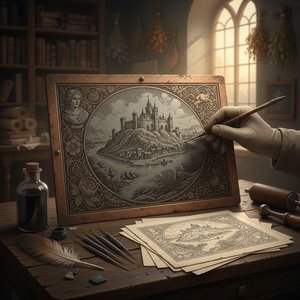
Long before the advent of digital reproduction, the desire to multiply images – to share stories, beliefs, and artistic visions beyond the limitations of a single hand-painted surface – spurred humanity’s earliest explorations into printmaking. While often associated with the Renaissance masters, the roots of this transformative art form stretch back millennia, beginning not with artists but with artisans seeking efficient methods for textile decoration. In China, as early as the 5th century, woodblock printing flourished, initially employed to replicate patterns on silk and later extending to paper, laying the groundwork for both textual dissemination and pictorial representation. These early examples weren’t merely functional; they demonstrate a sophisticated understanding of negative space and the power of repeated imagery.
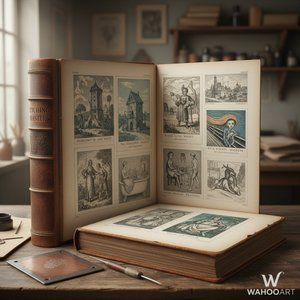
The transmission of knowledge westward was gradual, yet profound. By the 14th century, woodcut printing had begun to appear in Europe, initially serving religious purposes – devotional images readily accessible to a wider populace. The *Blockbücher*, small illustrated books carved entirely from woodblocks, represent a crucial stepping stone between manuscript illumination and true printmaking. However, these were still largely reliant on the skills of bookmakers; the real revolution came with the development of movable type by Johannes Gutenberg in the mid-15th century. While primarily focused on text, Gutenberg’s press also facilitated the integration of woodcut illustrations, marking a pivotal moment where image and word could be disseminated with unprecedented speed and accuracy.
The early European printmakers weren't simply copying existing forms; they were innovating. Artists like Albrecht Dürer, though initially trained as a goldsmith, quickly recognized the potential of engraving – cutting directly into metal plates to create incredibly detailed and nuanced images. This shift from wood’s relative softness to metal’s enduring precision allowed for a level of intricacy previously unattainable, establishing printmaking not just as a means of reproduction but as an independent art form capable of remarkable artistic expression.
Intaglio's Enduring Appeal: Mastering Line, Shadow & Texture in Metal
Intaglio ( in-TAL-ee-oh, -TAH-lee-; Italian: [inˈtaʎʎo]) is the group of printing and printmaking techniques in which an image is incised into a surface and the incised line or sunken area holds the ink. It is the direct opposite of a relief print w...
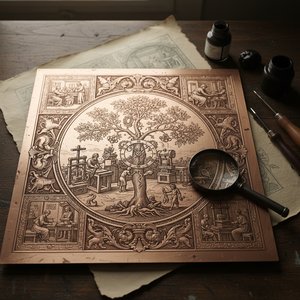
The term “intaglio,” derived from the Italian word for ‘to engrave,’ encompasses a family of printmaking techniques united by a singular principle: the image is incised into a surface – typically copper or zinc plates – and ink resides within these recessed areas. This fundamental difference from relief printing, where ink sits *on* the surface, dictates the unique aesthetic qualities inherent to intaglio processes. Engraving itself demands exceptional skill and patience; artists employ specialized tools called burins to meticulously carve lines into the metal, creating a network of channels that hold the ink.
However, engraving was not practiced in isolation. Etching, developed shortly thereafter, offered a more accessible – though no less demanding – approach. Instead of physically removing metal, etching utilizes acid to bite away at the plate’s surface where it has been protected by a resist, typically a wax ground. This allows for softer lines and broader tonal variations than engraving's precise incisions. Drypoint, another intaglio technique, employs a needle to scratch directly into the plate, leaving a burr – a raised ridge of metal – that holds ink, resulting in a velvety texture and a characteristic softness.
The true mastery of intaglio lies not just in technical proficiency but in the artist’s ability to manipulate these processes. Rembrandt van Rijn, arguably the most celebrated printmaker in history, exemplifies this skill. He frequently combined engraving, etching, and drypoint within a single plate, layering techniques to achieve unparalleled depth, luminosity, and emotional resonance. His prints aren't merely reproductions of paintings; they are independent works of art that explore light, shadow, and the human condition with breathtaking subtlety.
Lithography & Woodcut: Expanding the Boundaries of Artistic Expression
While intaglio dominated for centuries, the 18th and 19th centuries witnessed a surge in experimentation, leading to groundbreaking new techniques. Lithography, invented by Alois Senefelder in 1796, proved particularly revolutionary. Unlike previous methods requiring physical carving or acid etching, lithography relies on the chemical properties of oil and water. An artist draws directly onto a stone (typically limestone) with a greasy crayon or ink; the stone is then treated to repel water but accept ink in the areas where the drawing has been made. This allows for remarkably free and fluid lines, mimicking the spontaneity of drawing.
The impact of lithography was immediate and far-reaching. It democratized printmaking, making it accessible to artists without extensive training in metalworking. Furthermore, it opened up new possibilities for color printing and large-scale editions. Artists like Francisco Goya embraced lithography with fervor, using the technique to create his *Disasters of War* series – a harrowing depiction of the Napoleonic Peninsular War that remains powerfully relevant today.
Simultaneously, woodcut experienced a revival, albeit in a transformed state. The Japanese *ukiyo-e* prints, with their vibrant colors and dynamic compositions, captivated European artists like Edgar Degas and Édouard Manet. These influences led to a renewed appreciation for the expressive potential of woodcut, moving beyond mere illustration towards a more painterly aesthetic. Artists began experimenting with color reduction techniques – printing multiple layers from a single block – further expanding the possibilities of this ancient medium.
Printmaking as a Vehicle for Social Commentary and Narrative
Throughout its history, printmaking has served not only as a means of artistic expression but also as a powerful tool for social commentary and narrative. The accessibility of prints – compared to unique paintings or sculptures – allowed artists to reach wider audiences, disseminating ideas and challenging established norms. From the satirical etchings of William Hogarth exposing the vices of 18th-century London society to the political caricatures of Honoré Daumier critiquing French bureaucracy, printmaking provided a platform for dissent and social critique.
The power of visual storytelling was particularly evident in series like Goya’s *Disasters of War*, which unflinchingly depicted the brutality of conflict. These prints weren't intended as mere aesthetic objects; they were meant to provoke a response, to force viewers to confront uncomfortable truths. Similarly, artists used printmaking to illustrate literary works, bringing classic tales and contemporary novels to life for a broader readership.
The narrative potential of printmaking extended beyond direct social commentary. Artists like Gustave Doré created elaborate wood engravings illustrating Dante’s *Divine Comedy* and Milton’s *Paradise Lost*, transforming these epic poems into visually stunning sequences that captivated audiences worldwide. These prints weren't simply illustrations; they were interpretations, imbued with the artist’s own vision and emotional sensibility.
Abstract Expressionism and Beyond: Modern and Contemporary Printmaking Innovations
The 20th century witnessed a radical shift in artistic sensibilities, and printmaking was not immune to these changes. While traditionally associated with representational imagery, artists began exploring the possibilities of abstraction, pushing the boundaries of technique and form. Abstract Expressionists like Robert Motherwell embraced printmaking as a means of translating their gestural painting style into a reproducible medium.
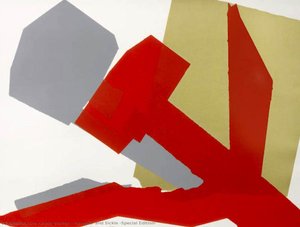
The development of new techniques – such as silkscreen printing (also known as serigraphy) – further expanded the possibilities of abstract expressionism. Artists like Andy Warhol famously utilized silkscreen to create his iconic pop art images, blurring the lines between high art and mass culture. The technique’s ability to reproduce photographs and bold graphic elements allowed for a new level of visual impact.
Contemporary printmaking continues to defy categorization, embracing a diverse range of approaches and materials. Artists are experimenting with digital technologies, combining traditional techniques with computer-generated imagery, and exploring unconventional substrates beyond paper. Figures like n. krishna reddy revolutionized color printing through viscosity techniques, creating vibrant abstract compositions that showcase the inherent dynamism of the medium. Printmaking today is not merely a continuation of past traditions; it’s a dynamic and evolving art form constantly pushing the boundaries of artistic expression.
Collecting Prints: A Guide to Assessing Value, Condition & Preservation
For the discerning collector, prints offer a unique opportunity to acquire original works of art at a range of price points. However, navigating the print market requires careful consideration and informed judgment. Assessing value involves several factors, including the artist’s reputation, the rarity of the edition size, the condition of the impression, and its provenance (history of ownership). Prints from limited editions – those with a small number of impressions – are generally more valuable than open editions.
Condition is paramount. Look for signs of foxing (brown spots caused by oxidation), staining, tears, or repairs. A print in pristine condition will command a higher price. Provenance can also significantly impact value; prints with documented ownership histories – particularly those associated with prominent collectors or institutions – are often more desirable.
Proper preservation is crucial to maintaining the value of your collection. Prints should be stored in acid-free mats and frames, protected from direct sunlight, humidity, and extreme temperatures. Avoid handling prints directly; always wear gloves to prevent transferring oils and dirt. ArtsDot offers a range of museum-quality framing options designed to protect and enhance your print investments. Whether you’re drawn to the historical significance of early engravings or the